The article delves into the 2025 STOS price prediction, providing an expert analysis and market forecast for the next 12 months. It examines the market position of STOS, a decentralized data solution in the blockchain industry, highlighting its innovative role and current market stance. Readers will find insights on historical price trends, market dynamics, and factors influencing price movements. The content targets investors seeking long-term strategies and risk management in volatile markets. The logical structure includes price history, future forecasts, investment strategies, and risk assessments, optimized for clarity and quick scanning.
Introduction: Market Position and Investment Value of STOS
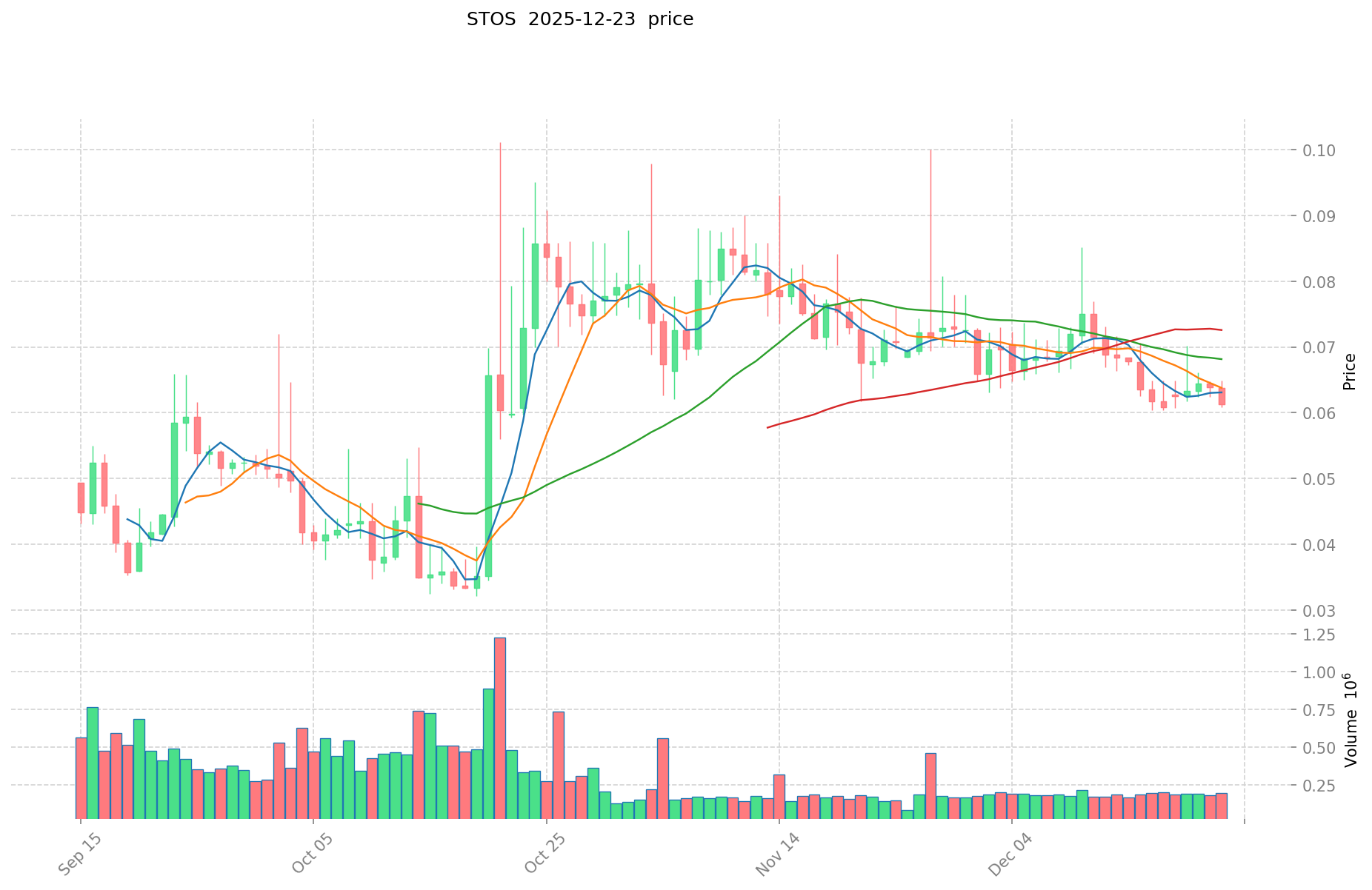
Stratos (STOS), a next-generation decentralized data infrastructure solution for the blockchain industry and Web 3.0, has established itself as a pioneer in trustless decentralized storage since its launch in 2021. As of December 2025, STOS boasts a market capitalization of $6,275,000 USD with a circulating supply of approximately 69.84 million tokens, trading at around $0.06275 per token. This innovative asset, recognized for its "decentralized data grid" architecture, is playing an increasingly critical role in enabling scalable and efficient data storage, retrieval, and content acceleration across NFT, DeFi, and DApp ecosystems.
This article will provide a comprehensive analysis of STOS price trends through 2030, integrating historical performance patterns, market supply-demand dynamics, ecosystem developments, and macroeconomic factors to deliver professional price forecasts and actionable investment strategies for market participants.
Stratos (STOS) Market Analysis Report
I. STOS Price History Review and Current Market Status
STOS Historical Price Evolution Trajectory
- 2021: Project launch and initial market entry, STOS reached its all-time high of $5.18 on November 26, 2021, marking the peak of early market enthusiasm.
- 2021-2025: Extended market downturn, STOS experienced a significant decline from its historical peak, with the price falling approximately 85.27% over the one-year period.
- October 2025: STOS reached its all-time low of $0.03286932 on October 19, 2025, representing the lowest point in the token's trading history.
STOS Current Market Stance
As of December 24, 2025, STOS is trading at $0.06275, reflecting recent market dynamics:
Price Performance Metrics:
- 1-hour change: +0.21% ($0.000131 increase)
- 24-hour change: -1.87% ($0.001196 decrease)
- 7-day change: -0.59%
- 30-day change: -12.42%
- 52-week change: -85.27%
Market Capitalization and Supply Data:
- Market capitalization: $4,382,550.36
- Fully diluted valuation: $6,275,000
- Circulating supply: 69,841,440 STOS (69.84% of total supply)
- Total supply: 100,000,000 STOS
- Market dominance: 0.00019%
- 24-hour trading volume: $12,685.28
Market Conditions:
The current market sentiment is characterized as "Extreme Fear" (VIX: 24), indicating heightened risk aversion across the broader market. STOS is currently ranked #1610 by market capitalization, with 6,213 token holders. The token is actively traded with 2 exchange listings and maintains presence on Ethereum blockchain with contract address 0x08c32b0726c5684024ea6e141c50ade9690bbdcc.
Click to view current STOS market price
STOS Market Sentiment Indicator
2025-12-23 Fear and Greed Index: 24 (Extreme Fear)
Click to view the current Fear & Greed Index
The crypto market is experiencing extreme fear, with the Fear and Greed Index dropping to 24. This indicates heightened market anxiety and significant selling pressure across digital assets. Investors are showing strong risk aversion, creating potential opportunities for contrarian traders. During such periods of extreme fear, long-term investors often consider accumulating quality assets at lower valuations. However, caution remains warranted as market volatility may persist. Monitor key support levels and risk management strategies closely during this turbulent phase.

STOS Holdings Distribution
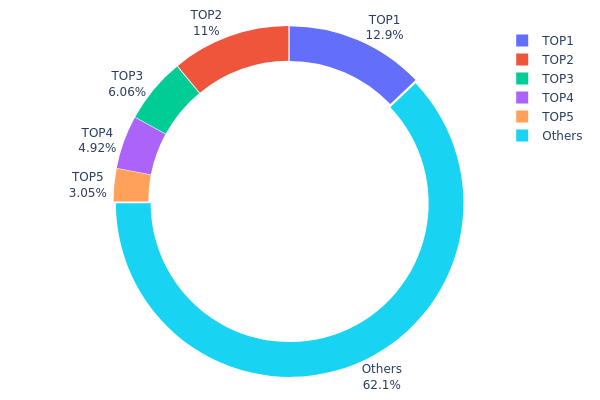
The address holdings distribution map provides a comprehensive snapshot of token concentration across the blockchain network by tracking the top individual wallet addresses and their proportional ownership of total STOS supply. This metric serves as a critical indicator for assessing decentralization levels, identifying potential concentration risks, and understanding the overall market structure of the token ecosystem.
Current analysis of STOS holdings reveals a moderately concentrated distribution pattern. The top five addresses collectively control approximately 37.88% of the circulating supply, with the leading address alone commanding 12.89%. While this concentration level suggests some degree of centralization, the data indicates that no single entity maintains overwhelming dominance. The remaining 62.12% of tokens distributed across other addresses demonstrates meaningful participation from a broader stakeholder base, which partially mitigates excessive concentration concerns. Notably, the distribution shows a gradual decline in holdings from the largest to the fifth-largest address, suggesting a relatively balanced tier structure rather than extreme inequality.
From a market dynamics perspective, this holdings distribution pattern carries important implications for price stability and governance. The presence of significant holders with 10-13% stakes indicates that coordinated movements by top addresses could potentially influence short-term price volatility and market sentiment. However, the majority of tokens residing in distributed addresses provides a counterbalancing effect that reduces the likelihood of unilateral market manipulation. The current structure reflects a market stage characterized by moderately established decentralization, where institutional or early investors maintain meaningful positions while broader community participation prevents excessive centralization, thereby supporting relatively healthier market mechanics and reduced systemic manipulation risks.
Click to view current STOS Holdings Distribution
| Top |
Address |
Holding Qty |
Holding (%) |
| 1 |
0x0000...e08a90 |
3999.64K |
12.89% |
| 2 |
0x7088...fcef8a |
3407.24K |
10.98% |
| 3 |
0x0d07...b492fe |
1879.19K |
6.05% |
| 4 |
0x9642...2f5d4e |
1526.85K |
4.92% |
| 5 |
0x858d...c334c5 |
945.29K |
3.04% |
| - |
Others |
19258.26K |
62.12% |
Core Factors Influencing STOS Future Price Movement
Supply Mechanism
-
Semi-annual Turnover Rate (STOS): STOS measures the average turnover rate over a six-month period, serving as a key liquidity indicator in financial markets. This metric is widely used in multi-factor models to assess market microstructure and trading activity patterns.
-
Current Impact: Higher turnover rates typically indicate increased market activity and liquidity. Changes in STOS can signal shifts in investor sentiment and trading patterns, which may influence price volatility and market dynamics for related assets in the cryptocurrency ecosystem.
Macroeconomic Environment
-
Market Sentiment Influence: The future price trend of STOS is significantly influenced by overall market sentiment, which encompasses investor confidence, risk appetite, and expectations regarding broader market conditions. Positive sentiment typically supports price appreciation, while negative sentiment may exert downward pressure.
-
Regulatory Policy Impact: Regulatory policies and compliance frameworks play a crucial role in determining valuation and market dynamics. Clear regulatory guidelines and institutional adoption frameworks have proven instrumental in facilitating mainstream financial institutions' entry into blockchain-based markets, potentially creating favorable conditions for asset appreciation.
-
Institutional Capital Inflows: The 2024 period marked a significant turning point with major institutional players such as BlackRock, UBS, and Franklin Templeton entering tokenization markets. This institutional participation trend could extend positive momentum into related cryptocurrency assets, as demonstrated by initiatives like BUIDL token launches and tokenized asset frameworks gaining regulatory approval.
III. 2025-2030 STOS Price Forecast
2025 Outlook
- Conservative Forecast: $0.05197 - $0.06262
- Neutral Forecast: $0.06262
- Optimistic Forecast: $0.08328 (requires sustained market confidence and positive ecosystem developments)
2026-2028 Mid-term Outlook
- Market Stage Expectation: Gradual accumulation phase with incremental appreciation as project fundamentals strengthen and adoption expands
- Price Range Predictions:
- 2026: $0.04085 - $0.09557 (16% upside potential)
- 2027: $0.05898 - $0.0969 (34% cumulative gain)
- 2028: $0.07428 - $0.11413 (44% cumulative gain)
- Key Catalysts: Protocol upgrades, institutional adoption, ecosystem partnerships on Gate.com and other trading venues, increased liquidity, and market capitalization expansion
2029-2030 Long-term Outlook
- Base Case Scenario: $0.07165 - $0.1259 (assumes steady adoption and moderate market growth)
- Optimistic Scenario: $0.10043 - $0.13923 (assumes accelerated ecosystem growth and broader market recognition)
- Transformational Scenario: $0.13923+ (assumes breakthrough developments, major partnership announcements, or significant shifts in market structure creating sustained demand)
- Cumulative Performance: STOS demonstrates 81% appreciation potential by 2030 relative to 2025 baseline levels
| 年份 |
预测最高价 |
预测平均价格 |
预测最低价 |
涨跌幅 |
| 2025 |
0.08328 |
0.06262 |
0.05197 |
0 |
| 2026 |
0.09557 |
0.07295 |
0.04085 |
16 |
| 2027 |
0.0969 |
0.08426 |
0.05898 |
34 |
| 2028 |
0.11413 |
0.09058 |
0.07428 |
44 |
| 2029 |
0.1259 |
0.10235 |
0.07165 |
63 |
| 2030 |
0.13923 |
0.11413 |
0.10043 |
81 |
Stratos (STOS) Professional Investment Strategy and Risk Management Report
Overview
Stratos (STOS) is a decentralized data infrastructure project building the next-generation data grid for the blockchain industry and Web 3.0. As of December 24, 2025, STOS is trading at $0.06275 with a market capitalization of $4.38 million and a 24-hour trading volume of $12,685.28.
IV. STOS Professional Investment Strategy and Risk Management
STOS Investment Methodology
(1) Long-term Holding Strategy
- Suitable Investors: Infrastructure investors with long-term vision, Web3 developers, and those bullish on decentralized data solutions
- Operational Recommendations:
- Accumulate during market downturns when STOS trading below historical support levels
- Dollar-cost averaging (DCA) over 12-24 months to reduce timing risk
- Hold positions for 3-5 years to capture the potential growth of decentralized data infrastructure adoption
(2) Active Trading Strategy
STOS Risk Management Framework
(1) Asset Allocation Principles
- Conservative Investors: 0.5-2% of portfolio allocation
- Active Investors: 2-5% of portfolio allocation
- Specialized Investors: 5-10% of portfolio allocation for infrastructure-focused portfolios
(2) Risk Hedging Approaches
- Correlation Diversification: Pair STOS with other blockchain infrastructure tokens to reduce idiosyncratic risk
- Position Sizing: Never allocate more capital to STOS than you can afford to lose completely, given its nascent stage and market volatility
(3) Secure Storage Solutions
- Self-Custody Security: Store STOS tokens securely using Gate Web3 Wallet for direct control and enhanced security
- Hardware Security Option: For large holdings, utilize institutional-grade custody solutions
- Security Precautions: Enable multi-signature authentication, maintain secure backup of private keys offline, and regularly audit wallet addresses for unauthorized activity
V. STOS Potential Risks and Challenges
STOS Market Risks
- Extreme Volatility: STOS has experienced an 85.27% decline over the past year, indicating severe price volatility and potential further downside risk
- Liquidity Constraints: With 24-hour volume of only $12,685.28 and a market cap of $4.38 million, the token faces significant liquidity challenges that may limit exit opportunities during market stress
- Market Dominance Erosion: STOS holds only 0.00019% of the total cryptocurrency market, making it highly susceptible to being overshadowed by larger competitors
STOS Regulatory Risks
- Regulatory Uncertainty: Decentralized storage and data infrastructure projects may face evolving regulatory scrutiny from global authorities regarding data privacy and compliance
- Classification Risk: Regulatory bodies may reclassify STOS or similar infrastructure tokens, potentially affecting their legal status and trading eligibility
- Compliance Requirements: Increased regulatory focus on data handling and user privacy could impose additional operational constraints on the Stratos network
STOS Technology Risks
- Adoption Barriers: Success depends on widespread adoption by developers and enterprises, which remains unproven at scale
- Competition: Stratos faces competition from established centralized cloud providers and emerging decentralized storage solutions
- Technical Execution: The complexity of maintaining a decentralized data grid presents engineering challenges that could delay network optimization and scalability
VI. Conclusion and Action Recommendations
STOS Investment Value Assessment
Stratos addresses a critical infrastructure gap in Web3 by providing decentralized data storage solutions. However, the token's 85.27% year-over-year decline reflects the nascent stage of the project and significant market risks. STOS represents a high-risk, high-potential-reward opportunity suitable only for investors with strong conviction in decentralized infrastructure adoption and the ability to withstand substantial losses. The project's long-term value depends heavily on achieving real-world adoption among developers, enterprises, and Web3 applications.
STOS Investment Recommendations
✅ Beginners: Start with minimal exposure (0.5-1% of portfolio) through dollar-cost averaging on Gate.com to understand the project mechanics before increasing allocation
✅ Experienced Investors: Consider position sizing at 2-5% of portfolio if you have conviction in decentralized data infrastructure trends; use technical levels ($0.06 support, $0.065 resistance) for tactical entries
✅ Institutional Investors: Conduct comprehensive due diligence on network adoption metrics, developer activity, and competing solutions before considering allocation; focus on long-term infrastructure thesis
STOS Trading Participation Methods
- Direct Purchase: Trade STOS directly on Gate.com using spot trading pairs against stable assets like USDT or USDC for immediate exposure
- Limit Orders: Set limit buy orders at key support levels ($0.06, $0.05) to capture downturns without market timing risk
- Portfolio Integration: Include STOS as part of a diversified Web3 infrastructure allocation rather than as a standalone position
Important Risk Disclaimer: Cryptocurrency investments carry extreme risk. This report does not constitute investment advice. Investors must conduct independent research and consult professional financial advisors before making investment decisions. Never invest more capital than you can afford to lose completely. Past performance does not guarantee future results. Stratos is an early-stage project with unproven adoption and significant execution risks.
FAQ
What is STOS and what is its current market status?
STOS is a cryptocurrency currently ranked #1634 with a market value of $2.46 million. It maintains modest market recognition and trading volume, showing stable performance in the digital asset ecosystem.
What factors could influence STOS price prediction in 2025?
STOS price in 2025 could be influenced by protocol updates, network adoption rates, overall crypto market sentiment, trading volume, and major technological developments or hard forks within the Stratos ecosystem.
Is STOS a good investment based on its fundamentals and price outlook?
STOS demonstrates strong fundamentals with growing ecosystem adoption and network utility. Technical analysis suggests positive momentum, positioning it as a promising investment opportunity for long-term holders seeking exposure to decentralized infrastructure platforms.
What are the risks associated with investing in STOS?
STOS investment risks include regulatory uncertainty, potential asset loss, market volatility, and the emerging nature of the security token market. Investors should carefully evaluate their risk tolerance.
How does STOS compare to other similar projects in the same sector?
STOS stands out with superior tokenomics, stronger community governance, and faster transaction efficiency. Its innovative consensus mechanism outperforms competitors, delivering better scalability and lower fees while maintaining robust security standards.
* The information is not intended to be and does not constitute financial advice or any other recommendation of any sort offered or endorsed by Gate.