This article compares JTO and KAVA, two promising blockchain platforms for decentralized finance, emphasizing investment value. It explores price history, supply mechanisms, institutional adoption, and technical ecosystems. The content includes investment strategies, a detailed risk assessment, and price predictions up to 2030, helping investors decide which platform suits their goals. Keywords like JTO, KAVA, blockchain, DeFi, investment, price prediction, and risk management enhance the article’s scope. Suitable for both new and experienced investors, the piece offers insights into JTO's Solana focus and KAVA's cross-chain DeFi applications.
Introduction: JTO vs KAVA Investment Comparison
In the cryptocurrency market, the comparison between Jito (JTO) vs Kava (KAVA) has always been a topic that investors cannot ignore. The two not only show significant differences in market cap ranking, application scenarios, and price performance, but also represent different positioning in the crypto asset space.
Jito (JTO): Since its launch, it has gained market recognition for its role in Solana ecosystem governance.
Kava (KAVA): Since its inception in 2019, it has been hailed as a cross-chain DeFi platform, becoming one of the notable projects in the decentralized finance sector.
This article will comprehensively analyze the investment value comparison between JTO and KAVA, focusing on historical price trends, supply mechanisms, institutional adoption, technical ecosystems, and future predictions, attempting to answer the question most concerning to investors:
"Which is the better buy right now?"
I. Price History Comparison and Current Market Status
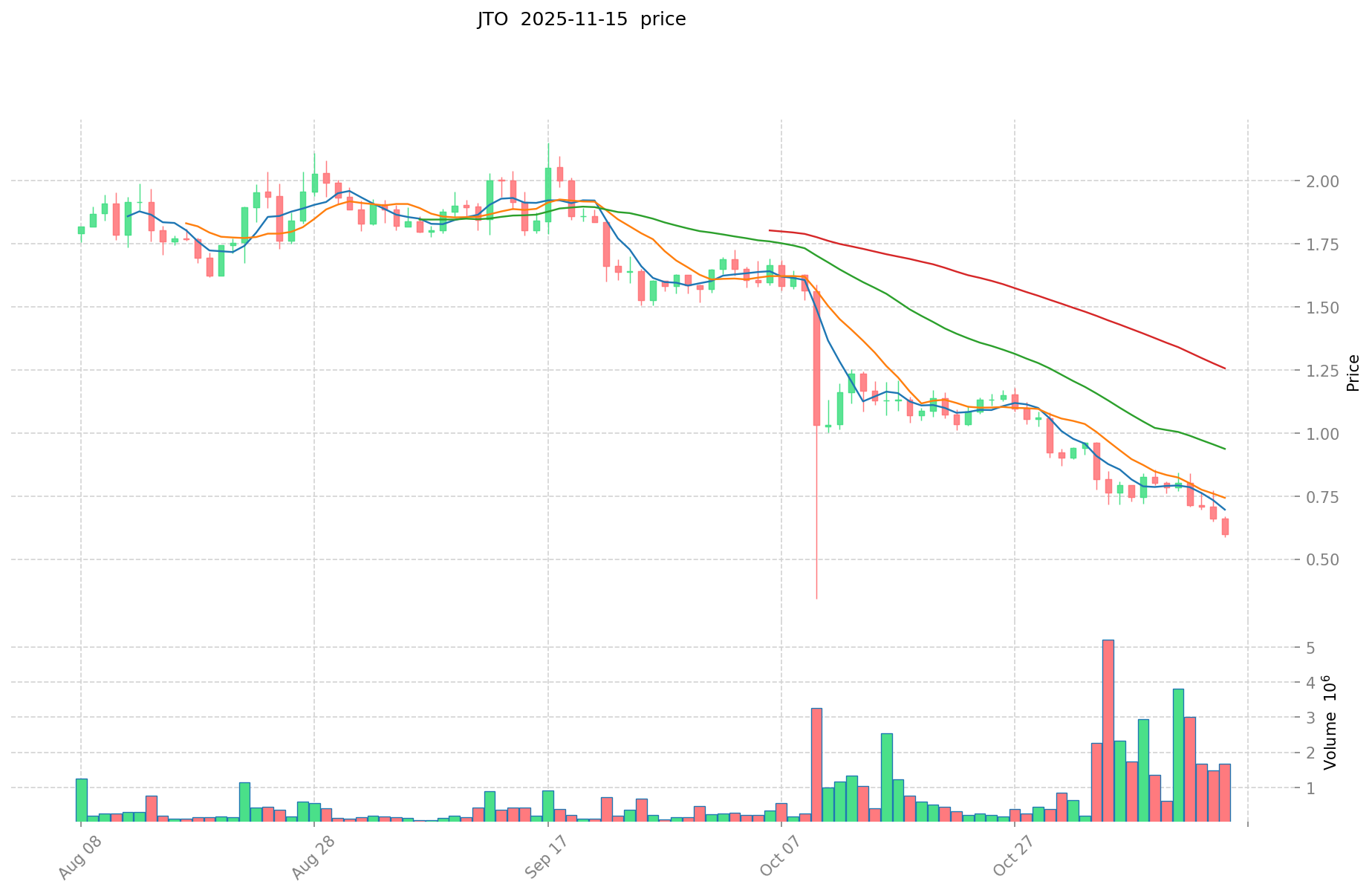
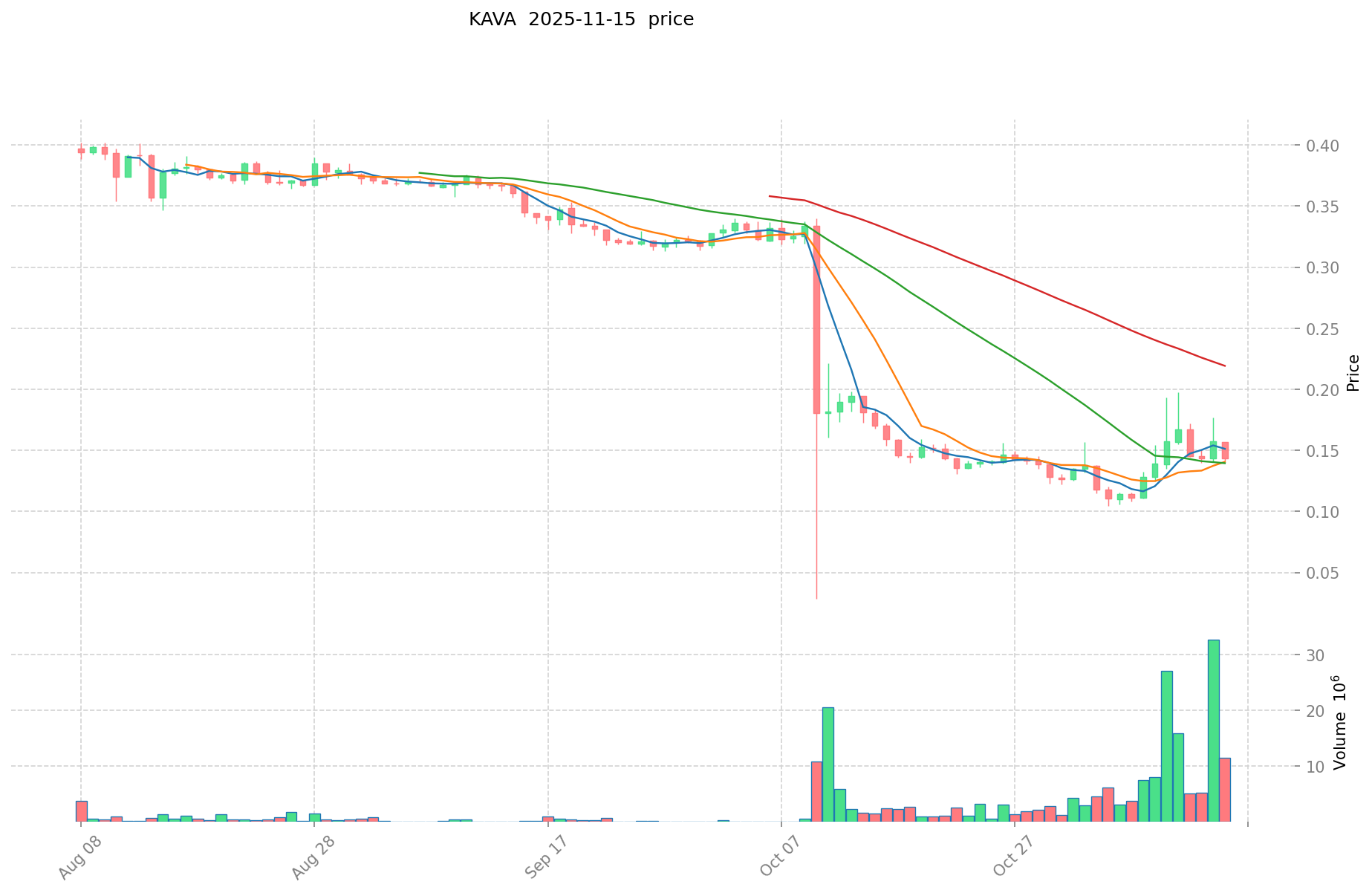
JTO and KAVA Historical Price Trends
- 2023: JTO launched in December, with an initial price of $0.2.
- 2021: KAVA reached its all-time high of $9.12 on August 30.
- Comparative analysis: Since its launch, JTO has risen to a high of $5.323 on April 3, 2024, while KAVA has declined from its all-time high to its current price.
Current Market Situation (2025-11-16)
- JTO current price: $0.5905
- KAVA current price: $0.13785
- 24-hour trading volume: JTO $720,868.43 vs KAVA $1,389,355.18
- Market Sentiment Index (Fear & Greed Index): 10 (Extreme Fear)
Click to view real-time prices:
- View JTO current price Market Price
- View KAVA current price Market Price
II. Core Factors Affecting the Investment Value of JTO vs KAVA
Supply Mechanisms Comparison (Tokenomics)
- JTO: Jito's token has a maximum supply cap of 1 billion tokens, with initial distribution primarily to early validators, the foundation, and community. The token includes staking and governance mechanisms.
- KAVA: Utilizes a hybrid model with an initial maximum supply of 122 million tokens, featuring both inflation and deflationary mechanisms through burn processes. Annual inflation ranges between 3-20% depending on staking rates.
- 📌 Historical pattern: Capped supply tokens like JTO typically demonstrate higher volatility but potentially stronger upside during bull markets, while KAVA's balanced inflation/burning approach aims for more sustainable long-term price stability.
Institutional Adoption and Market Applications
- Institutional holdings: KAVA appears to have stronger institutional backing with partnerships across DeFi and traditional finance sectors, while JTO is newer and still building institutional relationships.
- Enterprise adoption: KAVA has established multiple cross-chain applications in lending, staking, and yield generation, whereas JTO's MEV revenue sharing model primarily appeals to Solana validators and stakers.
- Regulatory attitudes: Both operate in similar regulatory environments, though KAVA's longer market presence has provided it more regulatory clarity compared to the newer JTO token.
Technical Development and Ecosystem Building
- JTO technical upgrades: Focuses on MEV solutions for Solana, with plans for expanding validator infrastructure and optimizing block space markets.
- KAVA technical development: Continues developing its Layer-1 co-chain architecture supporting both Ethereum and Cosmos ecosystems, with emphasis on cross-chain interoperability.
- Ecosystem comparison: KAVA has a more mature ecosystem with established DeFi protocols and yield opportunities across multiple blockchains, while JTO's ecosystem is concentrated on Solana's validator economy and MEV optimization.
Macroeconomic and Market Cycles
- Performance in inflationary environments: KAVA's yield mechanisms potentially offer better inflation hedging, while JTO's value is more closely tied to Solana ecosystem growth and MEV revenues.
- Macroeconomic monetary policy: Both tokens are affected by broader crypto market conditions, with rate hikes typically creating headwinds for the entire sector.
- Geopolitical factors: Cross-chain solutions like KAVA may benefit from increased demand for borderless transactions, while JTO's value proposition is more focused on optimizing within the Solana ecosystem.
III. 2025-2030 Price Prediction: JTO vs KAVA
Short-term Prediction (2025)
- JTO: Conservative $0.39 - $0.59 | Optimistic $0.59 - $0.75
- KAVA: Conservative $0.07 - $0.14 | Optimistic $0.14 - $0.15
Mid-term Prediction (2027)
- JTO may enter a growth phase, with estimated prices of $0.41 - $0.98
- KAVA may enter an expansion phase, with estimated prices of $0.13 - $0.22
- Key drivers: Institutional capital inflow, ETF developments, ecosystem growth
Long-term Prediction (2030)
- JTO: Base scenario $0.57 - $0.93 | Optimistic scenario $0.93 - $1.10
- KAVA: Base scenario $0.24 - $0.26 | Optimistic scenario $0.26 - $0.31
View detailed price predictions for JTO and KAVA
Disclaimer: This analysis is based on historical data and projections. Cryptocurrency markets are highly volatile and unpredictable. This information should not be considered as financial advice. Always conduct your own research before making investment decisions.
JTO:
| 年份 |
预测最高价 |
预测平均价格 |
预测最低价 |
涨跌幅 |
| 2025 |
0.752475 |
0.5925 |
0.39105 |
0 |
| 2026 |
0.733011375 |
0.6724875 |
0.356418375 |
14 |
| 2027 |
0.976821718125 |
0.7027494375 |
0.40759467375 |
19 |
| 2028 |
0.89017271248125 |
0.8397855778125 |
0.478677779353125 |
42 |
| 2029 |
0.986076225467437 |
0.864979145146875 |
0.467088738379312 |
46 |
| 2030 |
1.101377945515515 |
0.925527685307156 |
0.573827164890436 |
57 |
KAVA:
| 年份 |
预测最高价 |
预测平均价格 |
预测最低价 |
涨跌幅 |
| 2025 |
0.1529358 |
0.13778 |
0.0730234 |
0 |
| 2026 |
0.206408218 |
0.1453579 |
0.123554215 |
5 |
| 2027 |
0.21985382375 |
0.175883059 |
0.13367112484 |
27 |
| 2028 |
0.2255700231675 |
0.197868441375 |
0.18401765047875 |
43 |
| 2029 |
0.315461656084162 |
0.21171923227125 |
0.171492578139712 |
53 |
| 2030 |
0.311036724129693 |
0.263590444177706 |
0.242503208643489 |
91 |
IV. Investment Strategy Comparison: JTO vs KAVA
Long-term vs Short-term Investment Strategies
- JTO: Suitable for investors focused on Solana ecosystem growth and MEV optimization
- KAVA: Suitable for investors seeking cross-chain DeFi exposure and yield opportunities
Risk Management and Asset Allocation
- Conservative investors: JTO: 20% vs KAVA: 80%
- Aggressive investors: JTO: 60% vs KAVA: 40%
- Hedging tools: Stablecoin allocation, options, cross-token portfolio diversification
V. Potential Risk Comparison
Market Risks
- JTO: High volatility due to limited market history and Solana ecosystem dependency
- KAVA: Exposure to broader DeFi market fluctuations and cross-chain competition
Technical Risks
- JTO: Scalability, network stability of Solana
- KAVA: Cross-chain interoperability challenges, smart contract vulnerabilities
Regulatory Risks
- Global regulatory policies may impact both tokens differently, with KAVA potentially facing more scrutiny due to its cross-chain DeFi focus
VI. Conclusion: Which Is the Better Buy?
📌 Investment Value Summary:
- JTO advantages: Strong potential in Solana's MEV market, limited supply cap
- KAVA advantages: Established cross-chain DeFi ecosystem, balanced tokenomics
✅ Investment Advice:
- New investors: Consider a balanced approach, leaning towards KAVA for its established ecosystem
- Experienced investors: Explore a mix of both, with higher allocation to JTO for potential growth
- Institutional investors: Evaluate KAVA for its cross-chain DeFi applications, monitor JTO for Solana ecosystem developments
⚠️ Risk Warning: Cryptocurrency markets are highly volatile. This article does not constitute investment advice.
None
VII. FAQ
Q1: What are the main differences between JTO and KAVA?
A: JTO is focused on Solana ecosystem governance and MEV optimization, while KAVA is a cross-chain DeFi platform. JTO has a capped supply of 1 billion tokens, whereas KAVA has a hybrid model with both inflationary and deflationary mechanisms.
Q2: Which token has shown better price performance recently?
A: As of 2025-11-16, JTO is trading at $0.5905, while KAVA is at $0.13785. JTO has shown stronger recent performance, rising from its initial price of $0.2 in December 2023 to a high of $5.323 in April 2024. KAVA has declined from its all-time high of $9.12 in August 2021.
Q3: How do the ecosystems of JTO and KAVA compare?
A: KAVA has a more mature ecosystem with established DeFi protocols and yield opportunities across multiple blockchains. JTO's ecosystem is concentrated on Solana's validator economy and MEV optimization.
Q4: What are the long-term price predictions for JTO and KAVA?
A: By 2030, JTO is predicted to reach $0.57 - $1.10, while KAVA is expected to reach $0.24 - $0.31 in the base and optimistic scenarios respectively.
Q5: How should investors allocate their portfolio between JTO and KAVA?
A: Conservative investors might consider 20% JTO and 80% KAVA, while aggressive investors might opt for 60% JTO and 40% KAVA. The allocation depends on individual risk tolerance and investment goals.
Q6: What are the main risks associated with investing in JTO and KAVA?
A: JTO faces high volatility due to limited market history and Solana ecosystem dependency. KAVA is exposed to broader DeFi market fluctuations and cross-chain competition. Both tokens are subject to regulatory risks, with KAVA potentially facing more scrutiny due to its cross-chain DeFi focus.
Q7: Which token might be better for new investors?
A: New investors might consider leaning towards KAVA for its established ecosystem and more balanced approach. However, a mix of both tokens could provide exposure to different aspects of the crypto market.
* The information is not intended to be and does not constitute financial advice or any other recommendation of any sort offered or endorsed by Gate.













