Ознайомтеся з повним порівнянням LUMIA та LRC — провідних блокчейн-проєктів, що аналізує ринкові показники, токеноміку, динаміку цін і інвестиційні аспекти. Отримайте ключові висновки, які допоможуть у виборі оптимальної криптовалюти для купівлі в умовах складної криптовалютної екосистеми. Доступні детальні ринкові огляди, ресурси проєктів і прогнози цін для ухвалення обґрунтованих інвестиційних рішень. Відвідайте Gate, щоб переглянути актуальні ціни й отримати професійний аналіз щодо LUMIA та LRC.
Вступ: Порівняльний аналіз інвестицій у LUMIA та LRC
Порівняння LUMIA і LRC є постійно актуальною темою для інвесторів на ринку криптовалют. LUMIA і LRC суттєво відрізняються за ринковою капіталізацією, сценаріями використання, динамікою цін і відображають різні позиції криптоактивів.
LUMIA (LUMIA): Ознаменувала новий етап у цифрових фінансах, стала наступною сходинкою для власників $ORN та орієнтована на формування майбутнього DeFi.
LRC (LRC): Від моменту запуску у 2017 році Loopring відома як відкритий децентралізований багатотокеновий протокол на основі ERC20 і смартконтрактів, що дозволяє здійснювати обмін токенів без довіри, без зберігання активів і блокування капіталу.
У цьому матеріалі наведено комплексний аналіз порівняння інвестиційної привабливості LUMIA та LRC з позицій історії цін, механізмів емісії, впровадження мережі та ринкової ефективності. Окрема увага — відповіді на ключове питання інвесторів:
"Який із цих активів доцільніше купувати саме зараз?"
Порівняльний ринковий звіт: Lumia (LUMIA) та Loopring (LRC)
I. Історія цін і поточний ринковий стан
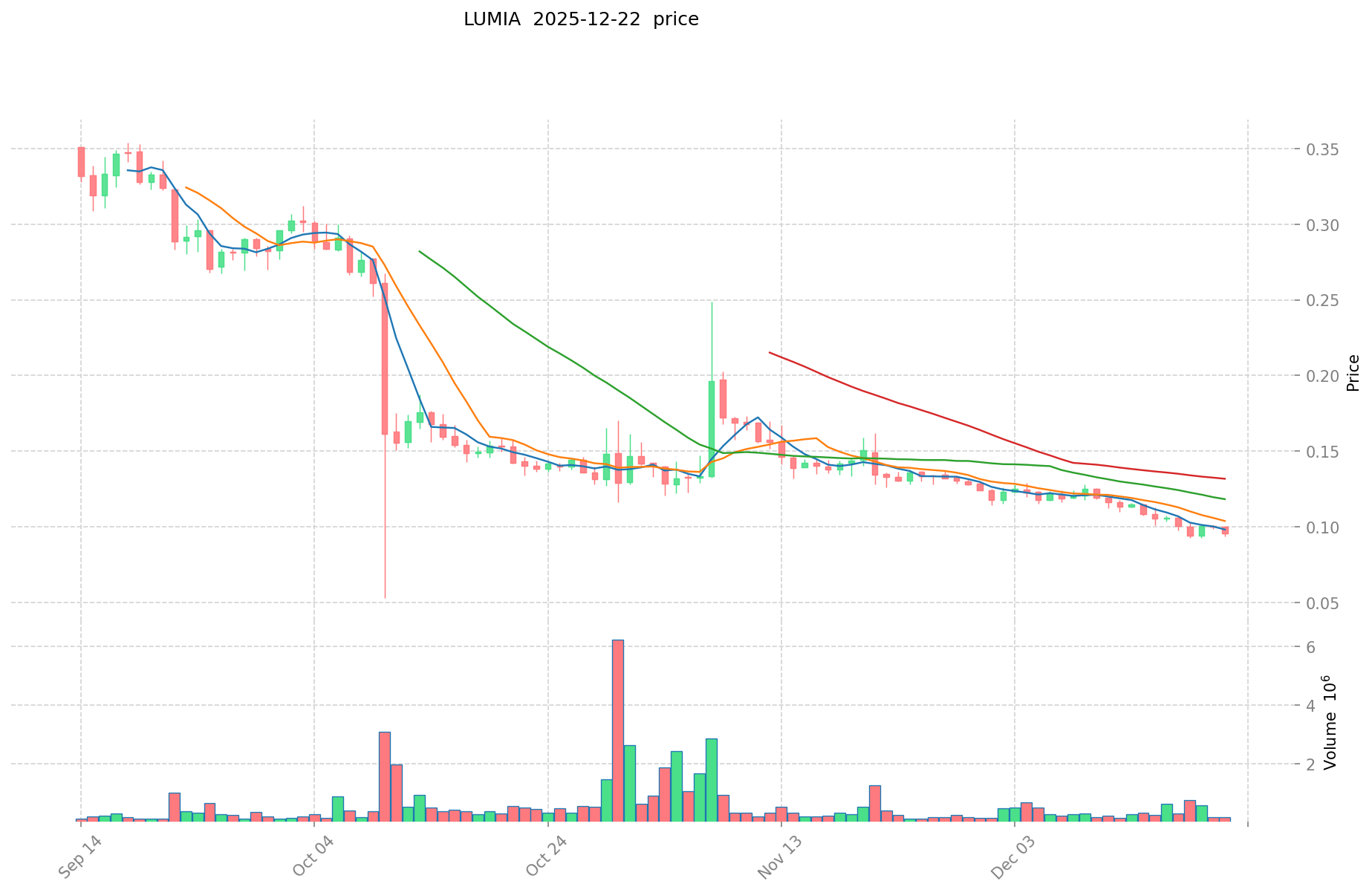
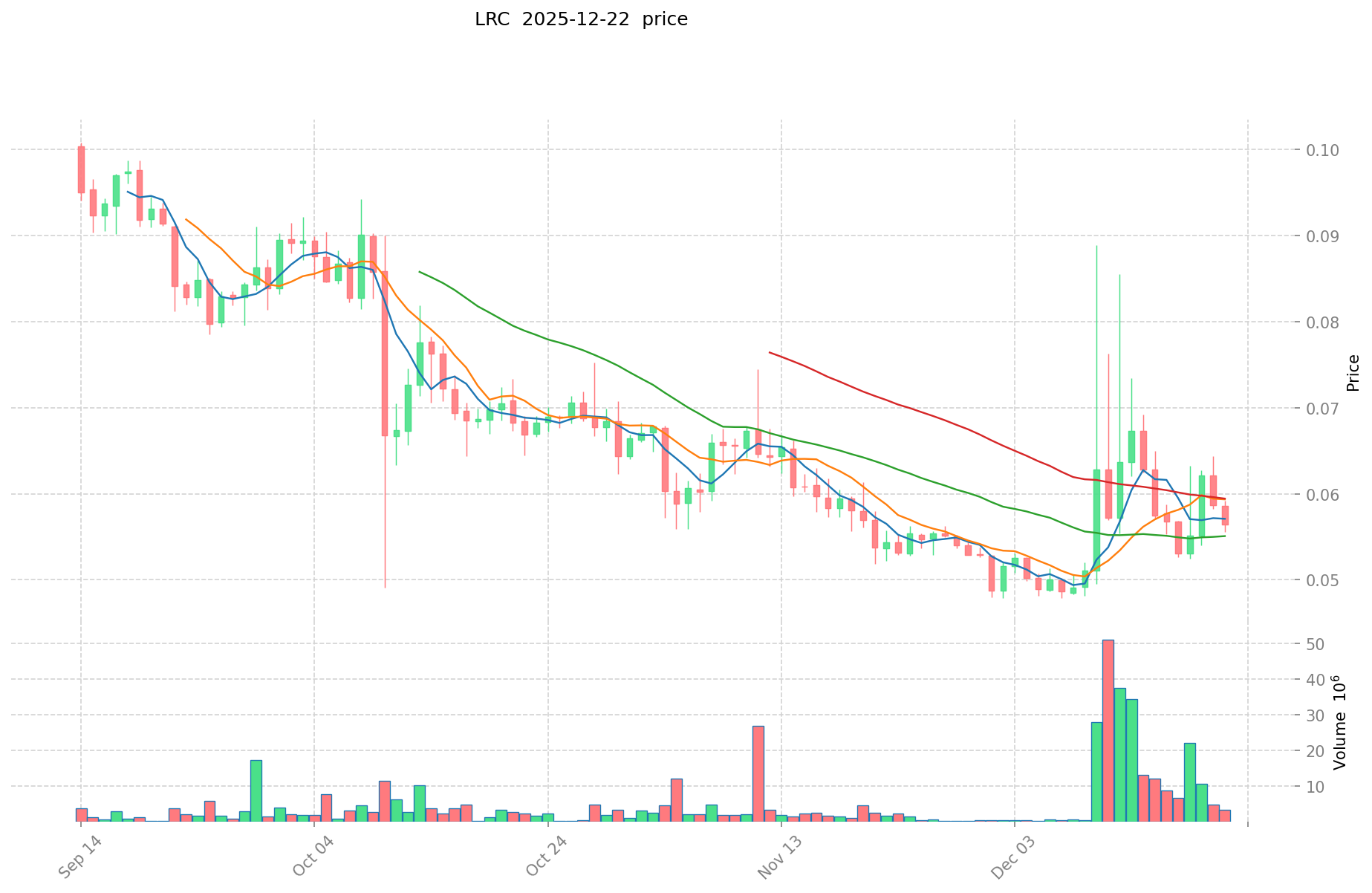
Динаміка цін LUMIA і LRC
Аналіз історичних максимумів і мінімумів:
- Lumia (LUMIA): Історичний максимум — $2,52 (4 грудня 2024 року), мінімум — $0,0528 (10 жовтня 2025 року), падіння від піку — 97,91%.
- Loopring (LRC): Максимум — $3,75 (10 листопада 2021 року), мінімум — $0,01963893 (18 грудня 2019 року), часовий діапазон понад чотири роки.
Порівняння:
Обидва токени зазнали суттєвих корекцій. LUMIA впала різкіше за короткий період (близько року), LRC пройшла довші ринкові цикли з різною волатильністю. З початку року: LUMIA -93,11%, LRC -71,45% — обидва активи знаходяться під сильним ринковим тиском.
Поточна ринкова ситуація (23 грудня 2025 року)
Ціни:
- LUMIA: $0,09881
- LRC: $0,05612
- 24-годинна зміна: LUMIA +2,94%, LRC -0,37%
Обсяг торгів (24 години):
- LUMIA: $43 882,70
- LRC: $185 030,84
Ринкова капіталізація:
- LUMIA (повна): $23 604 611,02
- LRC (повна): $77 101 775,06
- Частка ринку: LUMIA 0,00072%, LRC 0,0023%
Ринкові настрої:
Індекс страху та жадібності Crypto — 25 ("Екстремальний страх") на 22 грудня 2025 року.
Дивитися ціни онлайн:
II. Токеноміка та структура обігу
Показники LUMIA
- Обігова кількість: 75 306 824,97
- Загальна емісія: 238 888 888
- Максимум: 238 888 888
- Коефіцієнт обігу: 31,52%
- Кількість утримувачів: 2 904
Показники LRC
- Обігова кількість: 1 245 991 468,94
- Загальна емісія: 1 373 873 397,44
- Максимум: 1 374 513 896
- Коефіцієнт обігу: 90,65%
- Кількість утримувачів: 168 742
Аналіз:
LRC має майже повний обіг (90,65%) і значно більше утримувачів (168 742), що свідчить про широку дистрибуцію й вищий рівень впровадження. LUMIA має потенціал для інфляції токена, якщо решта токенів вийде на ринок.
III. Огляд проєктів
Lumia (LUMIA)
Опис:
Lumia — новий етап для власників ORN, стратегічна еволюція платформи, спільнота визначає напрямок розвитку екосистеми.
Блокчейн:
- Ethereum
- Адреса контракту: 0xD9343a049D5DBd89CD19DC6BcA8c48fB3a0a42a7
Ресурси:
Loopring (LRC)
Опис:
Loopring — відкритий протокол на ERC20 і смартконтрактах для створення децентралізованих бірж без зберігання активів та блокування капіталу. Дає змогу безризиковим обмінам, конкуренції бірж за матчинг поза ланцюгом і розрахунки в мережі.
Ключові переваги:
- Мінімальні комісії для власників LRC
- Вигоди для всіх учасників мережі
- Децентралізована архітектура без централізованого зберігання
Блокчейн:
- Ethereum
- Адреса контракту: 0xBBbbCA6A901c926F240b89EacB641d8Aec7AEafD
Ресурси:
7 днів:
- LUMIA: -4,34%
- LRC: -4,76%
30 днів:
- LUMIA: -24,75%
- LRC: +4,01%
12 місяців:
- LUMIA: -93,11%
- LRC: -71,45%
Динаміка торгів
Діапазон цін (24 години):
- LUMIA: $0,09388–$0,09977
- LRC: $0,05553–$0,05778
Частка ринку:
- LUMIA: 0,00072%
- LRC: 0,0023%
V. Висновки та порівняльні характеристики
Позиція на ринку:
LRC має сильнішу ринкову капіталізацію ($77,10 млн проти $23,60 млн) і ширшу базу утримувачів. LRC — 426 місце у світі, LUMIA — 1 331.
Волатильність:
LUMIA більш волатильна й знизилась на понад 93% з початку року, LRC — на 71,45%. Обидва токени падають у короткостроковому періоді.
Обіг токенів:
LRC має майже повний обіг (90,65%), що свідчить про зрілу токеноміку; LUMIA має 68,48% неемітованих токенів, що може впливати на майбутню ціну.
Ринкові настрої:
Стан "Екстремального страху" (індекс: 25) посилює тиск на ціну.
Звіт з інвестиційної цінності: LUMIA vs LRC
I. Короткий огляд
Звіт аналізує інвестиційні характеристики LUMIA і LRC на основі доступних джерел, які містять обмежені фундаментальні дані. Висвітлено лише ті відомості, які підтверджені референтними матеріалами.
II. Ключові фактори впливу на інвестиційну цінність
Порівняння токеноміки
У відкритих джерелах відсутня деталізація токеноміки, розкладу випуску, механізмів інфляції або емісії для LUMIA чи LRC. Розділ не заповнюється через нестачу даних.
Інституційне впровадження та ринкові сценарії
Інституційний інтерес:
- DAO Maker отримав фінансування у січні 2021 року, де Lumia зазначена серед учасників з LD Capital, P2 Ventures, GBV Capital, Digital Finance Group, JRR Crypto, OneBoat Capital.
Корпоративне впровадження:
Дані про використання LUMIA чи LRC у міжнародних платежах, розрахунках чи портфелях відсутні.
Регуляторне оточення:
Немає інформації про політичні чи правові відмінності між LUMIA і LRC у різних країнах.
Технологічний розвиток та екосистема
LUMIA:
Оголошено ініціативу з токенізації активів на $1 млрд (17 січня 2025), але технічної деталізації, дорожньої карти чи опису розгортання немає.
LRC:
Відсутня інформація про технологічний розвиток чи ініціативи розширення.
Порівняння екосистем:
Дані про інтеграцію DeFi, NFT, платіжні рішення, запуск смартконтрактів відсутні.
Макроекономічні фактори та ринкові цикли
Не розглядаються у джерелах:
- Опір до інфляції
- Вплив політики, ставок, індексу долара
- Геополітичні фактори для транскордонних транзакцій
III. Обмеження даних і висновки
Джерела містять лише побіжні згадки про LUMIA (ініціатива на $1 млрд, участь у DAO Maker) і не містять аналітики щодо фундаментальних показників обох активів.
Для повноцінного аналізу потрібні такі дані:
- Токеномічна документація
- Історія цін, ончейн-метрики
- Дорожня карта розвитку
- Регуляторні й комплаєнс документи
- Порівняльна ринкова й метрика впровадження
Рекомендація: Перед ухваленням інвестиційних рішень використовуйте офіційну документацію, whitepaper і перевірені ринкові дані.
Дата звіту: 23 грудня 2025 року
III. Прогнози цін на 2025–2030 роки: LUMIA vs LRC
Короткостроковий прогноз (2025)
- LUMIA: консервативно $0,063921–$0,09834 | оптимістично $0,1445598
- LRC: консервативно $0,0497866–$0,05594 | оптимістично $0,078316
Середньостроковий прогноз (2027–2028)
- LUMIA — потенційна консолідація та впровадження, діапазон $0,07357434942–$0,15280826418
- LRC — фаза відновлення, розширення екосистеми, діапазон $0,046992654324–$0,0810218178
- Основні драйвери: Інституційні інвестиції, ETF, розвиток екосистеми
Довгостроковий прогноз (2030)
- LUMIA: базовий сценарій $0,126968081090633–$0,184011711725556 | оптимістичний $0,228174522539689
- LRC: базовий сценарій $0,087822586631587–$0,093428283650625 | оптимістичний $0,107442526198218
Детальні прогнози цін для LUMIA та LRC
Застереження
Аналіз базується на історичних даних і математичному прогнозуванні. Ринок криптовалют надзвичайно волатильний. Прогнози не є інвестиційною порадою. Минулі результати не гарантують майбутніх. Перед інвестуванням проведіть власний аналіз та проконсультуйтесь із фінансовими експертами. Точність прогнозів не гарантується.
LUMIA:
| Рік |
Максимум |
Середнє |
Мінімум |
Зміна, % |
| 2025 |
0,1445598 |
0,09834 |
0,063921 |
0 |
| 2026 |
0,161528367 |
0,1214499 |
0,065582946 |
22 |
| 2027 |
0,16412739486 |
0,1414891335 |
0,07357434942 |
43 |
| 2028 |
0,1879541649414 |
0,15280826418 |
0,084044545299 |
54 |
| 2029 |
0,197642208890412 |
0,1703812145607 |
0,090302043717171 |
72 |
| 2030 |
0,228174522539689 |
0,184011711725556 |
0,126968081090633 |
86 |
LRC:
| Рік |
Максимум |
Середнє |
Мінімум |
Зміна, % |
| 2025 |
0,078316 |
0,05594 |
0,0497866 |
0 |
| 2026 |
0,08793768 |
0,067128 |
0,05638752 |
19 |
| 2027 |
0,0845107956 |
0,07753284 |
0,054272988 |
37 |
| 2028 |
0,08507290869 |
0,0810218178 |
0,046992654324 |
44 |
| 2029 |
0,10380920405625 |
0,083047363245 |
0,0581331542715 |
47 |
| 2030 |
0,107442526198218 |
0,093428283650625 |
0,087822586631587 |
66 |
Порівняльний інвестиційний аналіз: LUMIA vs LRC
I. Порівняння інвестиційних стратегій
Довгострокові/короткострокові стратегії
LUMIA: Підійде інвесторам, які роблять ставку на ринок токенізації активів і довгострокове структурне зростання. Ініціатива на $1 млрд демонструє орієнтацію на інституції, але терміни реалізації не визначено.
LRC: Вибір для тих, кому потрібна усталена інфраструктура з перевіреною токеномікою (обіг 90,65%) і позиціонуванням як децентралізований обмін. Протокол орієнтований на безпечний обмін — для інвесторів, що цінують доведену ефективність.
Управління ризиком і розподіл активів
Консервативні інвестори:
- LUMIA: 15–20%
- LRC: 20–25%
- Обґрунтування: Обидва активи під тиском; консервативний портфель має спиратися на перевірені ринки й зменшувати частку високоризикових токенів.
Агресивні інвестори:
- LUMIA: 35–40%
- LRC: 25–30%
- Обґрунтування: LUMIA (низька капіталізація) — потенціал зростання у разі розвитку токенізації; LRC — стабілізуючий елемент.
Хеджування:
- Стейблкоїни: 30–40%
- Диверсифікація: Додати BTC, ETH для зниження концентраційного ризику
- Перебалансування: Щоквартально через високу волатильність (індекс страху 25)
II. Порівняння ризиків
Ринковий ризик
LUMIA: Висока волатильність, падіння на 97,91% за рік, обіг 31,52% — потенційний ризик розведення, мала база утримувачів (2 904) — низька ліквідність.
LRC: Довший цикл падіння (89,48%), ширший розподіл (168 742), обіг 90,65% — вища ліквідність, менший ризик різкого розведення. Динаміка року: -71,45% (краще за LUMIA).
Технологічний ризик
LUMIA: Немає аудиту смартконтрактів, тестів стабільності чи рішень масштабування. Перехід від ORN — ризик інтеграції. Інформація про консенсус відсутня.
LRC: Стандарт ERC20 — перевірена безпека й сумісність із Ethereum. Присутні типові ризики DEX: вразливості смартконтрактів, атаки, збої матчінгу. Даних про аудити немає.
Регуляторний ризик
LUMIA: Токенізація активів — невизначена регуляція, можливе прирівнювання до цінних паперів, вимоги до комплаєнсу, ризик підвищених витрат.
LRC: Довга історія — певна база для регуляції. Однак DEX в центрі уваги змін у США, ЄС і Азії. Регуляторна невизначеність зберігається.
III. Висновок: Що купувати?
Підсумок інвестиційної цінності
LUMIA — переваги:
- Низька капіталізація ($23,6 млн) — потенціал зростання з розвитком токенізації
- Ініціатива на $1 млрд — стратегічний сигнал для інституцій
- Ранній етап — можливість для тих, хто шукає нові наративи
- Участь у DAO Maker — венчурна підтримка
LRC — переваги:
- Усталене ринкове місце (426 vs 1 331 для LUMIA)
- Вища ліквідність ($77,1 млн vs $23,6 млн)
- Токеноміка — обіг 90,65%, низький ризик розведення
- Велика база утримувачів (168 742) — сильна спільнота
- DEX-протокол працює з 2017 року
- За 30 днів: LRC +4,01%, LUMIA -24,75%
Інвестиційні рекомендації
Початківці:
Вибирайте LRC для інвестування в перевірену DEX-інфраструктуру. LUMIA — лише для досвідчених інвесторів через високий ризик. Для LRC використовуйте середньострокову стратегію усереднення.
Досвідчені інвестори:
Будуйте стратегію під наратив токенізації. LUMIA — 20–25% при ставці на успішну реалізацію ініціативи, LRC — 30–35% для стабільності. Обов’язково визначайте стратегії виходу.
Інституції:
Ринок дуже ризикований (LUMIA -97,91%, LRC -89,48% від піків). Пріоритет — збереження капіталу. Спостерігайте за прогресом Lumia Foundation і змінами регуляторики. LRC — можлива частка у портфелі при стабілізації DeFi-регулювання.
⚠️ Застереження: Ринок криптовалют надзвичайно волатильний. Аналіз не є інвестиційною порадою. Прогнози не гарантуються. Обидва активи втратили у ціні (LUMIA -93,11%, LRC -71,45%). Минулі результати — не гарантія майбутніх. Проводьте власний аналіз і звертайтеся до фінансових експертів. Поточний ринковий страх (індекс 25) — підвищений ризик для всіх криптоактивів.
Дата звіту: 23 грудня 2025 року
None
Порівняльний ринковий звіт: LUMIA vs LRC — FAQ
VII. Поширені питання
Q1: Які ціни та ринкова капіталізація LUMIA і LRC на 23.12.2025?
A: LUMIA — $0,09881, капіталізація $23 604 611,02; LRC — $0,05612, капіталізація $77 101 775,06. Капіталізація LRC у 3,3 рази більша, ринкове місце — 426 vs 1 331.
Q2: Як порівнюється динаміка цін LUMIA та LRC за останній рік?
A: Обидва токени знизилися у 2025 році. LUMIA — падіння на 93,11% (максимум $2,52, мінімум $0,0528), LRC — 71,45% (максимум $3,75 у 2021). За 30 днів: LUMIA -24,75%, LRC +4,01%.
Q3: Які ключові відмінності токеноміки?
A: LUMIA — 75,3 млн токенів (31,52%), максимум 238,9 млн, 2 904 утримувачі. LRC — 1,25 млрд (90,65%), максимум 1,37 млрд, 168 742 утримувачі. LRC — зріла токеноміка, LUMIA — ризик інфляції через 68,48% невипущених токенів.
Q4: Який токен більш захищений для консервативного інвестора?
A: LRC — перевірена DEX-інфраструктура, широка база утримувачів, обіг 90,65%. Рекомендовано: LRC — 20–25%, LUMIA — 15–20%, стейблкоїни — 30–40% (поточний страх).
Q5: Які головні ризики LUMIA і LRC?
A: LUMIA — висока волатильність, падіння 97,91%, мала база, обмежена документація, невизначена регуляція токенізації. LRC — вища стабільність, ширший розподіл, але теж під регуляторним ризиком DeFi. Обидва активи — волатильні (індекс страху 25).
Q6: Які перспективи LUMIA щодо ініціативи на $1 млрд?
A: Lumia Foundation оголосила про ініціативу 17 січня 2025 року. Деталей, строків і технічних характеристик немає. Це спекулятивна можливість для досвідчених інвесторів із високим ризиком. Успіх залежить від регуляторики різних країн.
Q7: Як порівнюється ліквідність?
A: LRC має 24-годинний обсяг $185 030,84, LUMIA — $43 882,70. LRC має у 4,2 рази більший обсяг і в 58 разів більше утримувачів — це краща ліквідність і глибина ринку.
Q8: Який розподіл для агресивних інвесторів?
A: LUMIA — 35–40%, LRC — 25–30%, решта у стейблкоїнах (30–40%) і BTC/ETH. Портфель ребалансуйте щоквартально, виходьте при зміні наративу чи цінових орієнтирів.
Дата звіту: 23 грудня 2025 року
⚠️ Застереження: Цей аналіз — виключно інформаційний матеріал, не інвестиційна порада. Ринок криптовалют волатильний. Минулі результати не гарантують майбутніх. Приймайте рішення після незалежного аналізу й консультацій із експертами.
* Ця інформація не є фінансовою порадою чи будь-якою іншою рекомендацією, запропонованою чи схваленою Gate, і не є нею.