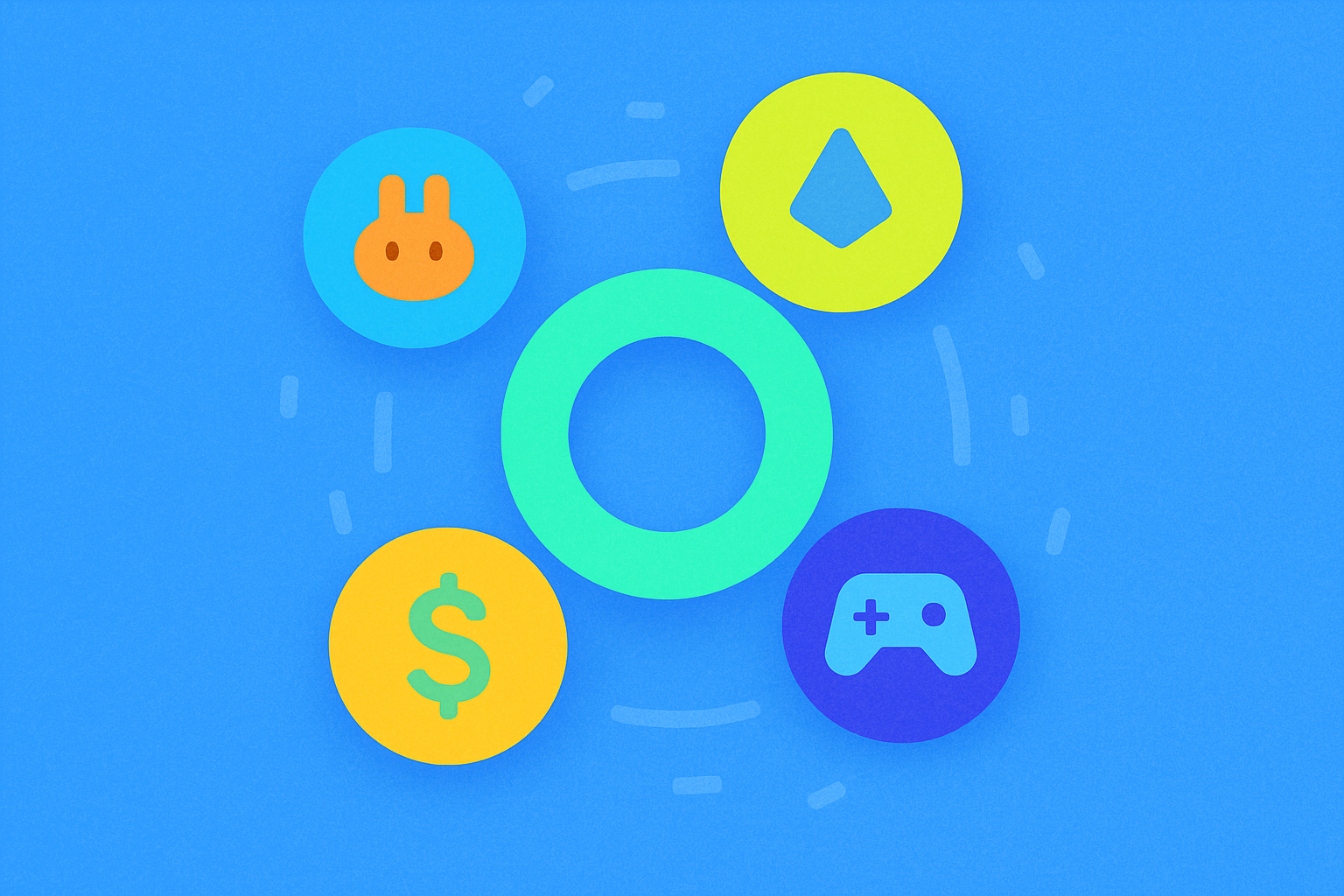
The decentralized finance (DeFi) revolution has fundamentally transformed how individuals trade and invest in the digital age. By leveraging blockchain technology, DeFi platforms provide unprecedented levels of transparency, autonomy, and accessibility to financial services that were previously controlled by centralized institutions. In the early stages of DeFi protocol development, the majority of platforms and decentralized exchanges (DEXs) were built on the Ethereum blockchain due to its robust smart contract capabilities. However, the ecosystem has since expanded significantly, with DeFi platforms now operating across multiple blockchain networks including BNB Chain, Polygon, Solana, and numerous others. These smart contract-enabled blockchains have fostered thriving communities of users, developers, and comprehensive toolsets for building sophisticated decentralized applications (DApps). This article provides a comprehensive examination of PancakeSwap, a prominent multichain decentralized exchange that has become a cornerstone of the DeFi landscape.
PancakeSwap is a leading decentralized exchange (DEX) that was launched in 2020, initially designed to facilitate the swapping of BEP-20 tokens on the BNB Smart Chain (BSC). Since its inception, the platform has undergone significant expansion and evolution. Today, PancakeSwap supports multiple token standards including ERC-20 and operates across various blockchain networks. Beyond its original BSC foundation, users can now access PancakeSwap on Ethereum, Polygon, Arbitrum, and several other compatible blockchains. This multichain approach has positioned PancakeSwap as a versatile and accessible platform for users across different blockchain ecosystems, enabling broader participation in decentralized finance activities.
The PancakeSwap exchange operates on an automated market maker (AMM) model, which represents a fundamental departure from traditional centralized exchange mechanisms. In this system, users can trade digital assets without relying on centralized intermediaries or traditional order book matching systems. Instead of being paired with individual counterparties, traders interact directly with liquidity pools. These pools are created and maintained by community members who deposit their funds into the platform, receiving liquidity provider (LP) tokens as proof of their contribution. These LP tokens serve dual purposes: they represent the holder's proportional share of the liquidity pool and entitle them to earn a portion of the trading fees generated by the pool. This model enables two primary activities: users can either trade tokens directly through the pools or contribute liquidity to earn rewards from trading fees.
In April 2023, PancakeSwap launched its third major version, representing a significant milestone in the platform's evolution. PancakeSwap V3 introduced several groundbreaking features and product enhancements that substantially improved the user experience and capital efficiency. Key innovations include non-fungible liquidity positions, which provide more flexible and customizable participation options for liquidity providers. The platform now supports customizable price ranges, allowing liquidity providers to concentrate their capital within specific price boundaries where trading activity is most likely to occur. These improvements have resulted in enhanced liquidity depth and significantly higher trading efficiency compared to previous versions. The V3 upgrade demonstrates PancakeSwap's commitment to continuous innovation and optimization of its decentralized exchange infrastructure.
PancakeSwap offers a comprehensive suite of features that cater to diverse user needs within the DeFi ecosystem. The liquidity pools form the foundation of the platform's functionality, enabling seamless token swaps while rewarding participants with LP tokens that represent both their pool share and entitlement to trading fee rewards. Yield farming capabilities allow liquidity providers to earn additional rewards, particularly CAKE tokens, by locking their LP tokens in smart contracts. The platform's Initial Farm Offerings (IFOs) create opportunities for users to purchase new tokens during exclusive, time-limited events.
The Smart Router technology optimizes token swaps by intelligently routing trades through various liquidity sources across PancakeSwap V3, V2, StableSwap, and market makers on both BNB Smart Chain and Ethereum. Users can customize their trading experience by selecting preferred liquidity sources and adjusting routing preferences, with the Smart Router ensuring optimal execution by identifying the best prices across multiple pools.
Limit orders provide users with enhanced control over their trades, allowing them to set specific target prices for buying or selling tokens. Market maker integration on Ethereum and BNB Smart Chain further improves trading efficiency by automatically routing trades to market makers when they offer superior execution prices compared to the AMM model. The innovative Zap feature simplifies liquidity provision by enabling users to add or remove liquidity using a single token with just one click, automatically rebalancing imbalanced token pairs to the required 50/50 split.
Accessing PancakeSwap's full functionality requires connecting a compatible cryptocurrency wallet. Users visiting the platform will find that many features remain inaccessible until wallet connection is established. By clicking the "Connect Wallet" button, users are presented with multiple wallet options including MetaMask, Trust Wallet, WalletConnect, and additional alternatives. For users utilizing MetaMask who need to connect to the BSC network, comprehensive guides are available to facilitate proper network configuration. Successful connection is confirmed by the display of the user's wallet ID in the top right corner of the interface, indicating that the wallet is properly linked and ready for transactions.
Providing liquidity to PancakeSwap follows a structured process similar to other AMM platforms. To begin farming CAKE tokens, users must first contribute liquidity to the exchange. The process starts by navigating to the Trade section, selecting Liquidity, and clicking Add Liquidity. Users then choose their desired token pair for deposit, such as BNB and CAKE, while being mindful of potential impermanent loss risks associated with liquidity provision. The platform automatically recommends the most popular fee tier for the selected pair. Users must set a price range within which they wish to provide liquidity, with the understanding that liquidity will not be deployed for trades occurring outside this range, making narrower ranges generally safer. After entering the desired deposit amount and clicking Add Liquidity, users must confirm several transactions through their wallet to authorize token usage and finalize the liquidity addition to the pool.
Staking LP tokens represents an additional opportunity to earn CAKE or other assets on PancakeSwap. Users navigate to the Farms tab and select the option corresponding to their LP tokens. The process requires approving token movement, which grants the smart contract permission to withdraw tokens on the user's behalf. When clicking Approve Contract, a popup displays the transaction details and associated fee for user confirmation. Following transaction confirmation, users specify their desired staking amount and confirm the action. The platform allows users to monitor their accumulated CAKE rewards at any time, with the flexibility to harvest rewards by clicking the Harvest button and confirming the transaction whenever they choose.
PancakeSwap's lottery system provides an entertaining use case for CAKE tokens, operating entirely through smart contract automation. Each lottery ticket costs approximately $5 in CAKE and generates a random six-digit number combination. To win the jackpot, a ticket's numbers must match the winning ticket's numbers in the exact same positions. However, partial matches also yield rewards, with prizes awarded when one or more numbers align with the winning ticket's positions. The prize pool comprises CAKE used to purchase tickets, unclaimed CAKE from previous lottery rounds, and periodic CAKE injections from the PancakeSwap treasury, creating substantial reward opportunities for participants.
Expanding beyond traditional DeFi offerings, PancakeSwap hosts a dedicated marketplace for non-fungible tokens (NFTs) on the BNB Smart Chain. This marketplace enables users to buy, sell, and collect unique digital assets, integrating NFT functionality seamlessly within the broader PancakeSwap ecosystem and providing users with diverse options for engaging with digital collectibles.
PancakeSwap's Web3 gaming marketplace represents an innovative expansion into blockchain gaming, functioning as a game publishing platform developed in partnership with third-party game developers. An example of this collaboration is Pancake Protector, published by the Mobox team. While the platform welcomes game developers interested in publishing their projects, games undergo a selective curation process based on criteria including prior development experience, integration with PancakeSwap elements, roadmap quality, and the availability of technical and community support resources.
The legality of PancakeSwap and similar decentralized exchanges varies by jurisdiction and continues to evolve as regulatory frameworks develop worldwide. As a decentralized protocol operating on public blockchains, PancakeSwap functions differently from traditional centralized platforms, operating without a central controlling entity. In many jurisdictions, using decentralized exchanges is permissible, though users should be aware that regulations surrounding cryptocurrency and DeFi platforms differ significantly across countries and regions.
Users must understand their local legal requirements and tax obligations when participating in DeFi activities. Some jurisdictions have embraced blockchain technology and decentralized finance, while others maintain stricter regulatory positions or are still developing comprehensive frameworks. It is the responsibility of each user to verify whether their participation in PancakeSwap complies with their local laws and regulations. Consulting with legal and tax professionals familiar with cryptocurrency regulations in your specific jurisdiction is advisable before engaging with any DeFi platform.
PancakeSwap has undergone security auditing by CertiK and maintains a position as one of the leading platforms in the DeFi space. However, users should understand that complete safety cannot be guaranteed in any DeFi environment. Depositing funds into smart contracts inherently carries risks of bugs or vulnerabilities, even for audited and reputable projects. Additional risks include potential financial losses that may occur during trading activities or liquidity provision, particularly from phenomena like impermanent loss. Users should exercise caution and never deposit more funds than they can afford to lose, maintaining responsible risk management practices.
While Ethereum pioneered the DeFi revolution, platforms like PancakeSwap demonstrate that innovation continues to proliferate across multiple blockchain ecosystems. PancakeSwap has established itself as a versatile, community-driven platform that solidifies its position as a key player in the decentralized finance landscape. Through its comprehensive offering of features including automated market making, liquidity pools, yield farming, market maker integration, the innovative Zap feature, and limit order functionality, PancakeSwap delivers a diverse and user-friendly DeFi experience. Understanding whether PancakeSwap is legal in your jurisdiction is essential before participation, as regulatory frameworks vary significantly across different regions. The platform's multichain expansion, continuous feature development, and commitment to user accessibility position it as a foundational infrastructure component for the future of decentralized finance. As the DeFi ecosystem continues to evolve, PancakeSwap's adaptability and innovation suggest it will remain at the forefront of decentralized exchange technology, serving users across multiple blockchain networks with efficient, accessible, and feature-rich financial services.
Yes, you can use PancakeSwap in the US. However, it is not a registered or SEC-approved exchange. Users should verify compliance with local regulations before trading.
No, PancakeSwap does not report to the IRS. As a DeFi protocol, it has no reporting obligations. Users are responsible for reporting their own transactions and tax liabilities to tax authorities.
Yes, you can withdraw from PancakeSwap by accessing your liquidity pool and clicking the Unstake button. Confirm the transaction in your wallet, and your funds will be available shortly.
Yes. PancakeSwap maintains strong user engagement and continuous innovation in DeFi. Its active development, growing community support, and expanding ecosystem indicate a promising long-term future with sustained relevance.