У міру розвитку екосистеми децентралізованих фінансів (DeFi) торгівля активами на ончейні перетворилася з простих свопів токенів на розгалужену систему, що вимагає ефективної агрегації ліквідності, інтелектуальної маршрутизації та уніфікованих торгових інтерфейсів. Для Гаманців, агрегаторів і децентралізованих торгових платформ вже недостатньо одного пулу ліквідності для задоволення попиту користувачів на цінову ефективність і безперервний торговий досвід. Це спричинило потребу в більш гнучкій модульності торгових протоколів.
0x Protocol створено як децентралізовану торгову інфраструктуру для вирішення цих завдань. Завдяки Relayer, Mesh, API та Смарт-контрактам він розділяє поширення ордерів, агрегацію ліквідності та розрахунок угод. Це дозволяє Розробникам ефективно підключатися до ончейн-ліквідності та створювати застосунки з вбудованими торговими функціями. Модульна архітектура підвищує масштабованість і робить 0x ключовим компонентом інфраструктури DeFi-торгівлі.
Які основні компоненти 0x Protocol?
Основна архітектура 0x Protocol складається з Relayer, Mesh network, 0x API та Exchange Proxy. Кожен із них відповідає за ретрансляцію ордерів, їх поширення, агрегацію пропозицій і виконання ончейн-угод, забезпечуючи повністю децентралізований торговий процес.
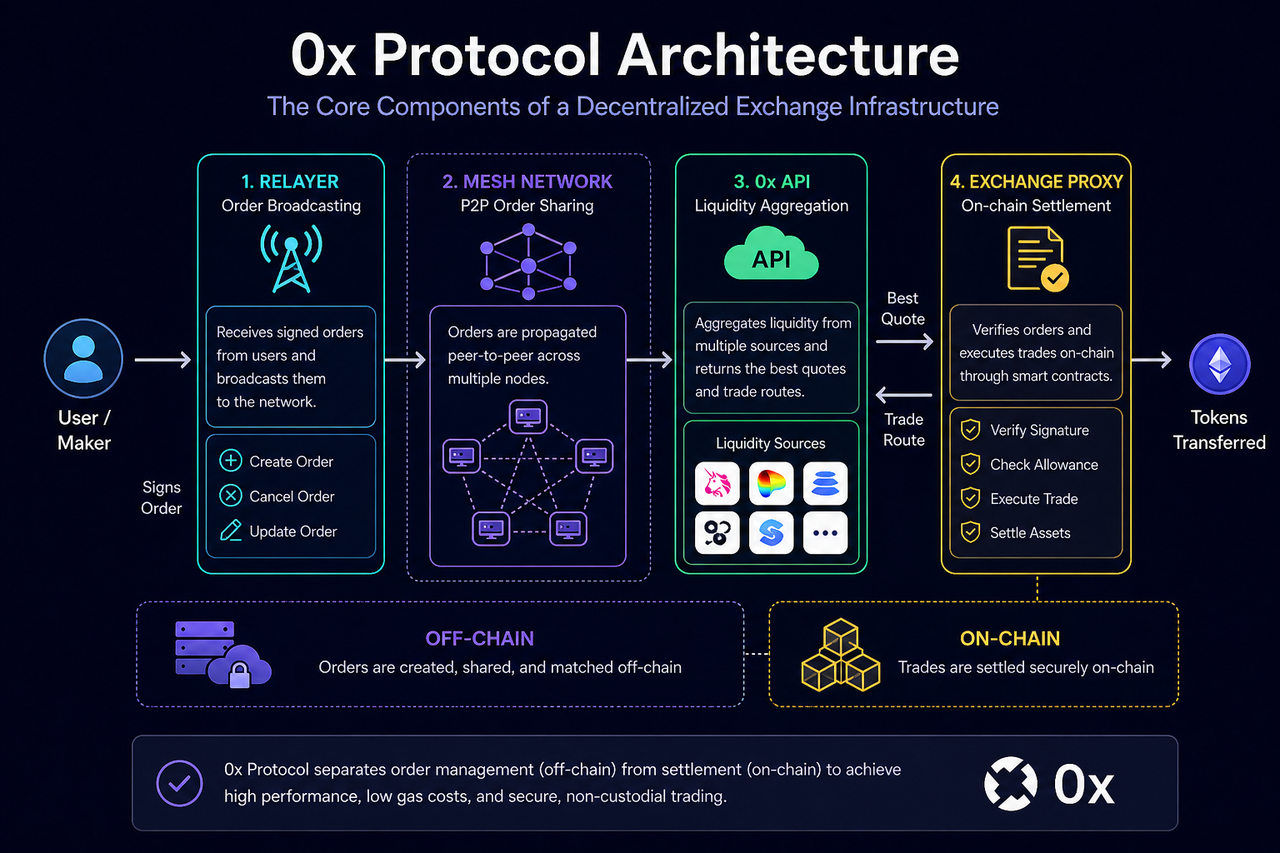
Коли користувач ініціює запит на торгівлю, ордери поширюються та зіставляються через офчейн-компоненти, а розрахунок відбувається через ончейн Смарт-контракти. Такий модульний поділ підвищує ефективність торгівлі та надає Розробникам уніфікований шлях інтеграції, що підтримує складні сценарії агрегації ліквідності.
Яка роль Relayer у 0x Protocol?
Relayer — це компонент 0x Protocol, що відповідає за ретрансляцію, поширення та керування створеними користувачем ордерами поза блокчейном. Після підписання користувачем ордери не надсилаються одразу в блокчейн, а розповсюджуються Relayer серед потенційних контрагентів або ліквідних мереж.
Такий підхід зменшує залежність від ончейн Історії ордерів, дозволяючи створювати, скасовувати й оновлювати ордери офчейн, що знижує транзакційні витрати. Relayer не зберігає Активи користувачів і не виконує угоди; його єдина функція — поширення ордерів.
Relayer — це децентралізований «інформаційний вузол ордерів»: він допомагає учасникам ринку знаходити ордери, а розрахунок Активів відбувається через ончейн Смарт-контракти.
Як Mesh network забезпечує поширення ордерів?
0x Mesh — це однорангова мережа для поширення ордерів у межах 0x Protocol, яка синхронізує та розповсюджує дані ордерів між різними Нодами. Вона дозволяє Relayer і Мейкерам обмінюватися інформацією Книги ордерів, забезпечуючи циркуляцію ліквідності по всій мережі.
Mesh вирішує проблему фрагментації ліквідності в окремих Relayer. Якщо ордери ізольовані у незалежних системах, ліквідність розпорошується. Однорангова синхронізація Mesh дозволяє поширювати ордери між Нодами, суттєво підвищуючи ефективність зіставлення.
Для кросплатформної торгівлі Mesh забезпечує уніфікований рівень поширення ордерів і є важливою частиною ліквідної мережі 0x.
Чому 0x API є критичним для агрегації ліквідності?
0x API — це уніфікований інтерфейс ліквідності для Розробників, який надає 0x Protocol. Він отримує пропозиції з різних ончейн і офчейн пулів ліквідності, автоматично розраховує оптимальний маршрут торгівлі й забезпечує ефективне ціноутворення для Гаманців і DEX-агрегаторів.
Для Розробників 0x API приховує складність маршрутизації ліквідності, дозволяючи застосункам отримувати найкращі ціни без прямої інтеграції з кількома торговими протоколами. Коли користувачі ініціюють запит на Своп, API аналізує пропозиції з різних джерел і повертає оптимальний план виконання.
0x API — це ключовий інтерфейс для Розробників і основний шлюз для Гаманців та агрегаторів, які інтегрують 0x.
Як Exchange Proxy виконує ончейн-угоди?
Exchange Proxy — основний ончейн-компонент Смарт-контракту 0x Protocol, який виконує угоди й розраховує Активи. Після маршрутизації через API та офчейн-зіставлення ордерів Exchange Proxy проводить фінальне ончейн-виконання.
Компонент забезпечує:
- Перевірку Підпису ордера
- Перевірку Схвалення Активу
- Виконання Свопу Активу
- Завершення маршрутизації ліквідності
Через уніфіковану точку виконання Exchange Proxy об'єднує різні джерела ліквідності та завершує остаточний розрахунок ончейн. Така архітектура стандартизує логіку виконання угод і підвищує масштабованість протоколу.
Як ці компоненти працюють разом для завершення торгового процесу?
У межах 0x Protocol кожен компонент працює у скоординованому процесі:
Користувачі створюють ордери та поширюють їх через Relayer. Далі ордери розповсюджуються між Нодами через Mesh network. Потім 0x API розраховує оптимальні пропозиції та маршрути з різних джерел ліквідності. Нарешті, Exchange Proxy виконує угоди та розраховує Активи ончейн.
Ця взаємодія відокремлює офчейн-поширення від ончейн-виконання, підтримує безпеку децентралізованої торгівлі та максимізує ефективність і Коефіцієнт використання.
Чому модульна архітектура критична для 0x Protocol?
Модульна архітектура дозволяє 0x Protocol розділяти поширення ордерів, маршрутизацію пропозицій і виконання угод на окремі незалежні компоненти. Це підвищує гнучкість системи та знижує складність інтеграції для Розробників.
Наприклад, застосунки Гаманців можуть просто використовувати 0x API для доступу до агрегованої ліквідності без створення власної мережі ордерів чи маршрутизації. Такий підхід підвищує композиційність і спрощує використання торгових можливостей 0x у DeFi-застосунках.
Модульна архітектура — ключова причина, чому 0x став основною ончейн-інфраструктурою ліквідності.
Підсумок
Ключові компоненти 0x Protocol — Relayer, Mesh network, 0x API та Exchange Proxy — відповідають за поширення ордерів, обмін ордерами, агрегацію ліквідності та ончейн-виконання угод, формуючи основу децентралізованої торгової інфраструктури.
Модульна архітектура 0x розділяє складні торгові процеси на незалежні компоненти, підвищує Коефіцієнт використання ліквідності та знижує бар’єр входу для Розробників. Розуміння взаємодії цих елементів дає змогу глибше усвідомити, як 0x Protocol забезпечує ефективну ончейн-торгівлю для Гаманців, DEX і DeFi-застосунків.
Поширені запитання
Яка основна функція 0x Mesh?
Mesh розповсюджує дані ордерів між різними Нодами, підвищуючи ефективність поширення ліквідності.
Чому 0x API важливий?
Він надає Розробникам уніфікований інтерфейс пропозицій, автоматично агрегує кілька джерел ліквідності та розраховує оптимальний торговий маршрут.
Яка роль Exchange Proxy?
Exchange Proxy виконує угоди ончейн, включаючи перевірку ордерів, пошук ліквідності та розрахунок Активів.
Чому 0x Protocol використовує модульну архітектуру?
Модульна архітектура підвищує гнучкість протоколу, знижує складність розробки та зміцнює агрегацію ліквідності.