HashKey’s Hong Kong IPO a Success, but HSK Token Plummets Over 86% in One Year: Causes and Future Outlook

Beginner
Quick Reads
Last Updated 2026-03-26 19:48:17
Reading Time: 1m
HashKey’s successful IPO in Hong Kong has drawn significant attention. However, the HSK platform token has dropped over 86% from its multi-year high, highlighting a marked disconnect between the token’s price action and the company’s strategic direction. Investors should carefully assess both the associated risks and underlying opportunities.

Behind HashKey’s IPO Success: Capital Market Endorsement vs. the Prolonged Slump of the HSK Token


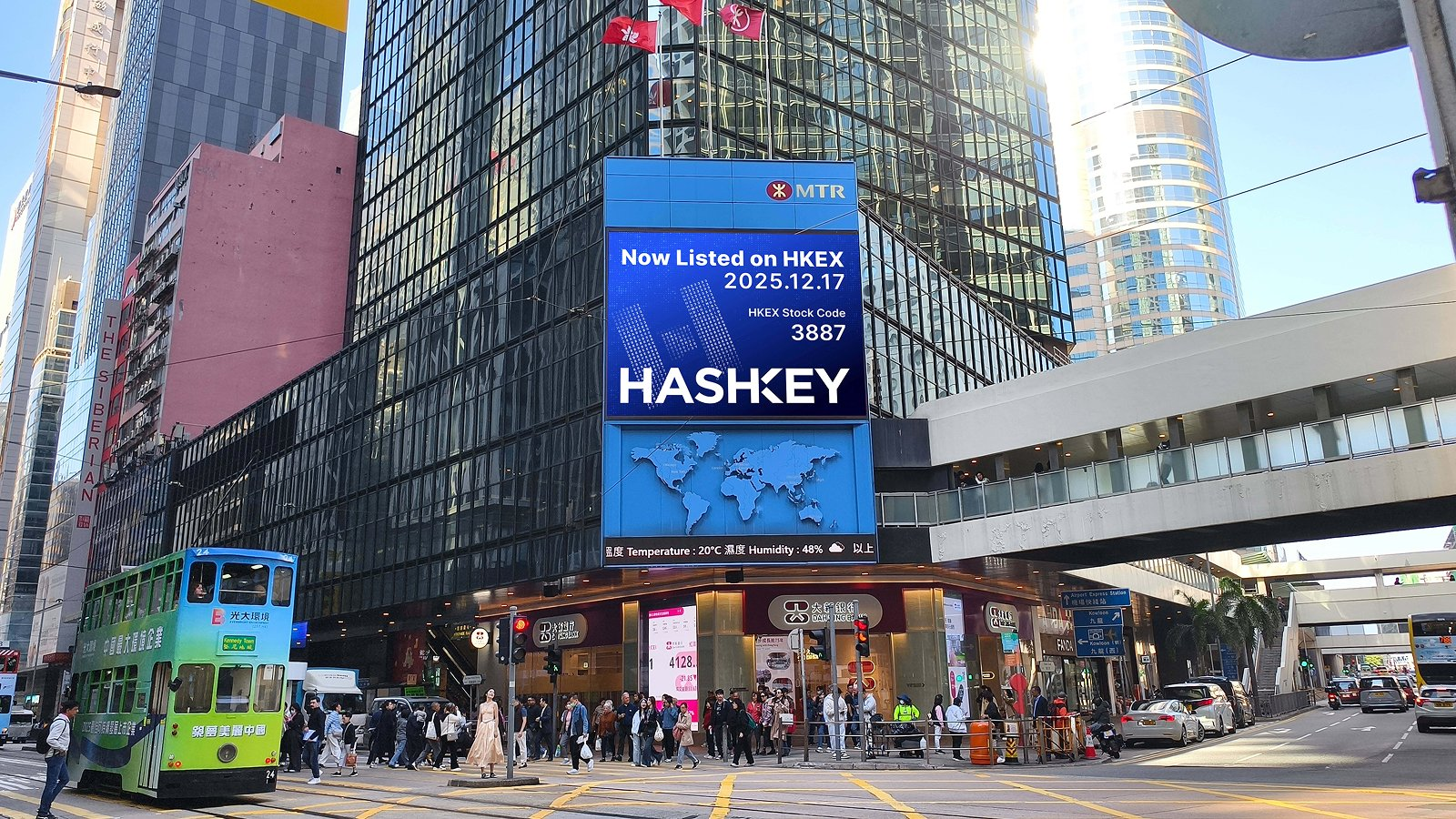
Image: https://x.com/HashKeyGroup/status/2001102615581798602

In mid-December 2025, Hong Kong’s digital asset sector reached a major milestone. HashKey Group, one of the city’s largest licensed crypto trading platforms, successfully completed its IPO on the Hong Kong Stock Exchange (HKEX). The company priced its shares at HK$6.68 each, and investor demand was exceptional—subscriptions from institutional investors exceeded the offering by more than five times, while retail subscriptions approached 393 times. The IPO raised approximately HK$161 million (about US$207 million), with most of the proceeds earmarked for technology R&D and ecosystem development.

This IPO stands as a significant benchmark in Hong Kong’s drive for digital asset regulatory compliance, demonstrating strong recognition from local capital markets for regulated crypto institutions. However, in the secondary market, HashKey’s stock climbed on its debut but soon retreated, closing just below the issue price. This outcome indicates measured market sentiment rather than unchecked enthusiasm.

HSK Token: Over 86% Decline in a Year Highlights Market Headwinds

In sharp contrast to HashKey’s positive reception in traditional capital markets, the HSK platform token has faced persistent downward pressure in the crypto market. Market data shows HSK has dropped more than 86% from its all-time high.

Currently, HSK trades in the US$0.28–$0.30 range, a far cry from its previous highs of several dollars. This dramatic decline illustrates how the platform token has struggled to maintain early market traction amid a broader crypto market downturn.

Key Drivers Behind HSK’s Persistent Price Decline

HSK’s ongoing weakness stems from a combination of structural factors:

1. Reduced risk appetite across the crypto market: Since 2024–2025, leading assets like Bitcoin and Ethereum have seen heightened volatility, prompting investors to seek safety. Capital has shifted toward blue-chip assets and stable-yield products, leaving small and mid-cap platform tokens under sustained selling pressure.

2. Limited ecosystem use and real-world demand: Despite its role as a core incentive within the HashKey chain and ecosystem, HSK currently lacks substantial on-chain applications and practical use cases. Unlike major platform tokens, HSK’s “non-trading demand” remains underdeveloped, making it difficult to support long-term value expectations.

3. Misalignment between company strategy and market expectations: Official filings and statements position HSK as an ecosystem incentive tool, not a fundraising vehicle. This diverges from some investors’ initial assumptions. At the same time, expectations for token buybacks or value support mechanisms have yet to materialize, which has further dampened holder confidence.

Fundamental Distinctions Between HashKey Stock and the HSK Token

It’s essential to recognize that HashKey stock and the HSK token represent fundamentally different investment propositions:

  • HashKey stock (3887.HK) reflects the company’s valuation in traditional capital markets, where the focus is on regulatory compliance, revenue growth, business expansion, and the regulatory environment.
  • The HSK platform token is a crypto asset, with its price driven primarily by market sentiment, liquidity cycles, and ecosystem development. Its value does not directly track the company’s business fundamentals.

As a result, equating HSK’s price movement with HashKey’s corporate value is a misinterpretation.

Risk Considerations and Future Outlook

While HSK has suffered a significant correction, it still retains potential value:

  • The token continues to serve as an important incentive and engagement tool within the ecosystem;
  • If HashKey continues to drive on-chain business, expand applications, and forge new partnerships, actual token demand may gradually recover.

Nonetheless, crypto assets are inherently volatile and unpredictable. Whether engaging with platform tokens or related ecosystem projects, investors must thoroughly understand their utility, incentive structures, and risk boundaries. Applying stock market logic directly to crypto assets is inadvisable.

Author: Max
Disclaimer
* The information is not intended to be and does not constitute financial advice or any other recommendation of any sort offered or endorsed by Gate.
* This article may not be reproduced, transmitted or copied without referencing Gate. Contravention is an infringement of Copyright Act and may be subject to legal action.

Related Articles

What is Fartcoin? All You Need to Know About FARTCOIN
Intermediate

What is Fartcoin? All You Need to Know About FARTCOIN

Fartcoin (FARTCOIN) is a representative meme coin within the Solana ecosystem based on an AI-driven narrative. Its core concept originated from an experiment aimed at exploring the "boundaries between AI Agents and humor." More than just a digital asset with social attributes, the project deeply couples absurd humor culture with on-chain financial logic by integrating autonomous AI interaction models.
2026-04-04 22:01:19
Gold Price Forecast for the Next Five Years: 2026–2030 Trend Outlook and Investment Implications, Could It Reach $6,000?
Beginner

Gold Price Forecast for the Next Five Years: 2026–2030 Trend Outlook and Investment Implications, Could It Reach $6,000?

Analyze current gold price trends alongside authoritative five-year forecasts, integrating an evaluation of market risks and opportunities. This gives investors insight into the potential trajectory of gold prices and the main drivers expected to shape the market over the next five years.
2026-03-25 18:13:30
Aster vs Hyperliquid: Which Perp DEX Will Prevail?
Beginner

Aster vs Hyperliquid: Which Perp DEX Will Prevail?

Aster and Hyperliquid are the two representative protocols of the "purpose-built L1 path" within the current decentralized perpetual exchange (Perp DEX) sector. As a pioneer in the field, Hyperliquid has built a deep liquidity moat through its highly mature order book architecture and strong community consensus. Conversely, Aster, as a rising challenger, seeks to leapfrog the competition in high-performance trading through more aggressive multi-chain aggregation logic, private transaction modules, and an underlying execution environment optimized for 2026 market demands.
2026-03-24 11:58:33
AI-Native Settlement Layers: How United Stables Is Building the Next Financial Rail
Beginner

AI-Native Settlement Layers: How United Stables Is Building the Next Financial Rail

Stablecoins were originally designed as dollar substitutes within exchanges, primarily used for asset pricing and trade settlement. As on-chain financial ecosystems have matured, their role has expanded beyond simple payments to include collateral assets, cross-chain liquidity mediums, and unified settlement units. In particular, as AI systems and automated agents begin to participate directly in economic activity, demand has risen sharply for programmable value units capable of instant settlement. This shift is pushing stablecoins toward the role of foundational financial infrastructure.
2026-03-25 03:16:17
Aerodrome Tokenomics: How ve(3,3) Powers Base's Most Profitable DEX
Beginner

Aerodrome Tokenomics: How ve(3,3) Powers Base's Most Profitable DEX

AERO is the native token of Aerodrome Finance, a core decentralized exchange and liquidity protocol in the Base ecosystem. It is primarily used for liquidity incentives and ecosystem operations. veAERO is a governance NFT that users receive by locking AERO, representing both voting power and the right to share protocol revenue. Through a dual track structure of AERO as a utility token and veAERO as a governance credential, Aerodrome separates liquidity usage value from long term governance power, allowing participants to act as liquidity providers, governance decision makers, and revenue sharers within the same system.
2026-03-25 06:40:31
Hybrid Collateral Stablecoins: Inside United Stables' Stability and Yield Architecture
Beginner

Hybrid Collateral Stablecoins: Inside United Stables' Stability and Yield Architecture

In the early stages of the crypto market, traditional stablecoins mainly relied on single-reserve or single-collateral models. Their primary focus was price stability and payment convenience, which allowed them to become foundational tools for on-chain trading and capital flows. As the market has entered a more mature financial phase, however, this structure has begun to reveal limitations, including high concentration risk and the difficulty of balancing liquidity with yield. These constraints have driven the evolution toward multi-layer collateral and portfolio-based designs, such as the dual-layer hybrid collateral architecture proposed by United Stables, which seeks to redefine the underlying logic of stable assets.
2026-03-25 03:17:39