ما هو لايتكوين (LTC)؟
لايتكوين (LTC) هو عملة مشفرة لا مركزية أُطلقت عام 2011 على يد المهندس السابق في Google تشارلي لي. صُمم لايتكوين ليكون "الفضة الرقمية" مقابل "الذهب الرقمي" للبيتكوين، ويهدف إلى تقديم شبكة قيمة أسرع وأخف وأكثر عملية للمدفوعات اليومية. يعتمد LTC على آلية إثبات العمل، لكنه يستخدم خوارزمية Scrypt بدلاً من SHA-256 الخاصة بالبيتكوين، ما يجعل التعدين متاحًا أكثر للأفراد ويدعم اللامركزية ويخفض رسوم المعاملات.
وباختصار، الإجابة عن "ما هو LTC" هي: لايتكوين عملة رقمية مشفرة سريعة وموثوقة ومنخفضة التكلفة تركز على تحسين كفاءة المعاملات وفائدة المدفوعات.
البنية التقنية الأساسية والميزات الجوهرية لـ LTC
يعمل لايتكوين بمبادئ مشابهة للبيتكوين، لكنه يتميز بعدة فروقات رئيسية:
- زمن إنشاء الكتل الأقصر: ينشئ لايتكوين كتلة جديدة كل 2.5 دقيقة تقريبًا، أي ربع مدة الكتلة في البيتكوين، ما يسمح بتأكيدات أسرع بكثير.
- خوارزمية Scrypt: باستخدام Scrypt بدلاً من SHA-256 الخاصة بالبيتكوين، يقلل لايتكوين من ميزة أجهزة التعدين المتخصصة ويجعل التعدين أكثر سهولة للمستخدمين العاديين.
- إجمالي عرض أكبر: الحد الأقصى لإجمالي عملات LTC هو 84 مليون عملة، أي أربعة أضعاف البيتكوين، ما يسهم في تخفيض الحاجز النفسي أمام المستخدمين الجدد.
- دعم MWEB والخصوصية: يدعم لايتكوين كتل التوسعة MimbleWimble (MWEB)، ويوفر ميزات خصوصية اختيارية تعزز سرية المستخدمين.
هذه الميزات تجعل من LTC أصلًا ليس فقط لحفظ القيمة، بل أيضًا كأداة للمدفوعات والتركيز على الخصوصية. وتستمر خارطة الطريق التقنية له بالتوسع نحو العقود الذكية والتطبيقات القابلة للبرمجة.
أداء السعر الأخير واتجاهات السوق
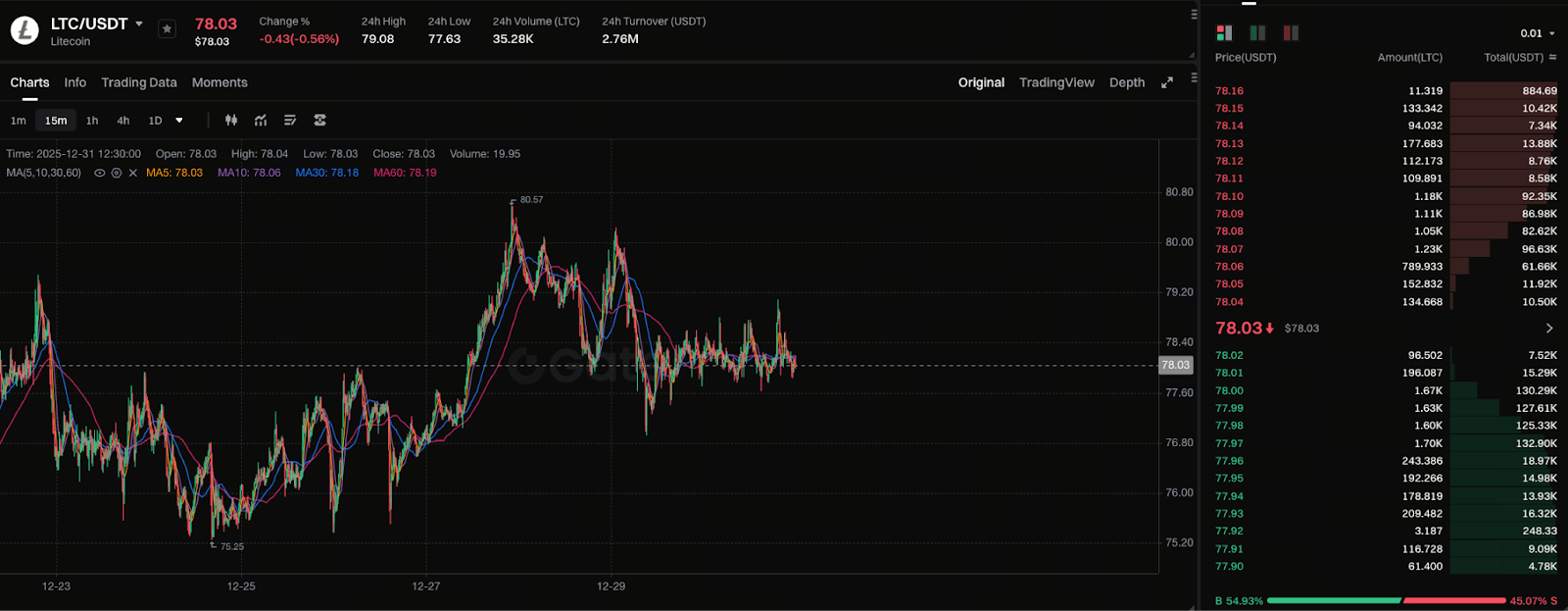
الرسم البياني: https://www.gate.com/trade/LTC_USDT
حاليًا، يتحرك سعر LTC داخل نطاق محدد، حيث تُظهر بيانات السوق تقلبه بين 70 دولارًا و80 دولارًا مع اختبارات متكررة لمستويات الدعم والمقاومة الرئيسية.
- يتداول LTC حاليًا في نطاق 76–79 دولارًا، ويتحرك غالبًا بالتوازي مع البيتكوين لكن بتقلب أقل.
- تشير التحليلات الفنية إلى مرحلة تجميع ضعيفة مع تشكل دعم بالقرب من 75 دولارًا.
- انخفض حجم التداول، ما يعكس حذرًا أكبر من المشاركين في السوق على المدى القصير.
رغم أن لايتكوين لا يزال بعيدًا عن أعلى مستوياته التاريخية، فإن حركة السعر الأخيرة تشير إلى أن السوق يستعد لتطورات محتملة مثل العقود الذكية من الطبقة الثانية.
الترقيات الرئيسية ونمو النظام البيئي للايتكوين
يركز تطوير نظام لايتكوين البيئي على عدة مجالات:
- تقنية LitVM من الطبقة الثانية: إدخال العقود الذكية وإمكانات السلاسل المتقاطعة ينقل شبكة LTC من المدفوعات البسيطة إلى تطبيقات مالية قابلة للبرمجة.
- الخصوصية وقابلية التوسع: حظيت MWEB بدعم من العقد والمعدّنين، ما زاد من تبني معاملات الخصوصية.
- المحافظ والتكامل: أدى التكامل مع تطبيقات مثل Telegram Wallet إلى تحسين تجربة المستخدم وتوسيع الاستخدامات الواقعية.
- صناديق الاستثمار المتداولة والمؤسسات: جذبت المناقشات الجارية حول صناديق الاستثمار المتداولة للايتكوين اهتمام المؤسسات ويمكن أن تدفع إلى تدفقات رأسمالية طويلة الأجل.
تدعم هذه المبادرات تطور LTC من أداة دفع تقليدية إلى نظام بلوكشين متعدد الوظائف.
أطروحة الاستثمار في LTC واعتبارات المخاطر
أطروحة الاستثمار
- سجل أداء راسخ: باعتباره من أفضل 20 أصلًا رقميًا، يتمتع LTC بحضور طويل في السوق واعتراف واسع.
- نمو تقني: ستعزز تكاملات الطبقة الثانية والعقود الذكية تنوع النظام البيئي لـ LTC وقوته.
- إمكانية تدفقات المؤسسات: قد يؤدي اعتماد صناديق الاستثمار المتداولة إلى توسيع قاعدة المستثمرين بشكل كبير.
اعتبارات المخاطر
- تقلب مرتفع: أسواق العملات المشفرة بطبيعتها شديدة التقلب، وقد تنخفض الأسعار بشكل حاد.
- منافسة قوية: يواجه LTC منافسة شديدة من شبكات البلوكشين الجديدة من الطبقة الأولى والثانية.
- عدم اليقين التنظيمي: قد تؤثر السياسات التنظيمية العالمية المتغيرة على تداول وامتلاك LTC.
الخلاصة: دور LTC في نظام الأصول الرقمية
في المجمل، يتجاوز سؤال "ما هو LTC" مجرد التعريف التقني—بل يعكس تطور موقع لايتكوين في مشهد الأصول الرقمية الأوسع. وباعتباره عملة مشفرة ناضجة، يحتفظ LTC بقوته كشبكة مدفوعات متينة، بينما يتبنى العقود الذكية وابتكارات السلاسل المتقاطعة. ومع ازدياد الاهتمام بإمكاناته الابتكارية وتنامي اهتمام المؤسسات، يظل لايتكوين أصلًا بارزًا للمستقبل.