Risk identification before participating in CASHCAT should begin with a clear understanding of the project’s positioning. For a comprehensive overview of the narrative, blockchain context, and participation boundaries, see Cash Cat (CASHCAT). CASHCAT is categorized as a cultural narrative meme token, with a public emphasis on its meme characteristics rather than functional utility. As such, risk assessment should focus on volatility mechanics, liquidity structure, information verification, and operational discipline, rather than protocol cash flow or yield promises.
What Drives CASHCAT’s Price Volatility?
CASHCAT’s volatility risk primarily stems from the interplay between sentiment-driven factors and liquidity fluctuations. Meme asset prices are highly sensitive to social media buzz, narrative momentum, and short-term capital movements, which can lead to rapid price surges or sharp corrections. A single quote, screenshot, or forwarded comment at any given time is generally insufficient to support a stable conclusion.
This volatility is not an outlier, but a defining trait of the asset class. As a meme token anchored in historical references, CASHCAT’s high dissemination efficiency also means sentiment feedback loops are faster. Participants are better served by setting position limits, staging entries, and defining acceptable loss boundaries, rather than relying on short-term directional bets.
A clearer narrative anchor, compared to typical meme coins, does not necessarily reduce volatility. For a comparative perspective, see CASHCAT vs Typical Meme Coin. The key differences lie in narrative consistency and dissemination templates, not in mechanisms for price stability.
How Does Liquidity Risk Affect Trading Outcomes?
Liquidity risk directly impacts fill price, slippage, and the ability to execute trades smoothly. Insufficient pool depth can cause large trades to deviate significantly from previewed quotes; even with low nominal tax rates, the actual amount received can drop due to price impact. For further context, see CASHCAT Tokenomics: a 0/0 tax structure describes transaction fees but does not mitigate liquidity shocks.
| Risk Scenario |
Direct Manifestation |
Control Action |
| Insufficient pool depth |
Amount received is much lower than preview |
Reduce order size, split into smaller trades |
| Short-term volatility spike |
Trade rollback or excessive slippage |
Adjust slippage tolerance, re-preview quotes |
| High fill density |
Frequent quote updates, path instability |
Lower chase order frequency, increase intervals |
| Unstable routing |
Large discrepancies in multiple previews |
Pause large trades, test with small amounts |
Note: The essence of liquidity risk is not whether a pool exists, but whether current depth can absorb your intended trade size. Deviations between previewed quotes and actual fills often explain outcomes better than nominal rates. For on-chain routing and swap steps, refer to CASHCAT On-chain Trading Path for process verification.
Information risk includes impersonator accounts, fake contract addresses, misleading screenshots, and misinterpretation through secondary dissemination. Meme projects spread rapidly, leaving little time for information verification and increasing the chance of acting before proper checks. For a step-by-step guide, see CASHCAT Participation Process.
A robust approach is to establish a tiered source system: use the official website (cashcattoken.xyz) and the official X account (@cashcat_token) as primary sources; blockchain explorers as the verification layer; and treat group chats, forwarded screenshots, and unsolicited messages merely as clues. Only the first two tiers should inform your actions. If contract addresses differ across channels, halt trading and re-verify—never “buy first, check later.”
Information risk is often confused with “unofficial association” narratives. CASHCAT is publicly positioned as a community cultural asset, not a Robinhood product or official issuance. Misinterpreting brand stories as institutional endorsement amplifies false expectations and herd behavior.
What Are the Most Common On-Chain Operational Risks?
Operational risks are concentrated in four areas: wrong network, incorrect contract, excessive authorization, and lack of review. These are typically process errors, not technical challenges. During periods of high activity, frequent switching between pages and wallets increases the risk of mistakes.
| Operation Step |
Common Error |
Suggested Correction |
| Network switching |
Executing trades on the wrong chain |
Double-check network and Chain ID before trading |
| Contract import |
Using unofficial or screenshot addresses |
Verify with two sources before importing |
| Authorization |
Approving without reviewing scope |
Grant only minimum necessary permissions |
| Post-trade handling |
Not checking transaction receipt or authorization |
Save transaction hash, review positions and permissions |
| Bridging |
Swapping before confirming bridge receipt |
Confirm bridge completion before trading |
Note: Operational risk is generally more controllable than market volatility. Following a fixed sequence—network, contract, preview, signature, receipt—reduces irreversible losses more effectively than relying on memory. If authorization is too broad, security exposure may persist even after a successful trade.
How Do You Build an Actionable Risk Control Framework?
Adopt a four-step framework: source verification, test trade validation, process review, and permission management. Source verification filters out false information; test trade validation checks routing accuracy; process review confirms on-chain status; permission management minimizes ongoing security exposure.
The strength of this framework lies in its repeatability. Write it as a checklist and execute it before and after every trade to reduce emotion-driven errors. The goal is not price prediction, but making “verifiable” and “traceable” actions routine.
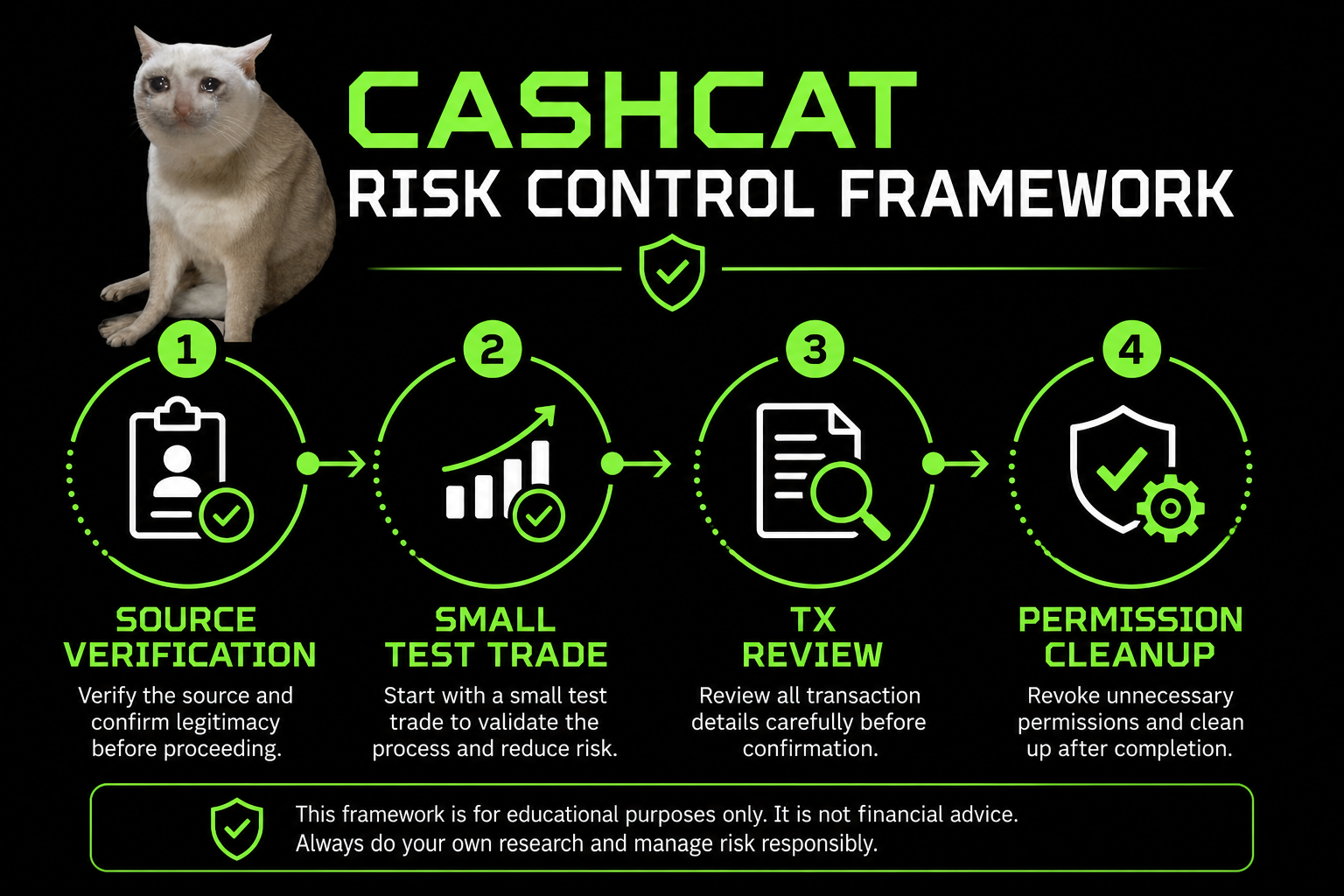
Figure 1. CASHCAT participant risk control loop: source verification, small test trade, trade review, and authorization management.
These four steps can be further refined: during verification, cross-check the official website and X account; for test trades, use the minimum observable amount to verify network, routing, and receipt; during review, save the transaction hash and confirm position display; for permission management, check for excess authorizations and revoke or restrict as needed.
What Are the Structural Limitations in CASHCAT Risk Analysis?
Structural limitations should be distinguished from “manageable operational risk.” One limitation is the absence of a stable cash flow anchor: the public narrative emphasizes meme attributes, so price is more dependent on sentiment, liquidity, and dissemination density, making long-term valuation via protocol revenue models difficult. Another is the short information half-life: social media updates quickly, secondary dissemination distorts easily, and research must continually reference primary sources and on-chain facts. A third is ecosystem dependency: user experience is influenced by Robinhood Chain network configuration, bridge availability, and DEX routing quality; any abnormality can impact actual execution.
These limitations mean the risk control framework is best for identifying and enforcing operational discipline, not for yield commitments or “is it worth it” judgments. Treating CASHCAT as a “high-risk cultural asset” aligns better with its public positioning than applying a functional DeFi evaluation template.
Summary
The key to participating in CASHCAT is not “whether it’s risk-free,” but “whether you can execute a stable process in a high-risk environment.” When source verification, stepwise execution, and authorization review become habitual, the risks of operational errors and information misjudgment drop significantly. For meme assets, disciplined risk management offers more long-term value than emotional judgment; volatility and liquidity shocks may persist, but can be partly mitigated by clear position and process boundaries.
FAQ
What is the biggest risk in participating in CASHCAT?
The biggest risk is high volatility combined with information misjudgment. Rapid price swings and social media noise increase the odds of decision errors. Establishing robust source verification and trial trading procedures can substantially reduce these risks, but cannot eliminate market volatility.
Why does a low tax rate not mean low risk?
A low tax rate only describes transaction fees and does not cover price volatility or liquidity risk. Actual results are still driven by market depth, slippage, and sentiment. Risk assessment must account for parameters, liquidity, and operational processes.
How can I reduce the risk of counterfeit contracts?
Obtain the contract address from the official website and X account, then verify token details and activity on a blockchain explorer. Execute a small test trade and confirm receipt before proceeding. Do not rely on group message screenshots or unsolicited messages as your only source.
What security checks are needed after trading?
Review the transaction hash, confirm position display, and check authorization scope. If permissions exceed what’s needed, restrict or revoke them promptly. Post-trade review is an essential part of the risk control process and cannot be replaced by simply “trade completed.”
Is CASHCAT an official Robinhood project?
No. CASHCAT is publicly positioned as a community-driven cultural narrative meme token and is not affiliated with Robinhood. Treat claims of official endorsement with caution and rely on the official website, official accounts, and verifiable on-chain information.
What’s the most direct impact of insufficient liquidity?
The most direct impact is fill price deviating from the preview, increased slippage, and possibly trade failure or rollback. Reducing order size, splitting trades, and re-previewing are generally more effective than chasing large orders when depth is insufficient.