Strategic Tower Defense Meets Card Combat: An Innovative Fusion
(Source: playcastlecrush)
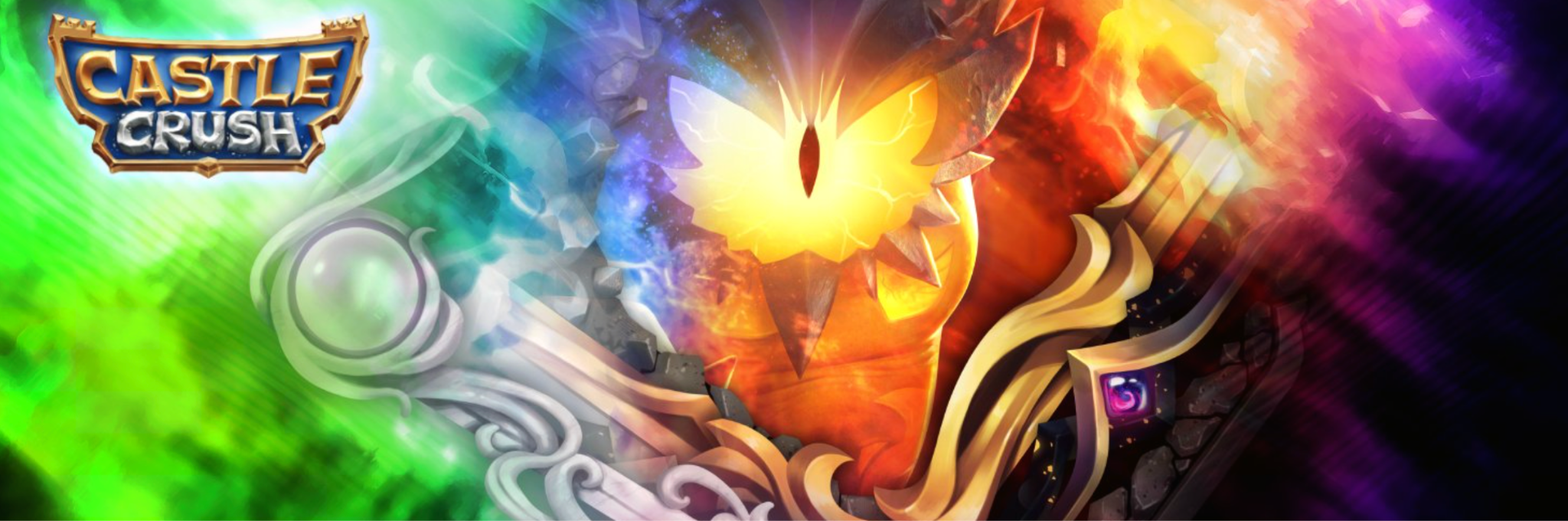
Castle Crush is a free-to-play strategy game developed by Wildlife Studios, a renowned mobile game developer. With over 75 million downloads worldwide, the game blends tower defense elements with card-based combat. Players deploy minion cards across three lanes, each leading to an opponent's door, strategically attacking and defending to break through enemy lines.
Each deck consists of 14 cards, including minions and spells. Players can flexibly arrange these cards to execute both offensive and defensive strategies, ensuring every match is packed with tactical depth and variety.
Core Strategic Gameplay of Castle Crush
What sets Castle Crush apart is its seamless integration of real-time strategy and card configuration. Players must consider not only each card's abilities and mana cost but also the best lane to attack or defend based on the evolving battlefield. Unit types have inherent counters, making deck composition and timing far more critical than simply having high-level cards.
Throughout a match, players must constantly monitor their opponent's deployment and quickly adjust their own tactics. This real-time decision-making keeps every battle unpredictable—a major reason Castle Crush has maintained its popularity over the years.
NFT Cards: Unlocking New Value for In-Game Assets
Following its blockchain integration, Castle Crush has been deployed on the Avalanche subnet. In-game assets, such as cards, are minted as NFTs, making each card a unique, tradable digital asset on the blockchain.
By holding NFT cards, players can participate in daily in-game rewards, seasonal events, and tournaments, earning Ascension Crystals (ACS tokens) that transform strategic in-game resources into tradable value.
When game assets become NFTs, the relationship between players and their items fundamentally changes. In traditional games, cards were locked within the game's ecosystem. Now, with on-chain ownership, players can freely hold, transfer, or trade their assets. This gives players far more control over the cards they've invested time in collecting and upgrading. Rare cards or event-limited assets may also appreciate in market value, adding an extra layer of excitement to both collecting and competing.
NFT Trading: Strategy Meets Profit
NFT Trade Castle Crush refers to the buying, selling, and exchanging of in-game NFT cards. This not only helps players strengthen their decks but also creates a pathway to turn gaming time into real-world earnings.
Through in-game marketplaces or external NFT platforms, players can buy, sell, or exchange cards using ACS tokens. This opens up a new strategic gaming economy where every NFT card serves as both a gameplay tool and a potential asset.
Advantages of the Avalanche Subnet
Castle Crush chose the Avalanche subnet for its superior transaction efficiency and lower on-chain costs. Unlike many public blockchains prone to congestion, the Avalanche subnet can be customized for specific gaming requirements, ensuring a smooth experience when trading NFTs or claiming rewards.
Additionally, the subnet architecture allows the game to independently manage its own economic system and on-chain activities, reducing reliance on mainnet resources and providing scalability for future player growth.
The Blockchain Gaming Economy and Player Participation Model
In recent years, more blockchain games have embraced player-driven economic models, and Castle Crush is a standout example. Through NFTs and token mechanics, players are not just consumers of content but active participants in the ecosystem.
In this model, in-game activities, competitive events, and asset trading form an interconnected loop, letting players leverage strategy, dedication, and market insight to shape the ecosystem's development. This evolution is gradually turning blockchain gaming from pure entertainment into a digital platform that integrates community, assets, and competitive play.
Want to dive deeper into Web3? Click to register: https://www.gate.com/
Conclusion
Castle Crush brings classic tower defense and card gameplay to the Avalanche subnet, combining them with NFT mechanics to create a gaming ecosystem that balances strategic depth with asset monetization. For players, it's not just a test of tactical skill—it's a new opportunity to explore the NFT gaming economy.