Ethereum’s Adoption Paradox Emerges
 (Source: ethereum)
On-chain analytics firm CryptoQuant reports that Ethereum is experiencing a market phenomenon known as the “Adoption Paradox.”
This paradox describes a situation where blockchain usage is rising, yet asset prices fail to follow suit. In other words, real network activity is surging, but market demand for Ether investment is not increasing in parallel.
ETH Price Could See Further Downside
CryptoQuant Head of Research Julio Moreno notes that if the crypto market’s bearish trend continues, ETH could fall further in the coming months. He forecasts that, without a clear improvement in market conditions, ETH could drop to around $1,500 between late Q3 and early Q4. This underscores that the market remains in an uncertain phase, with price direction largely driven by overall sentiment.
On-Chain Activity Hits Record Highs
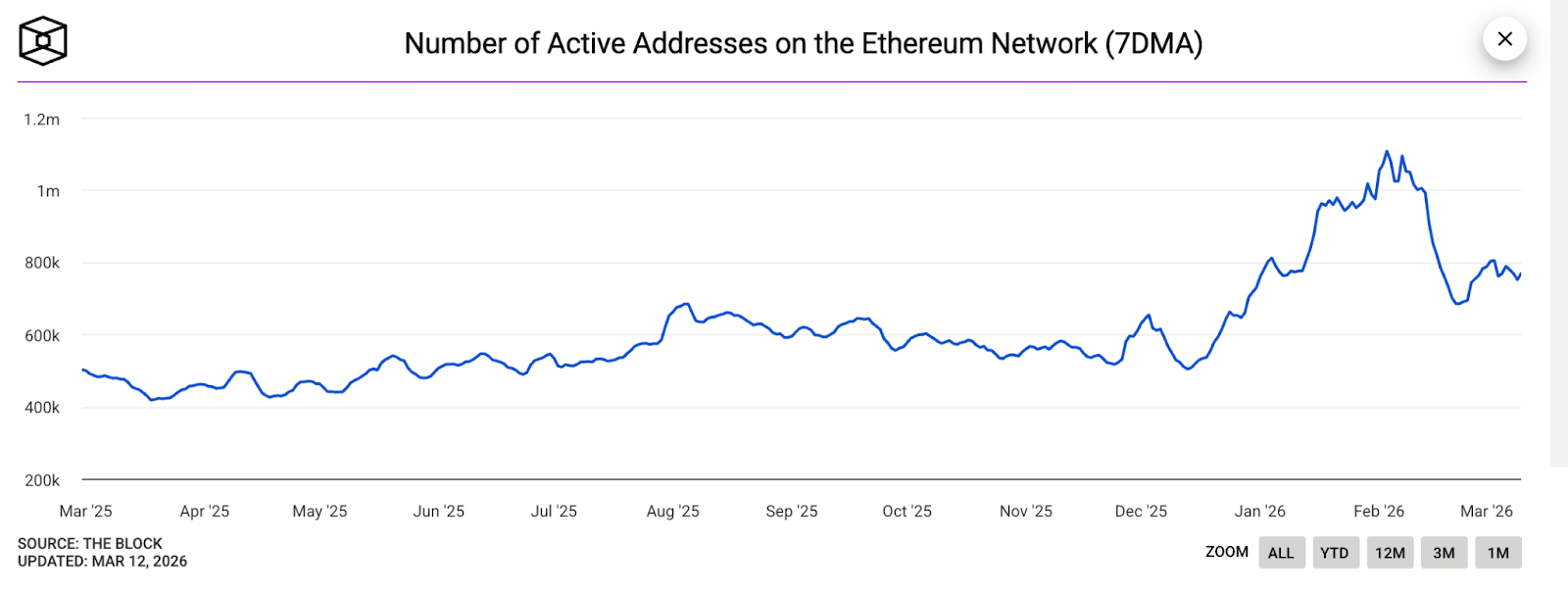
Despite weak price action, Ethereum network usage continues to climb.
CryptoQuant data shows:
Historically, rising user numbers have typically driven price gains, but the current market is showing a clear divergence from this pattern.
ETH has dropped more than 50% from its recent cycle high, signaling a shift in the relationship between usage and price.
Smart Contract Activity Surges
Beyond user growth, on-chain application activity is expanding rapidly. CryptoQuant highlights that last month, Ethereum’s internal contract calls also reached a record high.
These transactions typically occur in the following scenarios:
When smart contracts automatically execute transactions within decentralized applications, these internal calls are generated. As the ecosystem grows, this activity is increasing as well.
Price–On-Chain Activity Link Weakens
CryptoQuant observes that the correlation between ETH price and smart contract activity is fading.
In previous market cycles:
In today’s market, however, this positive relationship has weakened significantly.
Even with increased on-chain activity, prices may remain subdued.
Exchange Flows Now a Key Indicator
In the current environment, CryptoQuant believes that exchange inflows may be a more accurate indicator of price trends than on-chain activity.
The reasoning:
-
Exchange inflows often signal potential selling pressure
-
Investors may be preparing to offload assets
-
Current data shows ETH’s exchange inflow ratio is higher than Bitcoin’s.
This suggests that ETH may face greater selling pressure, helping explain its relative underperformance in recent markets.
Investment Inflows Also Show Weakness
Another key metric is Realized Capitalization, which tracks whether capital is entering or leaving an asset.
CryptoQuant notes that Ethereum’s one-year realized capitalization growth rate has turned negative, indicating that overall capital is flowing out of the network—even as on-chain activity increases.
What Could Help ETH Escape the Bear Market?
Looking ahead, Julio Moreno identifies two critical conditions:
ETH is only likely to break out of the current bear market if both of these conditions are met.
Summary
Ethereum’s current adoption paradox highlights a shifting market structure: on-chain activity and ecosystem growth remain strong, but capital flows and sentiment have not kept pace to support ETH’s price. As DeFi, stablecoins, and Layer 2 applications continue to expand, real demand for Ethereum usage is still climbing; however, short-term price action will depend on capital inflows and changes in exchange selling pressure. If capital returns and selling pressure diminishes, ETH may gradually emerge from the current bear market.







