Over the past ten-plus years, the digital asset industry has evolved from early innovation and exploration through rapid growth toward gradual standardization. As more countries and regions establish clear regulatory frameworks, the dynamics of industry competition are shifting significantly. While the market once prioritized trading volume, product innovation, and user acquisition, regulatory compliance, asset security, risk management, and cross-regional operational capabilities now serve as the critical foundation for the long-term success of international platforms. Especially as we move into 2026, major global markets are accelerating the refinement of digital asset regulatory systems. Europe has officially entered the MiCA era, the United States continues to push forward state-level regulatory frameworks, Japan maintains its stringent and well-established standards, and the Middle East—fueled by open innovation policies—has emerged as a new growth hub for the global digital asset industry.
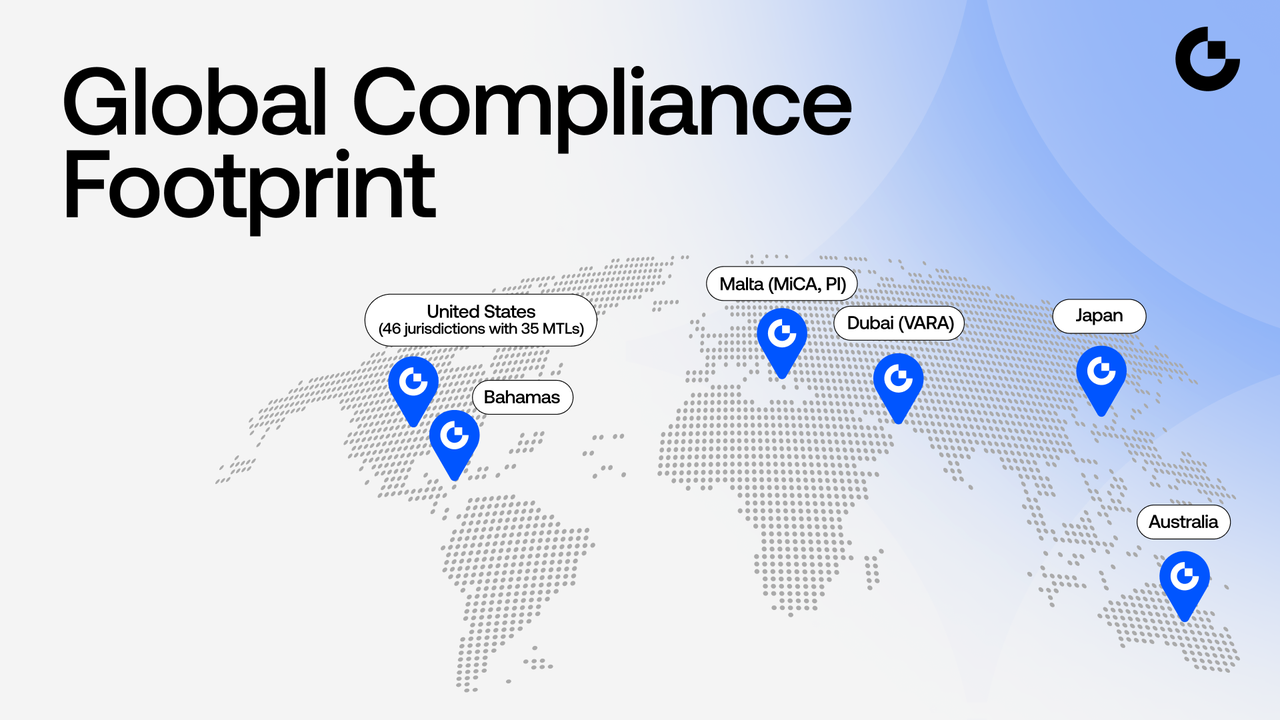
Against this backdrop, platform competition has shifted from a focus on individual products to a contest of global compliance operational strength. As a digital asset platform founded in 2013, Gate has been steadily advancing its global compliance infrastructure. Through a multi-jurisdictional strategy of licenses, registrations, and regulatory approvals, the platform is building a compliance operations framework that spans major international markets, providing enduring support for its global business development.
Europe Enters the MiCA Era: Gate Secures MiCA License in Malta
Europe stands as one of the fastest-developing regions in the global digital asset regulatory landscape. With the full implementation of the EU's Markets in Crypto-Assets Regulation (MiCA), businesses involving the trading, custody, and stablecoin operations of digital assets now operate under a unified regulatory regime. For the digital asset industry, MiCA's significance extends beyond establishing common rules—it enhances market transparency, strengthens user protection, and fosters the industry's long-term, healthy development.
Recently, Gate Group announced that its Maltese entity, Gate Technology Ltd (Gate Europe), has obtained a MiCA license from the Malta Financial Services Authority (MFSA). With this license, Gate Europe will offer digital asset trading and custody services under the regulatory framework and has initiated the EU Passporting mechanism process, laying the groundwork for further expansion across Europe.
Passporting is a key mechanism in the EU financial system, allowing financial institutions authorized in one member state to extend their services to other EU countries after meeting regulatory requirements. This means that with MiCA authorization, Gate Europe can gradually broaden its European market coverage under a unified regulatory framework.
In addition to MiCA, Gate Europe also holds a Payment Institution (PI) license. The PI license is a vital credential within the European payment ecosystem, covering payment services, money transfers, and related financial payment activities. For digital asset platforms, payment capabilities have become an increasingly important component of digital financial infrastructure. As stablecoin payments, Web3 payments, and digital asset settlement scenarios continue to evolve, the lines between trading, custody, and payment are steadily blurring.
Thus, the combination of MiCA and PI not only underscores Gate's compliance positioning in Europe but also signals its effort to build a more comprehensive operational infrastructure around digital asset services, payment capabilities, and the future digital financial ecosystem.
U.S. Market: Steady Progress on MTL License Deployment
The United States has long been a key market for the global digital asset industry, yet it also features one of the most complex regulatory environments. Unlike many countries that adopt a unified regulatory approach, U.S. digital asset businesses must often comply with both federal and state-level requirements. Among these, the Money Transmitter License (MTL) is a critical compliance foundation for digital asset companies conducting related activities.
In recent years, Gate has been advancing localized compliance efforts in the U.S. market. Through state-level regulatory permits and related registration systems, Gate US is gradually expanding its compliant operational capabilities while continuously strengthening risk control, anti-money laundering, and identity verification systems. MTL imposes stringent requirements on fund management, internal controls, user protection, and compliance operations. For international platforms, the U.S. market represents not only business opportunities but also a test of long-term operational and regulatory adaptability.
As the U.S. digital asset regulatory framework continues to develop, the importance of localized compliance operational capabilities only grows.
Japan Market: Long-Term Operational Strength in a Mature Regulatory Environment
Japan was one of the first countries in the world to establish a regulatory framework for digital assets. The Japanese Financial Services Agency (FSA) has long enforced a strict regulatory regime for digital asset service providers, setting clear requirements in asset management, risk control, information disclosure, and user protection. Gate Japan operates within this local framework, providing digital asset services in compliance with relevant regulations.
The Japanese market holds special significance for the digital asset industry. On one hand, its regulatory system is well-established; on the other, it demands that platforms demonstrate long-term, stable operational capabilities.
In such an environment, platforms must continuously optimize their products and services while simultaneously building robust risk management systems and internal governance mechanisms to meet evolving regulatory requirements.
Middle East Market on the Rise: Gate Expands Its Dubai Presence
In recent years, the Middle East has emerged as a key growth region for the global digital asset industry. Dubai, in particular, has attracted numerous digital asset companies and fintech institutions by establishing a dedicated virtual asset regulatory framework and fostering an open, innovative environment.
As a major global digital finance hub, Dubai is becoming a vital link connecting European, Asian, and African markets. Gate Dubai has obtained a license from the Dubai Virtual Assets Regulatory Authority (VARA) and officially launched its Dubai platform, offering compliant digital asset services to local users. VARA is one of the earliest regulatory bodies globally to focus exclusively on the virtual asset sector, aiming to balance innovation with risk management through a clear regulatory framework. As the Middle East's digital economy continues to expand, the importance of the Dubai market is steadily increasing.
Gate's compliance deployment in the region is not only a significant step in regional market expansion but also a key element in completing its global business footprint.
Australia Market: Strengthening Asia-Pacific Compliance Coverage
Beyond Europe, the United States, and the Middle East, Gate is also advancing compliance initiatives in the Asia-Pacific region. The platform has completed its registration as a Digital Currency Exchange Service Provider with AUSTRAC in Australia and launched its Australian platform, further enhancing local digital asset services. AUSTRAC is Australia's financial intelligence agency, with regulatory focus areas including anti-money laundering, counter-terrorism financing, and compliance requirements for digital asset-related activities.
Through operations within the local regulatory framework, Gate is steadily expanding its Asia-Pacific market presence and improving its international service capabilities. As the Asia-Pacific digital economy continues to grow, Australia is becoming an increasingly important market in the global digital asset landscape.
From Single Licenses to a Global Compliance Network: Gate Builds Long-Term Competitiveness
As global digital asset regulatory systems become more comprehensive, the dynamics of platform competition are evolving. In the past, competition centered on trading volume and product innovation. Today, regulatory compliance, risk management, and global operational capabilities are becoming essential components of long-term competitiveness. For international platforms, especially, different countries and regions have distinct regulatory frameworks. Building a compliance system that covers multiple jurisdictions has become a fundamental prerequisite for global growth.
In recent years, Gate has been actively executing its global compliance strategy. By securing regulatory licenses, registrations, and establishing localized operations in Europe, the United States, Japan, the Middle East, and the Asia-Pacific region, the platform is gradually forming a compliance operations network that spans major international markets. This capability goes beyond securing access to individual markets; it means the platform can operate sustainably across different regulatory environments, delivering more stable, secure, and transparent digital asset services to users.
Compliance: Becoming Essential Infrastructure for the Digital Asset Industry
From MiCA and PI in Europe to MTL in the U.S., FSA in Japan, VARA in Dubai, and AUSTRAC in Australia, Gate's global compliance deployment has evolved from acquiring individual licenses to building a comprehensive operational capability across multiple regions and regulatory systems.
As the digital asset industry moves toward greater standardization, compliance is no longer just a requirement for market entry—it is becoming core infrastructure for the long-term development of platforms.
Looking ahead, as global regulatory systems continue to mature, multi-jurisdictional compliance capabilities, robust risk management frameworks, and global operational networks may well become the key pillars for digital asset platforms seeking to build user trust and enhance long-term competitiveness.
FAQs
What is MiCA?
MiCA stands for the Markets in Crypto-Assets Regulation, introduced by the EU to create a unified regulatory framework for digital assets, covering trading, custody, stablecoins, and related services.
What is the purpose of the PI license?
PI (Payment Institution) license is a key component of the European payment system. Once obtained, it allows companies to offer payment and related financial services within the regulatory framework.
What is MTL?
MTL (Money Transmitter License) is a state-level license in the U.S. for money transmission, typically applicable to payment, money transfer, and certain digital asset-related activities. It is one of the important compliance requirements in the U.S. market.
What is VARA?
VARA is the Virtual Assets Regulatory Authority of Dubai, responsible for regulating and licensing the virtual asset industry in the region.
As regulatory systems continue to evolve, platforms must meet the requirements of multiple jurisdictions. A strong compliance framework enhances risk management, builds user trust, and supports the long-term, stable growth of global operations.







