Không giống như các blockchain Lớp-1 truyền thống vốn xem token chủ yếu là phương tiện trả Gas, HANA thể hiện một tokenomics mang tính "chuỗi công khai dựa trên trải nghiệm": giá trị người dùng được sinh ra từ tương tác xã hội, nhiệm vụ dạng trò chơi và các cổng vào/ra P2P bằng tiền pháp định, trong khi token đóng vai trò chuyển hóa các hành vi đó thành vốn chủ sở hữu trên chuỗi có thể đo lường, phân bổ và quản trị được. Nếu thiếu các ưu đãi và lịch mở khóa gắn liền với mức độ tương tác thực tế, các dự án SocialFi thường rơi vào tình trạng "điểm nhàn rỗi và áp lực bán token". Mô hình của Hana hướng đến mục tiêu giảm thiểu căng thẳng cấu trúc này thông qua tỷ lệ phân bổ cộng đồng cao, phát hành hệ sinh thái theo từng giai đoạn và một cơ chế phản hồi doanh thu giao thức hiện đang được quỹ nghiên cứu.
Dưới góc nhìn của ngành blockchain và tài sản kỹ thuật số, tokenomics của HANA phản ánh cách tiếp cận "tăng trưởng chính là quản trị" trong bối cảnh Web4: bằng cách kết nối việc thu hút, giữ chân người dùng và sự tham gia quản trị thông qua tỷ lệ cộng đồng 51% cùng với thiết kế phân tầng giữa Hana Points và HANA, trong khi phần phân bổ cho đội ngũ và nhà đầu tư tuân theo lịch mở khóa tuyến tính 12–24 tháng nhằm cân bằng lợi nhuận vốn ban đầu với áp lực bán dài hạn. Các phần bên dưới sẽ lần lượt xem xét vai trò chức năng của HANA, cơ chế phân phối và ưu đãi, phần thưởng xã hội, cơ chế tăng trưởng người dùng, các yếu tố thúc đẩy giá trị, khuôn khổ quản trị, rủi ro đầu tư và tiềm năng dài hạn.
Chức năng và Công dụng Cốt lõi của Token HANA
HANA không chỉ đơn thuần là một token gas; trong ma trận đa sản phẩm của Hana Network, nó đảm nhận các vai trò sau (theo các tuyên bố chính thức và từ quỹ):
| Danh mục chức năng |
Trường hợp sử dụng cụ thể |
Vai trò trong hệ sinh thái |
| Quản trị |
Bỏ phiếu đề xuất, điều chỉnh tham số, phân bổ kho bạc |
Sự phát triển của giao thức do cộng đồng dẫn dắt |
| Ưu đãi |
Tăng trưởng hệ sinh thái, phần thưởng nhiệm vụ, ghi nhận người đóng góp |
Khởi động và giữ chân người dùng |
| Tiện ích |
Các tính năng nâng cao trong tương lai (ví dụ: mua lại theo thời gian thực) |
Kiếm tiền từ sản phẩm và thiết lập ngưỡng truy cập |
| Staking |
Dự kiến dùng cho bảo mật mạng và phần thưởng |
Gắn kết người nắm giữ dài hạn |
| Chiếm lĩnh giá trị |
Phản hồi doanh thu giao thức (đang được nghiên cứu) |
Kết nối hoạt động với nhu cầu token |
Sự phân công lao động với Hana Points:
Hana Points chủ yếu được kiếm qua các hành động như gửi tài sản vào Hanafuda và hoàn thành nhiệm vụ; đây là điểm ở lớp ứng dụng với rào cản thấp hơn và phản hồi nhanh hơn. HANA là tài sản gốc trên chuỗi, làm neo cho quản trị, giao dịch và giá trị xuyên suốt các sản phẩm. Cả hai cùng tạo thành một phễu tăng trưởng Web3 phổ biến: "Điểm thu hút người dùng → Token giữ chân họ." Việc có triển khai cơ chế chuyển đổi hoặc airdrop hay không sẽ phụ thuộc vào thông báo chính thức.
Vai trò ở lớp mạng:
Là token gốc của chuỗi Cosmos SDK, HANA cũng sẽ đóng vai trò là tài sản staking cho các trình xác thực và thanh toán phí giao dịch, được triển khai dần khi mô-đun quản trị mainnet trở nên hoàn thiện.
Phân phối Token HANA và Cơ chế Ưu đãi
Tổng nguồn cung và Cấu trúc phân bổ
Tổng nguồn cung cố định của HANA là 1 tỷ token, được phân bổ như sau (phân tích chi tiết dựa trên DropsTab / nguồn chính thức):
| Danh mục |
Tỷ lệ |
Số lượng (Xấp xỉ) |
Mô tả |
| Tăng trưởng hệ sinh thái |
30% |
300 triệu |
Quan hệ đối tác, tài trợ, xây dựng hệ sinh thái dài hạn |
| Kho bạc |
20% |
200 triệu |
Dự trữ chiến lược, vận hành, tình huống khẩn cấp |
| Đội ngũ |
19% |
190 triệu |
Những người đóng góp cốt lõi |
| Ưu đãi |
16% |
160 triệu |
Hoạt động của người dùng và cộng đồng |
| Tổng cộng đồng |
51% |
510 triệu |
Bao gồm Tăng trưởng hệ sinh thái + Ưu đãi |
| Pre-seed |
8% |
80 triệu |
Nhà đầu tư tổ chức giai đoạn đầu |
| Pre Sale |
5% |
50 triệu |
Bán công khai trước TGE |
| Vòng chiến lược |
2% |
20 triệu |
Nhà đầu tư chiến lược |
| Tổng nhà đầu tư |
~15% |
— |
Bao gồm ba vòng trên |
Phần cộng đồng chiếm hơn một nửa, phù hợp với tỷ lệ phân bổ "ưu tiên tăng trưởng" đặc trưng của các chuỗi công khai SocialFi và hướng đến người dùng phổ thông. Đội ngũ và Kho bạc cùng chiếm 39%, dành nguồn lực cho việc cải tiến sản phẩm và mở rộng thị trường.
Lịch mở khóa và Vesting (Các cột mốc quan trọng)
Sau TGE vào ngày 26 tháng 9 năm 2025, quy tắc mở khóa có sự khác biệt đáng kể giữa các vòng:
| Vòng |
Mở khóa tại TGE |
Vesting sau đó |
| Pre Sale (50 triệu) |
100% |
Lưu thông hoàn toàn ngay tại TGE |
| Ưu đãi (160 triệu) |
100% |
Giải phóng hoàn toàn tại TGE |
| Vòng chiến lược |
Một phần |
Tuyến tính trong 20 tháng |
| Pre-seed |
0% |
Tuyến tính trong 12 tháng |
| Đội ngũ |
0% |
Tuyến tính trong 24 tháng |
| Kho bạc |
Giải phóng một phần |
Tuyến tính trong 24 tháng |
| Tăng trưởng hệ sinh thái |
0% |
Giải phóng tuyến tính sau cliff 12 tháng |
Tính đến nửa đầu năm 2026, khoảng 29% tổng số token đã được mở khóa trên toàn cầu, với khoảng 71% vẫn đang bị khóa hoặc trong quá trình giải phóng tuyến tính. Nguồn cung lưu thông vào khoảng 240 triệu token (khoảng 24% tổng nguồn cung). Trong những tháng và năm tới, Tăng trưởng hệ sinh thái (300 triệu) và Đội ngũ (190 triệu) sẽ là những nguồn gây áp lực bán chính cần theo dõi.
Tài trợ và Neo giá
- Tổng số tiền tài trợ qua các vòng là khoảng 6 – 9 triệu USD (bao gồm cả vốn ươm tạo từ Binance Labs / YZi Labs).
- Vòng "No More CEX" và đợt bán trước TGE có đơn giá khoảng 0,04 USD, tương ứng với FDV khoảng 40 triệu USD.
- Đợt bán Early Access vào tháng 6 năm 2025 đã huy động được khoảng 2 triệu USD, với token được mở khóa hoàn toàn tại TGE.
Cơ chế ưu đãi được thiết kế để tận dụng thanh khoản từ Ưu đãi và Pre Sale cho các đợt niêm yết sàn giao dịch ngắn hạn và thu hút sự chú ý của thị trường, trong khi việc mở khóa theo giai đoạn sẽ gắn kết lợi ích của đội ngũ và những người xây dựng hệ sinh thái trong trung và dài hạn.
Vai trò của HANA trong Tương tác Xã hội và Phần thưởng Hệ sinh thái
Hypercasual Finance của Hana Network dựa vào sự lan truyền xã hội và các tương tác có rào cản thấp. HANA cùng với hệ thống phần thưởng hỗ trợ hoạt động như sau:
-
Hanafuda (Thẻ Lego)
Người dùng gửi các tài sản như ETH và USDC để kiếm Hana Points và thẻ Hanafuda, sau đó thành lập nhóm để cạnh tranh Ticket. Dữ liệu trên chuỗi từng ghi nhận hơn 400.000 địa chỉ duy nhất và hàng chục triệu lượt tương tác gửi tiền, tạo nên nền tảng nhu cầu cho mô hình kinh tế của HANA. Hệ thống điểm giúp hạ thấp rào cản cho Người dùng mới và có thể được liên kết với HANA trong tương lai qua airdrop, chuyển đổi hoặc ngưỡng truy cập.
-
Hana Gateway (Cổng vào/ra Fiat P2P)
Gateway đóng vai trò là điểm vào từ tiền pháp định sang tiền điện tử. Sau khi hoàn tất giao dịch P2P, người dùng bước vào môi trường điểm và trò chơi của hệ sinh thái. Bản thân Gateway không nhất thiết tiêu thụ HANA, nhưng nó cung cấp một "phễu người dùng thực" cho nền kinh tế token.
-
Reunion (Nhiệm vụ DeFi)
Cung cấp các nhiệm vụ và tiền thưởng cho các thỏa thuận đối tác; HANA có thể được sử dụng làm tài sản thanh toán nhiệm vụ hoặc quỹ ưu đãi, củng cố vòng lặp tăng trưởng B2B.
-
Hana Play / Hana Rewards (Phía Ví)
Trong năm 2025–2026, hệ sinh thái đã mở rộng hệ thống phần thưởng XP: Điểm danh hàng ngày, hoán đổi đa chuỗi, giới thiệu bạn bè, v.v., tích lũy XP. Những người dùng đứng đầu trên Bảng xếp hạng sẽ nhận giải thưởng hàng tuần bằng USDC (ví dụ: Top 100 chia nhau quỹ giải thưởng hơn 500 USD mỗi tuần). Cách tiếp cận này sử dụng phần thưởng bằng stablecoin để giảm bớt lo ngại về biến động, đồng thời giữ hành vi giao dịch trong hệ sinh thái Hana Wallet, xây dựng một cơ sở người dùng tích cực cho tiện ích lâu dài của HANA.
-
Tích hợp Nền tảng Xã hội
Đội ngũ chính thức nhấn mạnh việc tích hợp với Twitter, Telegram, Discord, TikTok, v.v. Các cơ chế chia sẻ xã hội, mời bạn bè và nhóm sẽ khuếch đại hệ số lan truyền của các ưu đãi, đây chính là chìa khóa quyết định sự thành công của mô hình token SocialFi, thay vì chỉ đơn thuần tăng APY staking.
Cách HANA Thúc đẩy Tăng trưởng Người dùng và Tương tác Cộng đồng
Mô hình tăng trưởng của HANA có thể được tóm gọn trong một "chu kỳ ba lớp":
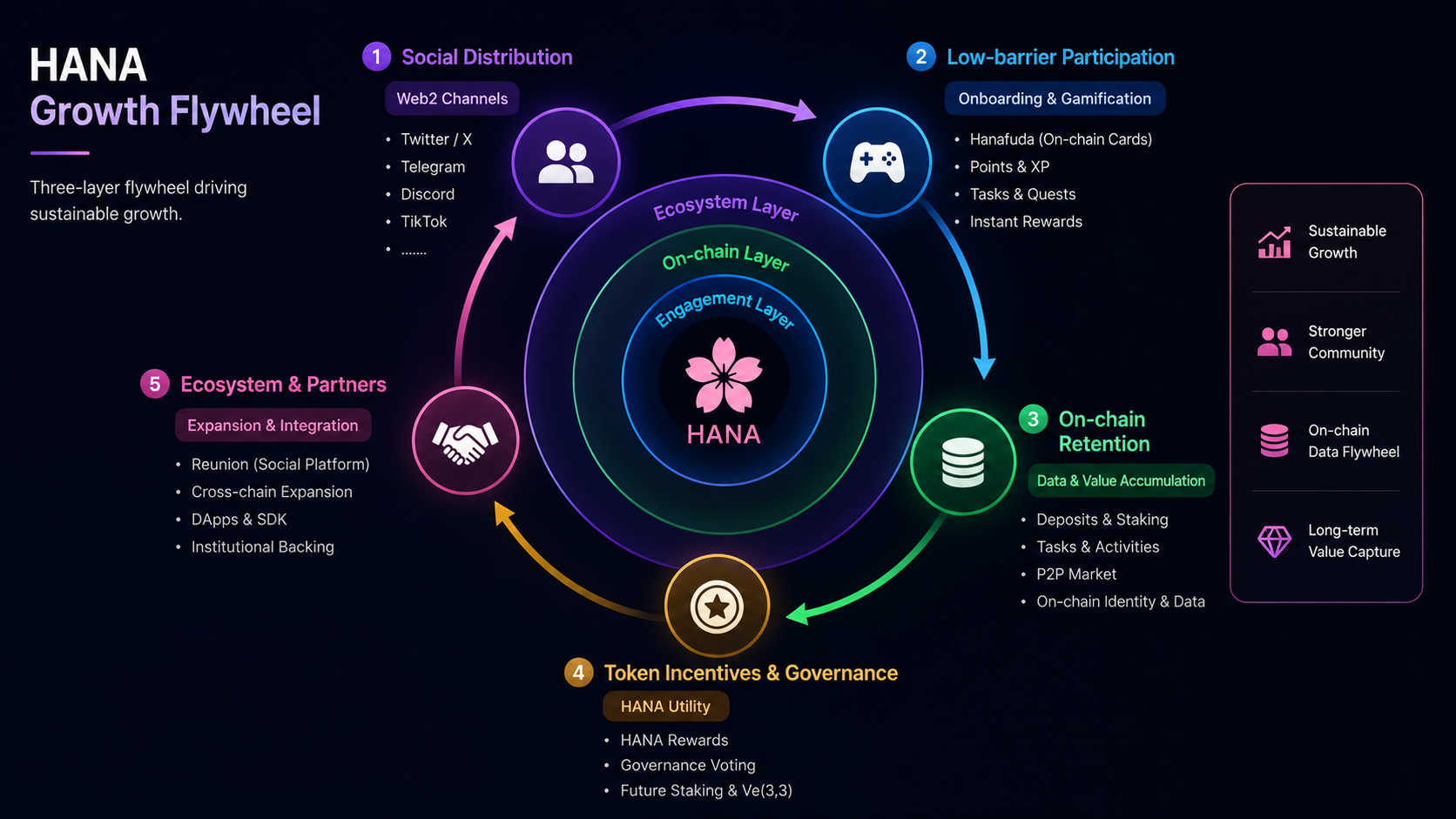
Các cơ chế cụ thể:
- Thu hút người dùng lan tỏa: Việc sưu tầm thẻ, thi đấu nhóm và hoa hồng giới thiệu phù hợp với logic sản phẩm hypercasual, với chi phí thu hút biên thấp hơn so với các chiến dịch trả phí truyền thống của CEX.
- Hành vi trở thành vốn chủ sở hữu: Điểm danh liên tục, gửi tài sản và hoàn thành nhiệm vụ làm tăng điểm và các quyền lợi HANA tiềm năng, từ đó nâng cao tỷ lệ giữ chân.
- Hỗ trợ từ các tổ chức: Sự ươm tạo từ Binance Labs và quan hệ đối tác với Babylon, Osmosis, v.v. giúp xây dựng niềm tin và hỗ trợ niêm yết sàn cũng như thanh khoản (ví dụ: robot DCA của Binance Futures hỗ trợ HANA vào tháng 3 năm 2026, giúp hạ thấp rào cản cho Đầu tư tự động).
- Phát hành sản phẩm theo giai đoạn: Sau khi Capsule Shop (NFT Gacha) và Dipsy (Live) ra mắt, các tính năng như tip, câu lạc bộ và tương tác thời gian thực sẽ tạo ra những trường hợp sử dụng mới cho HANA (tiêu dùng, tip, thành viên, v.v., dựa trên các tính năng thực tế đã ra mắt).
Hãy theo dõi các chỉ số tương tác cộng đồng chính sau: số địa chỉ duy nhất hoạt động hàng tuần trên Hanafuda, khối lượng giao dịch Gateway, mức độ tham gia XP trên Hana Play, sự thay đổi số lượng người nắm giữ HANA trên chuỗi và tỷ lệ tham gia bỏ phiếu cho các đề xuất quản trị.
Các Yếu tố Chính Ảnh hưởng đến Giá trị Token HANA
Giá HANA chịu tác động từ nhiều yếu tố đan xen. Dưới đây là khung phân tích khách quan (dựa trên dữ liệu thị trường nửa đầu năm 2026; giá có biến động mạnh):
| Yếu tố |
Hướng |
Mô tả |
| Áp lực bán từ mở khóa |
Giảm |
~71% vẫn bị khóa; 300 triệu token Tăng trưởng hệ sinh thái sẽ được giải phóng theo từng đợt |
| Hoạt động của hệ sinh thái |
Tăng |
Số địa chỉ Hanafuda, khối lượng gửi tiền, mức tham gia XP |
| Thanh khoản và niêm yết sàn |
Tăng/Biến động |
Niêm yết CEX và các công cụ phái sinh (ví dụ: Binance DCA) mở rộng cộng đồng giao dịch |
| Tâm lý thị trường |
Biến động |
Đã tăng ~157% trong một tuần trên HTX vào tháng 1 năm 2026; sau đó giảm mạnh |
| Vĩ mô và BTC |
Tương quan |
Các coin vốn hóa nhỏ có hệ số beta cao |
| Triển khai chiếm lĩnh giá trị |
Tăng dài hạn |
Mua lại từ doanh thu giao thức/cổ tức staking có thể cải thiện động lực cung-cầu |
| Cạnh tranh |
Không chắc chắn |
Các L1 SocialFi/GameFi khác có thể thu hút người dùng |
Cách Cơ chế Quản trị của Hana Network Vận hành
Quản trị của HANA vẫn đang ở giai đoạn đầu. Thông tin công khai phác thảo khuôn khổ như sau:
Người tham gia
- Người nắm giữ HANA: Bỏ phiếu cho các đề xuất liên quan đến nâng cấp giao thức, tham số kinh tế, chi tiêu kho bạc, v.v.
- Hana Foundation: Chịu trách nhiệm về các khoản tài trợ hệ sinh thái, quan hệ đối tác và thực thi chiến lược, với tuyên bố hướng tới sự minh bạch trong công bố kho bạc (theo tầm nhìn chính thức).
Các vấn đề quản trị điển hình (Phạm vi dự kiến)
- Tỷ lệ phân bổ quỹ ưu đãi và quy tắc hoạt động
- Tài trợ hệ sinh thái và kết nạp đối tác
- Ưu tiên sản phẩm trong các giai đoạn mainnet (Capsule Shop, Dipsy, v.v.)
- Tham số staking, cấu trúc Phí giao dịch và phân phối doanh thu giao thức
Nguyên tắc hoạt động (Xu hướng chính thức)
- Quy trình: đề xuất công khai → bỏ phiếu → thực thi, với ngưỡng đủ số và thông qua
- Chi tiêu kho bạc có thể kiểm toán để giảm thiểu các khoản phân bổ "dạng hộp đen"
So với các giao thức DeFi đã trưởng thành, mức độ hoàn thiện của quản trị trên chuỗi của Hana vẫn cần được theo dõi. Hãy chú ý đến đề xuất quản trị đầu tiên, tỷ lệ tham gia bỏ phiếu, địa chỉ đa chữ ký của kho bạc và liệu quản trị có được tích hợp đầy đủ với mô-đun Cosmos SDK hay không. Hiệu quả quản trị ảnh hưởng trực tiếp đến hiệu suất sử dụng 20% Kho bạc và 30% Tăng trưởng hệ sinh thái, qua đó tác động đến niềm tin dài hạn vào HANA.
Các Rủi ro Chính khi Đầu tư vào HANA
- Mở khóa và Sốc nguồn cung: Phần lớn Ưu đãi và Pre Sale đã được giải phóng tại TGE; Tăng trưởng hệ sinh thái, Đội ngũ và Pre-seed sẽ tiếp tục mở khóa tuyến tính trong 12–24 tháng tới.
- Biến động giá cao: Tài sản vốn hóa nhỏ có thể dao động với biên độ hai con số phần trăm mỗi ngày; các công cụ đòn bẩy và DCA có thể khuếch đại cả lợi nhuận lẫn thua lỗ.
- Sự không chắc chắn trong việc chuyển đổi điểm thành token: Nếu quy tắc Hoán đổi từ Hana Points sang HANA không đáp ứng được kỳ vọng, người dùng có thể kiếm được điểm nhưng giá token vẫn chịu áp lực.
- Sự phụ thuộc vào sản phẩm: Tăng trưởng phụ thuộc nhiều vào Hanafuda và Gateway; sự chậm trễ trong các sản phẩm Giai đoạn 2/3 có thể làm suy yếu câu chuyện đầu tư.
- Quy định: Cổng vào/ra fiat P2P liên quan đến các yêu cầu về thanh toán và KYC của nhiều quốc gia, có thể ảnh hưởng đến phễu người dùng.
- Cạnh tranh và sự nhàm chán với câu chuyện: Không gian SocialFi, blockchain gaming và phần thưởng ví đang rất đông đúc; sự chú ý của người dùng là có hạn.
- Chất lượng thông tin: Cần dựa vào hana.network và Medium chính thức; hãy cảnh giác với các vụ lừa đảo airdrop không chính thức.
Tuyên bố từ chối trách nhiệm: Nội dung trên chỉ mang tính tham khảo nghiên cứu và không cấu thành lời khuyên đầu tư. Tài sản tiền điện tử có thể dẫn đến mất toàn bộ số tiền gốc.
Tiềm năng Dài hạn của Hệ sinh thái HANA
Điều kiện thuận lợi
- Định vị đường đua rõ ràng: Web4 + Hypercasual Finance, nhắm đến "tỷ người dùng tiếp theo", tạo sự khác biệt so với các nền tảng giao dịch thuần túy.
- Sản phẩm đã được kiểm chứng: Hanafuda từng đạt tới hàng trăm nghìn địa chỉ, chứng minh rằng tài chính giải trí có thể thu hút người dùng.
- Phân bổ token tập trung vào cộng đồng: Tỷ lệ cộng đồng 51% là tương đối cao so với các dự án tương tự, hỗ trợ cho các ưu đãi dài hạn.
- Sự quan tâm từ cơ sở hạ tầng: Tích hợp Binance Futures DCA, phần thưởng ví đa chuỗi, v.v. giúp tăng khả năng tiếp cận trong năm 2026.
- Lộ trình mở rộng: NFT gacha, tip trực tiếp và thanh toán thực tế có thể mở rộng các kịch bản nhu cầu cho HANA nếu được triển khai.
Các kết quả chính cần theo dõi
- Vòng lặp chiếm lĩnh giá trị: "Phản hồi doanh thu giao thức cho người nắm giữ" của quỹ vẫn đang trong giai đoạn nghiên cứu; hãy tìm kiếm các cơ chế cứng như mua lại, cổ tức staking hoặc đốt phí.
- Quản trị thực chất: Liệu 510 triệu HANA trong Kho bạc và Tăng trưởng hệ sinh thái có thể được chuyển hóa thành sự phát triển bền vững thay vì chỉ là tiếp thị ngắn hạn?
- Sự phù hợp giữa FDV và hoạt động: Với chỉ ~24% đang lưu thông, nếu tốc độ tăng trưởng người dùng hoạt động chậm hơn tốc độ mở khóa, định giá có thể chịu áp lực trong dài hạn.
Trong trung và dài hạn, tiềm năng của HANA phụ thuộc vào việc Hana Network có thể chuyển đổi lưu lượng truy cập xã hội thành một nền kinh tế trên chuỗi có thể kiểm chứng và doanh thu giao thức hay không, thay vì chỉ dựa vào các đợt niêm yết sàn và tâm lý ngắn hạn. Nếu Capsule Shop Giai đoạn 2 và Dipsy Giai đoạn 3 lặp lại được đường cong tăng trưởng của Hanafuda, mô hình token có thể chuyển từ "dẫn dắt bởi ưu đãi" sang "dẫn dắt bởi tiện ích".
Tổng kết
Cốt lõi của mô hình tokenomics HANA là thúc đẩy hệ sinh thái tài chính xã hội của Hana Network thông qua nguồn cung cố định 1 tỷ token, tỷ lệ phân bổ cộng đồng 51% và hệ thống ưu đãi phân tầng (Points / XP / HANA): thu hút người dùng ngắn hạn qua Ưu đãi và trải nghiệm sản phẩm, gắn kết những người xây dựng trung hạn qua mở khóa theo giai đoạn, và chiếm lĩnh giá trị dài hạn qua quản trị và cơ chế doanh thu giao thức. Tính đến nửa đầu năm 2026, khoảng 70% token vẫn chưa đi vào lưu thông hoàn toàn, hệ sinh thái đang trong giai đoạn mở rộng mainnet đa pha ban đầu, và có sự phân kỳ rõ rệt giữa giá cả và các yếu tố cơ bản.
Đối với các nhà nghiên cứu và nhà đầu tư, điều cần thiết là theo dõi lịch mở khóa, dữ liệu hoạt động của Hanafuda, khối lượng giao dịch trên Gateway, tiến độ các đề xuất quản trị, công bố doanh thu của quỹ và mức độ chấp nhận HANA trong các sản phẩm phái sinh và ví. Thiết kế tokenomics cung cấp một khuôn khổ tăng trưởng, nhưng sự mở rộng bền vững của hệ sinh thái cuối cùng phụ thuộc vào sự phù hợp giữa sản phẩm và thị trường cũng như nhu cầu thực tế của người dùng, chứ không chỉ đơn thuần là các tỷ lệ phân bổ.