For on-chain prediction markets, liquidity often determines long-term stability. Without sufficient capital, even a large number of participants can lead to wide price swings and shallow market depth. Dexsport adopted a shared liquidity architecture specifically to enhance capital efficiency and lay the groundwork for future expansion into more prediction scenarios.
Shared Liquidity Pool Mechanism
A shared liquidity pool is a mechanism for centrally managing capital resources. Instead of each prediction market building its own independent pool, markets within the protocol draw from a single liquidity source for market operations and reward settlements.
In the traditional model, each market is required to accumulate its own liquidity. A market with low participation cannot directly tap into the funds of other markets, even if they are well-capitalized. This structure often leads to inefficient capital utilization and hinders the growth of new markets.
The shared liquidity model flips this logic. All funds entering the protocol are pooled into a unified liquidity pool and allocated by the system according to market demand. Because multiple markets draw from the same source, liquidity flows freely across the ecosystem.
For a prediction market protocol, a shared liquidity pool is far more than a storage vault—it is essential infrastructure that supports market operations. It dictates the scale a market can achieve and shapes the overall user experience.
Source: dexsport.io
Why Dexsport Adopts the Shared Liquidity Model
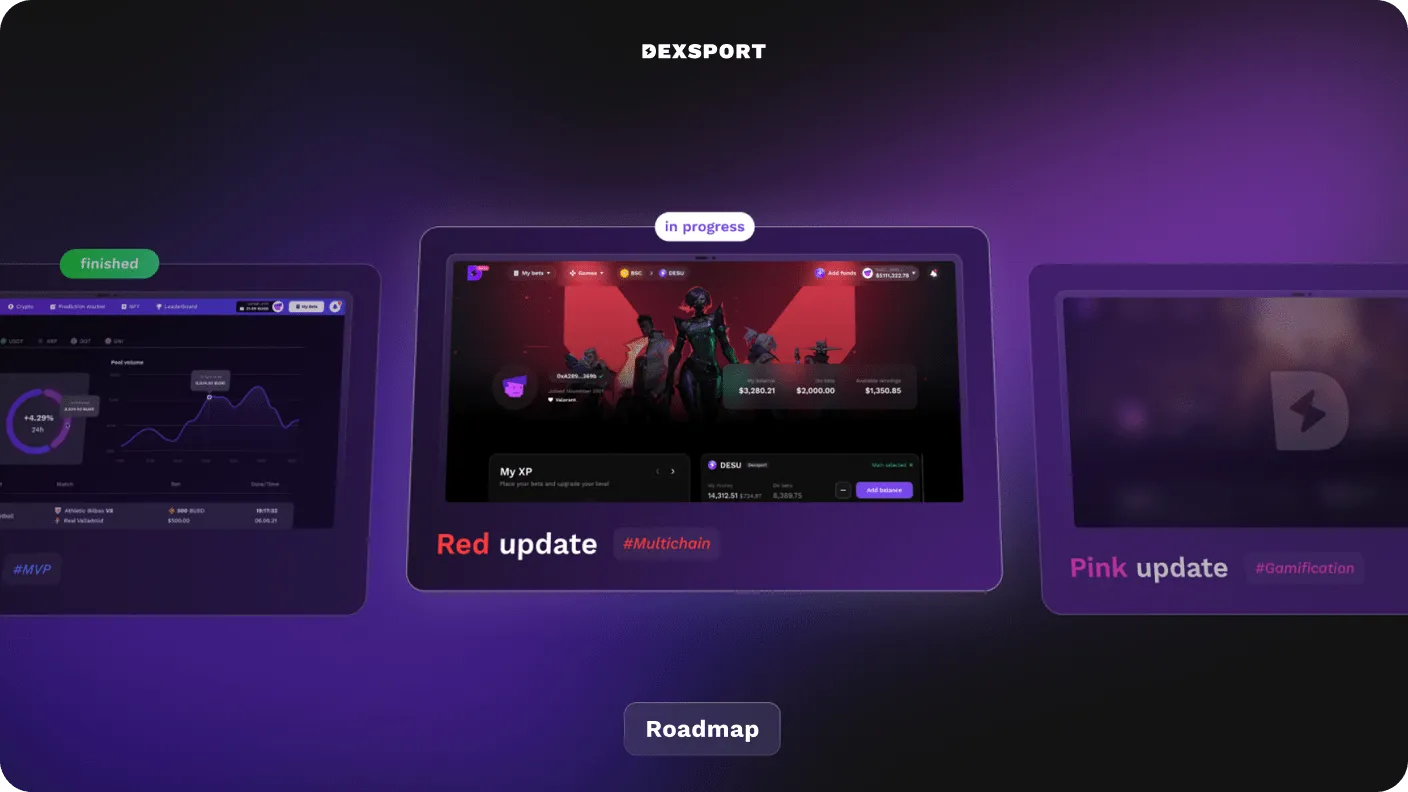
Dexsport's decision to adopt the shared liquidity model is closely tied to its long-term development strategy. According to the project's public roadmap, sports event prediction is only the beginning; future plans include expanding into prediction markets, digital asset price prediction, P2P event prediction, and NFT-related features.
If each business module used its own liquidity infrastructure, the protocol would need separate capital systems for every market. As the product line grows, funds become fragmented across pools, reducing overall capital efficiency.
The shared liquidity model centralizes fund management, enabling different markets to share a common liquidity base. Whether users are predicting sports outcomes, asset prices, or other events, the underlying system enjoys unified capital support.
This design also accelerates the launch of new markets. When the protocol introduces a new prediction scenario, there is no need to build a pool from scratch—it can leverage the existing liquidity system, reducing expansion costs and speeding time-to-market.
How the Shared Liquidity Pool Supports Prediction Markets
In Dexsport, the shared liquidity pool serves as the central capital hub. When users interact with the protocol, their funds enter the unified liquidity system and participate in the ecosystem's capital cycle.
Once a prediction market is created, participants generate market activity around a specific event. Upon settlement, compliant reward distributions are funded by the shared liquidity pool. Meanwhile, the system continuously adjusts liquidity allocation based on protocol rules to meet the varying capital demands of different markets.
This mechanism allows multiple markets to share a single capital source, eliminating the need to build redundant infrastructure for each market. As the number of markets grows, the advantages of a unified system become increasingly clear—capital can be deployed across markets according to real-time demand.
From a protocol perspective, the shared liquidity pool enhances capital efficiency. Unlike funds that sit idle in isolated markets, a unified architecture keeps more capital actively circulating within the ecosystem, boosting overall market activity.
What Is the Relationship Between Liquidity and Market Pricing?
Liquidity doesn't just affect a market's ability to function—it also shapes how prices are formed. In prediction markets, prices typically reflect participants' assessment of an event's probability.
With ample liquidity, participants can trade at prices closer to the market consensus. Higher liquidity dampens sharp price swings, enabling the market to reflect collective expectations more steadily.
Conversely, low liquidity means even small trades can cause noticeable price moves. Market prices may lose accuracy in reflecting overall sentiment, undermining the prediction market's information discovery function.
Thus, liquidity is not merely about the amount of capital—it is deeply tied to market efficiency. A key objective behind Dexsport's adoption of the shared liquidity model is to provide a more stable capital foundation for multiple prediction markets, thereby improving pricing quality.
| Factor |
High Liquidity |
Low Liquidity |
| Market Depth |
Higher |
Lower |
| Price Stability |
More Stable |
More Volatile |
| Capital Utilization |
Higher |
Lower |
| User Experience |
Smoother |
More Friction |
| Market Efficiency |
Stronger |
Weaker |
What Are the Advantages of the Shared Liquidity Model?
The primary advantage of the shared liquidity model is improved capital efficiency. Multiple markets draw from a unified capital source, enabling the protocol to support more market activity with less idle capital.
For users, shared liquidity enhances market depth. When funds are concentrated in a single pool, markets can support larger-scale activity with fewer capital constraints.
The model also facilitates ecosystem expansion. As Dexsport adds new prediction scenarios, it avoids building multiple independent capital systems, reducing operational complexity and improving resource utilization.
Moreover, shared liquidity amplifies network effects. The greater the number of markets and participants, the more valuable the unified pool becomes, as every market benefits from the ecosystem's growth.
What Challenges Does the Shared Liquidity Model Face?
Despite its clear advantages, the shared liquidity model also presents challenges. First, since multiple markets depend on a single liquidity source, risk management becomes paramount.
As the protocol scales, it must carefully manage fund allocation and liquidity efficiency. A poorly designed liquidity structure could allow certain markets to disproportionately affect overall liquidity.
As the range of prediction markets expands, risk profiles across markets will diverge. The protocol needs robust management mechanisms to ensure the long-term stability of the shared liquidity system.
Additionally, the pool's performance is highly dependent on ecosystem activity. Sustained growth in users and capital strengthens system stability, while insufficient liquidity can undermine market efficiency.
Conclusion
The shared liquidity pool is a cornerstone of the Dexsport prediction market protocol. By consolidating the capital needs of multiple markets into a single liquidity system, Dexsport boosts capital efficiency and lays the foundation for future expansion into sports predictions, price predictions, P2P events, and beyond.
For on-chain prediction markets, liquidity is not just about the amount of capital—it also impacts market depth, price stability, and overall efficiency. While the shared liquidity model demands more sophisticated risk management, its advantages in resource integration and ecosystem expansion make it an increasingly popular architecture among Web3 protocols.
FAQ
What is the Dexsport shared liquidity pool?
The shared liquidity pool is Dexsport's unified capital management system. Multiple prediction markets draw from a single liquidity source, improving capital efficiency and facilitating market settlements.
Why doesn't Dexsport create independent pools for each market?
Independent pools fragment capital. The shared liquidity model centralizes resources so multiple markets benefit from a unified system.
How does the shared liquidity pool support prediction market operations?
The shared liquidity pool supports reward distribution and settlement, enabling different prediction markets to share liquidity and boosting overall market efficiency.
Why does liquidity affect market pricing?
Abundant liquidity allows market prices to accurately reflect participants' collective judgment. Insufficient liquidity leaves prices vulnerable to swings from small trades.
What are the advantages of the shared liquidity model?
Key advantages include better capital utilization, deeper market depth, easier ecosystem expansion, and stronger network effects.
What challenges does the shared liquidity model face?
Challenges include greater risk management complexity, higher demands on liquidity allocation efficiency, and continued reliance on ecosystem activity.







