A lógica de investimento evolui com os ciclos de mercado
A volatilidade do mercado cripto está cada vez mais acelerada. As tendências já não se desenvolvem ao longo de períodos extensos; agora, a direção do mercado muda rapidamente, e tanto o sentimento quanto os preços oscilam em movimentos curtos. Nesse contexto, a estratégia clássica de comprar e manter—aguardando o tempo gerar retornos—apresenta eficiência de capital cada vez menor.
O gerenciamento de capital passou a priorizar a capacidade de ajustar a exposição de forma instantânea, em vez de simplesmente manter posições por períodos prolongados. Essa transformação está redefinindo o papel dos ETFs no mercado.
ETF como módulo de negociação
Historicamente, os ETFs representavam o investimento passivo, acompanhando o mercado e reduzindo a frequência de negociações. No cenário atual de alta volatilidade, porém, os ETFs vêm se transformando em ferramentas modulares que permitem participação direta nos ciclos de mercado. Os ETFs alavancados, em especial, voltaram a ganhar destaque—não apenas por ampliarem ganhos e perdas, mas por servirem como meio-termo para traders orientados por estratégia, entre o mercado à vista e derivativos.
Um terceiro caminho entre o mercado à vista e derivativos
Para a maioria dos traders:
- Negociação à vista: riscos diretos e transparentes, mas alavancagem limitada
- Negociação de derivativos: alta eficiência com alavancagem flexível, mas envolve exigências de margem, liquidação forçada e gestão de risco em tempo real
Os ETFs alavancados preenchem essa lacuna. Eles mantêm a mecânica da negociação à vista, mas permitem que os movimentos de preço tenham impacto multiplicado sobre o capital, possibilitando ao usuário implementar estratégias alavancadas sem acessar diretamente o mercado de derivativos.
Princípios de design dos tokens ETF alavancados da Gate
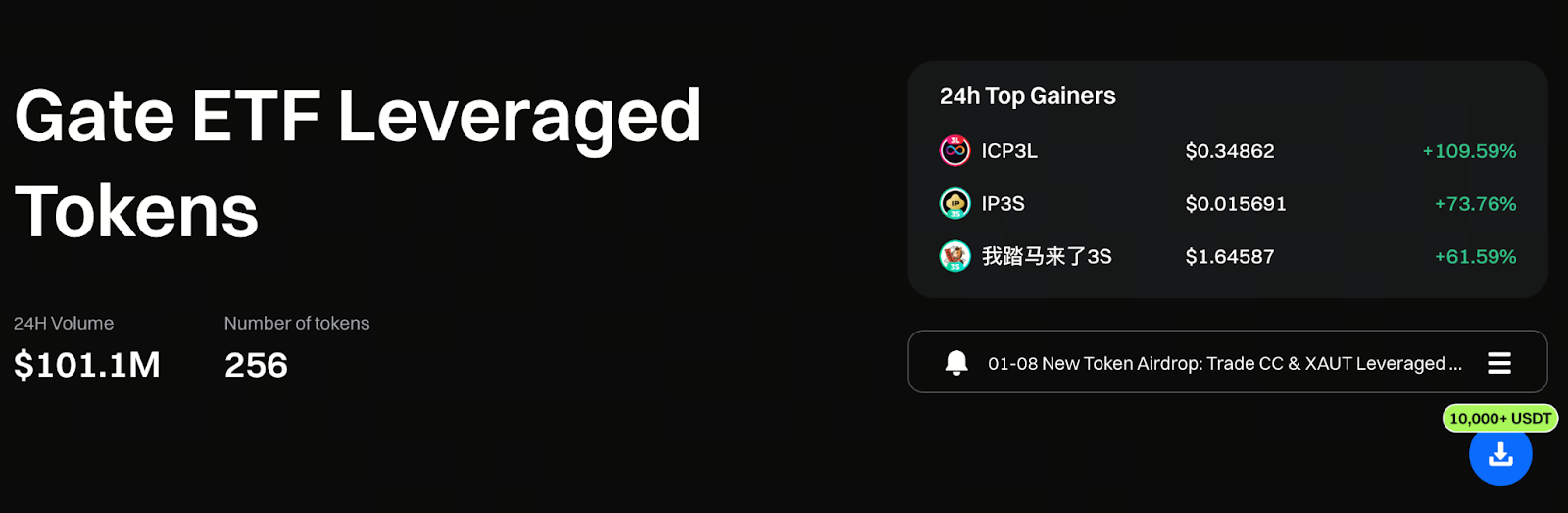
Os tokens ETF alavancados da Gate são criados por meio da formação de posições alavancadas em contratos perpétuos. Todas as operações em nível de contrato são realizadas automaticamente pelo sistema.
Para o usuário, a experiência de negociação é semelhante à de tokens à vista, sem necessidade de gerenciar:
- Cálculos de margem e manutenção
- Gestão de risco em tempo real devido à liquidação forçada
- Taxas de financiamento flutuantes
- Ajustes de tamanho de posição ou de tempo
O efeito de alavancagem já está incorporado à estrutura do produto, permitindo que o trader foque exclusivamente na direção do mercado e no timing da estratégia.
Comece a negociar tokens ETF alavancados da Gate: https://www.gate.com/leveraged-etf
Mecanismo de rebalanceamento
Os ETFs alavancados não são simplesmente multiplicadores. Para evitar que a exposição real se afaste da alavancagem-alvo devido à volatilidade do mercado, o sistema faz rebalanceamentos periódicos nas posições dos contratos subjacentes, restaurando a alavancagem ao intervalo pretendido. Embora esse processo seja invisível ao usuário, ele impacta significativamente os resultados. Por isso, o desempenho de um ETF alavancado não é apenas o movimento do ativo multiplicado pela alavancagem—ele é influenciado por:
- Caminho do mercado
- Estrutura de volatilidade
- Ritmo do mercado
Esses fatores tornam os ETFs alavancados mais adequados como instrumentos táticos do que como posições de longo prazo.
Estratégias de amplificação sem derivativos
Para alguns traders, o verdadeiro desafio não é a alavancagem em si, mas o risco de liquidação forçada e chamadas de margem na negociação de derivativos. Os ETFs alavancados não eliminam o risco de mercado—eles o convertem em volatilidade direta de preço, refletida no valor patrimonial líquido do token. Mesmo durante reversões breves do mercado, o sistema não força a saída, permitindo execução mais fluida das estratégias e menor estresse psicológico.
Eficiência de capital amplificada
Em mercados claros e de tendência definida, os ETFs alavancados permitem que o capital seja utilizado de forma mais eficiente no mesmo intervalo de tempo. Com o mecanismo de rebalanceamento, o desempenho em tendências favoráveis frequentemente se assemelha a uma acumulação contínua. Assim, os ETFs alavancados são amplamente utilizados como ferramentas de transição antes da adoção de estratégias totalmente alavancadas, permitindo ao usuário testar sua tolerância à volatilidade sem assumir toda a carga de gestão de risco dos derivativos.
Restrições estruturais e custos potenciais
Em mercados laterais ou oscilantes, o mecanismo de rebalanceamento pode, gradualmente, corroer o valor patrimonial líquido, fazendo com que o resultado real se afaste das expectativas intuitivas. Além disso:
- O retorno final não é simplesmente o múltiplo da alavancagem
- Custos de negociação, volatilidade e trajetória de preços influenciam os resultados
Essas características fazem com que os ETFs alavancados geralmente não sejam usados como ativos de alocação de longo prazo.
Por que é cobrada uma taxa de administração?
Os ETFs alavancados da Gate cobram uma taxa de administração diária de aproximadamente 0,1% para garantir o funcionamento normal do produto, incluindo:
- Custos de abertura e fechamento de contratos perpétuos
- Despesas com taxas de financiamento
- Ajustes de posição e exigências de hedge
- Perdas de negociação decorrentes do rebalanceamento
Esses custos não são cobranças extras—são essenciais para assegurar a estabilidade de longo prazo do produto.
Quem deve usar ETFs alavancados?
Os ETFs alavancados não são veículos de investimento passivo. São módulos táticos mais indicados para:
- Traders com visão direcional clara
- Aqueles com planos de entrada e saída bem definidos
- Estratégias capazes de suportar volatilidade de curto prazo
Só ao compreender plenamente sua estrutura, custos e limitações os ETFs alavancados podem, de fato, potencializar a eficiência do capital.
Conclusão
Os ETFs alavancados da Gate não tornam a negociação mais fácil—tornam a execução da estratégia mais direta. Eles amplificam tanto os movimentos do mercado quanto a importância de cada decisão. Para traders que compreendem os ciclos de mercado e gerenciam ativamente o risco, os ETFs alavancados funcionam como uma ponte eficaz entre a negociação à vista e estratégias alavancadas. No entanto, ignorar suas características estruturais e custos pode resultar em exposição a riscos maiores do que o previsto.