As blockchain technology continues to develop, more traditional assets are being digitized, and the digitization of precious metals has become an important trend. As a major global safe-haven asset, silver has long been accessed mainly through physical purchases or ETF products, but these methods have limitations in liquidity and payment efficiency.
In the digital precious metals sector, the core competitiveness of Kinesis Silver (KAG) lies in its 1:1 physical silver backing mechanism. Compared with financial products that merely track the price of silver, KAG emphasizes that every token is backed by real silver reserves and allows users to redeem physical silver under specific conditions.
What Is Kinesis Silver (KAG)’s 1:1 Silver Backing Mechanism?
Kinesis Silver (KAG)’s 1:1 silver backing mechanism means that for every 1 KAG issued, there must be 1 ounce of physical silver held in reserve. The platform does not issue additional KAG without physical reserves, helping ensure that the amount of assets circulating on-chain matches the actual amount of silver held in reserve.
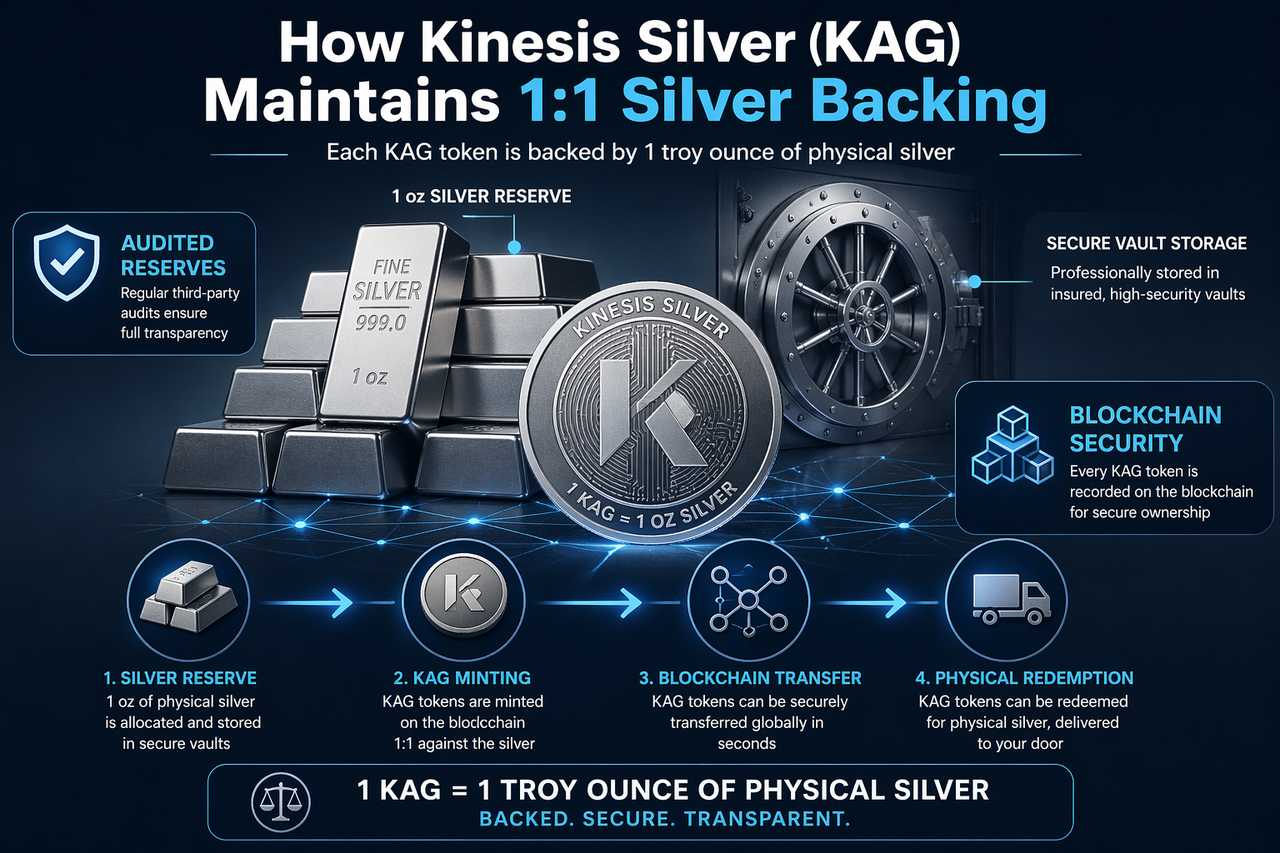
This mechanism anchors KAG’s value in real silver assets, rather than relying on market confidence or algorithmic adjustments. Holding KAG is, in essence, holding rights to a corresponding amount of physical silver. KAG can therefore be understood as a digital asset certificate backed by physical silver, with its value linked to custodial silver reserves and physical redemption available when the required conditions are met.
How Are KAG’s Physical Silver Reserves Managed?
The silver reserves behind KAG are held in professional vaults and audited by third-party institutions to ensure that the amount of silver in reserve matches the number of KAG in circulation. The main purpose of this custody structure is to protect the authenticity and security of the reserve assets.
The custody and audit mechanisms are designed to improve transparency around reserve information and strengthen market confidence in the authenticity of the underlying assets. This is also a key foundation for KAG’s ability to maintain its value backing, because only real and verifiable reserve assets can support the credibility of a digital silver asset.
How Does KAG’s On-Chain Issuance Mechanism Work?
When users buy or mint KAG, the platform adds the corresponding amount of silver to the reserve system and issues an equivalent amount of KAG on-chain. This process ensures that newly issued digital assets are backed by real silver.
The blockchain ledger records KAG issuance, transfers, and holdings, making the asset flow transparent and traceable. This on-chain recordkeeping mechanism gives KAG not only the characteristics of a precious metal asset, but also the transferability and high liquidity of a digital asset.
Why Can KAG Maintain Its Value Backing?
The main reason KAG can maintain its value backing is its physical reserve constraint. Because each KAG is backed by 1 ounce of silver, its price usually fluctuates around the market price of silver.
The physical redemption mechanism further reinforces this backing. KAG’s connection to the silver price mainly depends on its 1:1 reserve support and physical redemption mechanism. When the market price deviates from silver value, redemption and trading mechanisms may encourage the price to move closer to the silver market price, although this relationship can still be affected by market liquidity and trading conditions.
How Does KAG’s Physical Redemption Mechanism Support the Backing?
KAG holders can apply to exchange their digital assets for physical silver after meeting the minimum threshold. This means KAG is not merely a price-mapping tool, but a digital certificate representing real silver.
The importance of the redemption mechanism lies in the exchangeable relationship it creates between digital assets and physical assets. When users know that KAG can be redeemed for real silver, the market may have greater confidence in its value backing, which helps strengthen KAG’s price stability and asset credibility.
What Are the Advantages of KAG’s 1:1 Backing Mechanism?
First, the 1:1 backing mechanism gives KAG support from real assets and reduces the credit risk often associated with unsecured digital assets. What users hold is not an abstract digital token, but an asset right supported by silver reserves.
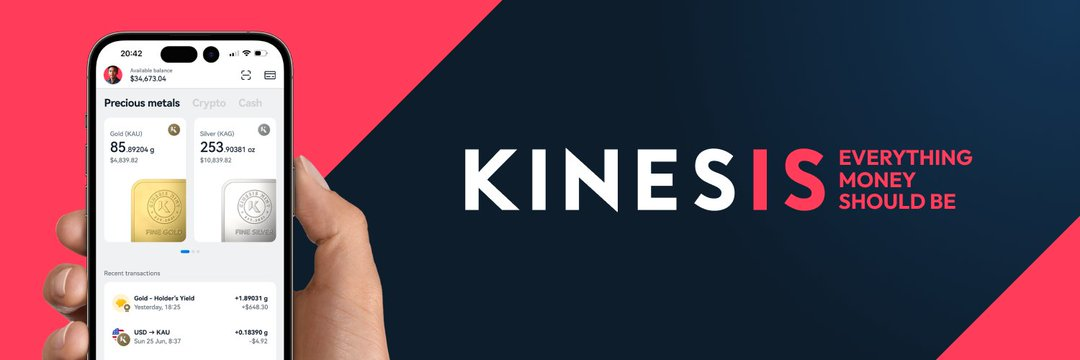
Second, this mechanism gives silver assets on-chain circulation capability. Traditional silver is difficult to transfer efficiently, while KAG can be transferred and used for payments quickly while maintaining the value characteristics of silver. This design gives KAG both precious metal-backed value and on-chain circulation capability, creating a distinct position among digital precious metal assets.
What Are the Risks of KAG’s Silver Backing Mechanism?
Although KAG uses 1:1 silver backing, it still carries certain risks, including custodian risk, audit transparency risk, and liquidity risk. Problems in custody or auditing could affect market confidence in the authenticity of KAG’s reserves.
In addition, KAG is backed by silver itself, so fluctuations in the price of silver will still affect KAG’s market price. A 1:1 backing guarantees asset support, not absolute price stability. Investors therefore still need to bear the volatility risk of the precious metals market.
Conclusion
Kinesis Silver (KAG) creates a value link between digital assets and real silver through 1:1 physical silver reserves, an on-chain issuance mechanism, and a physical redemption mechanism. Each KAG corresponds to 1 ounce of physical silver, allowing users to hold and transfer silver value in digital form.
This mechanism not only improves the liquidity of silver assets, but also brings greater transparency and credibility to the digital precious metals market. For users who want to hold digitized precious metal assets, the 1:1 silver reserve mechanism forms the core value support of KAG and is one of the key features that sets it apart from ordinary digital assets.
FAQs
Is Kinesis Silver (KAG) Backed by Real Silver?
Yes. Each KAG corresponds to 1 ounce of custodial silver and is issued through a reserve-backed mechanism.
Are KAG’s Silver Reserves Audited?
Kinesis states that its silver reserves are audited by third-party institutions to verify that reserve amounts match the number of KAG in circulation.
How Does KAG Maintain Its Link to the Silver Price?
KAG maintains its connection to silver value through 1:1 silver reserves and a physical redemption mechanism, although its market price may still be affected by liquidity.
Does KAG’s 1:1 Silver Backing Mean It Has No Risk?
No. Although it is backed by physical silver, it still carries custody risk, market liquidity risk, and silver price volatility risk.







