As NFTs and the RWA, real world asset market continue to evolve, more Web3 projects are exploring ways to map real world physical assets onto blockchain networks. Compared with traditional financial RWA such as real estate and bonds, collectibles are gradually becoming an important asset category in Web3 because of their natural scarcity, cultural appeal, and global trading demand. Markets for Pokémon cards, comics, sports cards, limited edition figures, and similar assets have continued to grow in recent years, further driving the development of “bringing collectibles on-chain” as a new direction.
Against this backdrop, Collect on Fanable aims to build infrastructure that connects the traditional collectibles market with Web3 digital ownership.
What Is Collect on Fanable’s On-Chain Trading Model?
The core model of Collect on Fanable is “physical asset custody + on-chain ownership circulation.”
In the traditional collectibles market, trading physical assets usually involves appraisal, shipping, settlement, and offline verification, which makes transactions relatively inefficient. This is especially true for high value collectibles, where cross region transactions often come with higher logistics costs and asset risks.
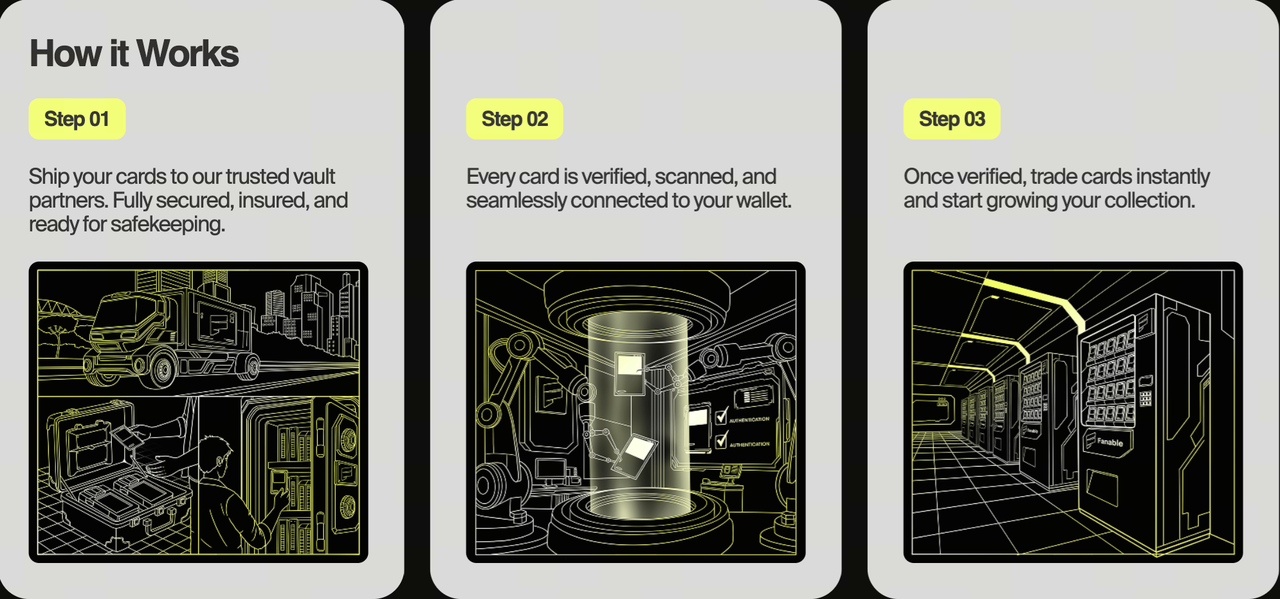
Collect on Fanable uses blockchain to create a digital ownership layer that links real world collectibles with on-chain records. The physical assets are held in custody by the platform or its partners, while users trade the corresponding digital ownership of those collectibles on-chain.
This mechanism can reduce the need to ship collectibles repeatedly during frequent trading, while also improving asset circulation efficiency.
How Do Physical Collectibles Enter the On-Chain Ecosystem?
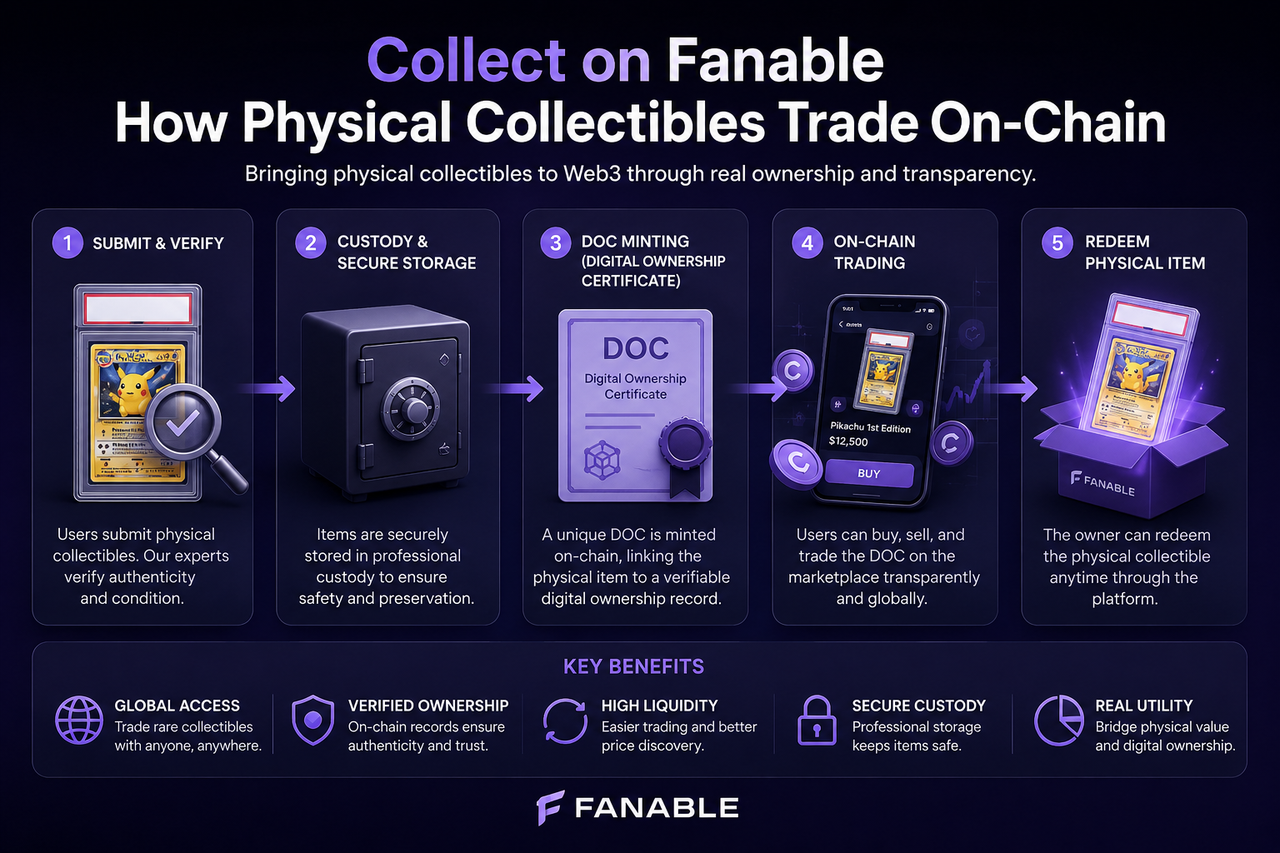
Physical collectibles usually enter the on-chain ecosystem through a process that includes verification, grading, and custody.
After a user submits a collectible, the platform first confirms the asset’s authenticity, including factors such as edition, condition, rarity, and market value. For high value collectibles, authenticity verification is one of the most important foundations of the entire trading system.
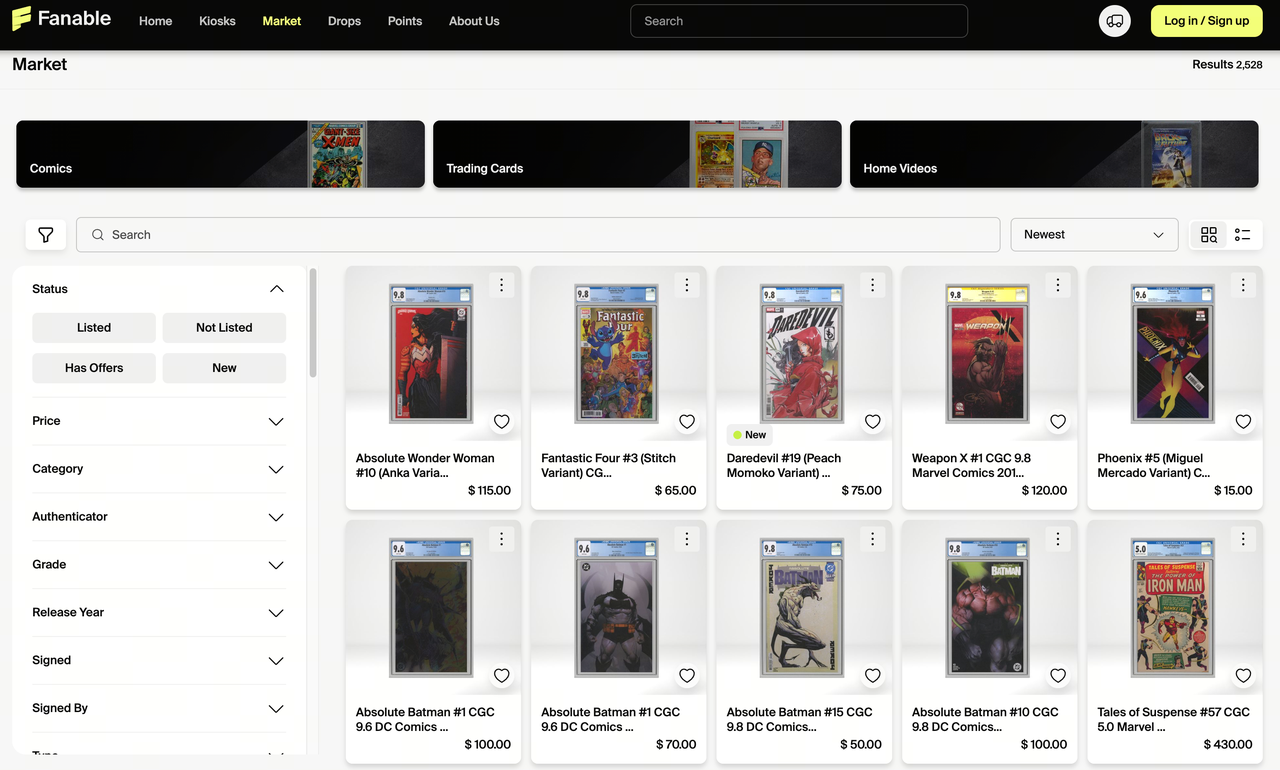
Once verification is complete, the physical asset enters a professional custody system. The platform generates a corresponding DOC, Digital Ownership Certificate, for the collectible and records the relevant information on a blockchain network.
From this stage onward, the collectible has completed the mapping process from a real world asset to an on-chain asset.
What Is DOC, Digital Ownership Certificate?
DOC is one of the core mechanisms in Collect on Fanable. In essence, it is an on-chain digital ownership credential for a physical collectible.
In the traditional collectibles market, ownership is usually supported by paper certificates, appraisal documents, or transaction records. DOC brings this process into digital form through blockchain. Each DOC corresponds to a specific physical asset and records the asset’s verification status, historical circulation information, and current holder.
Because blockchain data is tamper resistant, DOC can improve transparency and trust in the collectibles market.
The existence of DOC also means users can complete on-chain circulation and ownership transfers of collectibles without frequently handling the physical asset itself.
How Does Collect on Fanable Complete On-Chain Transactions?
Once a physical collectible has been custodied and its DOC has been generated, its digital ownership can be traded on an on-chain marketplace.
What users purchase on the platform is not simply an NFT image, but the digital ownership of the corresponding physical collectible. After a transaction is completed, the holder record on-chain is updated automatically, and the new holder obtains control and redemption rights over the physical asset.
This process is similar to traditional NFT trading in terms of user operation, but the underlying asset structure is entirely different. NFTs usually correspond to digital content, while the on-chain assets on Collect on Fanable correspond to real world physical collectibles.
Through on-chain trading, collectibles can move beyond traditional geographic limits and circulate globally.
Why Is Physical Custody Important for Collectibles RWA?
Physical custody is a key part of the collectibles RWA model.
Because the object traded on-chain ultimately corresponds to a real world asset, the platform must ensure that the asset actually exists and that its safety and integrity are maintained. Without a reliable custody system, digital ownership cannot establish real credibility.
High value collectibles also often require specific storage conditions. Cards, comics, and limited edition collectibles, for example, usually need protection from moisture, ultraviolet light, and unsuitable storage environments. A professional custody system can reduce the risk of asset damage and help preserve long term value.
For a collectibles RWA platform, custody capability is therefore one of its core competitive strengths.
How Can Users Redeem Physical Collectibles?
In Collect on Fanable’s model, on-chain holders usually have redemption rights for the physical collectibles.
When a user wants to take physical possession of a collectible, they can submit a redemption request. The platform verifies the on-chain ownership status and, once confirmed, arranges delivery of the physical asset.
The redemption mechanism means on-chain ownership is not detached from the real world asset. Instead, it remains practically connected to the physical collectible. This is also one of the biggest differences between collectibles RWA and traditional NFTs.
However, frequent redemption of physical assets may increase logistics and management costs, so some users may prefer to complete transactions directly on-chain rather than physically withdraw the collectible.
How Is Collect on Fanable Different from a Traditional NFT Marketplace?
Although Collect on Fanable’s trading process is similar to that of an NFT Marketplace, the underlying logic is different.
The core assets on a traditional NFT Marketplace are usually digital images, on-chain artworks, or in game items, and their value mainly comes from digital scarcity and community consensus. Collect on Fanable, by contrast, emphasizes support from physical assets in the real world.
In addition, the collectibles RWA model must address real world issues such as authenticity verification, custody, logistics, and redemption. These are not core components of traditional NFT platforms.
Summary
Collect on Fanable enables the digital circulation of real world collectibles through physical custody, DOC digital ownership certificates, and an on-chain trading structure.
Compared with the traditional collectibles market, Collect on Fanable offers greater transparency and global liquidity. Compared with traditional NFT projects, its core value comes from physical asset backing.
FAQs
How does Collect on Fanable enable on-chain trading of physical collectibles?
The platform first verifies and custodies physical collectibles, then maps the assets onto the blockchain through DOC digital ownership certificates, enabling on-chain trading.
What is DOC?
DOC, Digital Ownership Certificate, is a digital ownership certificate for physical collectibles. It is used to record on-chain ownership status.
Are users buying NFTs?
Users are buying digital ownership of corresponding physical collectibles, not merely digital images.
Why is physical custody needed?
Custody helps ensure that collectibles actually exist while reducing the risk of asset damage and transaction related issues.
Can users withdraw physical collectibles?
Usually, yes. on-chain holders have redemption rights for the corresponding physical assets.
What is the biggest difference between collectibles RWA and traditional NFTs?
Collectibles RWA are backed by real world assets, while traditional NFTs are usually blockchain native digital assets.