As the coffee industry shifts from expanding store locations to focusing on user engagement, membership systems are becoming the backbone of brand growth. Unlike traditional models that rely on products and store locations to attract consumers, digital memberships allow businesses to continuously gather user data, drive higher purchase frequency through targeted marketing, and cultivate more stable brand relationships.
From a digital business perspective, Starbucks Rewards exemplifies the global shift of consumer brands toward a "data-driven retail ecosystem." Through its mobile app, digital wallet, ordering system, and AI-powered personalized services, Starbucks is transforming one-time coffee purchases into an ongoing user relationship management framework.
What Is Starbucks Rewards
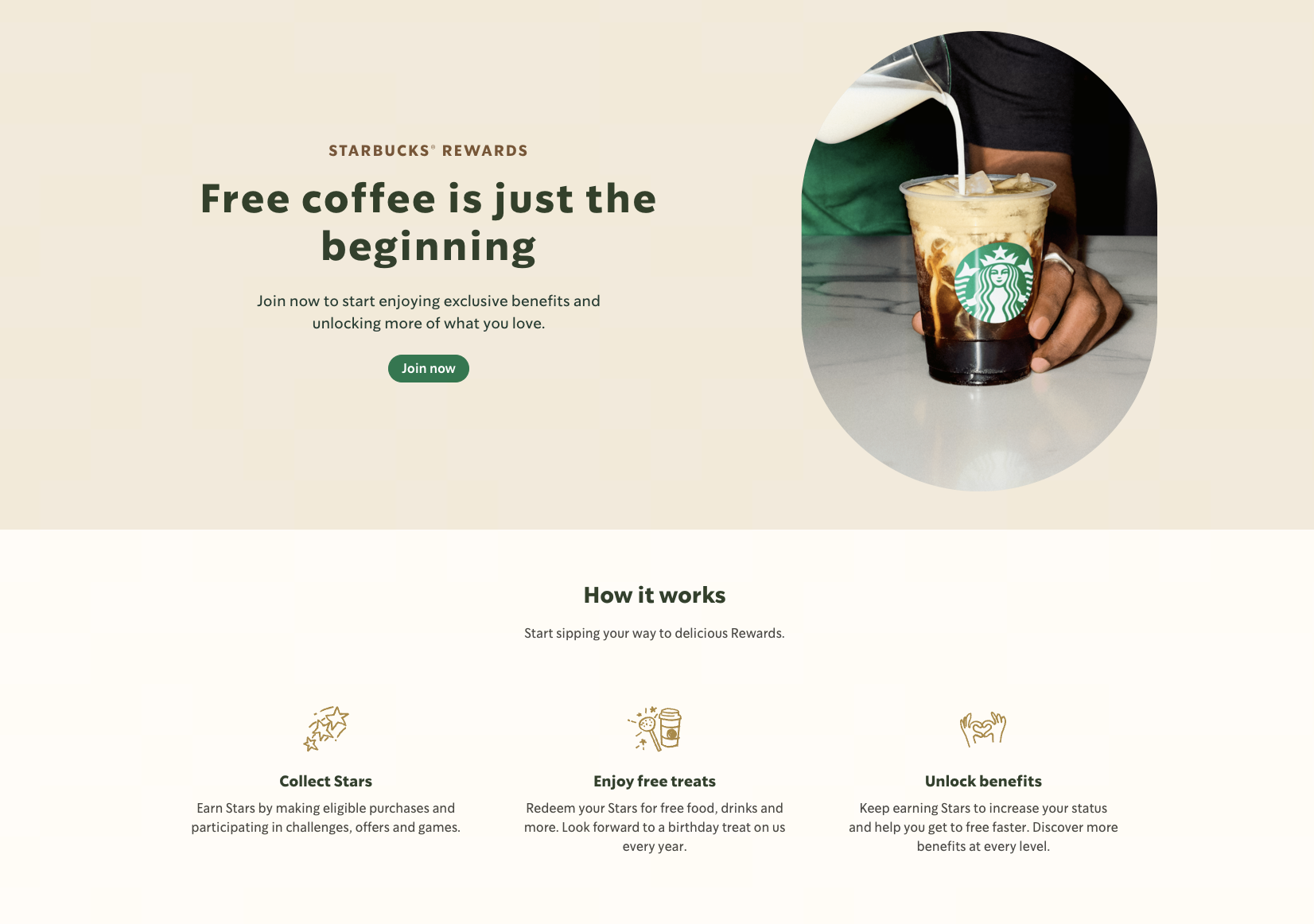
Starbucks Rewards is the digital membership program introduced by Starbucks, serving as a cornerstone of the company’s digital strategy. This system connects consumers to the Starbucks brand for the long term through rewards points, tiered membership benefits, exclusive offers, and mobile services. Users can join through the Starbucks app, earning points on coffee, food, and other purchases, which can then be redeemed for beverages or related perks.
Unlike traditional membership cards, Starbucks Rewards is more than just a points program—it’s an integrated ecosystem built around user data, purchasing behavior, and digital services. Every transaction, including purchase timing, product preferences, buying frequency, and store selection, enables Starbucks to better understand its customers.
In recent years, Starbucks Rewards has become one of the world’s largest coffee membership platforms. In the US, Starbucks maintains tens of millions of active members, who contribute a significant share of retail revenue. For Starbucks, members represent not only a larger customer base but also a highly valuable data asset.
The core value of the membership system is to maximize Customer Lifetime Value (CLV). While casual customers may choose a coffee shop based on location, price, or convenience, members—having accumulated points, linked payment methods, and established habits—are more likely to return regularly.
As a result, Starbucks Rewards has evolved from a simple marketing tool into a vital infrastructure connecting consumers, store operations, and digital commerce.
How Starbucks Drives Member Engagement
Starbucks boosts member engagement by leveraging rewards, habit formation, and ongoing interaction to foster repeat purchases.
The points mechanism is the foundation of Starbucks Rewards. Users earn Stars with every purchase and can redeem accumulated Stars for free drinks, food, or other rewards. This approach lowers the barrier to participation and reinforces the expectation of "earning more value with your next purchase."
Unlike one-time coupons, the points system creates a continuous feedback loop. Consumers aren’t just seeking a single discount—they accumulate benefits over time, increasing retention and reducing the likelihood of switching to competitors.
Starbucks further strengthens engagement through membership tiers and exclusive events. For example, members can access limited-time double points, birthday rewards, and exclusive previews of new products. These initiatives not only drive short-term sales but also encourage users to engage with the app and stay connected to the brand.
Additionally, Starbucks tailors activities based on user behavior. Frequent coffee buyers may receive more beverage rewards, while those who purchase more food might get breakfast combo offers. This targeted approach is more efficient than broad-based promotions.
Another critical factor in boosting engagement is minimizing friction in the purchase process. Features like in-app ordering, advance payment, and in-store pickup make transactions faster and more convenient. When convenience and rewards are combined, the membership system fosters strong user loyalty.
Why the Mobile App Is a Growth Engine
The Starbucks app is the gateway to the membership ecosystem and a key driver of the company’s digital transformation.
Traditionally, coffee consumption happened in-store, with brand interaction limited to the point of sale. The mobile app changes this dynamic, enabling Starbucks to engage consumers before, during, and after each purchase.
Before a purchase, the app uses push notifications, promotional alerts, and new product recommendations to draw users into the buying journey. For instance, when a user is near a Starbucks location, the app can send location-based prompts to increase store visits.
During the purchase, Mobile Order & Pay streamlines the process. Users can select their drinks and pay in advance, then pick up their orders in-store—improving both the customer experience and store operations.
The app also serves as a critical data hub for Starbucks. By analyzing order data, Starbucks can track regional preferences, popular menu items, peak demand times, and the effectiveness of promotional campaigns.
Globally, the retail industry is entering a "super app" era, where brands integrate membership, payments, shopping, and marketing into a single mobile platform. Starbucks’ early investment in a mature digital loop gives it a competitive edge.
Owning its own app ecosystem allows Starbucks to retain customer relationships and data, rather than relying solely on third-party delivery platforms. This is why the mobile app is a powerful engine for ongoing membership growth.
How Personalized Marketing Builds Loyalty
Personalized marketing is a defining strength of the Starbucks membership system, setting it apart from traditional points programs.
As membership scales, generic promotions no longer suffice. Consumers have diverse preferences for coffee flavors, purchase timing, price sensitivity, and buying frequency. Starbucks addresses this with data analytics and AI-driven marketing.
For example, a daily latte drinker and someone who occasionally tries seasonal offerings require distinct strategies. Habit reinforcement works for the former, while new product recommendations are better for the latter.
Starbucks creates user profiles based on transaction data, including purchase history, timing, store visits, and responses to promotions—enabling precise recommendations.
Advances in AI further elevate membership marketing. Generative AI and machine learning can anticipate consumer needs, recommend new products, optimize coupon timing, and adjust marketing content based on weather, season, and context.
Personalized marketing not only boosts sales but also strengthens emotional connections between consumers and the brand. When customers feel understood, brand loyalty deepens.
For Starbucks, the ultimate goal isn’t just more discounts—it’s delivering a personalized experience through data and service.
How Starbucks Builds Its Digital Payment Ecosystem
Digital payment is a cornerstone of the Starbucks membership ecosystem and a key differentiator from traditional coffee brands.
Amid rapid mobile internet growth, Starbucks has embedded payment into the membership experience. Users can top up, pay, earn points, and redeem rewards—all within the Starbucks app—creating a seamless loop from payment to engagement.
The Starbucks Card is central to this system. Consumers can pre-load funds and pay via the app, increasing transaction efficiency and deepening the financial link with the brand.
Digital payments do more than cut cash handling costs—they generate valuable consumption data. With proprietary payments, Starbucks gains full visibility into purchase frequency, spend, preferences, and lifecycle trends, rather than just transaction outcomes.
Digital payments also optimize store operations. By analyzing order peaks, Starbucks can adjust staffing, inventory, and supply to boost efficiency.
Globally, retail is shifting from "payment tool competition" to "payment ecosystem competition." Brands want to retain users through proprietary payment systems, not just banks or third-party platforms.
Starbucks’ digital payment strategy integrates payments, membership, and analytics. Consumers enjoy convenience; the brand gains richer, more frequent user engagement.
However, the rise of Apple Pay, Google Pay, and other mobile wallets means consumers may be less inclined to use a standalone brand app. Starbucks must continually enhance member benefits and experiences to keep users engaged in its digital ecosystem.
Comparing Starbucks, Luckin Coffee, and Costa Membership Systems
| Dimension |
Starbucks |
Luckin Coffee |
Costa |
| Membership Positioning |
Brand loyalty and long-term value via emotional engagement and "third place" stickiness. |
Efficiency-driven, high-frequency conversion through mobile, social virality, and value-driven repeat purchases. |
Digital extension of traditional retail, supporting offline experience and quality. |
| Core Growth Mechanism |
Tiered system (Silver → Jade → Gold): more spending unlocks higher tiers and benefits. |
Community/paid subscriptions (e.g., group invites, exclusive coupons): less focus on tiers, more on instant discounts. |
Points-based: accumulate and redeem for cash or coupons. |
| Points & Return Rate |
Star-based: approx. RMB 40 per star (better with Starbucks Card), high returns but rigid thresholds. |
Frequent coupons/targeted subsidies: relies on big data for exclusive offers, not points. |
Points for cash/gifts: spending converts to points for direct deduction or redemption. |
| Digital Core Platform |
Starbucks app: integrates payments, ordering, and immersive experiences. |
WeChat Mini Program/Enterprise WeChat: leverages WeChat for social sharing and outreach. |
WeChat Mini Program/app: basic features for ordering and coupon management. |
| Core User Profile |
White-collar, business professionals, experience-focused loyalists. |
Young professionals, students, value- and convenience-driven pragmatists. |
Traditional coffee enthusiasts, quality-focused, in-store relaxation seekers. |
| Challenges |
Competing with local brands on price while maintaining premium positioning and growth. |
Highly price-sensitive users; converting "deal hunters" to loyalists is a challenge. |
Slow digital adoption, limited online reach, risk of member attrition. |
Starbucks, Luckin Coffee, and Costa have all established digital membership systems, but each follows a distinct path.
Starbucks focuses on brand relationships and long-term value. Starbucks Rewards is built around high-frequency purchases, integrating points, the app, payments, and personalized service into a cohesive ecosystem. Consumers don’t just buy coffee—they buy into the Starbucks experience.
This approach aligns with Starbucks’ longstanding "Third Place" philosophy, positioning stores as social spaces beyond home and work. Its membership system prioritizes relationship management and brand loyalty.
Luckin Coffee, by contrast, relies on mobile technology and operational efficiency. From the start, Luckin used digital ordering, coupons, social sharing, and targeted marketing to rapidly expand its user base. Its system emphasizes frequent engagement and conversion, using aggressive promotions to lower trial barriers.
Luckin’s advantage is digital efficiency, enabled by streamlined operations and automation. However, heavy reliance on discounts means users are highly price-sensitive, so ongoing product and loyalty improvements are essential.
Costa’s strategy is more traditional, focusing on digitizing its global store network and brand presence. Its digital ecosystem has developed more slowly, with greater emphasis on coffee quality, in-store experience, and brand heritage, while digital membership serves mainly as a marketing tool.
In summary:
- Starbucks: Prioritizes brand value and relationships, using the membership ecosystem for long-term growth.
- Luckin Coffee: Focuses on digital efficiency and frequency, expanding via its app, promotions, and data-driven operations.
- Costa: Emphasizes coffee culture and offline experience, using digital tools to enhance consumer connections.
Looking ahead, industry competition will hinge not only on products but also on user engagement. Brands that leverage data to boost repeat purchases and reduce churn will secure long-term advantages.
Challenges in the Coffee Membership Economy
Despite their growth potential, coffee membership systems face several challenges.
Membership Growth May Plateau
In the early stages, brands can quickly attract users with points, discounts, and app promotions. As membership scales, acquisition costs rise, shifting the focus to increasing the value of existing members. For Starbucks, future growth will depend more on driving active member rates, purchase frequency, and average order value.
Over-Reliance on Discounts May Erode Brand Value
Frequent discounts can make consumers price-sensitive. If a brand depends too heavily on promotions, users may switch to competitors offering lower prices. Mature brands must shift from "discount-driven" to "experience-driven" strategies, enhancing loyalty through product innovation, service, and brand culture.
Data Privacy and User Management Are Crucial
Membership systems depend on vast consumer data—purchase history, location, preferences. As data protection laws evolve, companies must prioritize security and privacy. Balancing data-driven experiences with compliance is essential for sustainable growth.
Rapid AI Adoption Raises the Bar
As more retailers deploy AI for recommendations, customer service, and automated marketing, competitive differentiation will depend on data quality, brand value, and depth of user relationships—not just technology.
The Future of the Starbucks Membership Ecosystem
Looking ahead, Starbucks’ membership ecosystem will become increasingly intelligent, personalized, and omnichannel.
AI-powered personalization will be a defining trend. As generative AI and machine learning advance, Starbucks can leverage user data to deliver highly tailored product recommendations—factoring in purchase history, weather, time, and seasonal trends. The member experience will evolve from simply "earning points" to AI-guided discovery of drinks and services.
Starbucks will further integrate online and offline channels. Whether ordering through the app, in-store, or via delivery and digital payments, the goal is a seamless, consistent experience across all touchpoints.
The company may also explore new digital services, such as subscriptions, enterprise solutions, digital gift cards, and expanded partnerships, broadening the reach of its membership ecosystem. Membership could become an entry point to a wider range of business scenarios.
Ultimately, Starbucks’ competitive edge lies not just in coffee, but in the data and service network built around its customers. As the industry shifts from store-based to ecosystem competition, brands with robust membership systems will reach users more efficiently, respond faster to market changes, and optimize operations through data.
Conclusion
Starbucks Rewards is a cornerstone of Starbucks’ digital strategy, creating a world-class coffee membership ecosystem through its points program, mobile app, digital payments, and personalized marketing.
The true value of this system extends beyond sales—it’s about building lasting consumer relationships. By continuously collecting and analyzing user data, Starbucks can refine its offerings, boost operational efficiency, and strengthen brand loyalty.
While Luckin Coffee focuses on digital efficiency and high-frequency operations, Starbucks emphasizes brand value, user experience, and long-term relationships. Compared to Costa, Starbucks has developed a more sophisticated mobile and digital payment ecosystem.
As AI, analytics, and digital payments advance, the coffee membership economy will continue to evolve. For Starbucks, maintaining a balance between innovation, user experience, and brand value will be key to sustaining its competitive edge.
In the era of global digital transformation, Starbucks Rewards is more than a points program—it’s a digital ecosystem connecting consumers, data, payments, and business growth.