As the multichain ecosystem continues to develop, Bitcoin and Ethereum have become two of the most important on-chain asset networks. BTC, as the crypto asset with the largest market capitalization, represents a vast store of value, while ETH is a key foundational asset in the decentralized finance ecosystem. Yet these two assets exist on separate blockchain networks and cannot be exchanged directly with each other, making cross-chain swaps a critical need in DeFi infrastructure.
Traditionally, users who wanted to convert BTC into ETH usually had to rely on a centralized exchange, or first use a cross-chain bridge to convert BTC into a wrapped asset such as WBTC before participating in on-chain trading. This process is not only cumbersome, but also introduces custody risk and bridge-related risk.
THORChain’s Role in the Cross-Chain Swap Sector
THORChain is one of the few decentralized liquidity protocols today that supports cross-chain swaps of native assets. It allows users to swap BTC directly for ETH without routing through wrapped assets or centralized platforms. This capability makes THORChain an important part of cross-chain liquidity infrastructure.
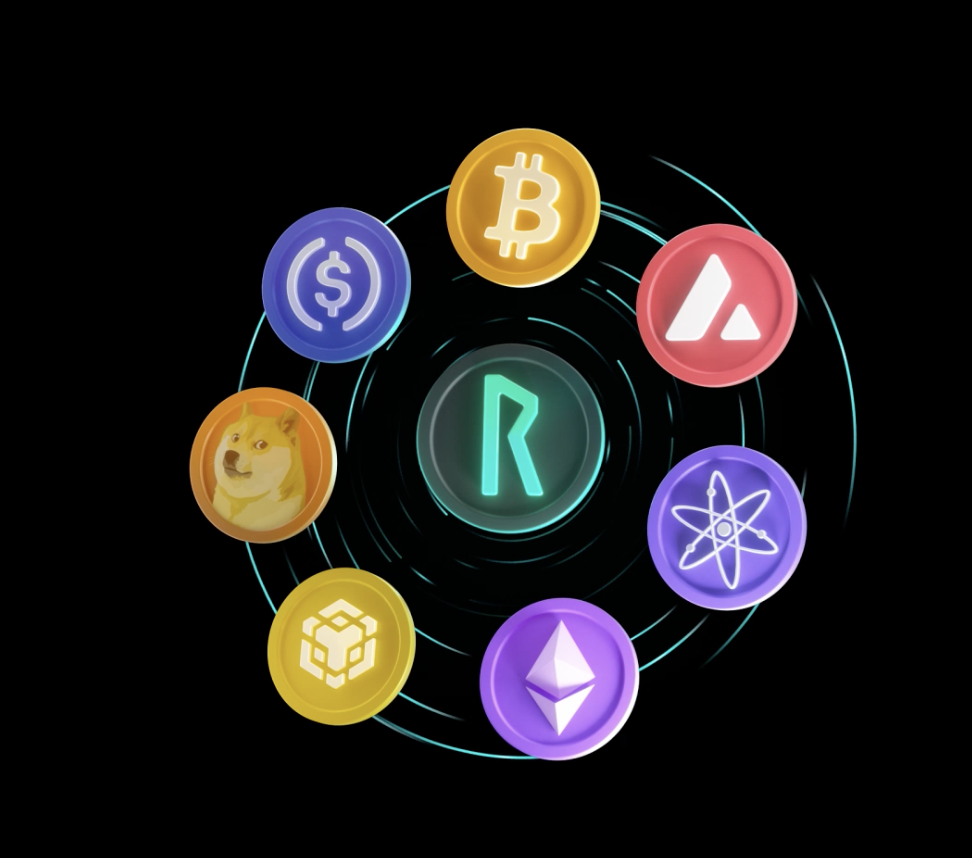
In cross-chain DeFi, most protocols focus on transferring assets across chains, while THORChain’s core value lies in enabling direct swaps between native assets. By building cross-chain liquidity pools and a decentralized node network, THORChain provides a more efficient solution for asset movement between different blockchains.
How Does THORChain Enable Cross-Chain Swaps Between BTC and ETH?
The core mechanism that allows THORChain to enable BTC-to-ETH cross-chain swaps is the use of RUNE as an intermediary settlement asset, together with a two-pool swap model. When a user wants to swap BTC for ETH, the system does not execute a direct BTC/ETH trade. Instead, it completes the process through two liquidity pools: BTC/RUNE and ETH/RUNE.
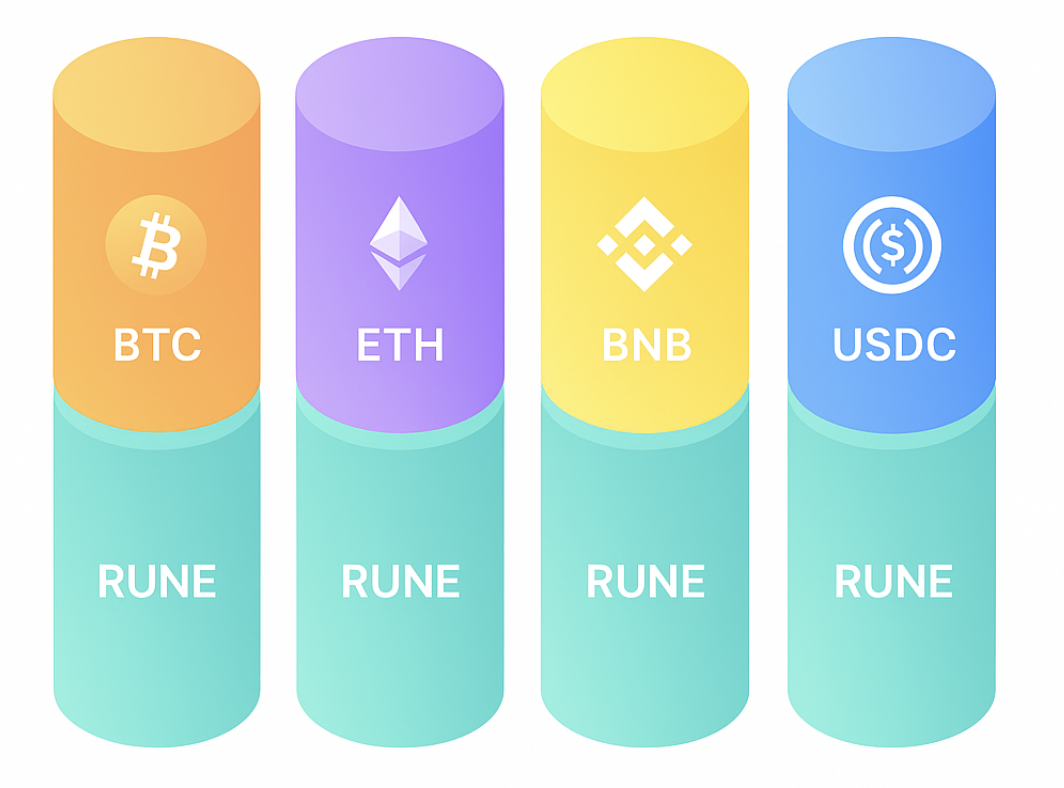
More specifically, after the user sends BTC, the protocol first swaps BTC into RUNE through the BTC/RUNE liquidity pool. It then swaps RUNE into ETH through the ETH/RUNE liquidity pool and finally sends the ETH to the user. This process can be understood as: BTC → RUNE → ETH.
This design avoids the need to create a separate liquidity pool for every asset pair, reducing liquidity fragmentation and improving cross-chain swap efficiency.
What Is THORChain’s Cross-Chain Swap Process?
When a user initiates a BTC-to-ETH swap on THORChain, the system first receives the BTC sent by the user, and the node network confirms that the transaction has arrived. The protocol then calculates how much RUNE can be obtained based on real-time pricing in the liquidity pool, and uses the ETH/RUNE pool price to calculate the final amount of ETH the user will receive.
After the pricing calculation is complete, THORChain releases the corresponding amount of ETH to the user’s specified address through its fund custody system, completing the entire cross-chain swap process. The full process is verified and executed by decentralized nodes, without relying on any centralized intermediary.
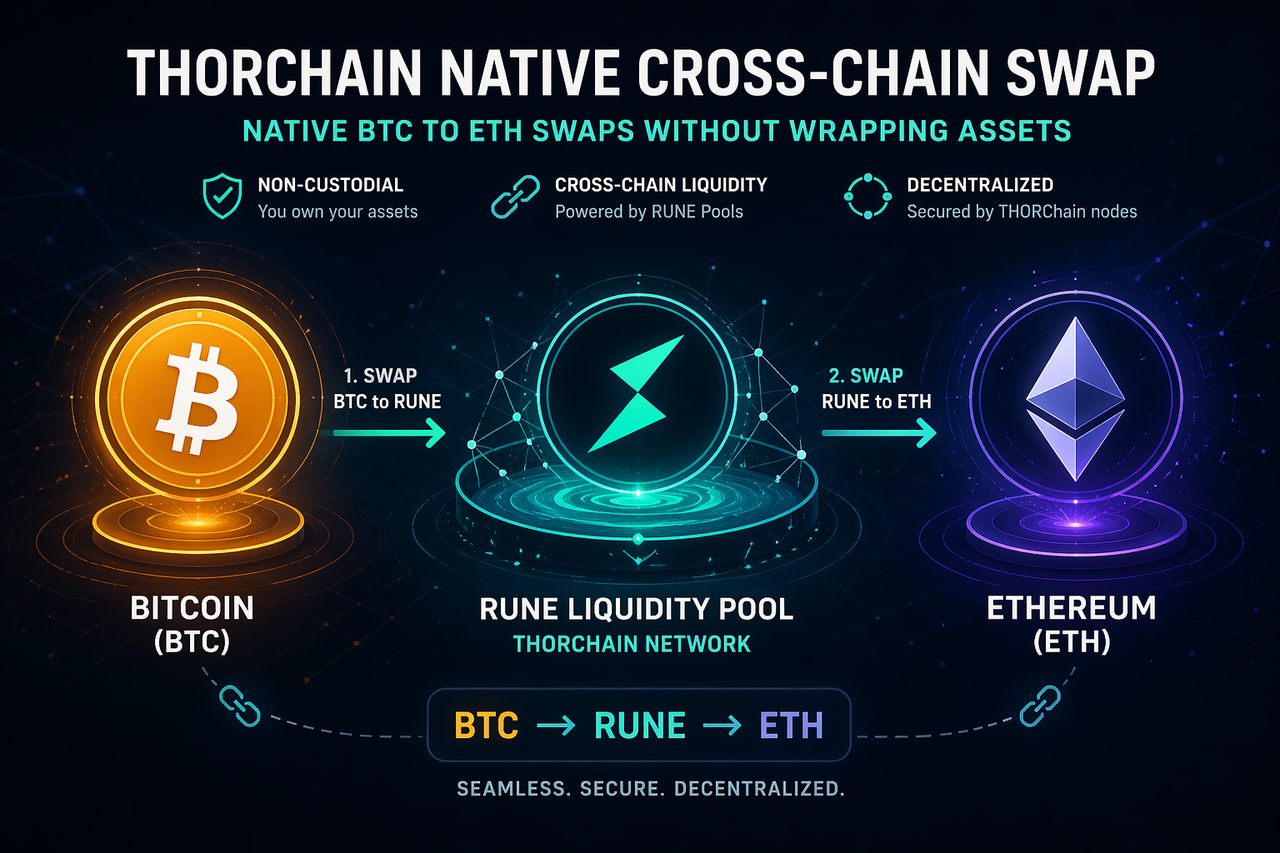
This model allows users to exchange assets directly between different blockchains while keeping them in their native asset form, rather than depending on wrapped assets for trading.
Why Does THORChain Not Need Wrapped Assets?
Traditional cross-chain bridges usually require BTC to be locked first, after which an equivalent amount of wrapped assets, such as WBTC, is minted on the target chain. In this case, users are not actually trading native BTC, but a mapped version of it, which adds extra risk and complexity.
THORChain, by contrast, completes swaps between native assets through liquidity pools and does not need to mint any wrapped assets on the target chain. BTC enters the liquidity pool on the Bitcoin chain, while ETH is released from the liquidity pool on the Ethereum chain. The two are connected through RUNE as a value medium, so there is no need to create any intermediary mapped asset.
This model reduces the risks associated with bridged assets and makes the cross-chain transaction process more direct.
What Are the Advantages of THORChain Cross-Chain Swaps?
THORChain’s biggest advantage is that it enables direct swaps between native assets. Users can complete cross-chain transactions between BTC and ETH without going through a centralized exchange and without first wrapping their assets into another form. This significantly reduces the complexity of cross-chain operations.
At the same time, THORChain’s decentralized liquidity pools provide ongoing liquidity support for cross-chain swaps, allowing trades to be priced and settled automatically. Compared with traditional bridging solutions, this approach removes intermediate steps and improves the efficiency of asset movement, giving THORChain a clear advantage within cross-chain DeFi infrastructure.
What Risks Do THORChain Cross-Chain Swaps Face?
Although THORChain enables native cross-chain asset swaps, certain risks remain. First, cross-chain transactions depend on liquidity pools. When pool depth is insufficient, large trades may experience higher slippage. Second, the node network and protocol logic are relatively complex, and any vulnerability could affect fund security.
In addition, because BTC and ETH are located on different chains, cross-chain swaps involve confirmation times across multiple networks. Transaction speed may therefore be affected by on-chain congestion. For users making large cross-chain swaps through THORChain, liquidity depth and protocol security are important factors to watch.
Conclusion: How Does THORChain Advance Native Cross-Chain Swaps?
THORChain enables native cross-chain swaps between BTC and ETH through the BTC → RUNE → ETH two-pool swap model, without relying on wrapped assets or centralized exchanges. This mechanism not only improves the efficiency of cross-chain asset movement, but also reduces the complexity and risks associated with traditional bridge models.
As demand for interaction between multichain assets continues to grow, THORChain is becoming an important liquidity infrastructure in cross-chain DeFi. Its native cross-chain swap capability gives major assets such as BTC and ETH more direct liquidity support, while also allowing RUNE to play a key role across the entire protocol.
FAQs
How Does THORChain Enable Cross-Chain Swaps Between BTC and ETH?
THORChain completes swaps through two liquidity pools, BTC/RUNE and ETH/RUNE, following the path BTC → RUNE → ETH to enable cross-chain exchange between native assets.
Why Does THORChain Not Need Wrapped Assets?
THORChain uses liquidity pools and RUNE as an intermediary settlement asset to complete swaps, so there is no need to mint wrapped assets on the target chain.
Are THORChain Cross-Chain Swaps Safe?
THORChain uses a node network and liquidity pool mechanism to support security, but risks such as insufficient liquidity and protocol vulnerabilities still exist.
What Advantages Does THORChain Have Over Cross-Chain Bridges?
THORChain supports direct swaps of native assets, reduces the need for wrapped asset steps, and lowers bridge-related complexity.







