Огляд Lighter і LIT
Джерело: https://lighter.xyz/
Lighter — це децентралізована платформа торгівлі безстроковими контрактами, побудована на архітектурі другого рівня Ethereum. Основна мета — надати користувачам некостодіальний досвід торгівлі безстроковими контрактами з низькою затримкою та мінімальними комісіями. Технологія Layer-2 дозволяє Lighter суттєво зменшити газові витрати й підвищити ефективність виконання транзакцій, забезпечуючи баланс між високою продуктивністю та децентралізацією.
Наприкінці 2025 року Lighter офіційно представив власний токен — Lighter Infrastructure Token (LIT), який є основним активом для стимулювання екосистеми та управління. Випуск LIT став ключовим етапом для Lighter, що перетворює платформу з окремого торгового протоколу на повноцінну екосистему.
LIT виконує не лише функцію стимулювання користувачів, а й є критично важливим інструментом для підвищення залученості до протоколу, зміцнення участі спільноти та підвищення ефективності управління. Lighter розподіляє частину токенів безпосередньо серед ранніх активних користувачів через програми обміну балів і airdrop-кампанії, прискорюючи залучення користувачів і зміцнюючи спільноту.
Структура розподілу токена та механізм airdrop
За відкритими даними, LIT має фіксовану загальну емісію (наприклад, 1 мільярд токенів) і просту модель розподілу, поділену на дві основні категорії: стимули екосистеми та внутрішні стимули:
- 50% призначено для екосистеми — для винагород спільноти, обміну балів, стимулювання ліквідності та майбутніх партнерств у межах екосистеми;
- 50% призначено для команди та ранніх інвесторів, з річним cliff-періодом, після чого — трирічний лінійний вестинг.
У межах екосистемного розподілу близько 25% токенів уже розподілено як airdrop серед відповідних користувачів через програми Points Season 1 і 2. Ці airdrop автоматично зараховуються — ручний запит не потрібен. Решта екосистемних токенів підтримає майбутні сезонні стимули й спільні проєкти.
Така модель розподілу, балансуючи винагороди раннім користувачам і довгострокове зростання екосистеми, закономірно стала предметом дискусій у спільноті.
Різні погляди у DeFi-спільноті
Погляди прихильників
Частина DeFi-спільноти розглядає токеноміку LIT як прозору з чіткою структурою стимулів. Зокрема, розподіл токенів серед ранніх реальних користувачів через airdrop на основі балів сприймається як відносно справедливе повернення цінності. Додатково, тривалий період блокування токенів команди та інвесторів допомагає зменшити тиск продажу в короткостроковій перспективі.
Прихильники вважають, що для інфраструктурних DeFi-проєктів розумні стимули для команди й капіталу є необхідними для забезпечення довгострокових ресурсів розвитку та постійної еволюції продукту, що підтримує стійке зростання протоколу.
Погляди критиків
Водночас деякі учасники спільноти ставлять під сумнів модель розподілу LIT. Вони вважають, що виділення 50% токенів команді та інвесторам є надмірним і може створювати стійкий тиск на продаж під час майбутніх розблокувань. Деякі критики розглядають таку структуру як сприятливу для внутрішніх інтересів, а не як справжній “fair launch”.
Критики також зазначають, що у DeFi-секторі, який акцентує децентралізоване управління, висока концентрація розподілу токенів може підірвати децентралізацію протоколу та знизити довіру спільноти у довгостроковій перспективі.
Динаміка ринкової ціни та короткострокова торгова активність
Джерело: https://www.gate.com/trade/LIT_USDT
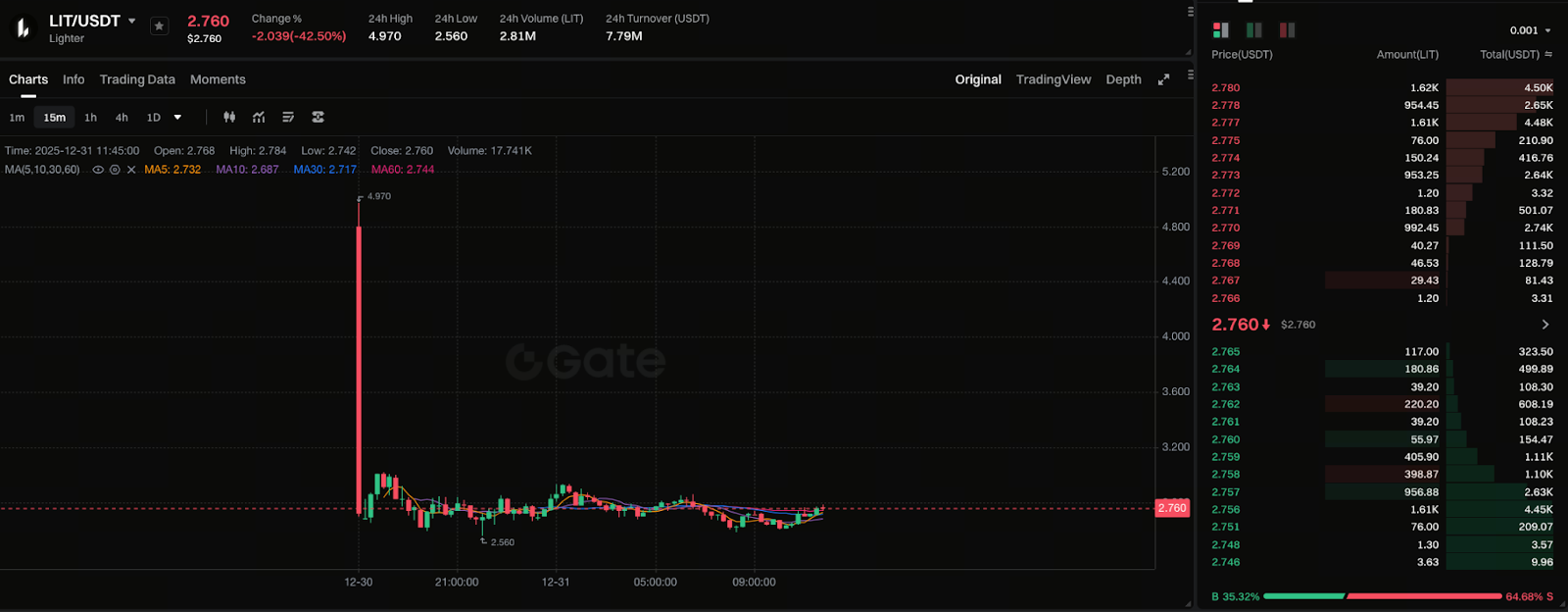
Після airdrop LIT зазнав суттєвої короткострокової волатильності ціни. Дані свідчать, що під час премаркету або на ранніх етапах торгів ціна LIT знижувалася більш ніж на 10% у певний момент, що вказує на те, що частина отримувачів airdrop вирішила одразу зафіксувати прибуток, спричинивши концентрований тиск на продаж.
Ця динаміка відповідає типовому сценарію “sell the news” (продати на новині), коли ринок спостерігає короткострокову фіксацію прибутку після ключових подій. Подібні тенденції вже спостерігалися у попередніх airdrop-проєктах і є типовими для ринку.
Варто зазначити, що обмежена ліквідність токена на ранніх етапах здатна посилювати торгову активність і призводити до цінових коливань, які значно перевищують рівень зрілих ринків.
Перспективи: потенційні можливості та ключові ризики
Можливості
- Потенціал стимулювання екосистеми: зі зростанням торгової екосистеми Lighter, LIT може стати основним інструментом для торгових стимулів, надання ліквідності та участі в управлінні.
- Прозорий графік вестингу: річний період блокування з подальшим трирічним лінійним розподілом дозволяє ринку прогнозувати зміни пропозиції токенів і зменшує ризик раптових цінових стрибків.
- Зростаюча увага з боку провідних бірж: кілька найбільших бірж уже додали LIT або спостерігають за ним, що може підвищити ліквідність і доступність ринку в майбутньому.
Ризики
- Висока частка токенів у внутрішньому розподілі: значний пакет у команді та інвесторів може створювати стійкий тиск на зниження ціни під час майбутніх розблокувань.
- Чутливість до ринкових настроїв: сектор DeFi дуже волатильний, і ціна LIT може зазнавати різких коливань через макроекономічні фактори та події на блокчейні.
- Висока конкуренція у секторі: ринок DEX безстрокових контрактів є надзвичайно конкурентним, і інноваційні протоколи можуть відволікати користувачів і торгові обсяги.
Висновок: значення та основні висновки із запуску LIT
Запуск токена LIT від Lighter став важливим етапом переходу від торгового продукту до повноцінної екосистеми. Токен вирішує питання стимулювання користувачів і формує основу для управління протоколом і довгострокових механізмів стимулювання.
Попри розбіжності у DeFi-спільноті щодо структури розподілу, ця дискусія відображає постійну боротьбу сектору за баланс між справедливістю, ефективністю стимулів і стійким зростанням. Надалі ринок має уважно стежити за динамікою ціни LIT після лістингу, графіком вестингу токена, а також змінами у спільноті та екосистемі для повної оцінки його довгострокової цінності як інфраструктурного токена.