Сектор Кошельков вступил в фазу интеграции «мультичейн + торговля + добавленная стоимость», где значение токеномики существенно возросло. Теперь пользователи обращают внимание не только на безопасность хранения активов, но и на издержки кроссчейн-переводов, эффективность дохода, сложности взаимодействия и права на участие в управлении сообществом. SFP подтверждает свою ценность этими высокочастотными запросами: проекты, которые внедряют утилиту токена в реальные пользовательские процессы, способны создать устойчивую экосистему.
Для комплексного анализа SFP важно рассмотреть три основных аспекта: структуру предложения и утилиту токена; продуктовый слой SafePal (Программный кошелек, Аппаратный кошелек, Торговля и Earn) и его способность поглощать спрос; а также влияние рыночных циклов и регулирования на оценку стоимости. Далее рассмотрим эти три направления, чтобы сформировать полный аналитический фреймворк.
Основные функции и утилиты токена SFP
Источник изображения: SFP White Paper
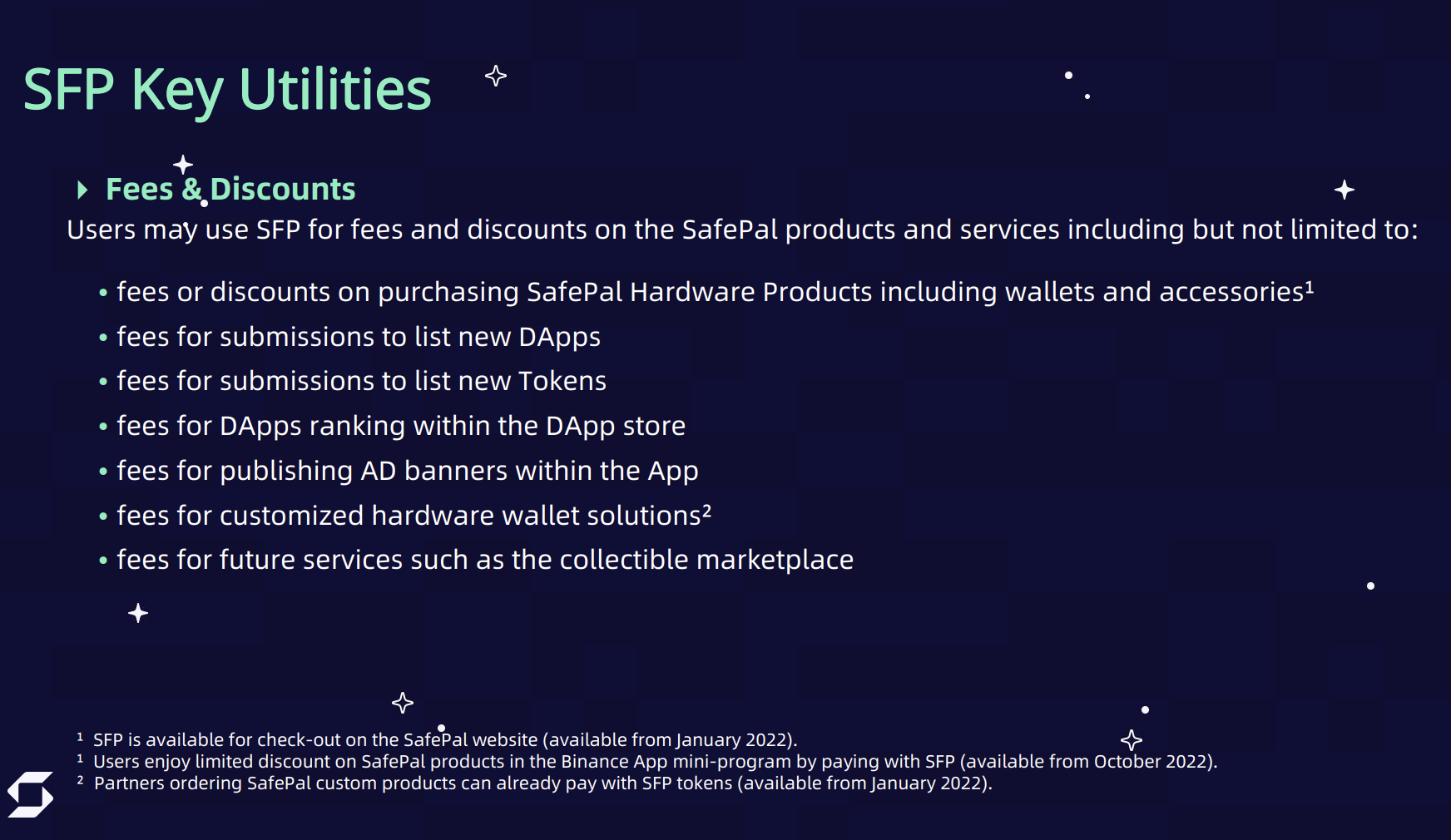
С точки зрения продукта, ключевая ценность SFP — в утилите, а не просто в хранении. При обменах, создании мостов, стейкинге, участии в событиях или взаимодействии с экосистемой SafePal SFP используется на разных этапах.
-
Механизмы наград и поощрений. Держатели SFP участвуют в платформах активностей, партнерских аирдропах и программах экосистемного участия. Это напрямую повышает удержание пользователей, особенно при запуске новых сетей и функций. После запуска SafePal гранта Builder’s Grant для экосистемы Solana (инициатива на 3 млн $) в 2026 году ожидается усиление внимания к развитию экосистемы и синергии токена.
-
Повышение доходности и разблокировка функций. В Earn и доходных сценариях SafePal SFP используется для увеличения доходности или открытия дополнительных прав. Для активных пользователей ончейн-стратегий такой подход «токен как переключатель функций» оказывается более устойчивым, чем разовые субсидии.
-
Оптимизация комиссий за газ. Станция газа SafePal позволяет использовать SFP для покрытия мультичейн-комиссий, снижая издержки при перемещении активов между сетями. Для мультичейн-пользователей это заметно повышает частоту использования.
-
Оплата сервисов экосистемы и доступ к демонстрациям. При подаче проектов на демонстрацию токенов или DApp SFP выступает платежным и сервисным токеном. Это формирует спрос не только со стороны розничных пользователей, но и партнеров экосистемы, создавая многомерную базу.
В целом, функциональная матрица SFP — это высокочастотное малое использование, среднечастотные права и низкочастотное управление. Пока активность SafePal и ончейн-вовлеченность растут, спрос на утилиту SFP остается устойчивым.
Механизм выпуска и распределения токена
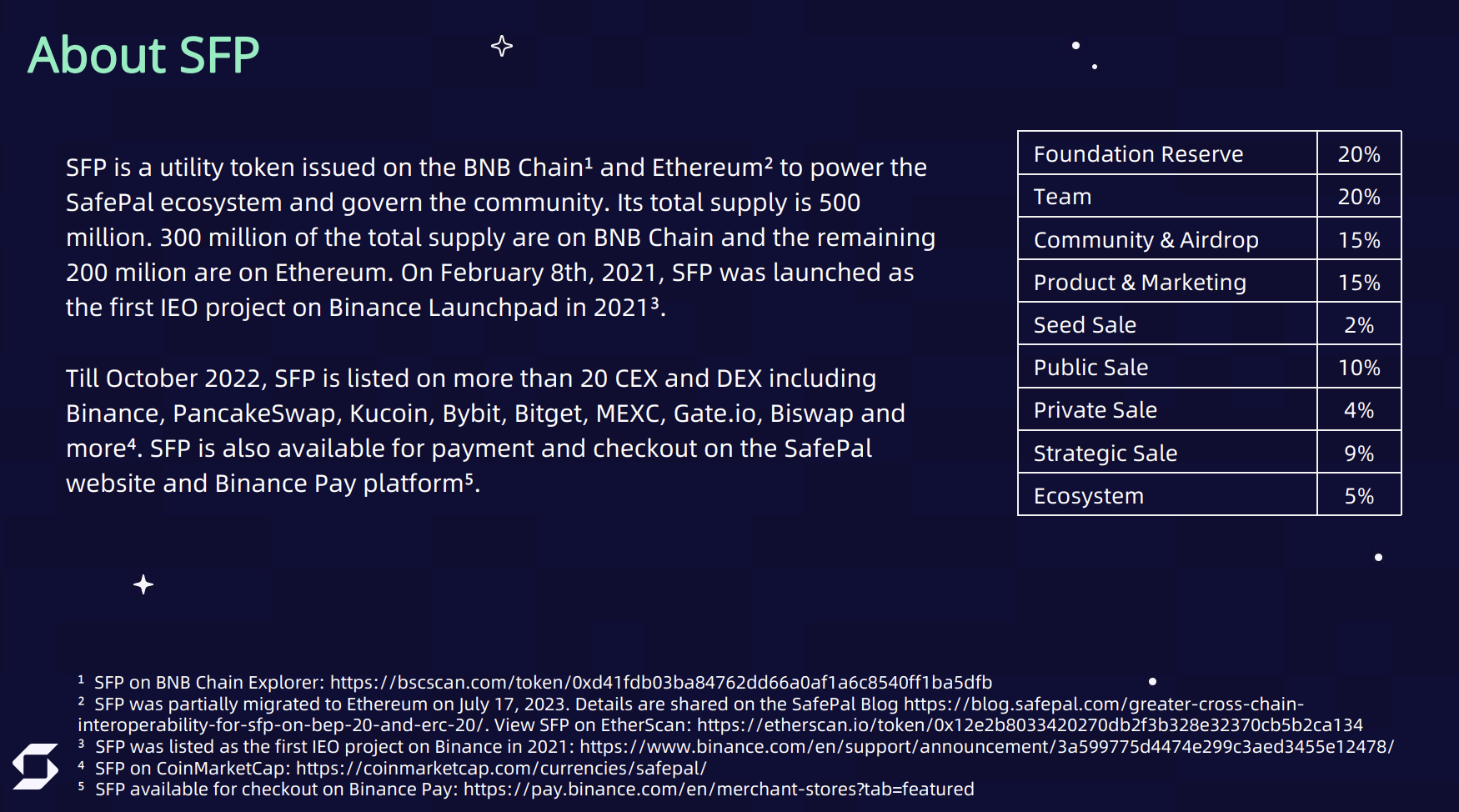
SFP работает по фиксированной модели предложения — максимум 500 млн токенов. Это повышает предсказуемость и исключает долгосрочное размывание стоимости.
Первоначально SFP был размещен через Binance Launchpad в 2021 году (около 10 %), а затем сформировал многоуровневую структуру: публичный выпуск, экосистемные стимулы, команда и советники, частные/посевные раунды, операционная деятельность сообщества. Такая структура типична для криптопроектов, но важны два аспекта:
При оценке SFP рекомендуется параллельно анализировать механизмы распределения и спроса:
-
Если новые токены поступают в обращение по мере роста активности кошелька и экосистемы, давление на цену легче поглощается.
-
Если темпы обращения опережают рост использования, стоимость становится зависимой от рыночного настроения, что повышает волатильность.
SFP поддерживает кроссчейн-выпуск (BEP-20 и ERC-20), что обеспечивает ликвидность и доступность. Инвесторам важно отслеживать глубину ликвидности, торговые издержки и безопасность мостов между сетями.
Как участвовать в управлении платформой с помощью токенов SFP
Модель управления SFP — это практическое управление сообществом: не мгновенный переход к DAO, а постепенное усиление влияния держателей через постоянное взаимодействие.
Доступные пути участия:
-
Голосование и обратная связь: мнения по поддержке активов, приоритетам функций и направлениям событий влияют на развитие продукта.
-
Доступ к событиям экосистемы: держатели SFP получают преимущества в отборе участников, уровнях стимулов и партнерских бонусах.
-
Кросс-протокольное управление: благодаря интеграции DApp в SafePal пользователи участвуют в управлении внешними протоколами, получая мультиуправление в Кошельке.
Такая модель управления эффективна и позволяет быстро реагировать на рыночные изменения. Главная задача — поддерживать прозрачность: стандартизировать предложения, каналы обратной связи и публикацию результатов. Для пользователей важна не только возможность голосовать, но и реальное влияние результатов на продукт и распределение ресурсов.
По мере расширения поддержки сетей (например, Hedera, World Chain, Lemon Chain) и интеграции новых сценариев (например, Polymarket) в 2025–2026 годах вопросы управления станут сложнее, а ценность совместной работы держателей SFP — выше.
Рыночная стоимость и долгосрочный потенциал токена SFP
Рыночная стоимость SFP состоит из трех компонентов: функциональной, сетевой и ожидаемой.
Функциональная стоимость определяется использованием токена в продукте — оплатой газа, увеличением доходности, стимулами и оплатой сервисов. Чем стабильнее этот показатель, тем прозрачнее фундаментальный спрос.
Сетевая стоимость формируется за счет пользовательской базы SafePal, мультичейн-поддержки и партнерств. SafePal расширил мультичейн-покрытие и глобальные сервисы, повысил уровень аппаратной безопасности до CC EAL 6+. По мере роста безопасности и охвата продукта привлекательность SafePal для новых пользователей увеличивается, что усиливает сетевой эффект SFP.
Ожидаемая стоимость отражает рыночную оценку перспектив роста. Экосистемные стимулы, новые платежные сценарии и усовершенствованные торговые модули могут быть учтены в цене заранее. Однако этот компонент наиболее волатилен и зависит от макроэкономической ликвидности и настроения.
Для оценки долгосрочного потенциала важны четыре ключевых показателя:
-
Месячное количество активных кошельков и удержание пользователей;
-
Объем транзакций и кроссчейн-активность в Кошельке;
-
Проникновение SFP в основные функции;
-
Качество и устойчивость новых экосистемных партнерств.
Если все эти показатели растут, долгосрочная устойчивость SFP будет выше, чем у токенов, основанных только на нарративах. Если показатели стагнируют, устойчивый рост маловероятен даже при краткосрочном ралли.
Анализ рисков и доходности инвестиций в токен SFP
Все платформенные токены сталкиваются с задачей обеспечить рост, и SFP не исключение. Взвешенный анализ требует учета как факторов доходности, так и рисков.
Потенциальные источники доходности:
-
Рост спроса за счет расширения экосистемы;
-
Переоценка функциональной стоимости после обновления продуктов;
-
Повышение оценки на фоне улучшения рыночного аппетита к риску.
Основные риски:
-
Рыночный цикл: давление на платформенные токены в периоды сокращения плеча на крипторынке;
-
Конкуренция: ведущие Кошельки развивают мультичейн, торговые и доходные функции, а издержки смены продукта для пользователя невысоки;
-
Исполнение: задержки в запуске функций, слабые партнерства или плохой пользовательский опыт могут снизить спрос на токен;
-
Ликвидность: различия в глубине на торговых площадках и в ончейн-пулах могут усиливать ценовые колебания;
-
Комплаенс: регулирование криптоплатежей, доходных продуктов и Кошельков может быстро меняться по регионам;
-
Самостоятельное хранение: пользователи должны владеть навыками управления сид-фразами, подписями и предотвращения фишинга.
Более устойчивая стратегия — это слоистые позиции и поэтапная валидация:
-
Сначала проверить, поддерживаются ли оценки данными по продукту;
-
Затем определять размер позиций с учетом ликвидности рынка;
-
И, наконец, контролировать крайние риски с помощью стоп-лоссов и лимитов на позицию.
Потенциал доходности SFP зависит от реального роста экосистемы. Фокус на данных, а не на цене, часто приводит к более взвешенным решениям.
Итоги
Токеномика SFP глубоко интегрирована с продуктами Кошелька SafePal, ончейн-сервисами и сообществом. Сильные стороны — четкая утилита, ограниченное предложение и широкая экосистемная синергия; вызовы — высокая конкуренция, циклическая волатильность и требования к качеству исполнения.
Согласно последним тенденциям 2025–2026 годов, SafePal продолжает совершенствовать архитектуру безопасности, расширять мультичейн-поддержку и укреплять партнерства, что формирует основу для долгосрочного потенциала SFP. В долгосрочной перспективе на результаты будут влиять три фактора: устойчивый рост пользовательской базы, внедрение новых функций и повышение прозрачности и эффективности управления.