As Meme Coins have become an important part of the crypto asset market, understanding the differences between USELESS and Dogecoin helps explain how Meme Coin culture has evolved from early internet jokes into a digital asset category with complex community structures and distinctive value logic. The differences between Useless Coin and Dogecoin are not only technical. They are also reflected in cultural identity, brand narrative, and community development models.
What Is Useless Coin?
Useless Coin is a Meme Coin built on the Solana network, with “having no use” as its core positioning.
Unlike most projects that try to emphasize technical innovation, ecosystem building, or future vision, USELESS turns “uselessness” directly into its brand label. The project openly states that it does not provide governance functions, does not build a complex ecosystem, and does not promise to change the future of the industry.

This extremely simplified form of expression creates a distinctive reverse narrative. For the community, USELESS is more like a symbol of internet culture than a blockchain product in the traditional sense.
What Is Dogecoin?
Dogecoin, one of the earliest Meme Coins to gain global attention, was created in 2013.
Dogecoin was originally a humorous response to Bitcoin and the speculative frenzy around cryptocurrencies. Its brand image came from the famous Shiba Inu Meme, Doge. At the time of its creation, the project was not intended to become a major digital asset. It was more of a lighthearted and playful internet experiment.
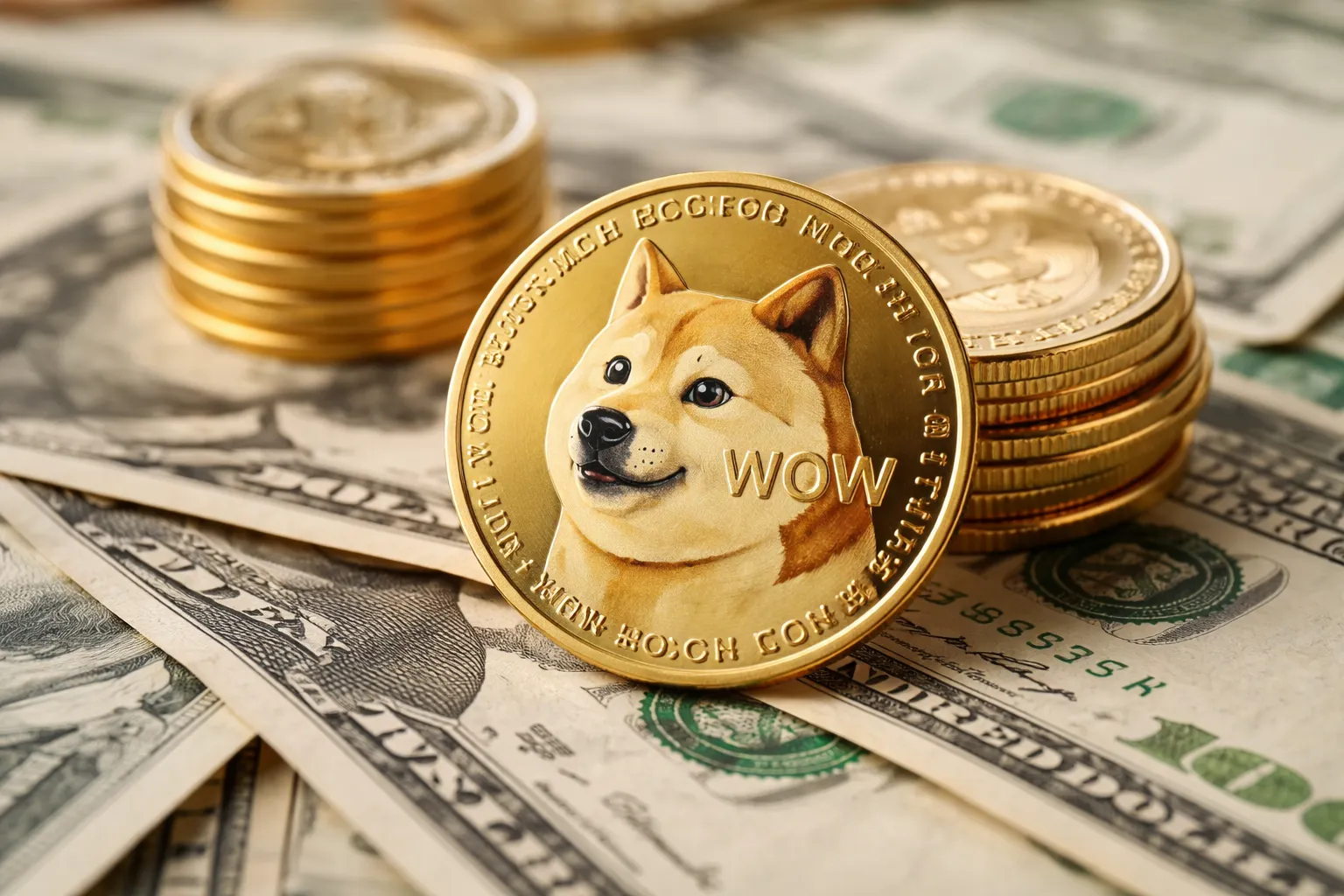
As its community continued to grow, Dogecoin gradually developed its own distinctive cultural system. Users have used DOGE in charity campaigns, sports sponsorships, online tipping, and other scenarios.
How Do the Brand Positions of Useless Coin and Dogecoin Differ?
Dogecoin’s brand core is humor and friendliness.
The project has long emphasized an open community, internet entertainment culture, and active participation in charitable causes. The Dogecoin community often uses the slogan “Do Only Good Everyday” to strengthen its brand image.
Useless Coin’s brand core, by contrast, is satire and self mockery.
USELESS does not try to create an idealistic vision. Instead, it challenges the marketing logic commonly seen in the industry by admitting that it has “no use.” Its content is more often built around humorous satire and cultural deconstruction.
Both brand positions come from internet culture, but they express themselves in completely different ways.
How Do the Community Cultures of Useless Coin and Dogecoin Differ?
Community is the most important part of any Meme Coin, and the two communities have clear cultural differences.
The Dogecoin community is known for long term building and inclusiveness. Many users have held DOGE for years and continue to participate in community activities and online discussions.
Dogecoin’s community is closer to traditional internet forum culture, with an emphasis on cooperation, sharing, and entertainment.
By comparison, the USELESS community has a stronger subcultural character.
Community members usually interact through satire, deconstruction, and Meme creation. “Having no use” is not only the project’s slogan, but also an important symbol of community identity.
This culture gives the USELESS community a highly recognizable position within the Meme Coin ecosystem.
Dogecoin and Useless Coin both rely on community consensus, but their narratives work in different ways.
Dogecoin’s value narrative is built on long term brand accumulation. After years of development, DOGE has become one of the most representative Meme Coins in the crypto market, and the brand itself now has broad recognition.
Useless Coin uses a reverse narrative strategy.
The project does not emphasize future value or promote technical advantages. Instead, it attracts attention by promising nothing at all.
This model does not rely on a grand vision. It relies on the community’s identification with internet humor and anti formula culture.
How Do Useless Coin and Dogecoin Spread Differently?
Dogecoin’s spread mainly depends on long term community building and broad media exposure.
Over time, DOGE has become a digital asset frequently covered by mainstream media, and its influence now extends far beyond the traditional Meme Coin category.
Useless Coin spreads more through social media culture.
Community members continue to expand the project’s influence through memes, short videos, satirical content, and derivative creations.
This communication model fits the way modern Memes spread, using high frequency, low barrier, and highly replicable content to achieve viral circulation.
USELESS vs Dogecoin
| Comparison Dimension |
Useless Coin |
Dogecoin |
| Launch period |
Mature Meme Coin stage |
Early Meme Coin stage |
| Blockchain foundation |
Solana |
Independent blockchain |
| Core narrative |
Having no use |
Humor culture |
| Brand positioning |
Satire and self mockery |
Entertainment and friendliness |
| Community features |
Subcultural identity |
Long term community building |
| Communication model |
Social media Memes |
Driven by both community and media |
| Application orientation |
Cultural expression |
Payment and tipping exploration |
| Core value |
Reverse narrative |
Brand influence |
Conclusion
Although Useless Coin and Dogecoin both belong to the Meme Coin category, their cultural logic and development paths differ significantly. Dogecoin was born in the early stage of Meme Coin development and became a globally recognized digital asset through humor culture and long term community building. Useless Coin emerged in a highly mature Meme Coin era and built distinctive brand recognition through the reverse narrative of “having no use.”
Dogecoin shows how a Meme Coin can grow from an internet joke into a mainstream digital asset, while Useless Coin shows how community culture and anti formula marketing can become a new force in communication. Together, they demonstrate that the influence of Meme Coins does not come only from technical capability, but also from cultural identity, community consensus, and the network effects of internet communication.
FAQs
What Is the Biggest Difference Between Useless Coin and Dogecoin?
The biggest difference lies in their brand narratives. Dogecoin centers on humor culture and community spirit, while Useless Coin builds brand recognition through the reverse narrative of “having no use.”
Does Dogecoin Have Real Uses While Useless Coin Does Not?
Over its long development, Dogecoin has been used for online tipping, charity activities, and payment experiments. Useless Coin’s official positioning does not emphasize practical use cases. It focuses more on cultural expression and community driven communication.
Why Is Useless Coin Compared with Dogecoin?
Because both are Meme Coins, and both rely on community consensus to gain influence. However, they represent different stages of Meme Coin development and different cultural directions.
Is Useless Coin a Competitor to Dogecoin?
From a technical and application perspective, the two do not directly compete. Useless Coin focuses more on satirical culture, while Dogecoin has developed into a Meme Coin brand with global recognition.
Risk Warning: Meme Coins are highly volatile digital assets, and their market performance may be affected by community sentiment, media communication, market conditions, and many other factors. This article is intended only to analyze the cultural differences and development logic of Useless Coin and Dogecoin. It does not constitute investment advice.