 Source: Anoma Official Website
Unlike traditional "transaction hub" models that force users through sequential signing, bridging, and token swapping, Anoma represents a fundamental shift in Web3 interaction: users simply state "what they want," and the system handles "how to get it done." This design not only elevates the experience of cross-chain DeFi, payments, and institutional-grade applications but also lays the foundation for next-generation dApp capabilities like programmable privacy, information flow control, and composable identity.
From the perspective of blockchain and digital asset industry evolution, Anoma aims to unify the fragmented multi-chain landscape using operating system-level abstractions, with XAN serving as the global coordination and governance asset. XAN launched on Ethereum mainnet in September 2025, with capabilities rolling out in phases. By 2026, DOS has expanded across multiple EVM ecosystems, and applications like AnomaPay are in public beta. The sections below detail the project background, token model, technical architecture, operational mechanics, use cases, competitive positioning, investment risks, and future outlook.
What Is Anoma (XAN)? Project Background and Development History
Anoma is backed by the Swiss Anoma Foundation, with core R&D and engineering by Heliax. Co-founders include Adrian Brink, Awa Sun Yin, and Christopher Goes, many of whom bring experience from Cosmos and similar infrastructure projects. The project originated around 2020, aiming to address blockchain's "involution"—numerous new chains stacking on similar transaction models without solving user experience, privacy, or cross-chain coordination.
Anoma positions itself as a "third-generation Intent-Centric architecture," emphasizing generalized intents, decentralized counterparty discovery, and outsourcing complex state transitions to a network of Solvers. Within the same foundation ecosystem, privacy-focused chains like Namada complement Anoma: Namada focuses on multi-chain private settlement, while Anoma targets the cross-chain application layer and OS-level abstraction.
In terms of funding, the Anoma Foundation has completed multiple rounds totaling over $60 million (publicly disclosed), with investors including Polychain Capital, CMCC Global, Electric Capital, Coinbase Ventures, and Delphi Digital. On September 29, 2025, the Anoma mainnet rollout began: XAN was deployed as an ERC-20 token on Ethereum, simultaneously launching governance, the Anoma Portal, and the Season 1 airdrop claim. Protocol Adapters were subsequently deployed to Base, Arbitrum, BNB Chain, Optimism, Aurora, and others, with mainnet functions upgraded in phases.
XAN Tokenomics and Ecosystem Incentives
XAN is Anoma's native coordination token, with a fixed total supply of 10 billion tokens. The official allocation is approximately: Supporters (including early investors) 31%, Community/Market/Liquidity 25%, R&D and Ecosystem 19%, Core Contributors 15%, Anoma Foundation 10%. Foundation, R&D, investor, and core contributor shares typically have a 12-month lock-up followed by 36-month linear release. Initial circulating supply is estimated between 2 billion and 2.5 billion tokens, subject to on-chain data.
Current XAN utilities include: paying network fees, participating in dual-track governance, and serving as the coordination medium for ecosystem economic activities. Governance features a "Voter Body" and "Governance Council" with checks and balances: token holders lock XAN for voting rights, the council can propose when turnout is low, and voters can veto council proposals. Future mainnet phases may introduce Solver staking and slashing, pending official upgrade announcements.
For ecosystem incentives, Anoma uses the Builders Program (e.g., Intents Initiates), multi-season airdrops (Season 1/2), and community contribution programs to attract developers and users to testnets, application building, and governance. XAN's value capture ultimately depends on DOS adoption in real-world use cases—whether payment routing, privacy applications, cross-chain settlement volume, and the Solver economy form a positive feedback loop.
What Is Anoma's Intent-Centric Architecture?
Intent-Centric Architecture treats "intents" as the fundamental, application-agnostic primitive. Users no longer manually script "call Contract A → bridge → call Contract B," but instead declare target states and constraints, e.g., "Swap ETH for USDC before the deadline with slippage no greater than X%, and send to a specific address."
Anoma splits intent processing into stages: expression and broadcast, counterparty discovery, solving (Solvers compute valid state transitions), and atomic execution at the settlement layer. Unlike first-generation "single-application intents" (e.g., some DEX aggregators) or second-generation "cross-chain but centralized solving," Anoma emphasizes end-to-end decentralized general intents, configurable ordering and settlement, and local/global scalability.
The technical core is the Anoma Resource Machine (ARM)—analogous to EVM for Ethereum. ARM defines the creation, consumption, and state model of Resources, supporting privacy and composable logic. Intents are coded under ARM semantics as constraints on resource state transitions, while Solvers search the feasible solution space for composable intent subsets, producing transactions acceptable to the settlement layer.
How Does Anoma Build a Web3 Decentralized Operating System?
Anoma calls itself a Distributed OS (DOS), akin to how a traditional OS abstracts CPU/hardware. Developers face a unified application interface, while underlying chains, rollups, liquidity, and oracles become pluggable resources. The official three-layer structure is:
- Application Layer: Anoma Apps built once and deployed across multiple chains, giving users a consistent cross-chain experience.
- Network Layer: A P2P network (also called Interpool in whitepapers and docs) of Intent Gossip nodes and Solvers, handling intent propagation and matching.
- Settlement Layer: Connects to Ethereum, L2s, and other chains via Protocol Adapters, finalizing state updates.
Protocol Adapters are smart contracts on EVM-compatible chains, allowing ARM to "add" intent and privacy features to existing chains without modifying underlying protocols. The Anoma Portal serves as the ecosystem entry point for balance management, governance voting, and application discovery.
The advantage: no need to convince every chain to migrate consensus. The disadvantage: full DOS capabilities depend on phased mainnet upgrades; early stages may focus on settlement adaptation and specific apps like AnomaPay.
How the Solver Network, Intents, and Fractal Consensus Work
Intent Lifecycle: Users submit intents via wallets or apps → Broadcast over the Gossip network → Solvers monitor the intent pool, combining chain states to find matchable, composable counterparty intents → Construct transactions satisfying ARM rules → Submit to the corresponding chain's Protocol Adapter for settlement.
Solver Network: Solvers are permissionless market participants who may specialize in certain intent types (e.g., stablecoin routing, NFT matching) or act as general solvers. Competition drives better prices, shorter routes, and lower gas. Future phases may introduce XAN staking and slashing to deter malicious behavior (subject to the roadmap).
Fractal Consensus: The whitepaper introduces Fractal Instances—instances of Anoma's consensus and execution protocol with properties of security domains, concurrency domains, and data availability domains. Each Fractal Instance is sovereign, can choose different Sybil resistance, gas pricing, and local governance; under conditions like overlapping validator sets, multi-chain atomic settlement is possible. Local instances (e.g., on-demand consensus between devices) serve low-latency scenarios, while global instances handle cross-domain interoperability.
At the consensus layer, BFT protocols like Typhon (under research) aim to separate "ordering" from "execution validity," allowing certain Solver-submitted transactions to be ordered first and validated later, improving parallel intent processing. Overall, this is still in phased mainnet deployment; production parameters should follow official specs and audit reports.
Use Cases: Cross-Chain, Privacy, and Multi-Chain Settlement
Cross-Chain and Liquidity: Users can execute cross-chain token swaps, payments, or combined DeFi operations with a single intent, without manually managing bridges and routes. Ecosystem projects like Fluton and Spicenet explore intent gateways and unified liquidity layers.
Programmable Privacy: ARM supports data and function privacy, enabling selective disclosure on public chains via ZK and other mechanisms, meeting needs for "privacy plus provability" in payments, trade, payroll, and compliance audits. AnomaPay's public beta on BNB Chain and others supports private transfers of ETH, USDC, USDT, and XAN, emphasizing non-custodial, Passkey login, and payment links with non-hexadecimal addresses.
Multi-Chain Settlement: The same application can settle simultaneously on Ethereum, Base, Arbitrum, and other chains, suitable for RWA tokenization, institutional treasuries, AI agent payments, and other scenarios requiring "one business logic, assets on multiple chains." The Anoma Builders Program's first cohort includes projects in privacy DEX (Mycel), DeFAI (HeyElsa), and resource coordination (Reppo).
How Anoma Differs from Traditional Public Chains and Modular Blockchains
| Dimension |
Traditional L1/L2 |
Modular Stack (DA/Execution/Consensus Separation) |
Anoma (DOS) |
| Core Unit |
Transaction / Block |
Module Composition |
Intent + Resource |
| Positioning |
Single-chain state machine |
Pluggable infrastructure |
Cross-chain app OS |
| User Interaction |
Step-by-step signing |
Depends on upper-layer abstraction |
Declare result only |
| Scaling Method |
New chain or rollup |
New modules |
Fractal Instance + Adapter |
Anoma does not aim to replace Ethereum's security or liquidity base; instead, it unifies the developer and user interface on top of it. Compared to interoperability solutions like Cosmos IBC and LayerZero, Anoma emphasizes native integration of intent semantics, Solver markets, and ARM-level privacy primitives beyond simple message or asset passing.
Key Risks for XAN Investors
- Technology and Roadmap Risk: Full DOS, Solver staking economy, and fully functional Fractal mainnet are still being delivered in phases, with potential delays or feature scope reduction.
- Token Unlock Pressure: The 31% supporter and 15% core contributor shares will be released continuously after lock-up, potentially creating secondary market supply shocks.
- Governance Concentration: The influence of the council and early holders in the dual-track governance structure needs ongoing monitoring; unstaked voting power may also dilute retail voice.
- Solver and MEV Risk: Without sufficient competition or transparency in the solving market, user intents may be suboptimally executed or subject to value extraction.
- Regulatory and Compliance Risk: Privacy payments and cross-border stablecoin routing face varying regulations across jurisdictions.
- Competition Risk: The intent track already includes UniswapX, CowSwap, Across, and multiple intent infrastructure projects. Anoma must prove differentiated adoption for its cross-chain OS.
- Market Risk: XAN's price is highly volatile. This is not investment advice; please conduct your own research and assess risk tolerance.
Future Development and Market Potential
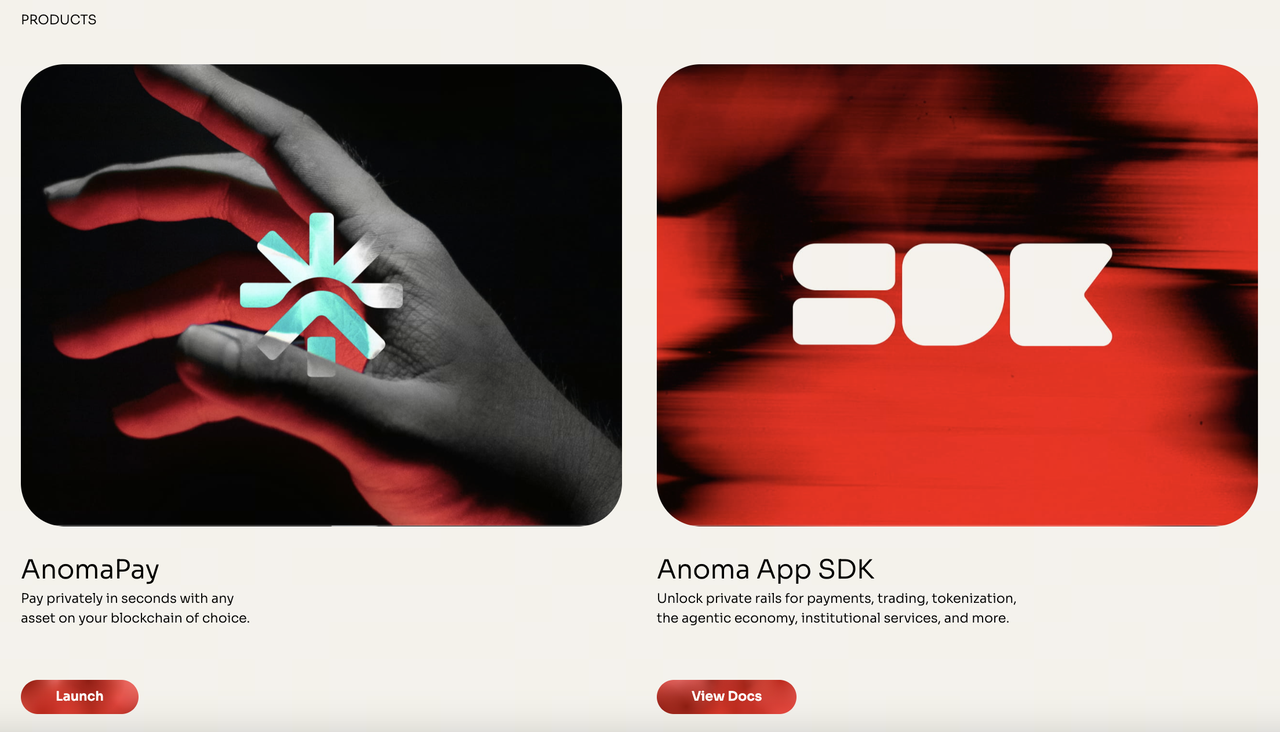
In the short term, Anoma will continue its mainnet Beta: expanding Protocol Adapter coverage, refining the Anoma App SDK, pushing multi-chain asset support for AnomaPay, and growing the developer base through Season 2 airdrops and the Builders Program. Medium-term goals include maturing the Solver economy, stabilizing Fractal Instances and Typhon consensus in production, and scaling "build once, run on all chains" application templates.
The long-term vision is to become Web3's "unified command layer"—enabling ordinary users to use privacy, cross-chain, and composable dApps without understanding chain IDs, bridge contracts, or gas tokens. If intents become the dominant interaction paradigm, demand for XAN as a global coordination asset could rise with settlement volume and governance participation. Conversely, if application-layer innovation stalls or competitors set standards, the token may reflect short-term speculation rather than fundamentals.
Market potential hinges on: real monetized use cases (payments, institutional treasuries, AI agents), progress in privacy-compliant products, and the pace of adaptation to ecosystems beyond Ethereum (Solana, Bitcoin, etc.). While multi-chain deployment accelerated in 2025–2026, whether network effects materialize requires ongoing monitoring of on-chain intent volume and solver count.
Summary
Anoma (XAN) represents an architectural upgrade from "transaction hub" to "intent hub," integrating multi-chain infrastructure as a distributed operating system. The launch of XAN marks the start of ecosystem coordination and governance, while ARM and Protocol Adapters embed intent and privacy capabilities into existing public chains. For researchers and investors, the key question is not whether this is "just another new chain," but whether the Solver economy, cross-chain settlement volume, and privacy applications can form a sustainable, self-reinforcing loop. Before participating in governance or holding XAN, independently assess risks and rewards based on official documentation, audit reports, and unlock schedules.
FAQs
Is Anoma a new Layer 1 public chain?
No, it is not a traditional independent L1. Anoma is a distributed operating system deployed on multiple existing chains, providing intent and privacy capabilities via ARM and Protocol Adapters; it can also run native Fractal Instances.
Which wallets support XAN?
Initially, XAN is an ERC-20 token on Ethereum, compatible with MetaMask, Rabby, Coinbase Wallet, etc. It can also be managed through the Anoma Portal.
How do Intents differ from regular transaction aggregation?
Aggregators typically optimize single-chain or fixed-path swaps. Anoma's intents are general primitives that can express multi-step, multi-chain, privacy-constrained complex goals, solved by a decentralized Solver market.
What is the relationship between Anoma and Namada?
Both are part of the Anoma Foundation ecosystem. Namada focuses on multi-chain privacy L1, while Anoma focuses on cross-chain intent OS and application layers—complementary positioning.
What features are currently usable?
As of 2026, XAN governance and payments, Protocol Adapters on multiple EVM chains, and the AnomaPay public beta are available. Full Solver staking and fully functional Fractal mainnet are rolling out with upgrades.
Is investing in XAN safe?
Cryptocurrency investments carry high risk and may result in total loss of principal. The risk section above is for reference only and does not constitute investment advice.







