A well-functioning healthcare system depends not only on doctors, hospitals and medicines, but also on a vast range of medical devices, diagnostic equipment and clinical consumables. From syringes and infusion systems used in hospitals to testing equipment and sample processing tools in laboratories, medical devices have become an essential part of modern healthcare.
Unlike many healthcare companies that rely on a single innovative product, Becton Dickinson has long focused on the field of medical infrastructure. By building a complete product system that covers clinical treatment, disease testing and laboratory research, the company has become one of the key infrastructure suppliers in the global healthcare ecosystem.
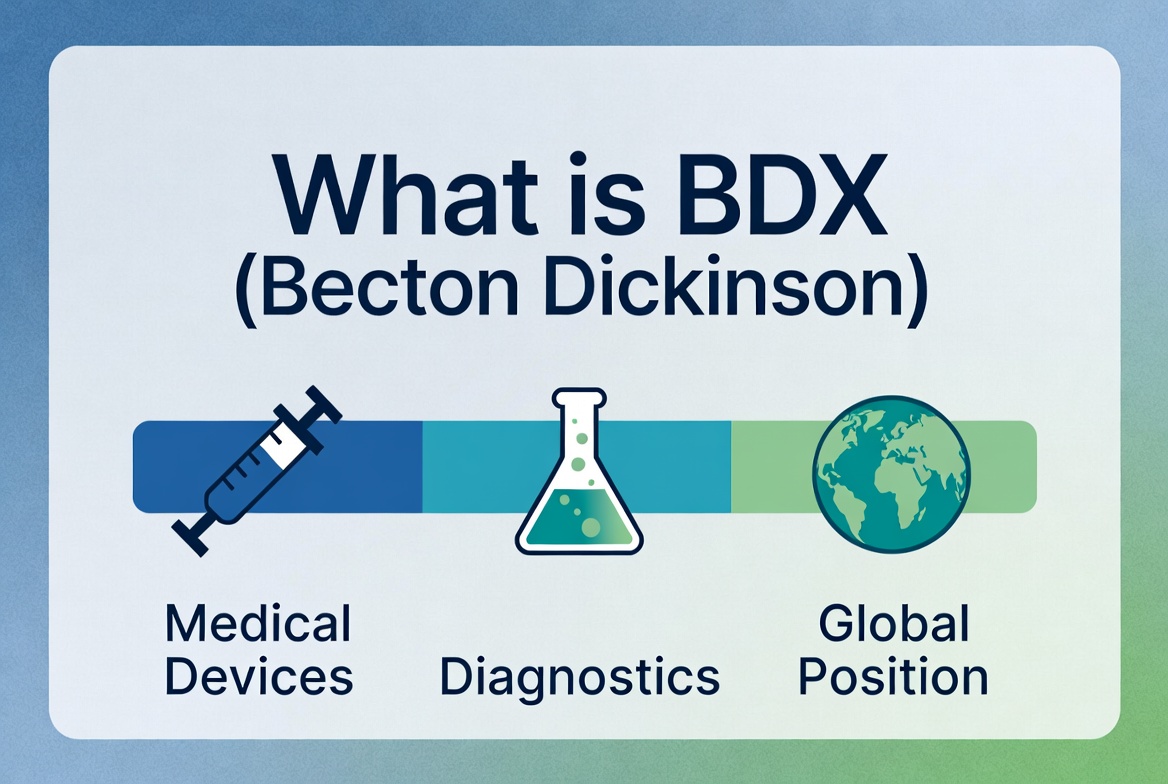
What Is BDX (Becton Dickinson)
Becton Dickinson is best known for products such as syringes, needles, intravenous infusion systems, catheters and a wide range of hospital consumables. These products may not attract market attention as often as innovative drugs, but they are among the most frequently used basic tools in the daily operation of the healthcare system. BDX is the stock ticker for Becton, Dickinson and Company, commonly known as Becton Dickinson. Founded in 1897 and headquartered in New Jersey, the company is one of the world’s largest medical device and medical technology companies.
As the healthcare industry has evolved, the company has gradually expanded beyond traditional consumables into automated diagnostics, sample testing, life sciences research and drug delivery systems. Today, BDX is not just a medical consumables company. It is an integrated medical device group with a business footprint across the diagnostics and medical technology ecosystem.
From an industry classification perspective, BDX is usually regarded as a major representative of the medical devices sector and one of the core participants in the global medical infrastructure ecosystem.
Becton Dickinson’s History and Market Position
Becton Dickinson has more than a century of history, and its growth has closely followed the development of the modern medical device industry. The company began by producing medical needles and injection devices, then continued to expand its product lines and gradually entered the hospital equipment and diagnostic technology markets.
As healthcare systems around the world expanded, medical institutions’ demand for standardized, large scale medical tools continued to grow. With stable product quality, an extensive sales network and a long established brand reputation, Becton Dickinson gradually became an important supplier to healthcare institutions worldwide.
In recent years, the company has further strengthened its business layout through multiple acquisitions. Its expansion in areas such as interventional medicine, diagnostic equipment and life sciences has made its business structure more diversified. This ongoing expansion has helped the company grow from a pure consumables manufacturer into a platform based enterprise covering multiple parts of healthcare.
Today, Becton Dickinson’s market position is closer to that of a medical infrastructure provider. Whether in large general hospitals or primary care institutions, its products may appear in clinical diagnosis and treatment workflows.
How Becton Dickinson’s Medical Device Business Works
The medical device business is one of Becton Dickinson’s most important operating segments. Its core products cover a large number of basic devices and consumables needed for routine diagnosis and treatment in hospitals.
In clinical treatment, products such as syringes, infusion sets, catheters and drug delivery systems are used almost every day. Their unit prices are usually not high, but demand is stable and usage frequency is extremely high, creating a continuous market need.
Becton Dickinson manufactures these products through its global production system and delivers them to medical institutions through distribution networks and hospital procurement systems. Because medical devices are directly related to patient safety, product quality, regulatory certification and supply stability are often more important than price competition.
This business model allows the company to build long term customer relationships around the world. For many hospitals, a medical device supplier is not only a product provider, but also an important partner in keeping the healthcare system running reliably.
Becton Dickinson’s Diagnostics and Life Sciences Business System
In addition to traditional medical devices, diagnostics has become an important growth area for Becton Dickinson. Modern healthcare increasingly emphasizes early detection and accurate diagnosis, and diagnostic equipment is a key support for this trend.
Becton Dickinson’s diagnostic products are widely used in hospital laboratories, disease testing centers and public health institutions. Blood testing, infection screening, microbiology testing and automated laboratory systems all fall within the company’s business scope.
At the same time, the company has also built a presence in the life sciences market. Its life sciences business mainly serves research institutions, biotechnology companies and pharmaceutical companies by providing experimental tools, sample processing systems and analytical platforms.
This layout allows Becton Dickinson to participate in both clinical healthcare and scientific research innovation. As precision medicine and biotechnology continue to develop, diagnostics and life sciences are becoming increasingly important parts of the business.
Why Medical Consumables Are a Core Source of Revenue
Medical consumables have long been one of Becton Dickinson’s most important sources of revenue because they are continuously used and repeatedly purchased.
Unlike large medical equipment, syringes, needles and infusion consumables usually need to be replaced after use, so hospitals must keep purchasing them. This recurring demand creates a stable and relatively predictable market size.
From a business model perspective, the consumables business resembles a form of continuous consumption. A single product may have a limited price, but the long term procurement scale is substantial. As long as medical activity continues, the related demand generally does not disappear.
In addition, global population growth, the expansion of healthcare resources and the increase in patients with chronic diseases are further driving long term growth in the medical consumables market. As a result, consumables have become an important source of stable cash flow for Becton Dickinson.
Becton Dickinson’s Role in the Global Healthcare System
The modern healthcare system is made up of hospitals, doctors, pharmaceutical companies, insurers and medical device companies. Becton Dickinson’s role is closer to that of a foundational infrastructure supplier.
Whether a patient receives infusion therapy, completes a blood test or undergoes surgery, products supplied by Becton Dickinson may be involved. Because its product coverage is so broad, the company effectively participates in the foundational stages of a large number of medical activities.
During public health events and major disease control efforts, the importance of medical consumables and diagnostic equipment becomes even more apparent. Vaccination, sample testing and laboratory analysis all require significant support from related products.
For this reason, although Becton Dickinson does not directly develop medicines in the way large pharmaceutical companies do, its importance within the healthcare system is no less significant. The company provides the basic tools and platforms needed to keep healthcare systems functioning normally.
How Becton Dickinson Differs from Medtronic and Abbott
Becton Dickinson, Medtronic and Abbott are all globally recognized healthcare companies, but their business priorities are clearly different.
| Company |
Core Focus |
Representative Areas |
| BDX |
Medical consumables and diagnostics |
Injection systems, diagnostic equipment |
| Medtronic |
Medical equipment |
Cardiac devices, neuromodulation |
| Abbott |
Healthcare and diagnostics |
Glucose monitoring, nutrition products |
Becton Dickinson’s defining feature is its broad coverage of basic medical devices, with products used extensively in everyday medical activities. By comparison, Medtronic focuses more on high technology medical equipment, while Abbott has strong influence in diagnostics and chronic disease management.
From a business model perspective, Becton Dickinson relies more on large scale consumables sales and long term healthcare demand, while the other companies depend more heavily on higher value devices and innovative products.
Main Use Cases for Becton Dickinson Products
Becton Dickinson’s products cover many parts of the healthcare service system, giving them a very wide range of applications.
Hospitals are one of the most important use cases. From emergency care and inpatient treatment to surgical procedures, large quantities of medical consumables are used continuously. Clinics, community health centers and primary care institutions also rely on these products to carry out routine diagnosis and treatment.
Laboratories and disease testing institutions are important use cases for the diagnostics business. Sample collection, blood testing, infection screening and automated laboratory management all require support from related equipment.
In addition, life sciences research institutions, biopharmaceutical companies and university laboratories widely use research tools provided by Becton Dickinson. As medical technology continues to advance, the range of applications for the company’s products is still expanding.
How to Buy BDX (Becton Dickinson) Stock
BDX is the stock ticker under which Becton Dickinson is listed and traded on the New York Stock Exchange (NYSE). Traditionally, investors can buy BDX stock through a securities account that supports US stock trading, thereby participating in the development of the global medical device industry.
Because Becton Dickinson has long served the basic needs of the healthcare system, it is often classified within the medical devices industry under the broader healthcare sector. Its business performance is generally closely related to growth in global healthcare spending, population aging and trends in medical technology development.
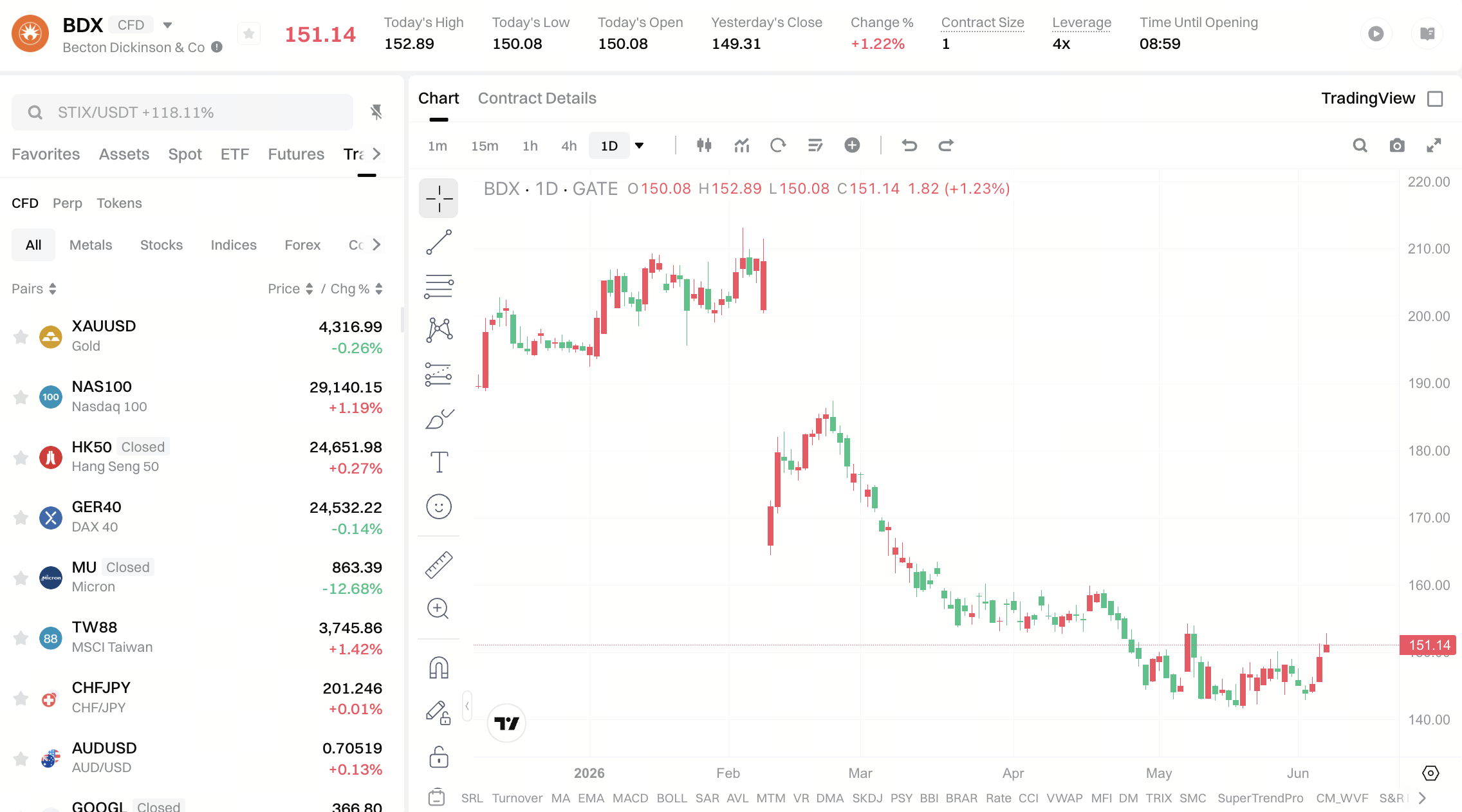
As the digital asset market and traditional financial markets gradually converge, more trading tools linked to US stock prices have also emerged. For example, some platforms offer CFD products linked to the prices of relevant stocks, allowing users to participate in market price movements without directly holding the underlying shares.
Gate TradFi is continuing to expand its coverage of traditional financial assets. Users can track digital assets, US stocks, ETFs, indexes and commodities within the same account environment. Some markets also provide Gate CFD products, offering more choices for cross market asset management and price observation.
Regardless of how they participate in the market, investors should fully understand the product structure, trading rules and regulatory requirements in their region.
Becton Dickinson’s Strengths and Limitations
Becton Dickinson’s greatest strength lies in the relatively resilient demand for its products. Regardless of economic cycles, medical institutions generally continue to need basic consumables and diagnostic equipment.
At the same time, the company has a broad product line and a global sales network, allowing it to serve healthcare institutions across different regions and at different levels. Its long established brand reputation and regulatory certification capabilities also create high barriers within the industry.
However, the company also faces challenges such as changes in healthcare regulation, cost pressure and industry competition. The medical device industry must continuously meet strict quality and compliance requirements, while changes in global supply chains may also affect production costs and operating efficiency.
As a result, Becton Dickinson combines the stability of the medical infrastructure industry with the ongoing innovation challenges of the medical technology sector.
Conclusion
BDX (Becton Dickinson) is a global leader in medical devices and diagnostic technologies, with businesses covering medical consumables, diagnostic systems, life sciences tools, hospital solutions and several other areas. Through its long standing role in serving healthcare systems worldwide, the company has become an important part of the medical infrastructure ecosystem. As populations age, healthcare demand grows and precision medicine advances, the importance of the medical device and diagnostics markets is likely to continue rising, while Becton Dickinson will continue to play a key role in connecting clinical treatment, disease testing and life sciences research.
FAQs
What Kind of Company Is BDX?
BDX is the stock ticker for Becton, Dickinson and Company. The company is a global leader in medical devices and diagnostic technologies.
What Products Does Becton Dickinson Mainly Sell?
The company mainly sells products such as syringes, needles, infusion systems, catheters, diagnostic equipment and life sciences research tools.
Why Are Medical Consumables Important?
Medical consumables are essential basic tools for daily diagnosis and treatment in hospitals. They are continuously used and repeatedly purchased.
Is Becton Dickinson a Medical Device Company or a Pharmaceutical Company?
Becton Dickinson is a medical device company. Its core business is medical equipment, consumables and diagnostic systems, not drug development.
Who Are Becton Dickinson’s Customers?
Its customers mainly include hospitals, clinics, laboratories, research institutions and public health organizations.
Why Is Becton Dickinson Seen as a Medical Infrastructure Company?
Because its products are widely used in the foundational parts of the healthcare system and serve as important support tools for clinical treatment, disease testing and scientific research.