What Is RIOT?
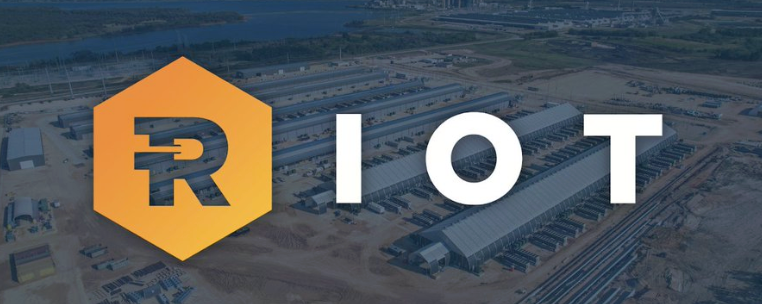 (Source: Riot Platforms)
Riot Platforms is one of the largest publicly traded Bitcoin mining companies in the U.S., listed on the Nasdaq under the ticker RIOT. Its core operations center on Bitcoin mining, digital infrastructure development, and data center management. In recent years, the company has also expanded into artificial intelligence (AI) and high-performance computing (HPC).
With the rapid evolution of the crypto industry, Riot has emerged as a flagship Bitcoin mining firm in North America. Because it directly produces Bitcoin and holds substantial Bitcoin reserves, its performance is closely tied to the crypto market cycle. For many traditional equity investors, RIOT is viewed not merely as a tech stock but as a key vehicle for gaining exposure to the Bitcoin market.
The Development History of Riot Platforms
Riot Platforms did not start out in crypto. As blockchain technology gained traction and the Bitcoin market surged, the company pivoted toward digital assets and began aggressively building out Bitcoin mining infrastructure.
In recent years, Riot has steadily expanded its mining footprint, with a strategic focus on Texas. The state's low energy costs and reliable power supply have made it a global hub for Bitcoin mining. By increasing its mining fleet, boosting hashrate, and optimizing energy management, Riot has grown into one of the world's leading publicly listed mining companies.
What Are RIOT's Core Businesses?
- Bitcoin Mining Business
Bitcoin mining is Riot Platforms' primary revenue driver. Miners use high-performance computing hardware to validate transactions and generate new blocks on the Bitcoin blockchain. Successfully validating a block yields Bitcoin rewards plus a share of transaction fees.
Riot operates a vast fleet of specialized ASIC miners across large-scale facilities in the U.S. By continuously increasing its hashrate, the company improves its odds of earning block rewards. Given that Bitcoin mining is energy-intensive, electricity costs and equipment efficiency are critical to profitability.
- Digital Infrastructure and Data Center Services
Beyond self-mining, Riot offers data center and hosting services. Through its own large-scale data centers, the company provides infrastructure support to other blockchain firms and tech companies, including:
- Facility space
- Power supply
- Network connectivity
- Mining machine hosting
This diversification reduces Riot's reliance on Bitcoin price swings and creates additional revenue streams.
Long term, the growth of the digital infrastructure market could become a major growth avenue for Riot.
- AI and High-Performance Computing (HPC)
The rapid rise of AI has fueled a surge in demand for data centers and computing power. Riot has begun allocating resources to AI data center construction, leveraging its existing energy infrastructure and large facility footprint to enter the HPC market.
The logic is straightforward: while Bitcoin mining and AI computing serve different markets, both require:
- Large amounts of electricity
- High-density computing hardware
- Stable data center environments
- Comprehensive cooling systems
By repurposing its infrastructure, Riot aims to boost asset utilization and reduce dependence on any single industry cycle. As the AI market expands, this move has become a key focus for investors.
Why Is RIOT Considered a Bitcoin Proxy Stock?
In the U.S. stock market, many investors view RIOT as a classic Bitcoin proxy stock because its core business is tightly linked to Bitcoin's price.
When Bitcoin rises:
- Mining revenue increases
- The value of held Bitcoin assets appreciates
- Company profitability improves
- Market sentiment strengthens
As a result, RIOT's stock price tends to follow Bitcoin upward.
Conversely, when Bitcoin drops sharply, miner revenues suffer, and expectations for future profits decline. That's why many investors see RIOT as an indirect way to invest in Bitcoin. For those unable to hold crypto directly, buying RIOT stock offers a path to participate in the Bitcoin industry's growth.
How Is RIOT Different From Direct Bitcoin Investment?
Although RIOT is highly correlated with Bitcoin, the two are fundamentally different. Buying Bitcoin means directly holding a digital asset whose value depends on market supply and demand. Investing in RIOT means owning equity in a publicly traded company.
Thus, beyond Bitcoin's price, RIOT's stock is influenced by company-specific factors such as:
- Mining costs
- Energy prices
- Equipment efficiency
- Financial health
- Capital expenditure plans
- Management decisions
In short, RIOT is correlated with Bitcoin but is not a perfect proxy.
What Risks Should Investors Watch For?
-
Bitcoin Price Volatility
Bitcoin is inherently volatile. During bear markets, miner revenues and asset values can decline sharply, making RIOT's stock price more volatile than typical tech stocks.
-
Rising Competition in Mining
As global miners expand, network hashrate rises. Higher mining difficulty means that even if Bitcoin's price holds steady, revenue per unit of hashrate may fall. Companies must continually invest in new gear and efficiency to stay competitive.
-
Energy Cost Risk
Electricity is the single largest operating expense for miners. If energy prices spike or local power policies shift, Riot's profitability could take a hit. Investors should monitor energy markets and the company's power management strategies.
Based on its current strategy, Riot is no longer just a pure Bitcoin miner. The company is repositioning itself as a digital infrastructure operator, aiming to benefit from:
- Bitcoin industry growth
- Rising AI computing demand
- HPC data center expansion
- Cloud infrastructure demand
If AI continues to ramp up, Riot's data center assets could offer additional upside.
Going forward, the market will watch whether Riot can successfully convert its mining sites into integrated infrastructure platforms serving both mining and AI workloads.
Summary
Riot Platforms (RIOT) is one of the most prominent publicly traded Bitcoin mining companies in the U.S. Its core businesses span Bitcoin mining, digital infrastructure, and data center services. Because it directly produces Bitcoin and holds related assets, its stock price is closely tied to the crypto market, making it a popular Bitcoin proxy for investors.
With AI and HPC demand accelerating, Riot is aggressively diversifying, aiming to evolve from a pure mining company into a digital infrastructure provider. For investors, understanding Riot's business model, industry positioning, and risk factors is essential to evaluating its long-term potential.







