Користувачі обирають Space, адже він поєднує торгові платформи із механізмами прогнозування, дозволяючи учасникам одночасно висловлювати свою думку та отримувати прибуток від змін цін. Традиційні ринки прогнозів зазвичай централізують інформацію на обмеженій кількості платформ, тоді як ончейн-протоколи на кшталт Space підвищують прозорість і залученість завдяки відкритому доступу.
Зазвичай це охоплює три напрямки: механізми ринку прогнозів, логіку співставлення ордерів та структуру токен-інцентивів. Саме ці елементи формують функціональну основу Space.
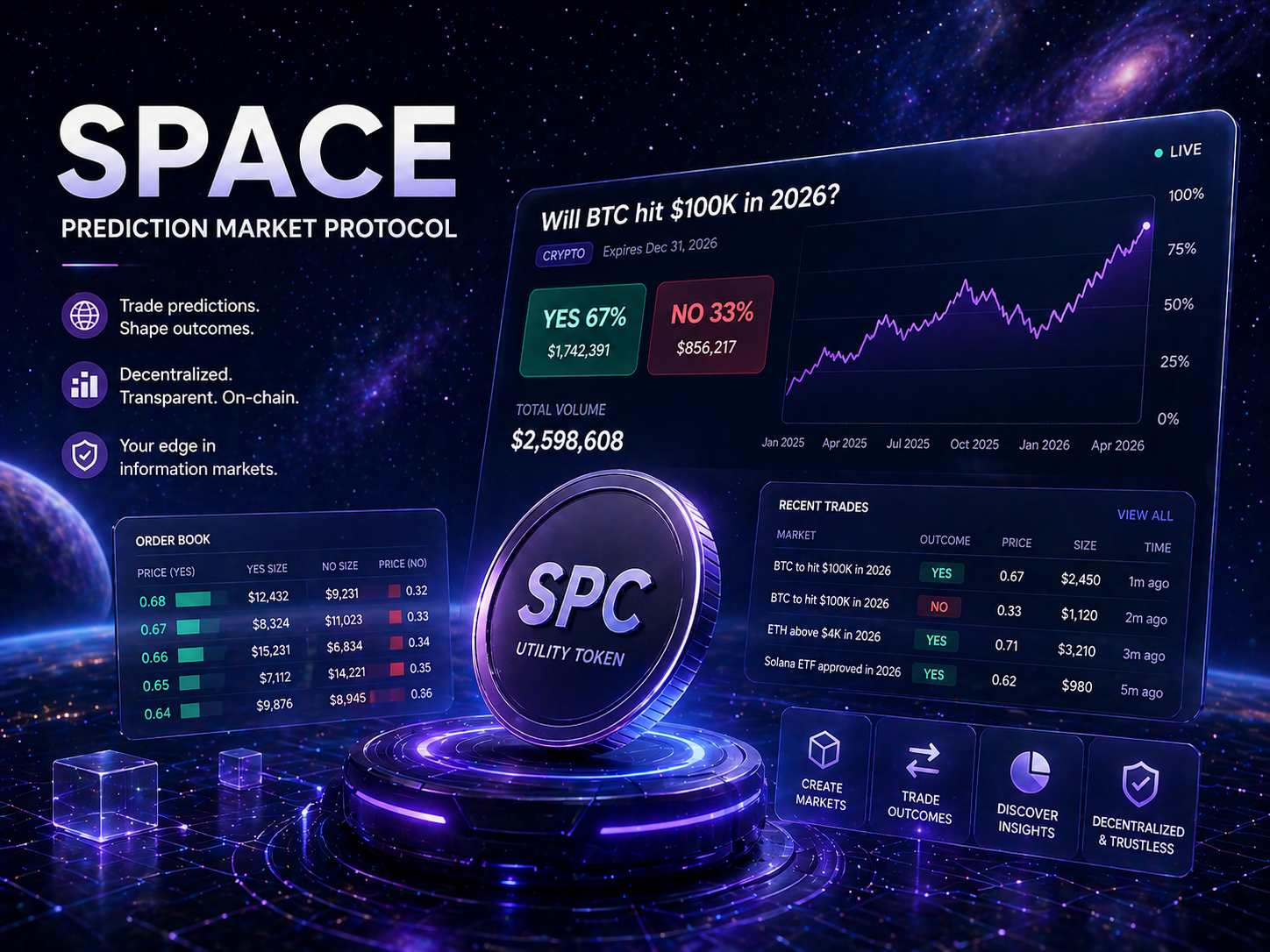
Що таке Space (SPC)?
Space — децентралізований протокол ринку прогнозів, який дає користувачам змогу створювати та торгувати ринками, що базуються на майбутніх подіях.
Space перетворює «результати подій» на «торговані активи», дозволяючи користувачам висловлювати свої прогнози через купівлю та продаж позицій, пов’язаних із різними сценаріями. Протокол працює на блокчейні, де всі транзакції, ордери й розрахунки здійснюються за допомогою смарт-контрактів.
Процес починається з вибору або створення події прогнозу. Ринок генерує активи для кожного потенційного результату. Учасники демонструють свої очікування, купуючи чи продаючи відповідні позиції. Після визначення результату система автоматично розраховує позиції.
Така структура трансформує інформаційні судження у ринкову поведінку: ціни стають відображенням ймовірності, підвищуючи ефективність пошуку інформації.
Як працює основний механізм Space
Основний механізм Space базується на торгівлі у ринку прогнозів, пошуку ціни та логіці розрахунків.
Space — це торговий майданчик, який перетворює «ймовірності» на «ціни». Користувачі впливають на ціноутворення через торгівлю, а ціни відображають очікування ринку щодо результатів подій.
Користувачі входять у конкретний ринок прогнозу, купують або продають позиції залежно від своїх прогнозів. Ордери обробляються системою співставлення для визначення цін угод. Згодом рух цін відображає консенсус ринку, а розрахунок здійснюється після завершення події.
Механізм Space дозволяє ефективно агрегувати інформацію: чим більше учасників, тим точніше ціни відповідають реальним ймовірностям, що підвищує ефективність ринку.
Роль і функція токена SPC в екосистемі
SPC — ключовий токен екосистеми Space, який забезпечує торгівлю, інцентиви та участь в екосистемних процесах.
SPC використовується як платіжний інструмент і основний засіб для операцій на ринку: він дає змогу торгувати, сплачувати комісії, отримувати винагороди.
Користувачі застосовують SPC для торгівлі на ринках прогнозів. Система стягує комісію з транзакцій, частина якої розподіляється як інцентиви учасникам ринку чи постачальникам ліквідності. SPC постійно циркулює в межах екосистеми.
Вартість SPC залежить від активності та обсягу торгівлі — чим більше транзакцій, тим вищий попит і використання SPC.
Логіка співставлення ордерів та розрахунків у ринках прогнозів
Логіка співставлення ордерів і розрахунків — основа торгової системи Space.
Як і традиційні біржі, але з торгівлею «результатами подій», система співставлення ордерів у Space визначає ціни, а механізм розрахунків — остаточний прибуток.
Користувачі подають ордери на купівлю чи продаж, система співставляє їх за ціною та кількістю. Угоди формують ринкові ціни. Після підтвердження результату події система здійснює розрахунок усіх позицій.
Механізм співставлення забезпечує пошук ціни, система розрахунків — розподіл вартості. Така чітка сегментація гарантує ефективність торгівлі та надійність розрахунків.
Завдяки стандартизації цих процесів Space перетворює складні прогнозні операції на оптимізовану логіку торгівлі і розрахунків.
Створення ринку і участь у Space
Space дає користувачам можливість створювати власні ринки прогнозів — це ознака децентралізованої архітектури.
Кожен користувач, а не лише оператори платформи, може запустити ринок, що забезпечує постійне розширення типів ринків завдяки відкритій участі.
Користувач задає подію прогнозу та правила. Система створює відповідний ринок. Інші користувачі можуть торгувати на цьому ринку. Після завершення події — ринок розраховується за результатом.
Цей підхід підвищує різноманітність ринків і вимагає якісного дизайну правил для кожної події.
Space vs Polymarket: механізм і архітектурні відмінності
Space і Polymarket — обидва протоколи ринку прогнозів на блокчейні, але різняться архітектурою, механізмами торгівлі та моделями інцентивів.
Мета схожа, але підходи різні: Space фокусується на ончейн-торгівлі та співставленні ордерів, Polymarket — на моделі пулу ліквідності.
| Вимір |
Space |
Polymarket |
| Архітектура |
Модель співставлення ордерів |
Модель пулу ліквідності |
| Формування ціни |
Співставлення ордерів |
Автоматизований маркетмейкер |
| Метод торгівлі |
Книга ордерів |
Свопи у пулі |
| Інцентиви |
Винагороди за торгівлю |
Винагороди за ліквідність |
| Використання |
Частотна торгівля й пошук ціни |
Спрощена участь і ліквідність |
Space ближча до класичної біржі з книгою ордерів, Polymarket — до децентралізованих біржових протоколів. Відмінності формують різний користувацький досвід і ринкову ефективність.
Учасники і потік вартості в екосистемі Space
Space об’єднує творців ринків, трейдерів і постачальників ліквідності.
Кожен учасник додає цінність на своєму етапі й отримує відповідну винагороду. Творці ринків створюють події, трейдери забезпечують ліквідність і пошук ціни, система управляє співставленням і розрахунками.
Творець задає ринок, трейдери купують і продають, система фіксує угоди, оновлює ціни й розподіляє прибутки залежно від результатів подій.
Такий потік вартості формує самодостатню економіку, підтримуючи активність і ефективність ринку.
Переваги та потенційні обмеження Space
Space вирізняється прозорістю на блокчейні та ринково-орієнтованою структурою.
Всі торгівельні операції й розрахунки можна перевірити, що підвищує довіру. Механізм співставлення ордерів сприяє ефективному пошуку ціни.
Водночас Space стикається із викликами: низька ліквідність може обмежити торгівлю, а складні механізми — створити бар’єри для нових користувачів.
Довгостроковий потенціал Space залежить від кількості учасників, якості дизайну ринків і структури токен-економіки.
Висновок
Space об’єднує ціноутворення інформації, торгівлю активами та розподіл вартості, інтегруючи ринки прогнозів з ончейн-торговими механізмами. Суть платформи — синергія співставлення ордерів, створення ринку і токен-інцентивів. Відмінності між Space та протоколами типу Polymarket підкреслюють унікальність їхньої архітектури і позиціонування.
FAQ
Що таке Space
Space — протокол ринку прогнозів на блокчейні, який дозволяє торгувати майбутніми подіями та виражати очікування через ціни.
Яка функція токена SPC
SPC забезпечує торгівлю, оплату комісій і участь в інцентивах екосистеми; це ключовий інструмент для роботи ринків прогнозів.
Як Space сприяє торгівлі прогнозами
Користувачі торгують активами, прив’язаними до різних результатів; зміни цін відображають очікування ринку щодо результатів подій.
У чому різниця між Space і Polymarket
Space використовує співставлення ордерів, Polymarket — модель пулу ліквідності; їх механізми торгівлі та формування цін відрізняються.
Які ризики Space
Основні ризики — недостатня ліквідність, недосконалий дизайн ринку і невизначеність у розрахунку результатів подій.