A medida que DeFi pasa de protocolos de función única a infraestructuras integrales, el préstamo y las stablecoins se consolidan como los dos pilares financieros fundamentales, cada uno históricamente desarrollado como tipo de protocolo independiente, lo que ha fragmentado la eficiencia de capital y los flujos operativos. Integrar mecanismos de generación de stablecoins con mercados de préstamos algorítmicos va más allá de fusionar funciones: supone un cambio en las finanzas on-chain, de un “ensamblaje modular” a una “sinergia estructural”. Esto permite que el colateral, la liquidez y la expansión del crédito circulen en un sistema unificado, impulsando la eficiencia de capital y la liquidez del mercado.
Desde el punto de vista arquitectónico, este diseño integrado redefine la base de DeFi. Los sistemas sustentados en mecanismos de colateral, modelos de tasas de interés, incentivos con tokens y control de riesgos determinan no solo el uso de los activos, sino también el flujo y la redistribución del valor dentro de los protocolos. Los mecanismos enfocados en los procesos de préstamo, la operativa de stablecoins, la estructura de pools principales y la tokenómica configuran un ecosistema financiero on-chain sostenible, transformando DeFi de una caja de herramientas a un sistema financiero coherente.
¿Qué es Venus Protocol?
 (Fuente: Venus Protocol)
Venus Protocol es un protocolo de Finanzas Descentralizadas (DeFi) desarrollado en BNB Chain, especializado en el préstamo de criptoactivos y la emisión de stablecoins.
Venus fusiona dos modelos clásicos de DeFi:
Esta integración permite depositar, tomar prestado y acuñar stablecoins en una sola plataforma, reduciendo las barreras de acceso y aumentando la eficiencia general de DeFi.
¿Cómo funciona Venus?
Venus automatiza la lógica de préstamo mediante contratos inteligentes on-chain, con el siguiente flujo central:
-
Depositas criptoactivos (BTC, ETH, BNB, etc.)
-
El sistema emite vTokens como comprobantes de depósito
-
Puedes tomar prestados otros activos o la stablecoin VAI usando tu colateral
Mecanismo de sobrecolateralización
Venus utiliza un modelo de sobrecolateralización para garantizar la seguridad:
-
El valor del préstamo debe permanecer por debajo del valor del colateral
-
Si el ratio de colateral baja demasiado, se activa la liquidación
Modelo dinámico de tasas de interés
Venus emplea un modelo de tasas JumpRate:
-
Las tasas se ajustan automáticamente según la oferta y demanda del mercado
-
Los costes de tomar prestado aumentan si la liquidez es limitada
-
Las tasas bajan cuando el capital es abundante
El objetivo es mantener el equilibrio del mercado y maximizar el uso del capital.
Arquitectura central de productos Venus
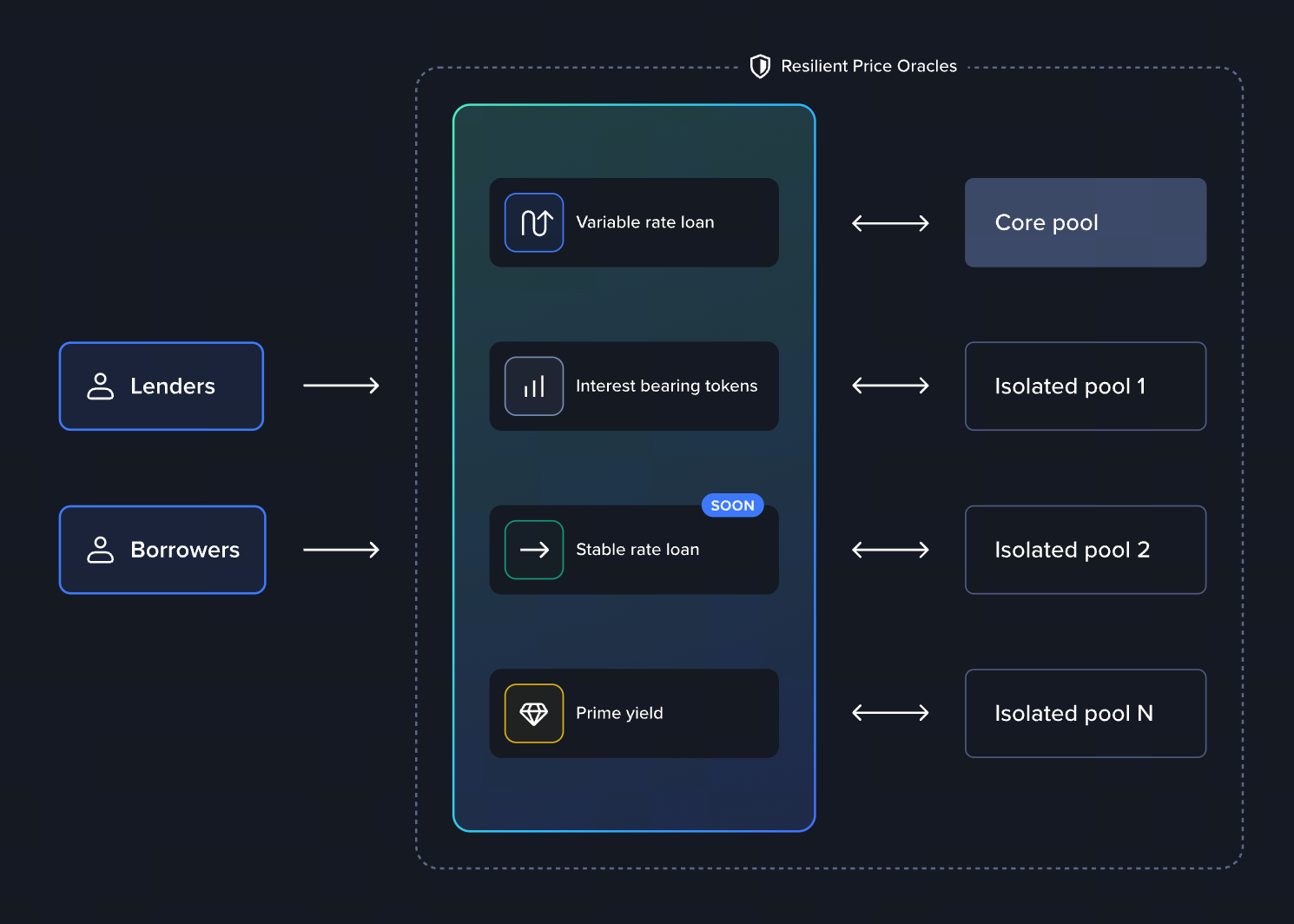
Venus ofrece un ecosistema de préstamos completo a través de módulos diversificados: desde mercados líquidos para activos principales hasta pools aislados para activos de alto riesgo, junto con stablecoins y herramientas de rendimiento, creando una infraestructura DeFi que equilibra eficiencia y control de riesgos.
Core Pool
El core pool es el principal mercado de préstamos de Venus, compatible con activos como BTC, ETH, BNB y stablecoins. Características principales:
Isolated Pool
Los pools aislados están destinados a activos nuevos o de alto riesgo:
-
Cada pool opera de forma independiente
-
El riesgo se limita a cada pool
-
Permite listar nuevos activos de forma flexible
Stablecoin VAI
VAI es la stablecoin descentralizada de Venus, acuñada con colateral y anclada a 1 $. VAI circula y se utiliza en todo el ecosistema DeFi.
Otros módulos
-
Bóvedas: Pon en staking XVS o VAI y obtén rentabilidad
-
Convertidor de tokens: Convierte automáticamente las recompensas
-
Puente: Permite transferir activos entre cadenas
Características clave de Venus
A medida que DeFi evoluciona, la competencia entre plataformas se traslada de comparar funciones aisladas a evaluar la arquitectura y los mecanismos. Venus destaca por equilibrar eficiencia, costes y gobernanza en un solo framework.
-
Integración funcional
Venus combina préstamo, emisión de stablecoins y herramientas de rendimiento en un solo sistema, permitiendo gestionar activos y aplicar estrategias de rendimiento sin cambiar de protocolo, lo que mejora la eficiencia y el uso del capital.
-
Bajo coste y alta eficiencia
Gracias a la infraestructura de BNB Chain, Venus ofrece tarifas de trading bajas y confirmaciones rápidas, ideal para operaciones frecuentes y gestión flexible de capital.
-
Mecanismo de distribución justo
Venus prescinde de ICO tradicionales, distribuyendo tokens mediante minería de liquidez e incentivos del ecosistema, lo que garantiza mayor acceso, descentralización y equidad.
-
Gobernanza DAO
Los holders de XVS participan en la gobernanza del protocolo, votando parámetros clave y mejoras a través de un mecanismo descentralizado. Así, el desarrollo de la plataforma se alinea con el consenso de la comunidad, aportando transparencia y sostenibilidad a largo plazo.
La última versión de Venus Protocol es el protocolo de préstamos más sólido y fiable de BNB Chain, con mejoras en:
-
Gestión de riesgos
-
Descentralización
-
Experiencia de usuario
 (Fuente: docs-v4.venus)
Venus sigue marcando el ritmo en el desarrollo de las finanzas descentralizadas.
Tokenómica de Venus
Venus utiliza su token nativo XVS para construir un modelo económico que equilibra incentivos, gobernanza y gestión de riesgos, logrando un balance entre crecimiento y estabilidad. XVS tiene un suministro total de 30 000 000 tokens y cerca de 16 millones en circulación. La emisión limitada ayuda a controlar la inflación y a mantener el valor a largo plazo.
Estructura de distribución
XVS adopta una distribución orientada al ecosistema:
-
79 % para minería del ecosistema, incentivando préstamo y liquidez
-
20 % para Launchpool, ampliando la base de usuarios y la participación
-
1 % para desarrollo del ecosistema, apoyando la evolución y alianzas
Este modelo se centra en la asignación por uso, premiando a participantes genuinos sobre capital temprano.
Funciones y casos de uso
XVS cumple funciones clave en el protocolo:
-
Votación de gobernanza: Incide en parámetros y ajustes de mecanismos
-
Rentabilidad por staking: Consigue recompensas adicionales
-
Propuestas (VIP): Inicia y promueve mejoras y actualizaciones
Así, XVS es portador de valor y representa derechos de gobernanza y participación.
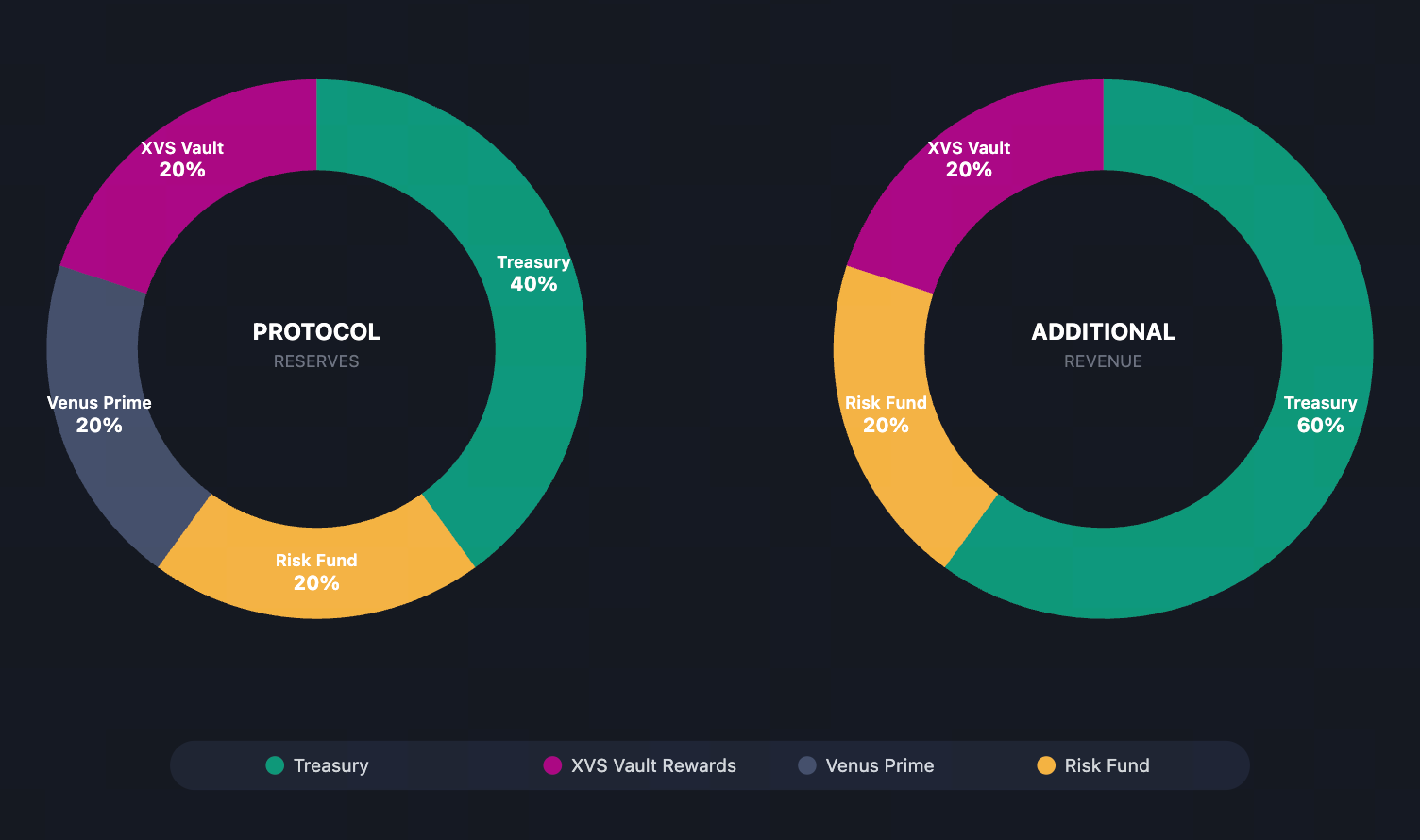
Mecanismo de distribución de ingresos
Venus genera ingresos principalmente de intereses de préstamos y penalizaciones por liquidación. Los fondos se distribuyen para equilibrar crecimiento y seguridad:
- 40 % al Tesoro para operaciones y desarrollo estratégico a largo plazo
- 20 % a la Bóveda de XVS, recompensando a los stakers
- 20 % para incentivos, atrayendo liquidez y nuevos usuarios
- 20 % al Fondo de Riesgos para escenarios extremos
 (Fuente: docs-v4.venus)
La tokenómica de Venus refuerza la implicación de los usuarios y la resiliencia del protocolo mediante una asignación de fondos escalonada y sostenible.
Mecanismo de estabilidad de VAI
VAI mantiene su estabilidad mediante un mecanismo similar a la Stability Fee:
-
Se paga una tarifa al reembolsar VAI
-
Las tasas se ajustan dinámicamente según el precio de mercado
-
Si el precio cae de 1 $, se contrae la oferta
-
Si supera 1 $, se incentiva la acuñación
Esto replica la lógica de estabilización de DAI, ayudando a mantener la paridad con 1 $.
Escenarios de uso de Venus
Como protocolo DeFi central en BNB Chain, Venus habilita casos de uso flexibles y componibles para préstamos, stablecoins y estrategias de rendimiento, permitiendo ejecutar múltiples operaciones de capital en un mismo sistema.
-
Préstamo de criptoactivos
Deposita criptoactivos para obtener intereses y toma prestados otros tokens usando colateral, facilitando la asignación flexible de capital y el apalancamiento. Esto aumenta la utilización de activos y proporciona liquidez de mercado.
-
Liquidez de stablecoins
Acuñando VAI con colateral, puedes usarlo en minería de liquidez, trading on-chain o pagos, mejorando la liquidez y utilidad del activo.
-
Estrategias de rendimiento (yield farming)
Combinando mercados de préstamos y bóvedas, puedes diseñar estrategias avanzadas como préstamo recursivo o farming apalancado, multiplicando el rendimiento potencial en mercados favorables.
-
Gestión de activos entre cadenas
Con el puente cross-chain, puedes distribuir activos entre blockchains, aplicar estrategias multichain y ampliar oportunidades de arbitraje.
Venus no solo proporciona servicios básicos de préstamo, sino también un toolkit financiero on-chain flexible y extensible gracias a su integración DeFi.
Riesgos potenciales y desarrollo futuro
Aunque Venus ofrece servicios DeFi variados, enfrenta diversos riesgos. Caídas bruscas del precio del colateral durante la volatilidad pueden causar liquidaciones forzadas y pérdidas. A pesar de auditorías de contratos inteligentes, existen posibles vulnerabilidades o ataques en entornos on-chain complejos. VAI puede perder la paridad en condiciones extremas, afectando su fiabilidad como unidad estable de cuenta. Si falta liquidez, la eficiencia de préstamo y la asignación de capital se resienten, degradando la experiencia de usuario.
Estos riesgos son los principales retos de Venus para su desarrollo futuro, afectando su estabilidad y competitividad a largo plazo en DeFi.
Resumen
Venus Protocol integra mecanismos de préstamo y stablecoins en una plataforma DeFi avanzada, permitiéndote depositar, tomar prestado y gestionar rendimientos en un solo sistema. Destaca por su integración funcional, bajo coste y gobernanza transparente, equilibrando eficiencia y accesibilidad. Debes considerar los riesgos, especialmente las liquidaciones en mercados volátiles. En el ecosistema BNB Chain, Venus es infraestructura clave y puerta de entrada práctica para participar en DeFi.
Preguntas frecuentes
-
¿Qué es Venus Protocol?
Venus Protocol es un protocolo de finanzas descentralizadas sobre BNB Chain, que ofrece préstamo de criptoactivos y emisión de stablecoins. Combina mecanismos de stablecoin tipo MakerDAO con mercados de préstamo algorítmicos al estilo Compound, permitiendo depositar, tomar prestado y acuñar stablecoins en una sola plataforma.
-
¿Cómo funciona Venus Protocol?
Venus automatiza el préstamo mediante contratos inteligentes. Depositas criptoactivos como colateral y recibes vTokens como comprobantes de depósito. Puedes tomar prestados otros criptoactivos o la stablecoin VAI, con seguridad garantizada por reglas de sobrecolateralización y liquidación.
-
¿Para qué sirve el token XVS?
XVS es el token nativo de Venus, usado para gobernanza, staking para obtener rentabilidad e iniciar propuestas. Como holder, puedes votar sobre cambios de parámetros o mejoras y participar en la distribución de ingresos del protocolo haciendo staking.