WMB (Williams Companies) is one of the most representative players in the U.S. natural gas infrastructure sector. Through its extensive network of pipelines, compressor stations, storage facilities, and related energy systems, the company delivers natural gas from producing regions to cities, industrial parks, power plants, and export terminals. While Williams may not be a household name like energy producers, the infrastructure it operates profoundly shapes the efficiency of the U.S. energy market.
Understanding the real-world applications of Williams' natural gas infrastructure sheds light on why pipelines are considered a cornerstone of the modern energy economy—and why WMB has maintained a lasting strategic role in the U.S. energy landscape.
Why WMB's Natural Gas Infrastructure Matters
Natural gas infrastructure serves as a critical link between energy supply and demand. Even with abundant domestic natural gas reserves, without a robust transportation and storage system, these resources cannot flow efficiently to consumers. In this sense, natural gas pipeline networks are to the energy system what highways are to logistics.
WMB has long specialized in natural gas transportation and infrastructure operations. The company owns a large-scale pipeline network spanning multiple states, connecting major producing basins with densely populated demand centers. These facilities enable a steady, uninterrupted supply of natural gas to homes, power generators, and industrial users.
Unlike upstream producers whose fortunes are tied directly to commodity prices, Williams plays more of an infrastructure service role. Whether the gas is ultimately used for electricity generation, industrial processes, or export, it must travel through Williams' transportation network. As a result, the company's value in the energy market derives primarily from its infrastructure assets rather than from price volatility in energy commodities.
As U.S. natural gas consumption grows and the energy mix evolves, the importance of this infrastructure continues to rise—and Williams stands as a key beneficiary of this trend.
How Williams' Pipeline Network Serves Residential Energy Needs
For millions of American households, natural gas is an integral part of daily life. Winter heating, hot water, cooking, and even some home power generation systems all rely on a stable natural gas supply.
But homes are rarely located near natural gas fields. Most of the country's gas resources are concentrated in shale basins and production zones, while major consuming markets are situated along the East Coast, the Midwest, and in large metropolitan areas. This geographic mismatch makes long-distance transportation essential.
Williams' extensive pipeline system handles this critical function. The company moves gas from producing areas to regional distribution networks, which local utilities then deliver to end users. For millions of residents, although they never directly interact with Williams' facilities, their daily energy consumption depends on the reliable operation of these pipelines.
With ongoing population growth and urban expansion, residential energy demand in the U.S. continues to climb, further reinforcing the importance of the natural gas transportation network.
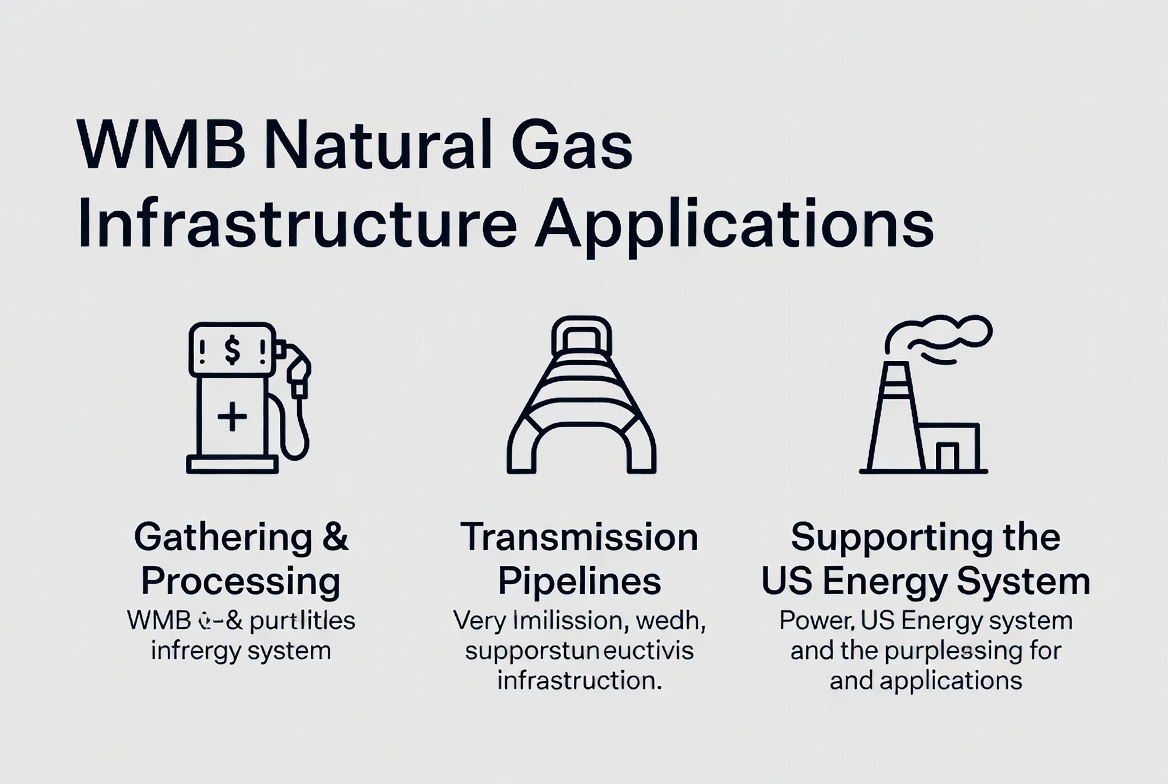
How Power Generation Relies on WMB-Transported Natural Gas
Natural gas-fired power generation has become a mainstay of the U.S. electricity system. In many regions, gas plants handle both baseload and peak-shaving duties, playing a crucial role in maintaining grid stability.
Over the past few decades, the U.S. energy mix has shifted markedly. As coal's share declined and renewables expanded, natural gas emerged as one of the most important fuel sources for the power sector. This shift has directly driven increasing demand for gas transportation.
Power plants require a continuous, reliable supply of natural gas, and pipelines are the most efficient delivery method. Williams' extensive network transports gas to power facilities, providing long-term fuel security for generators.
For the power industry, the natural gas transportation network is not just about supply efficiency—it also affects grid security. That's why WMB plays a pivotal role in the natural gas power generation value chain.
Why the LNG Export Industry Depends on Williams' Infrastructure
In recent years, the U.S. has become a major global LNG exporter, and natural gas infrastructure is the backbone of this rapid growth.
Before export, natural gas must first be transported to coastal liquefaction terminals, where it's processed and shipped to international markets. This requires large volumes of gas to be moved from inland production areas to export hubs, primarily along the Gulf Coast.
Williams' pipeline network connects multiple key producing regions with consumer markets, and also handles a significant portion of export-related transportation. As LNG export volumes expand, liquefaction terminals' demand for gas supply grows in tandem, raising the strategic importance of the pipeline system.
Williams is not directly involved in LNG trading, but its infrastructure network is an essential link in the export chain. Rising international demand ultimately translates into higher transportation volumes, which is a key reason why many investors keep a close watch on WMB.
How Industrial Enterprises Benefit from the Natural Gas Supply Network
Beyond households and power generation, the industrial sector is a major consumer of natural gas. Chemical manufacturing, steel production, food processing, and many other industrial activities rely on natural gas as an energy source or feedstock.
For industrial companies, energy costs and supply reliability directly impact operational efficiency. Natural gas provides stable heat and is also widely used as a raw material in chemicals, which is why many industrial parks are built near gas supply networks.
Williams helps industrial users secure a dependable energy supply through its transportation infrastructure. For large enterprises, a long-term, reliable gas source reduces operational risk and supports production continuity.
With rising U.S. manufacturing investment and industrial expansion, the importance of the natural gas network continues to grow, and Williams' infrastructure assets become an integral part of industrial development.
Why the U.S. Energy Transition Drives WMB's Long-Term Growth
The energy transition is a defining trend in the global power sector. While renewables are expanding rapidly, natural gas remains widely regarded as a key bridge fuel during this transformation.
Compared to coal, natural gas produces significantly lower carbon emissions, leading many countries to adopt it as a transitional energy source to reduce emissions. In the U.S., gas-fired power has long played a critical role in grid balancing and energy security.
At the same time, wind and solar power are inherently intermittent, requiring stable backup from dispatchable sources. Natural gas plants can ramp up quickly to meet demand changes, maintaining their importance in the modern grid.
For Williams, the energy transition doesn't spell the end of gas demand—rather, it pushes gas infrastructure into new roles. As natural gas continues to serve as a transition fuel, WMB's pipeline and transportation network is expected to retain long-term strategic value.
Summary
WMB (Williams Companies) underpins the U.S. energy system with its massive natural gas infrastructure network. From residential heating and gas-fired power to industrial manufacturing and LNG exports, Williams' pipelines connect energy supply with end-use demand, forming a vital backbone of the modern energy economy. As natural gas consumption grows, global trade expands, and the energy transition advances, the importance of this transportation network continues to rise—and Williams remains a key player in the U.S. energy market.
FAQ
What is WMB's main business?
WMB is primarily engaged in natural gas transportation, storage, and related energy infrastructure operations, making it one of the leading natural gas pipeline operators in the U.S.
Which customers does Williams' natural gas infrastructure serve?
It serves residential utility companies, electric power companies, industrial clients, and energy export-related facilities.
Why does natural gas power generation depend on Williams' pipeline network?
Power plants need a stable supply of natural gas, and pipelines are the most efficient and cost-effective method of delivery.
How does LNG export affect WMB's business?
Growth in LNG exports means more natural gas must be transported to liquefaction terminals, increasing demand on the pipeline network.
How do industrial enterprises benefit from the natural gas supply network?
A stable supply of natural gas helps reduce energy costs, improve production efficiency, and support long-term operations.
What impact does the U.S. energy transition have on WMB?
Natural gas is widely considered a transition fuel. The energy transition is likely to sustain and even increase demand for natural gas transportation, supporting WMB's infrastructure business.