


#30YearTreasuryYieldBreaks5%
A Rentabilidade dos Títulos do Tesouro de 30 Anos Acima de 5% E O Início De Uma Mudança No Regime Macroeconómico Global
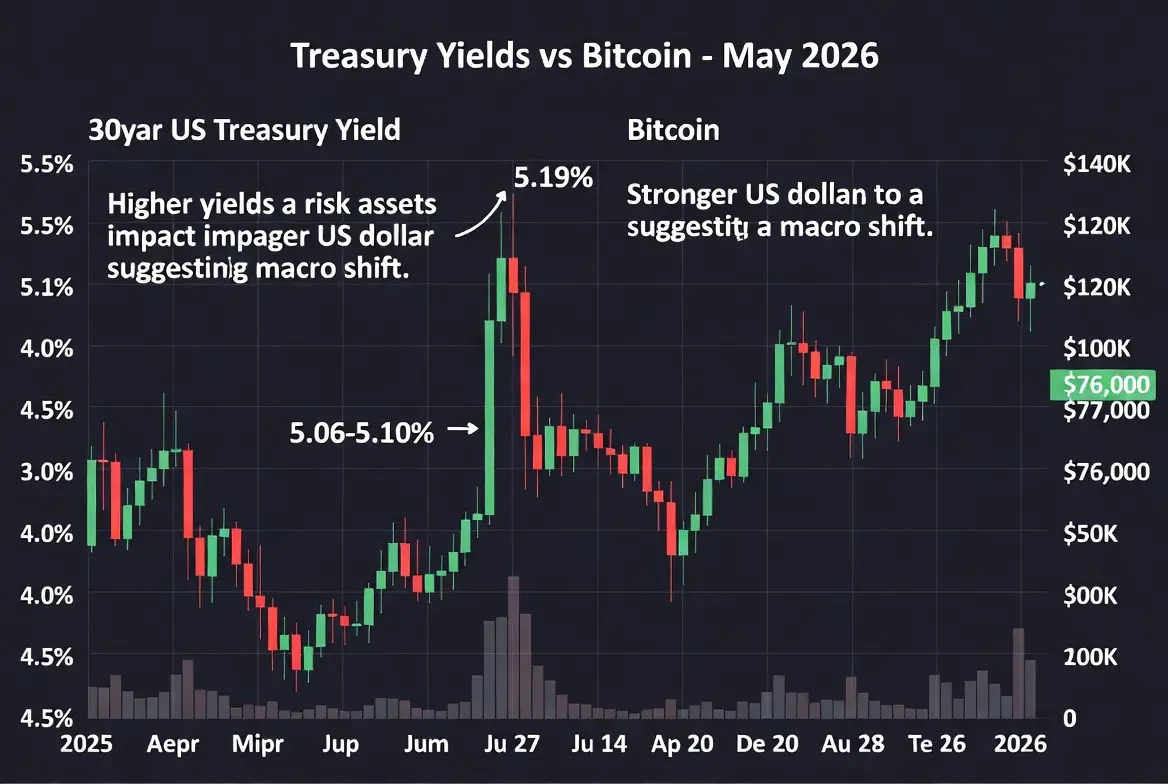
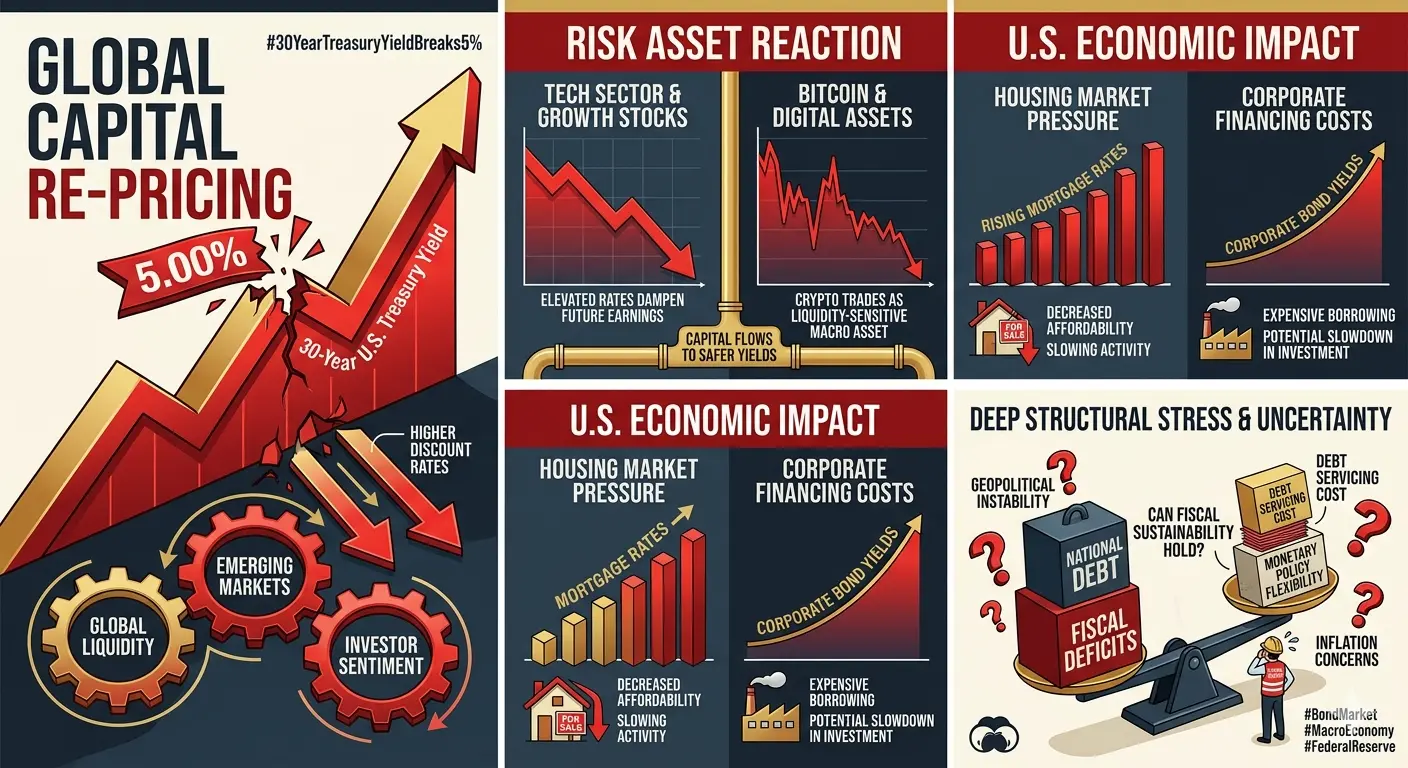
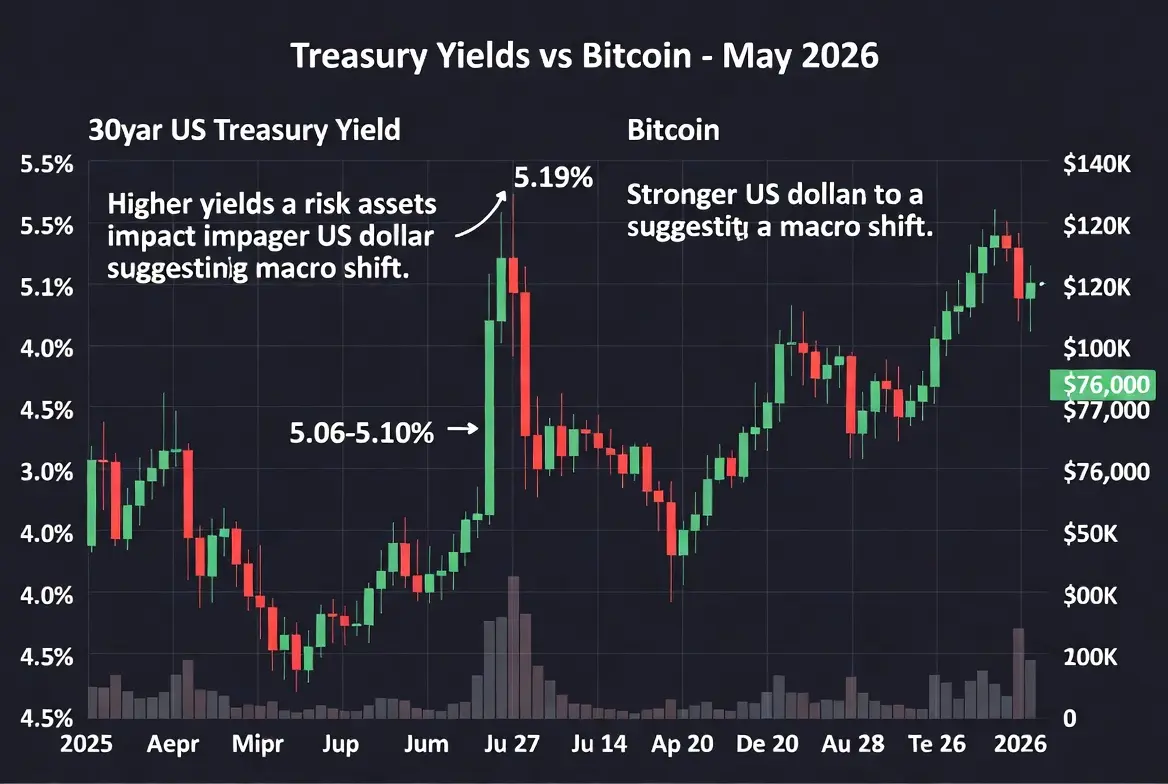
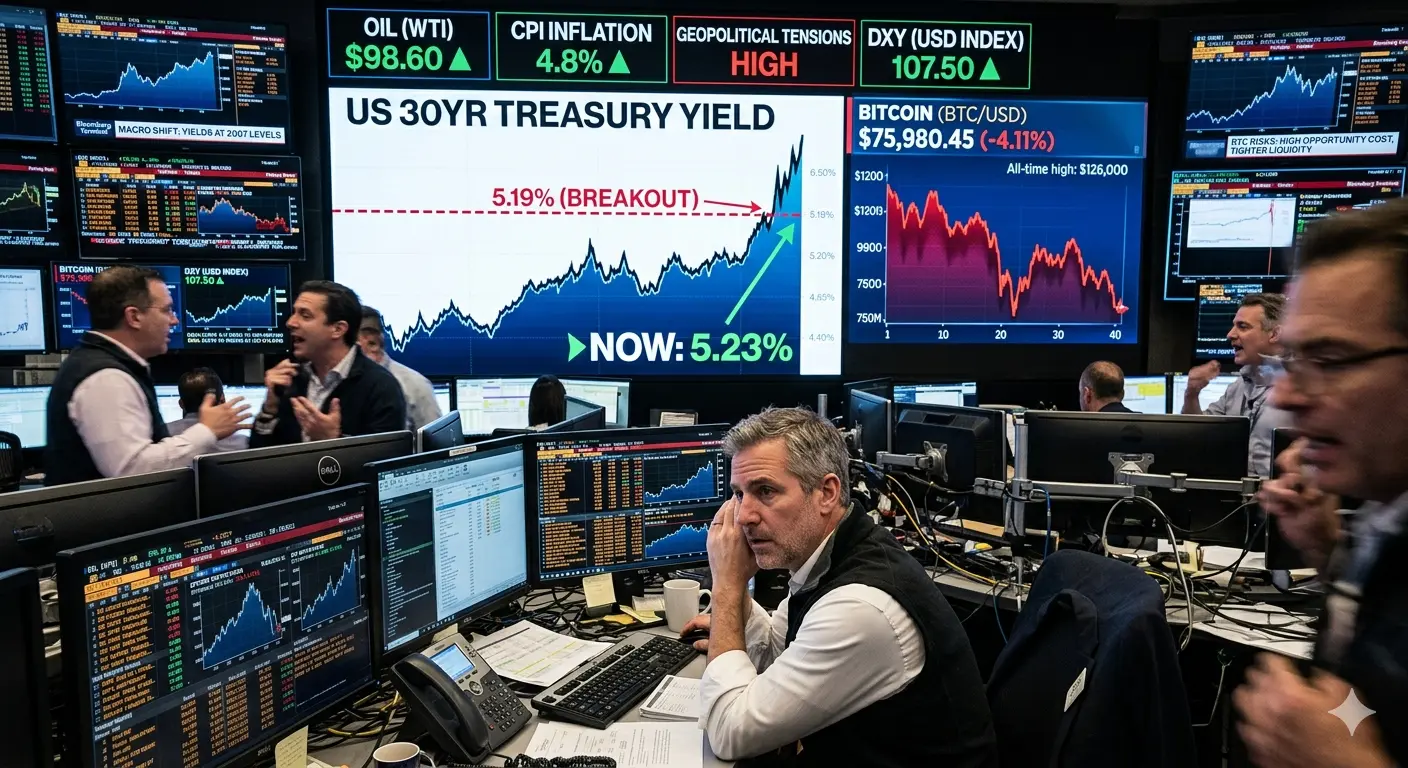
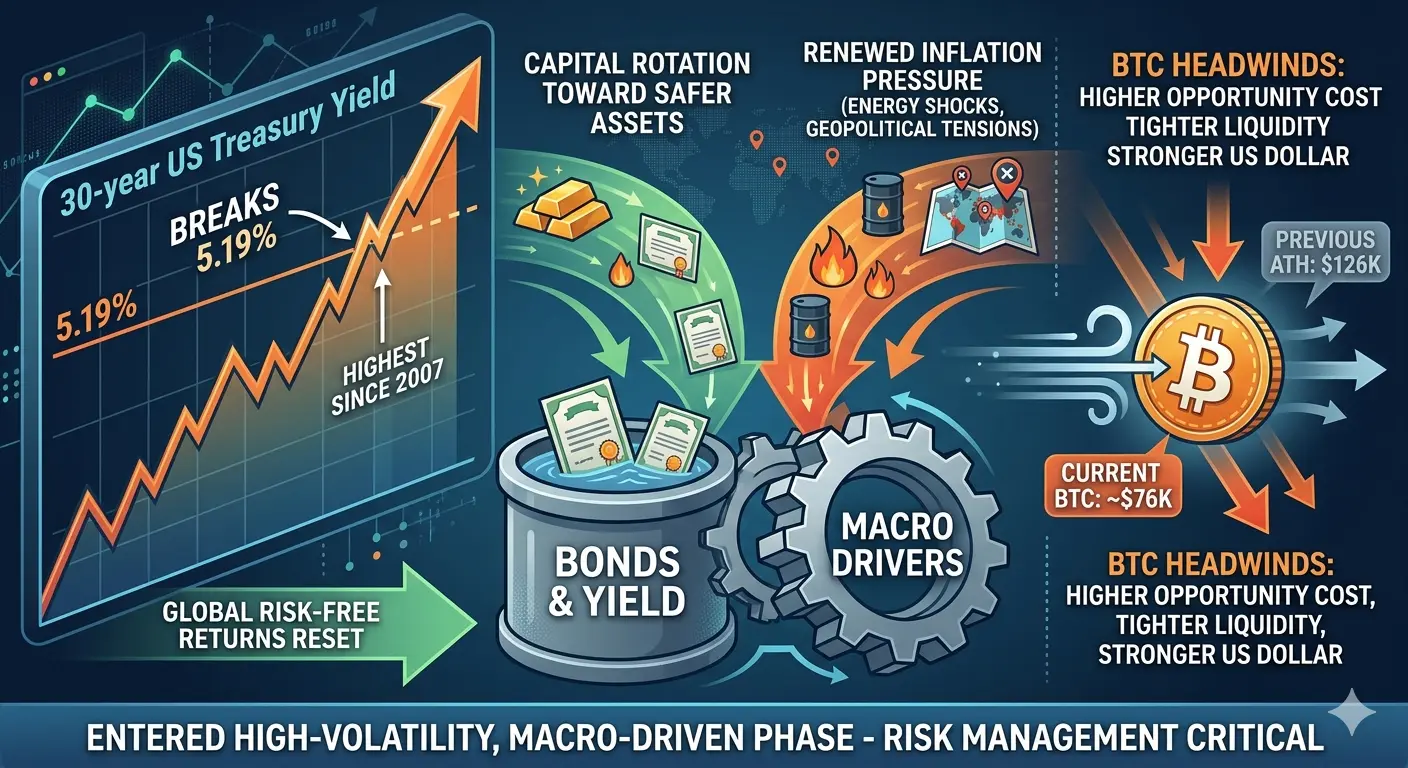
A rentabilidade do Tesouro dos Estados Unidos a 30 anos, ultrapassando o limiar crítico de 5 por cento e estabilizando na faixa de 5,15 a 5,19 por cento, representa uma das mudanças de regime macroeconómico mais significativas desde o ciclo financeiro anterior a 2007. Isto não é um pico de volatilidade de curto prazo. É uma reprecificação estrutural do capital global que sinaliza o fim da era do dinheiro ultra-barato e o início de um ambiente de custo de capital permanentemente mais elevado.
Toda a curva de rendimentos confirma esta mudança. A dívida do Tesouro a 10 anos, perto de 4,65 por cento, e a a 2 anos, perto de 4,12 por cento, mostram que os mercados estão a precificar uma inflação persistente, uma forte oferta de dívida soberana e condições de liquidez estruturalmente mais apertadas em toda a economia global. O dinheiro de longo prazo já não é barato, estável ou previsível.
Os Mercados de Obrigações Soberanas Globais Entram Num Choque de Duração Sincronizado
Este movimento não é isolado aos Estados Unidos. É global.
O gilt de 30 anos do Reino Unido está perto de 5,8–5,9 por cento, a Alemanha atinge máximos de rendimento em vários anos, e a estrutura de rendimento do Japão está a quebrar décadas de estabilidade ultra-baixa.
Isto reflete um choque de duração global sincronizado impulsionado por:
Pressão inflacionária persistente
Aumento dos défices fiscais
Crescimento da emissão de dívida soberana
Instabilidade geopolítica
Os mercados de obrigações já não são controlados apenas pela supressão do banco central. Agora são impulsionados pelo preço real de mercado do risco, inflação e sustentabilidade da dívida.
O Conflito com o Irã E o Choque Energético Estão a Amplificar a Pressão Inflacionária
A tensão geopolítica em torno do Irã e as perturbações no Estreito de Hormuz estão a reforçar as tendências inflacionárias globais.
O petróleo permanece na faixa de 105 a 118 dólares, enquanto a volatilidade do gás natural continua devido à incerteza na oferta. Este choque energético é agora o principal canal de transmissão para a inflação.
Inflação do IPC: ~3,8 por cento ano a ano
Inflação do PPI: ~6 por cento
Isto confirma que a inflação não está a diminuir — está a evoluir para uma segunda onda impulsionada por energia, logística e rigidez salarial.
Entretanto, a dívida federal dos EUA ultrapassa os 36,8 trilhões de dólares, com custos anuais de juros a aproximar-se de 952 mil milhões de dólares, criando um ciclo de pressão fiscal composta onde rendimentos mais elevados geram ainda mais emissão de dívida.
Porque é que uma Rentabilidade de 5 Por Cento Muda Tudo Para o Bitcoin E Ativos de Risco
Uma rentabilidade de 30 anos acima de 5 por cento é um reset global na alocação de capital.
Os investidores podem agora obter cerca de 5 por cento de retorno livre de risco de obrigações soberanas. Isto aumenta drasticamente o custo de oportunidade de manter ativos sem rendimento como o Bitcoin.
O ciclo anterior foi definido por:
Taxas de juros zero
Liquidez excessiva
Alavancagem barata
Esse ambiente já não existe.
Agora:
Renda fixa oferece retornos atrativos
A volatilidade nos títulos é menor
O capital institucional rotaciona para a segurança
Isto já é visível:
Entradas mais lentas em ETFs de Bitcoin
Redução do apetite ao risco nos mercados de derivados
Aumento da sensibilidade ao aperto de liquidez
Ao mesmo tempo, rendimentos mais elevados fortalecem o dólar, o que historicamente cria obstáculos para o Bitcoin e ativos de risco.
Estrutura de Mercado do Bitcoin Sob Pressão Macroeconómica
O Bitcoin está atualmente a negociar na faixa de 74.000 a 76.000 dólares, após várias rejeições perto de 78.000 a 80.000 dólares.
Desde o seu pico de ciclo de 126.000 dólares, o BTC corrigiu quase 39 por cento, refletindo uma contração de liquidez impulsionada por fatores macro, e não uma falha estrutural interna.
Isto não é uma venda de pânico. É uma distribuição controlada por instituições.
O Bitcoin permanece fundamentalmente forte devido a:
Adoção de ETFs
Modelo de oferta fixa
Dinâmica do ciclo de halving
Preocupações de dívida soberana a longo prazo
Mas o comportamento de curto prazo é totalmente dominado pelas condições de liquidez macroeconómica.
Visão Geral do Mercado Atual
Preço do BTC: 74.000–76.000 dólares
ATH: 126.000 dólares
Redução: ~39 por cento
Capitalização de mercado: ~1,5 triliões de dólares
Altcoins continuam fortemente comprimidas:
Ethereum: ~4.000–4.200 dólares
Solana: abaixo de resistência principal perto de 210 dólares
Mercado amplo de altcoins: queda de 50–80 por cento
Estrutura Técnica E Níveis-Chave
O Bitcoin permanece numa fase de transição, sem reversão macro confirmada.
O momentum de baixa domina a estrutura de 4 horas, enquanto o gráfico diário mostra o preço abaixo das médias móveis principais.
Zonas de Apoio:
73.000–74.000 dólares → base de liquidez primária
70.000–72.000 dólares → zona de acumulação institucional
65.000 dólares → zona de extensão de stress macro
Zonas de Resistência:
75.700 dólares → barreira de oferta imediata
77.600 dólares → zona de rejeição estrutural
79.800 dólares → gatilho de reversão de tendência macro
85.000 dólares → confirmação de breakout
Cenários de Bitcoin Baseados em Rendimentos do Tesouro
Se os Rendimentos Subirem Para 5,3–5,5 Por Cento:
BTC testa novamente 73.000–74.000 dólares
Potencial extensão até 70.000–72.000 dólares
Cenário de stress extremo: 65.000 dólares
Se os Rendimentos Se Estabilizarem Perto de 5 Por Cento:
BTC consolida na faixa de 73.000–80.000 dólares
Continua a volatilidade na faixa
Se os Rendimentos Caírem Abaixo de 4,8 Por Cento:
Retorno de liquidez
Recuperação do BTC para 80.000–85.000 dólares+
Modelos de longo prazo ainda projetam potencial de 120.000 a 200.000 dólares ao longo do ciclo, se a adoção e a dinâmica da dívida continuarem.
Porque é que o Bitcoin Reage aos Rendimentos
Rendimentos mais elevados aumentam os retornos livres de risco, reduzindo a procura por ativos voláteis. Também apertam a liquidez, reduzem a alavancagem e fortalecem o dólar.
No entanto, o aumento estrutural da dívida soberana pode, eventualmente, enfraquecer a confiança nos sistemas fiduciários, reforçando a narrativa de longo prazo do Bitcoin como uma proteção monetária não soberana.
Estratégia de Negociação Num Ambiente Dominado por Macroeconomia
Esta é uma fase de preservação de capital, não de alavancagem.
Estratégia de Acumulação:
Zona primária: 73.000–76.000 dólares
Zona profunda: 70.000–72.000 dólares
Oportunidade extrema: ~65.000 dólares
Gestão de Risco:
Evitar alavancagem
Priorizar exposição à spot
Acompanhar diariamente os rendimentos do Tesouro (zona de 5%–5,3% é crítica)
Monitorizar petróleo, inflação e política do Fed
Posicionamento agressivo de alta só é válido se o BTC recuperar 77.600–80.000 dólares com confirmação forte.
Conclusão Final
A quebra da rentabilidade do Tesouro de 30 anos acima de 5 por cento representa um reset macroeconómico global histórico que está a remodelar os fluxos de capital em todas as classes de ativos.
Rendimentos mais elevados comprimem a liquidez, fortalecem o apelo da renda fixa e reduzem o apetite ao risco nos mercados especulativos, incluindo criptomoedas.
O Bitcoin não está estruturalmente quebrado. Está a reagir a uma transição de liquidez global onde os mercados de obrigações dominam atualmente a descoberta de preços em todos os sistemas financeiros.
A variável mais importante daqui para frente permanece na faixa de rendimento de 5 a 5,3 por cento. Estabilidade ou declínio desbloquearia liquidez e potencial de valorização, enquanto aumentos adicionais para 5,5 por cento ou 6 por cento aprofundariam a pressão macro em todos os ativos de risco.
Em essência, o Bitcoin não está numa tendência de baixa estrutural. Está num ciclo de liquidez macro controlado pelos mercados de obrigações globais.
@Gate_Square @Gate广场_Official #TradfiTradingChallenge
A Rentabilidade dos Títulos do Tesouro de 30 Anos Acima de 5% E O Início De Uma Mudança No Regime Macroeconómico Global
A rentabilidade do Tesouro dos Estados Unidos a 30 anos, ultrapassando o limiar crítico de 5 por cento e estabilizando na faixa de 5,15 a 5,19 por cento, representa uma das mudanças de regime macroeconómico mais significativas desde o ciclo financeiro anterior a 2007. Isto não é um pico de volatilidade de curto prazo. É uma reprecificação estrutural do capital global que sinaliza o fim da era do dinheiro ultra-barato e o início de um ambiente de custo de capital permanentemente mais elevado.
Toda a curva de rendimentos confirma esta mudança. A dívida do Tesouro a 10 anos, perto de 4,65 por cento, e a a 2 anos, perto de 4,12 por cento, mostram que os mercados estão a precificar uma inflação persistente, uma forte oferta de dívida soberana e condições de liquidez estruturalmente mais apertadas em toda a economia global. O dinheiro de longo prazo já não é barato, estável ou previsível.
Os Mercados de Obrigações Soberanas Globais Entram Num Choque de Duração Sincronizado
Este movimento não é isolado aos Estados Unidos. É global.
O gilt de 30 anos do Reino Unido está perto de 5,8–5,9 por cento, a Alemanha atinge máximos de rendimento em vários anos, e a estrutura de rendimento do Japão está a quebrar décadas de estabilidade ultra-baixa.
Isto reflete um choque de duração global sincronizado impulsionado por:
Pressão inflacionária persistente
Aumento dos défices fiscais
Crescimento da emissão de dívida soberana
Instabilidade geopolítica
Os mercados de obrigações já não são controlados apenas pela supressão do banco central. Agora são impulsionados pelo preço real de mercado do risco, inflação e sustentabilidade da dívida.
O Conflito com o Irã E o Choque Energético Estão a Amplificar a Pressão Inflacionária
A tensão geopolítica em torno do Irã e as perturbações no Estreito de Hormuz estão a reforçar as tendências inflacionárias globais.
O petróleo permanece na faixa de 105 a 118 dólares, enquanto a volatilidade do gás natural continua devido à incerteza na oferta. Este choque energético é agora o principal canal de transmissão para a inflação.
Inflação do IPC: ~3,8 por cento ano a ano
Inflação do PPI: ~6 por cento
Isto confirma que a inflação não está a diminuir — está a evoluir para uma segunda onda impulsionada por energia, logística e rigidez salarial.
Entretanto, a dívida federal dos EUA ultrapassa os 36,8 trilhões de dólares, com custos anuais de juros a aproximar-se de 952 mil milhões de dólares, criando um ciclo de pressão fiscal composta onde rendimentos mais elevados geram ainda mais emissão de dívida.
Porque é que uma Rentabilidade de 5 Por Cento Muda Tudo Para o Bitcoin E Ativos de Risco
Uma rentabilidade de 30 anos acima de 5 por cento é um reset global na alocação de capital.
Os investidores podem agora obter cerca de 5 por cento de retorno livre de risco de obrigações soberanas. Isto aumenta drasticamente o custo de oportunidade de manter ativos sem rendimento como o Bitcoin.
O ciclo anterior foi definido por:
Taxas de juros zero
Liquidez excessiva
Alavancagem barata
Esse ambiente já não existe.
Agora:
Renda fixa oferece retornos atrativos
A volatilidade nos títulos é menor
O capital institucional rotaciona para a segurança
Isto já é visível:
Entradas mais lentas em ETFs de Bitcoin
Redução do apetite ao risco nos mercados de derivados
Aumento da sensibilidade ao aperto de liquidez
Ao mesmo tempo, rendimentos mais elevados fortalecem o dólar, o que historicamente cria obstáculos para o Bitcoin e ativos de risco.
Estrutura de Mercado do Bitcoin Sob Pressão Macroeconómica
O Bitcoin está atualmente a negociar na faixa de 74.000 a 76.000 dólares, após várias rejeições perto de 78.000 a 80.000 dólares.
Desde o seu pico de ciclo de 126.000 dólares, o BTC corrigiu quase 39 por cento, refletindo uma contração de liquidez impulsionada por fatores macro, e não uma falha estrutural interna.
Isto não é uma venda de pânico. É uma distribuição controlada por instituições.
O Bitcoin permanece fundamentalmente forte devido a:
Adoção de ETFs
Modelo de oferta fixa
Dinâmica do ciclo de halving
Preocupações de dívida soberana a longo prazo
Mas o comportamento de curto prazo é totalmente dominado pelas condições de liquidez macroeconómica.
Visão Geral do Mercado Atual
Preço do BTC: 74.000–76.000 dólares
ATH: 126.000 dólares
Redução: ~39 por cento
Capitalização de mercado: ~1,5 triliões de dólares
Altcoins continuam fortemente comprimidas:
Ethereum: ~4.000–4.200 dólares
Solana: abaixo de resistência principal perto de 210 dólares
Mercado amplo de altcoins: queda de 50–80 por cento
Estrutura Técnica E Níveis-Chave
O Bitcoin permanece numa fase de transição, sem reversão macro confirmada.
O momentum de baixa domina a estrutura de 4 horas, enquanto o gráfico diário mostra o preço abaixo das médias móveis principais.
Zonas de Apoio:
73.000–74.000 dólares → base de liquidez primária
70.000–72.000 dólares → zona de acumulação institucional
65.000 dólares → zona de extensão de stress macro
Zonas de Resistência:
75.700 dólares → barreira de oferta imediata
77.600 dólares → zona de rejeição estrutural
79.800 dólares → gatilho de reversão de tendência macro
85.000 dólares → confirmação de breakout
Cenários de Bitcoin Baseados em Rendimentos do Tesouro
Se os Rendimentos Subirem Para 5,3–5,5 Por Cento:
BTC testa novamente 73.000–74.000 dólares
Potencial extensão até 70.000–72.000 dólares
Cenário de stress extremo: 65.000 dólares
Se os Rendimentos Se Estabilizarem Perto de 5 Por Cento:
BTC consolida na faixa de 73.000–80.000 dólares
Continua a volatilidade na faixa
Se os Rendimentos Caírem Abaixo de 4,8 Por Cento:
Retorno de liquidez
Recuperação do BTC para 80.000–85.000 dólares+
Modelos de longo prazo ainda projetam potencial de 120.000 a 200.000 dólares ao longo do ciclo, se a adoção e a dinâmica da dívida continuarem.
Porque é que o Bitcoin Reage aos Rendimentos
Rendimentos mais elevados aumentam os retornos livres de risco, reduzindo a procura por ativos voláteis. Também apertam a liquidez, reduzem a alavancagem e fortalecem o dólar.
No entanto, o aumento estrutural da dívida soberana pode, eventualmente, enfraquecer a confiança nos sistemas fiduciários, reforçando a narrativa de longo prazo do Bitcoin como uma proteção monetária não soberana.
Estratégia de Negociação Num Ambiente Dominado por Macroeconomia
Esta é uma fase de preservação de capital, não de alavancagem.
Estratégia de Acumulação:
Zona primária: 73.000–76.000 dólares
Zona profunda: 70.000–72.000 dólares
Oportunidade extrema: ~65.000 dólares
Gestão de Risco:
Evitar alavancagem
Priorizar exposição à spot
Acompanhar diariamente os rendimentos do Tesouro (zona de 5%–5,3% é crítica)
Monitorizar petróleo, inflação e política do Fed
Posicionamento agressivo de alta só é válido se o BTC recuperar 77.600–80.000 dólares com confirmação forte.
Conclusão Final
A quebra da rentabilidade do Tesouro de 30 anos acima de 5 por cento representa um reset macroeconómico global histórico que está a remodelar os fluxos de capital em todas as classes de ativos.
Rendimentos mais elevados comprimem a liquidez, fortalecem o apelo da renda fixa e reduzem o apetite ao risco nos mercados especulativos, incluindo criptomoedas.
O Bitcoin não está estruturalmente quebrado. Está a reagir a uma transição de liquidez global onde os mercados de obrigações dominam atualmente a descoberta de preços em todos os sistemas financeiros.
A variável mais importante daqui para frente permanece na faixa de rendimento de 5 a 5,3 por cento. Estabilidade ou declínio desbloquearia liquidez e potencial de valorização, enquanto aumentos adicionais para 5,5 por cento ou 6 por cento aprofundariam a pressão macro em todos os ativos de risco.
Em essência, o Bitcoin não está numa tendência de baixa estrutural. Está num ciclo de liquidez macro controlado pelos mercados de obrigações globais.
@Gate_Square @Gate广场_Official #TradfiTradingChallenge