WatchingWhalesUnderTheNeon

vip
Age 0.1 Yıl
Peak Tier 0
No content yet
Over the past couple of days, I’ve been seeing more people on-chain shouting, “Coincidence transfers = someone’s up to something.” Instead, I’ve gotten used to first breaking the route down: whether the same payment is split into several parts, whether it went through an aggregation routing path first, whether it looped around at the exchange’s hot-wallet entry point, and then whether the time gaps and fees look like a script. A lot of what seems “mysterious” is really just batch deposits and withdrawals combined with address-management habits—amplifying emotions.
The recent uproar around priv
View Original
  • Reward
  • Comment
  • Repost
  • Share
An app that directly connects Pixels+Dungeon+Sleepagotchi, so I don't have to switch wallets/accounts back and forth.
View Original
CryptoManMab
{future}(PIXELUSDT)
No more guessing on play-to-earn. Now you’ve got one app where you play Pixels, Pixel Dungeons, Sleepagotchi, Chubkins and whatever comes next, knock out smart missions, build streaks, and cash out real rewards. And on the studio side they’ve got an AI economist helping teams reward the right players at the right time without killing the economy.
  • Reward
  • Comment
  • Repost
  • Share
OK! What's the next step to coordinate?
View Original
CarpenterLabs
@Molly9975019573 @HTX_Molly @justinsuntron Yes, that's possible~!
  • Reward
  • Comment
  • Repost
  • Share
Support, becoming more stable as broadcast continues, with the rhythm at its maximum.
View Original
CryptoRevolutionMaster
Thank you 🔥🔥 More streaming coming
repost-content-media
  • Reward
  • Comment
  • Repost
  • Share
The signal of BTC funding rate turning negative is very clear: sentiment is cooling down, and it's all about risk control.
BTC-0,44%
View Original
Furan86999
The global situation has suddenly tightened, and a tense atmosphere has swept across major markets. A new round of storm has already arrived!
The White House has issued a major clarification: the previously circulated rumor of an indefinite ceasefire was a complete misunderstanding. In reality, the ceasefire will last only 3-5 days, and the brief easing has completely fallen through.
The U.S. Central Command has officially confirmed the “smoking gun,” stating that 29 passing ships have already been driven away, and it has officially sealed the Strait of Hormuz. The key oil transport route is directly restricted.
In response, Iran has delivered a tough message, vowing that it will implement reciprocal blockade measures in the Strait of Mand. Trump also made a harsh remark: if negotiations fail, he will directly restart the war, and the Middle East powder keg has been fully ignited.
The geopolitical crisis has directly triggered a surge in energy markets—oil prices are strongly pushing past $100!
Brent crude jumped 3.3%, breaking through $100 per barrel, and WTI crude rose in parallel to $94.65.
The soaring in energy has set off a chain reaction that has spread across the board: global inflation concerns have surged again, and capital markets have faced a collective hit:
U.S. stock index futures fell sharply; gold and silver dropped in the short term; and U.S. Treasuries were dealt a severe blow. Traditional safe-haven and equity markets both faced downward pressure at the same time.
The crypto market is also not immune to volatility. BTC has rapidly pulled back from the $78,300 high, slipping below the $78,000 threshold, with funding rates turning negative.
Market sentiment cooled quickly, and most traders reached a consensus: this rally is only a short-term rebound, not a trend-breaking breakout, and uncertainty about the outlook has increased significantly.
With a strait blockade, war risks, oil prices surging, and inflation returning—multiple negative factors stacking up, there is no absolutely safe lane in today’s market.
Next, where geopolitical game-making goes and where energy prices move will directly determine the pace of global assets. Make sure to strictly control risk in your operations, be cautious when trying to pick bottoms, and respond rationally to the volatile market!
#美伊二轮谈判进展 #比特币反弹 @Gate广场_Official
  • Reward
  • Comment
  • Repost
  • Share
It's not easy to make big gains in this market; the strategic logic should be very clear.
View Original
CurrencyGodfather
Brothers, the recent strategy is to take big profits. Congratulations to the friends who followed.
repost-content-media
  • Reward
  • Comment
  • Repost
  • Share
Diversification is not about buying more; it's about spreading risk and allocating across different cycles, support.
View Original
TimeProphecyMachine
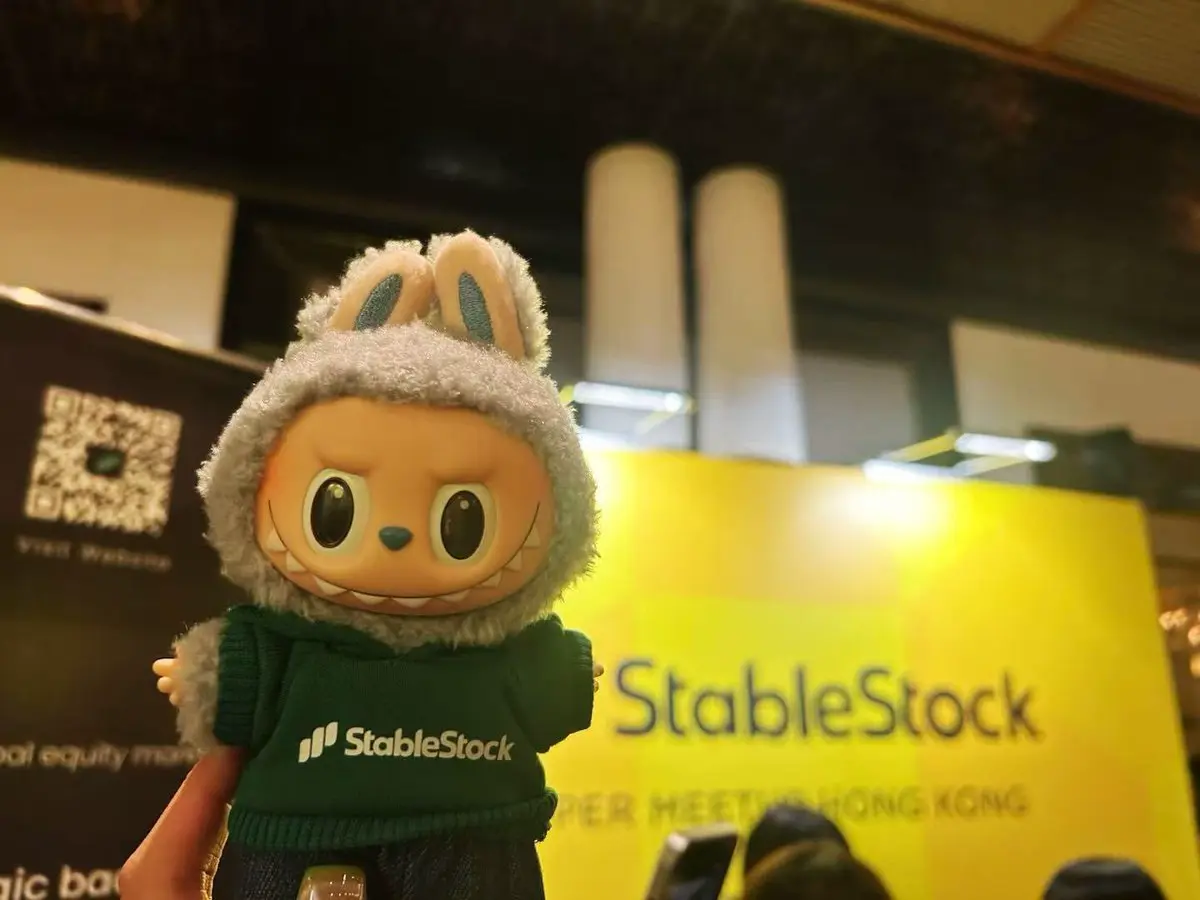
Thanks to my sister Yu, @ShuYu622, for the labubu! Lately, I’ve been seeing @StableStock get lots of wins in Hong Kong stock IPO lottery draws. This time, I’m going to Hong Kong to take care of all my Hong Kong cards! I also want to invest in a more diversified way.
repost-content-media
  • Reward
  • Comment
  • Repost
  • Share
A dollar buys your decision-making cost, saving you from continuing to calculate.
View Original
God-givenTeam
Why are 🦶 treatment 💆🏻‍♂️ priced at 199, 299
Is it really just that one dollar difference?
  • Reward
  • Comment
  • Repost
  • Share
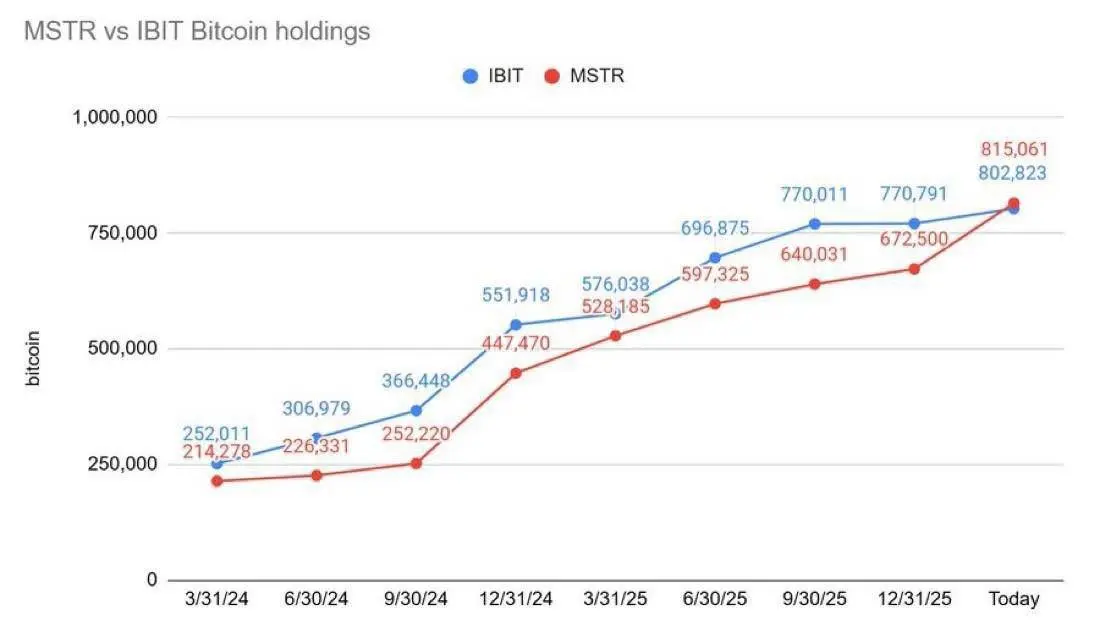
815k BTC surpasses Blackstone; this scale no longer resembles retail investor narratives, but rather a national-level position.
BTC-0,44%
View Original
CryptoRevolutionMaster
Michael Saylor's company increased its reserves to 815,061 BTC, surpassing BlackRock's 802,823 BTC holdings.
Saylor continues buying while institutional investors remain much more cautious.
$BTC
repost-content-media
  • Reward
  • Comment
  • Repost
  • Share
Lately, when I see projects, am I working seriously? I'm actually more focused on how the treasury spends: it's not about who shouts the loudest slogans, but whether the spending rhythm and milestones match up. For example, several small transfers in the same week, going through multiple layers of routing, and finally ending up in an exchange—that kind of thing makes me frown... Conversely, the money is issued in phases to clear deliverables, with some reserve left for the next step, at least for those who have a budget plan in place.
As for the recent debate over staking and shared security a
View Original
  • Reward
  • Comment
  • Repost
  • Share
Lately, reading governance voting records has become more and more boring: a bunch of addresses claiming to be "the community," but through layers of delegation, in the end, it's just a few big wallets making the decisions. Who exactly does governance tokens govern? Honestly, it’s like outsourcing decision-making to "seemingly professional people," and ordinary users voting or not makes little difference, at most giving oligarchs a boost in participation rates.
What I care more about are those staged transfers, route changes, and flows into exchanges—claiming decentralization while positions a
View Original
  • Reward
  • Comment
  • Repost
  • Share
I tried social mining once, posting a few messages, interacting a bit, and the numbers in the backend kept jumping, which was pretty exciting. But then I thought, is this thing really mining attention or my exit routes... Anyway, it's lively regardless. Recently, parallel/sharding narratives have come back up, with everyone talking about throughput and experience. I'm more concerned about how assets move: which route to use for cross-chain bridges, whether transaction fees suddenly become more expensive, whether the funds are split into multiple transactions, and ultimately whether they all fl
View Original
  • Reward
  • Comment
  • Repost
  • Share
Recently, I've come across a bunch of PFP projects claiming to offer memberships and branding, sounds pretty good, but on-chain it seems more like testing "how many days can attention last." To put it simply, long-term value isn't about how good the avatar looks, but whether you're willing to keep the door open for long-term holders: whether activities, permissions, and collaborations can be sustainably delivered.
I also noticed a small detail when watching large addresses: those truly "operating as a brand" will transfer in batches, and their routing is more restrained, occasionally moving a
View Original
  • Reward
  • Comment
  • Repost
  • Share
The biggest fear is that players quickly find the optimal solution and converge onto a single path, which would revert us back to the old P2E model.
View Original
Furan86999
Over the past few years, the blockchain game industry has been stuck in an awkward cycle: first attracting people with high returns, then relying on new users to retain the old ones as they exit, until the model collapses, leaving behind a "sea of data" and a group of educated players. Many projects claim to be making games, but in reality, they are still conducting financial experiments. It’s precisely because of this that, when I look at Pixels again, I care less about its art style or short-term token price, and more about whether it has pushed blockchain gaming in a different direction.
In my view, the most noteworthy aspect of Pixels isn’t that it made a farming game, but that it attempts to bring "behavior" back to the center of the economic system. The biggest problem with traditional P2E is that it compresses everyone’s goals into maximizing profits. Players no longer care about experience, the world, or social interactions; all actions ultimately serve one purpose: converting time into tokens as quickly as possible, then turning tokens into money. On the surface, such a system seems lively, but it’s actually very fragile because once returns decline, behaviors collapse instantly, and everyone leaves simultaneously.
What’s relatively clever about Pixels is that it doesn’t base its economic model solely on a gold-farming logic. You can plant, harvest, build, complete tasks, and participate in trading; you can also develop your own management route around land and resources. Different types of players assume different roles within this system. Some are producers, responsible for resource supply; some are traders, making money through market efficiency; some are consumers, driving demand through purchases and upgrades; and others are essentially engaging in social and long-term development, bringing activity and stickiness to the entire world. Once roles are differentiated, the economy is no longer just a simple "reward distribution—token selling" closed loop but more closely resembles a real market.
That’s why I say the core of Pixels isn’t the game shell but the production relationships. It’s not just giving you a gameplay but providing a behavior structure that’s participatory, tradable, investable, and accumulative. Tokens are important here, but they shouldn’t be the whole story. The real value doesn’t come from a phrase like “it will rise in the future,” but from whether there are use cases within the system, whether there’s demand to support it, and whether it can sustain circulation. If a token can only be driven by sentiment, it’s essentially an old narrative; but if it begins to support consumption, trading, upgrades, identity, and resource allocation, it has the chance to transform from a pure financial symbol into a genuine ecological tool.
Another point that cannot be ignored is the significance of Ronin for Pixels. Many people attribute growth to lower gas fees and smoother chains, but I believe the deeper value lies in the fact that Ronin has already proven that blockchain games can have large-scale user recognition. In other words, Pixels isn’t re-educating a completely blank market but is meeting demand within an ecosystem that already has blockchain gaming culture and asset awareness. This directly lowers the conversion threshold and makes it easier for players to accept the logic of “assets, trading, and behavioral value.” Its growth isn’t explosive out of nowhere but built upon a verified user base, climbing steadily.
Of course, Pixels is far from a "sure win." The challenges it faces are very real: if new user growth slows, will resource demand decline accordingly? If players quickly find the optimal strategies, will behaviors converge into a single path again? If content updates can’t keep pace, can slow-paced gameplay like farming still sustain activity? These issues are still present, just not fully exposed yet.
But even so, I believe Pixels has given the industry something more important than a “short-term hit”: it has reignited discussions about whether blockchain games can shift from a financial narrative back to content-driven products, from airdrops to behavioral value, from crude subsidies to refined operations. If blockchain games are to have a next phase of growth, it’s likely not about who offers higher APY, but about who can create a more authentic world, a more stable cycle, and a longer-lasting reason for players to stay.
So, in my view, Pixels isn’t the endpoint or the answer; it’s more like a turning point. At least it shows the market that blockchain games don’t have to survive solely on bubbles—they can start to operate more like a real economy.
  • Reward
  • Comment
  • Repost
  • Share
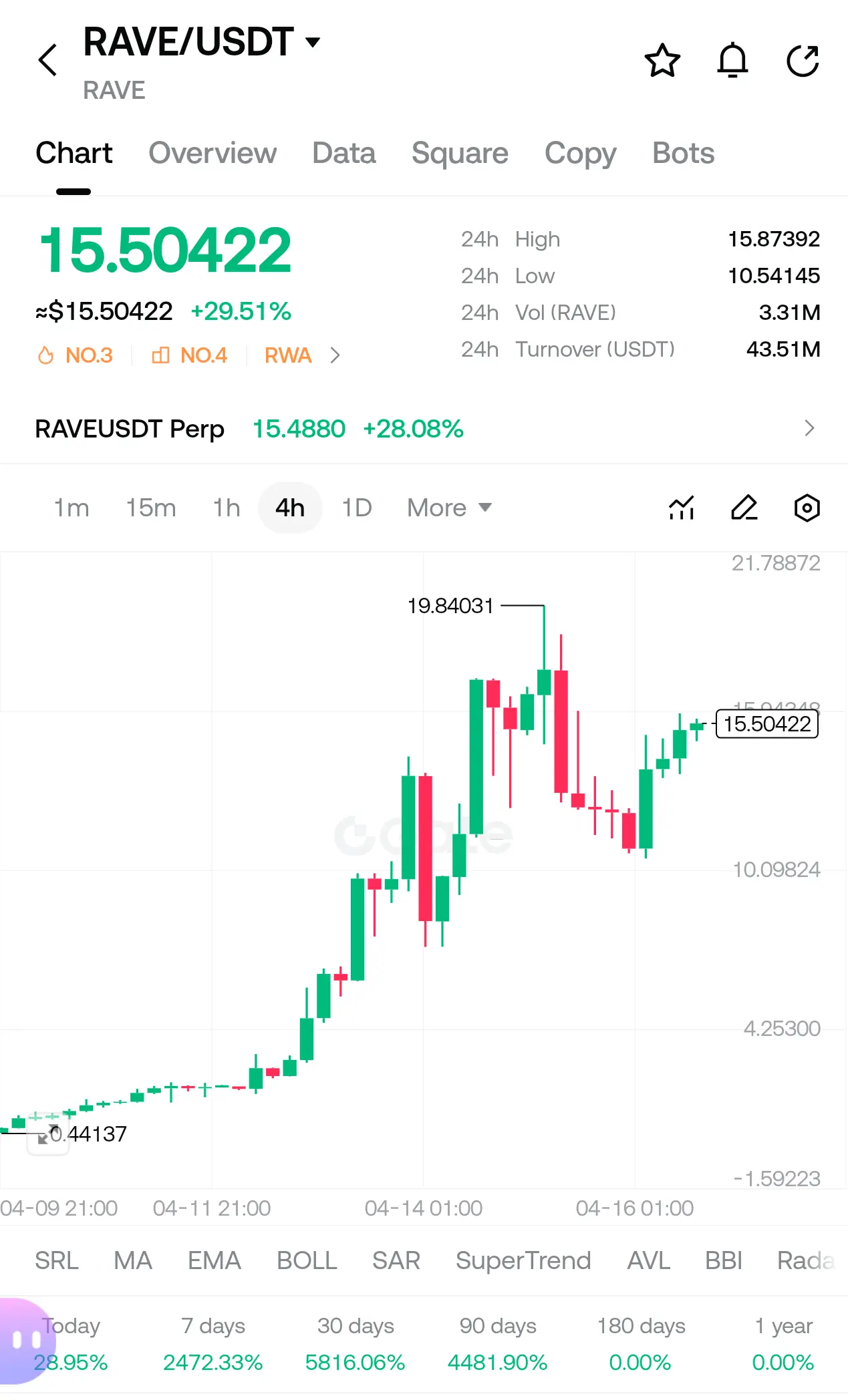
Long-position correction is considered valid, but I will wait until around 15 to confirm before entering the trade, after all, fake breakouts are too common.
View Original
MarcusCorvinus
$RAVE bullish recovery, momentum rebuilding
I’m seeing a strong push after the pullback from 19.8.
Price reclaimed structure and now forming higher lows again.
Entry : 14.8 – 15.5
Target : 17.5 → 19.5
Stop Loss : 12.9
How it’s possible :
Big move → correction → now accumulation.
Buyers stepping back in and trend trying to continue.
I’m bullish if this recovery holds.
Let’s go and Trade now $RAVE ‌
repost-content-media
  • Reward
  • Comment
  • Repost
  • Share
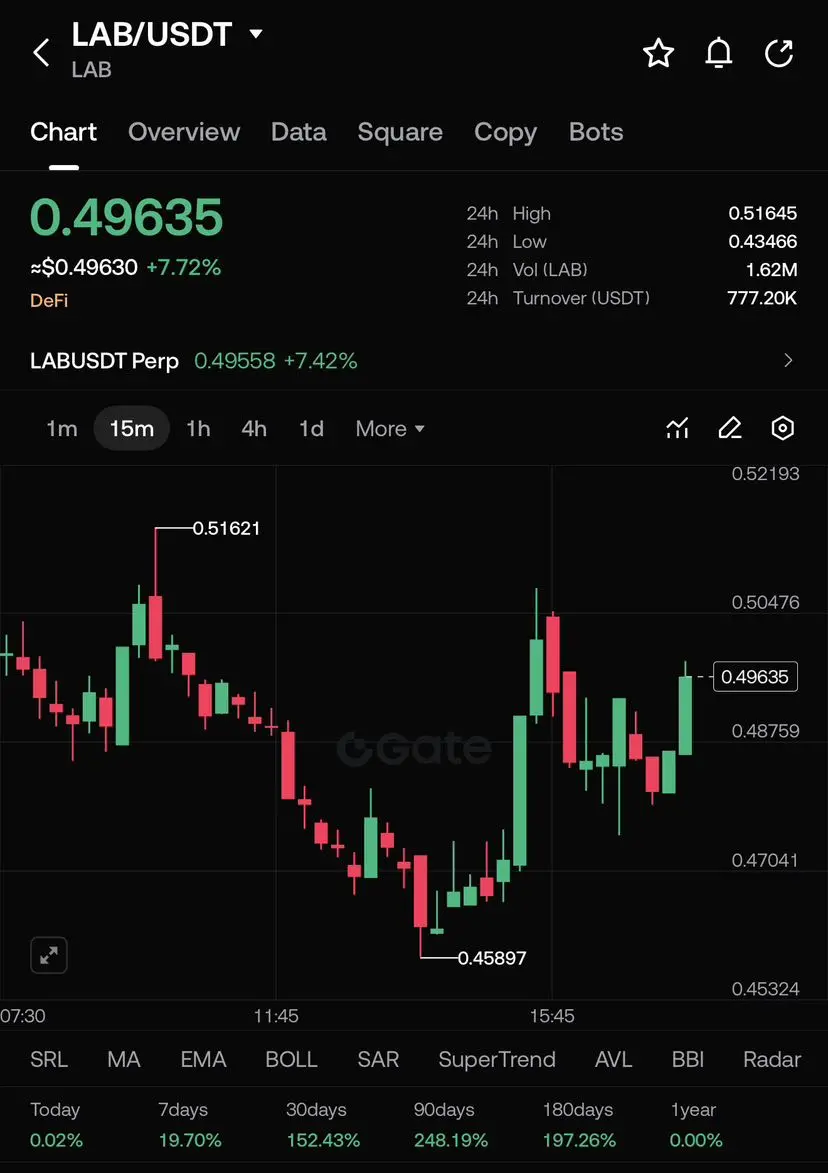
This typical "sweep the lows first and then rebound," there are things in the demand zone, monitor and observe.
View Original
LedgerBull
$LAB showing recovery after a clear downside sweep.
Price reclaimed structure and is now pushing back into range with improving momentum.
EP
0.4850 – 0.4920
TP
TP1
0.5050
TP2
0.5150
TP3
0.5300
SL
0.4700
Liquidity below got taken near 0.4589 and price reacted strongly — signs of demand stepping in. Now it’s stabilizing above mid-range, not fading.
If higher lows continue to form, upside expansion remains likely. Any dip into the entry zone looks like positioning, not weakness.
Let’s go $LAB ‌
repost-content-media
  • Reward
  • Comment
  • Repost
  • Share
Comfortable is comfortable, but don't get carried away; being able to get 50% is already top-tier.
View Original
Original content no longer visible
  • Reward
  • Comment
  • Repost
  • Share
These days, I’ve seen people arguing about secondary market royalties again. Basically, creators want to maintain a steady cash flow, trading platforms want smoother transactions, and buyers don’t want to get hit with fees every time they resell. After watching the blockchain for a while, I realize that many slogans supporting creators ultimately boil down to how the routes are set, how they enter exchanges, and how they split transactions into batches... The emotions are intense, but the settlement is very cold.
Now I care more about whether royalties are based on consensus or enforced by con
View Original
  • Reward
  • Comment
  • Repost
  • Share
Lately, I haven't been paying much attention to the K-line while watching the market, mostly thinking about how interest rates gradually "squeeze" people out of risky positions. To put it simply, when interest rates are high, everyone's risk appetite threshold rises: with the same volatility, those who used to go all-in now want to hold some cash, or split their positions into smaller parts, just to stay alive first. On-chain, you can also feel it—exchange inflows and outflows aren't as extreme anymore, large addresses seem more like testing the waters, transferring in batches, changing routes
View Original
  • Reward
  • Comment
  • Repost
  • Share
  • Pin