Lately, I've been watching the oracle price feeds, and it really feels like the coffee brewing is half a beat slow: you see the market already jumping, but on-chain quotes are still stuck at yesterday's bitter taste, and the ones that should be liquidated aren't, and those that shouldn't be hit are getting hit. Positions are like someone sneaking in while you blink and moving your chair. Especially for leveraged or LP positions, a delay in the feed price turns the protection line into a "psychological comfort line." Honestly, you think you have some buffer, but you're actually just waiting in
Lunchtime scrolling revealed more noise about whether the main public chain will move or shut down after the upgrade/stoppage. I'm more interested in how the project team spends their treasury... Honestly, whether they migrate or not is the result; the way they spend money reveals their character. Serious projects tend to have expenditures around milestones that seem more "work-like": audits, bug bounties, infrastructure, documentation, and operations that align with progress; Less serious ones keep circling around "market partnerships/consultant fees/community incentives," with ledger
These days, new L1/L2 projects are starting to sprinkle incentives to boost TVL everywhere. Old brothers in the group are rushing and complaining, "Mining, selling," while I watch and feel my eyes watering… Honestly, no matter how attractive the incentives are, when it comes to cross-chain, who do you really trust? You need to think it through first. Once IBC/message passing/bridges are involved, the core issues are threefold: Is the source chain accurately recording that “I indeed locked/burned/withdrew” this transaction? Is the set responsible for relaying messages (relays, proofs,
I just glanced at my borrowing position, and the liquidation line is only three steps away... Saying I’m not nervous would be a lie. My habit is to first **pour out** the “coffee grounds”: shut down every impulse to go leverage, then add a bit of margin or directly cut down the position—if I can push the red line outward by one step, I push it by one step. Then I also take a look at the interest rate / funding rate. Lately the fees have been so extreme that even the community is arguing whether it’ll reverse or whether we’ll keep squeezing the bubble. I don’t bet on emotions either—I’d rather
4.1 billion vs 1.2 billion—this gap is basically “whoever has the traffic wins.”
View Original
CryptoFrontier
PYUSD Reaches $4.1B While RLUSD Drops to $1.25B in Stablecoin Competition
PayPal's PYUSD stablecoin has surged to $4.11 billion, while Ripple's RLUSD has decreased to $1.25 billion after peaking. PYUSD's growth is fueled by its user base and brand confidence, contrasting with RLUSD's recovery efforts. Both coins will depend on adoption rates for future success.
Internal assessment + establishing mechanisms is quite crucial; many projects haven't even done an asset inventory.
View Original
CryptoFrontier
Venom Foundation Advances Quantum-Ready Blockchain Security
Venom Foundation, an Abu Dhabi-based fintech firm focused on high-performance blockchain infrastructure, has announced that the blockchain industry must urgently prepare for quantum computing threats. The organization conducted an internal assessment of its network vulnerabilities and established a
Spending $5,000 can indeed wash a wave, but it might also wash someone out completely.
View Original
TimeProphecyMachine
Mainstream players are obsessed with playing; I haven't bought a single one of these so-called strong altcoins... A $5,000 drop in BTC would really make me feel good.
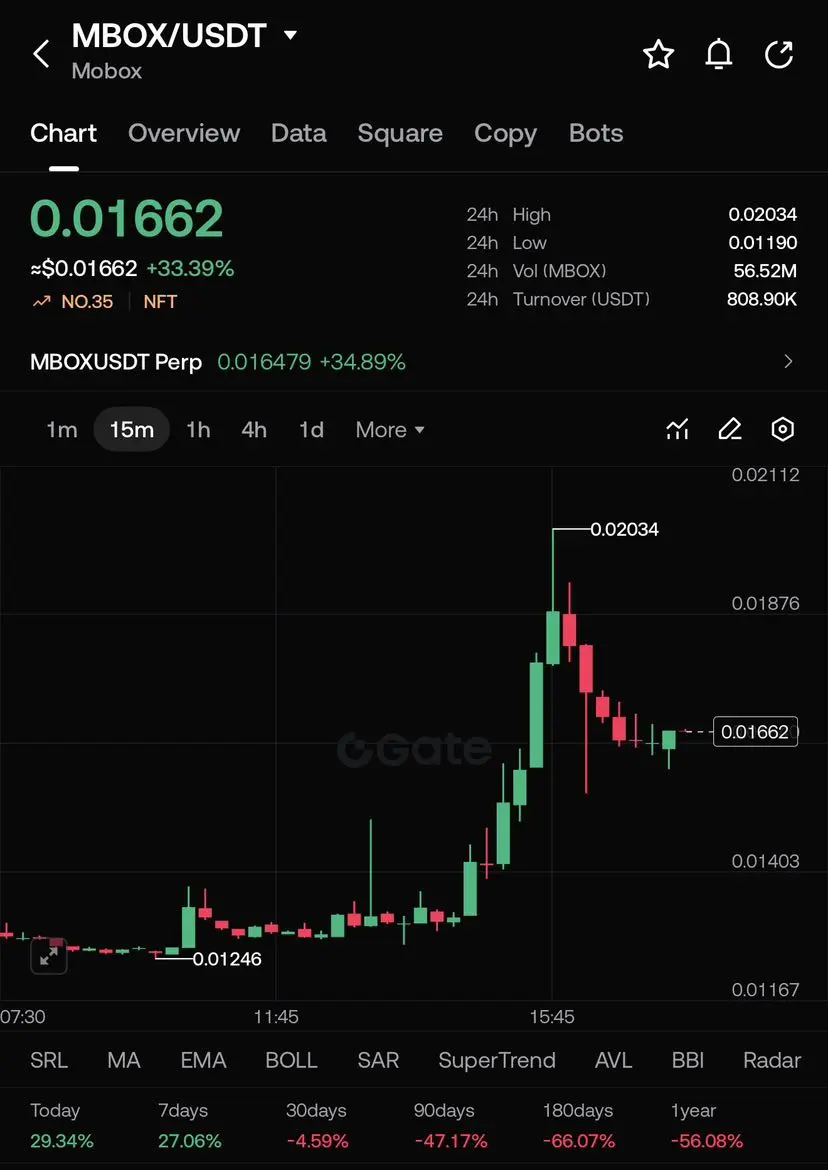
Bullish bias remains unchanged: hold the structure, hold at 0.0158, and look for partial profit-taking levels on the way up.
View Original
LedgerBull
$MBOX pushing back after a strong expansion move. Pullback looks controlled — structure still intact with buyers defending the range. EP 0.01620 – 0.01650 TP TP1 0.01720 TP2 0.01800 TP3 0.01920 SL 0.01580 Liquidity above already swept near 0.02034, and price is now rotating lower to stabilize. This isn’t weakness — it’s rebalancing after an impulsive move. As long as higher lows keep forming, bias stays bullish. Dips into the entry zone look like positioning, not panic. Let’s go $MBOX
The current strategy is to wait for signals: break out with high volume and follow the trend, buy on the dip and sell at the peak, straightforward and aggressive.
View Original
TimeProphecyMachine
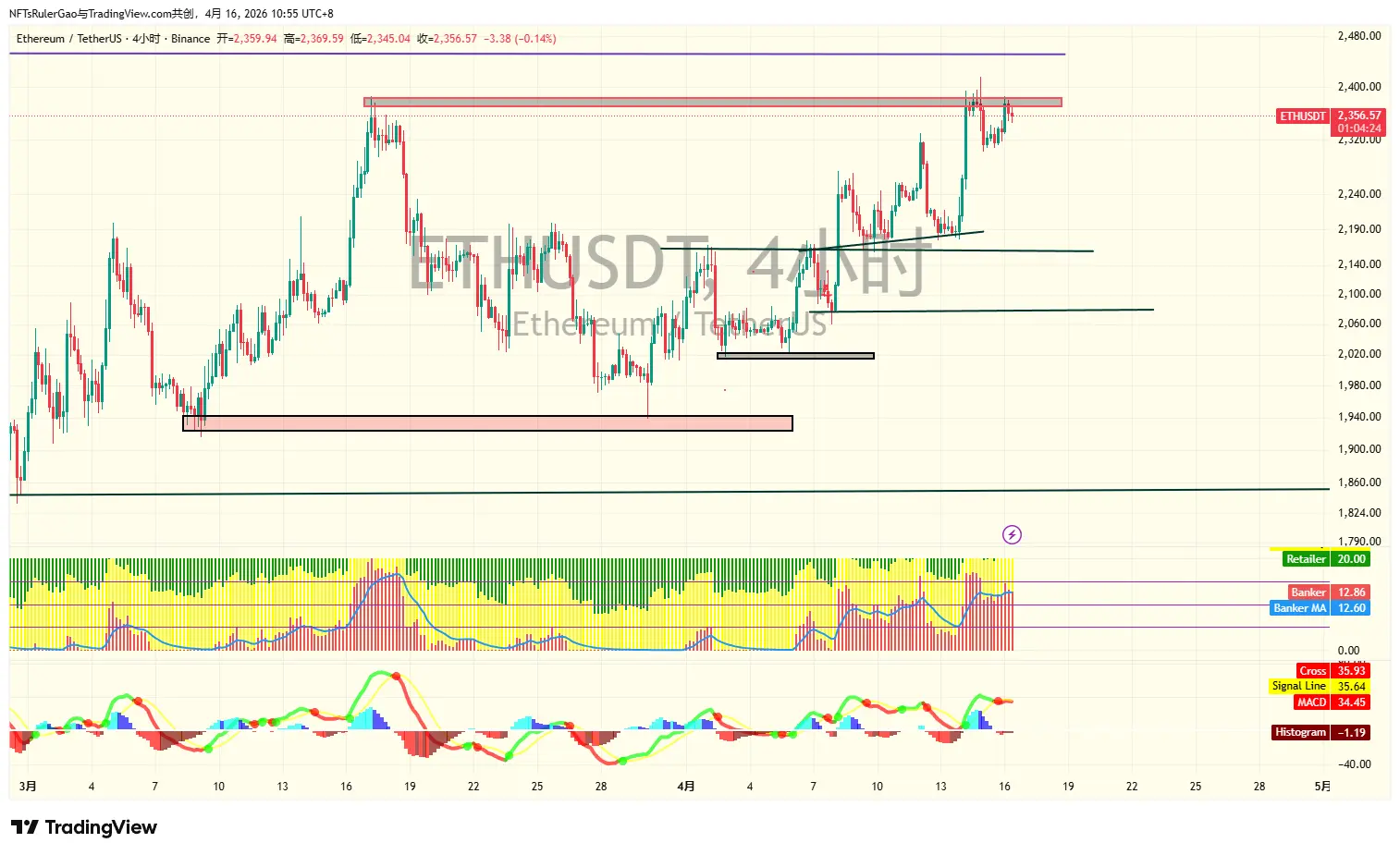
$ETH is being suppressed by the price at the 2400 level. Just like $BTC , it can only have a good upward move after breaking through the key resistance. Keep an eye on whether it can break through 2400–2420; if it rises up and the candle closes with a rejection (recoil), don’t hesitate—go short directly. There’s only so much money in the market moving back and forth, and it isn’t really the time for a genuine bull run unless it breaks out with high volume.
Keep a close eye on the actual implementation of governance proposals: delays, temporary parameter changes, and information asymmetry will all be directly reflected in the market.
View Original
CryptoSat
World Liberty Financial just posted a governance proposal to restructure 62.28 Billion locked $WLFI tokens. Key points: • Up to 10% burn planned • 40.7B tokens to start vesting for founders & team • Tokens were previously locked indefinitely • Comes after recent $75M loan controversy Token unlock + vesting could bring new supply pressure to the market. Execution, timelines, and transparency will decide the reaction. 👀
When I’ve been reviewing projects lately, I go with the “coffee three-piece set”: GitHub, audit reports, and multi-sig upgrades. On GitHub, I don’t care how many lines you’ve written; mainly, I look at whether people are consistently doing real work, whether issues/PRs are being answered seriously, and whether fixes are quick when something goes wrong. As for the kind that’s lively for a week and then it’s all “next time for sure” afterward—I’m going to let that cool off first. For audit reports, don’t just stare at the logo either. Flip through and check whether serious issues were truly
I find that people are really weird. When they’re floating to quick profit, they sleep like pigs; the next day, they even complain that they made too little. The moment they float into a quick loss, they start imagining the worst-case scenario, waking up in the middle of the night to grab their phone and take a look at the candlestick chart… To put it plainly, it’s not that the money is getting smaller—it’s that breath of “did I mess up?” is what pushes on them. This thing called loss aversion is even more refreshing than caffeine. Recently, I’ve also gotten a bit of PTSD from the whole “yield