À mesure que le Web3 gaming évolue du modèle Play-to-Earn traditionnel vers une nouvelle ère axée sur les mondes ouverts et l’engagement communautaire, les NFT ne se limitent plus à de simples objets de collection numériques. Ils deviennent essentiels pour l’identité virtuelle, les économies numériques et les frameworks de participation des utilisateurs.
Dans les principaux projets Web3 gaming, les systèmes NFT sont conçus pour transformer personnages, objets et actifs virtuels en NFT que les utilisateurs peuvent réellement posséder grâce aux protocoles d’actifs numériques on-chain. Ces actifs sont utilisables dans le jeu et peuvent également être gérés ou échangés via des Portefeuilles blockchain.
Qu’est-ce que le système NFT de BabyShark ?
Le système NFT de BabyShark constitue une économie de jeu avancée fondée sur des actifs numériques on-chain. Avatars, tenues, objets, collectibles et certains actifs d’espace virtuel existent sous forme de NFT sur la blockchain.
Les NFT (Non-Fungible Tokens) se distinguent par leur caractère unique et leur vérifiabilité. Contrairement aux objets standards stockés dans une base de données in-game, les NFT on-chain sont réellement détenus via un Portefeuille, avec des registres de propriété immuables sur la blockchain.
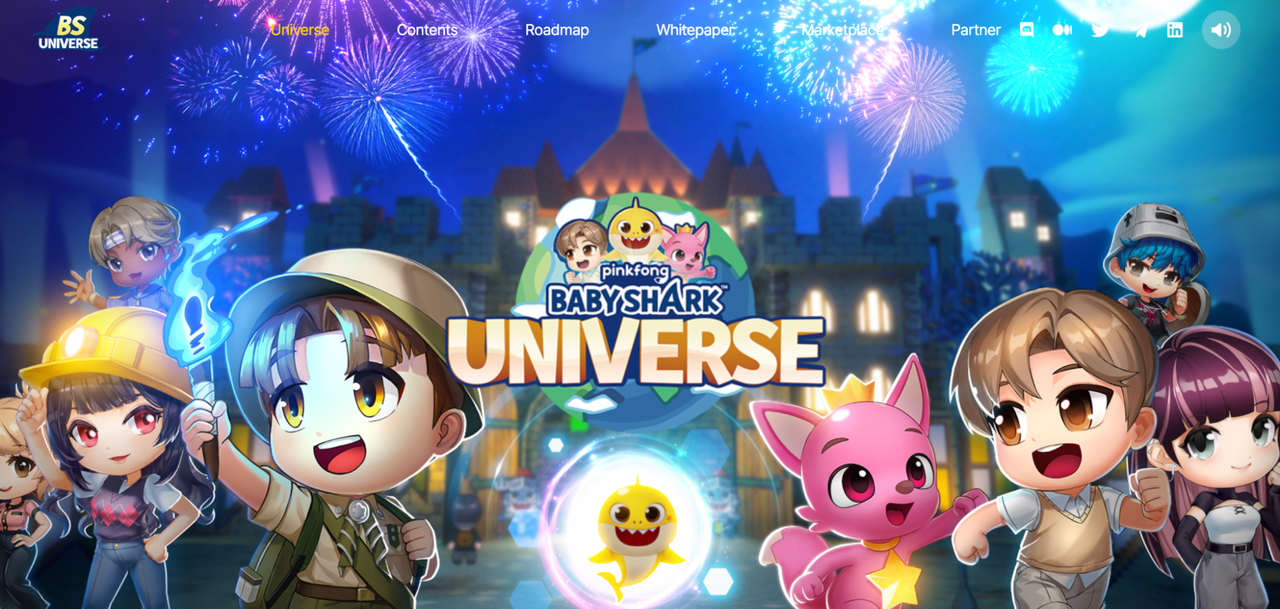
Dans Baby Shark Universe, les NFT sont bien plus que de simples objets de collection : ils jouent un rôle interactif et fonctionnel dans le jeu et le monde ouvert. Par exemple, certains NFT permettent de personnaliser les personnages, d’accéder à des événements ou lieux spéciaux, ou servent de marqueurs de statut communautaire.
Les NFT de l’écosystème BabyShark sont introduits par des sorties officielles, des récompenses de gameplay, la participation à des événements ou l’engagement des utilisateurs. Certains NFT sont des actifs numériques en édition limitée, d’autres sont générés ou améliorés au fil de l’interaction avec le jeu.
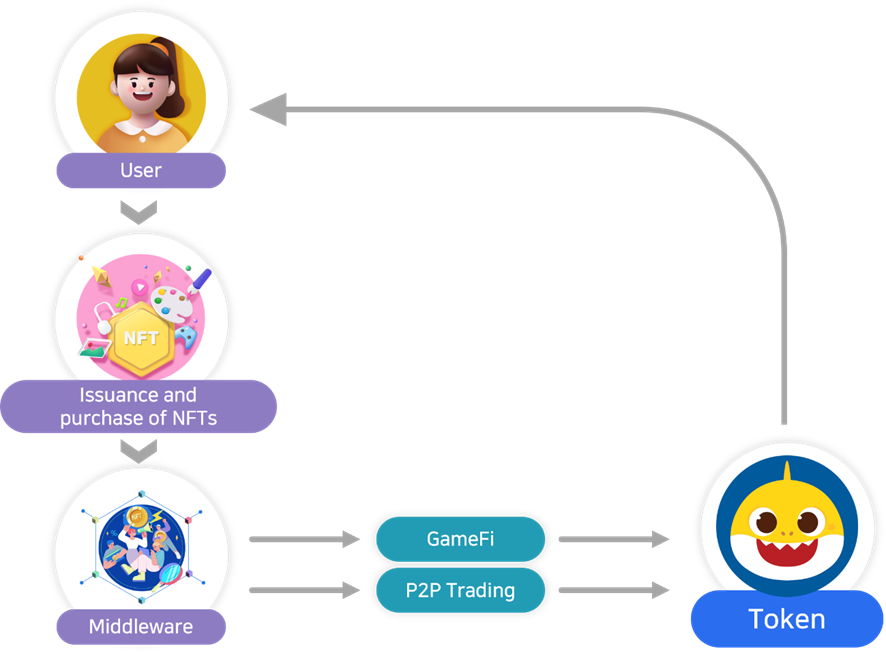
Lors de leur création, l’ID unique, les attributs et les détails de propriété de chaque NFT sont enregistrés via un Smart Contract. Les utilisateurs peuvent stocker leurs NFT dans des Portefeuilles on-chain et y accéder ou les échanger sur les Marchés compatibles.
Contrairement aux bases de données centralisées des jeux traditionnels, les données des actifs NFT ne sont pas contrôlées par une seule plateforme. Même si un utilisateur quitte le jeu, les NFT restent dans l’Adresse du portefeuille de l’utilisateur — une caractéristique essentielle des actifs Web3 gaming.
Dans l’écosystème open-world de BabyShark, les NFT sont à la fois fonctionnels et décoratifs. Chaque type de NFT débloque des expériences interactives spécifiques.
Par exemple, les NFT Avatars établissent une identité on-chain, tandis que les NFT tenues modifient l’apparence du personnage ou renforcent la présence communautaire. Les NFT spéciaux peuvent donner accès à des événements, conférer des privilèges de jeu ou faciliter l’interaction sociale.
À mesure que l’écosystème Web3 gaming se développe, les NFT évoluent de simples objets de collection vers des systèmes d’identité numérique complets. Les actions des utilisateurs, leurs actifs et leur implication communautaire sont de plus en plus liées aux NFT.
Le Marché est un pilier central de l’écosystème NFT BabyShark, permettant le trading d’actifs numériques entre pairs. Les utilisateurs connectent leur Portefeuille on-chain au Marché pour acheter, vendre ou exposer des NFT.
Lors des transactions, les Smart Contracts gèrent automatiquement les transferts d’actifs et les mises à jour de propriété. Contrairement aux plateformes traditionnelles, les transactions sur le Marché NFT sont enregistrées de façon transparente et permanente on-chain.
Le Marché permet aux utilisateurs de bâtir une économie indépendante d’actifs numériques. La valeur des NFT dépend non seulement de la plateforme, mais aussi de la demande communautaire, de la rareté et de l’activité de l’écosystème.
La propriété on-chain distingue fondamentalement le Web3 des jeux traditionnels. Dans les jeux classiques, les utilisateurs peuvent utiliser des objets in-game, mais le contrôle final reste à la plateforme, qui peut modifier, révoquer ou restreindre les actifs à tout moment.
Dans le système NFT BabyShark, les utilisateurs détiennent leurs NFT via leur Portefeuille, avec une propriété enregistrée de façon immuable sur la blockchain. Tant que les utilisateurs conservent leur Clé privée du portefeuille, ils gardent le contrôle de leurs actifs numériques.
Cette structure rapproche les NFT des véritables droits de propriété numérique, faisant passer les jeux Web3 d’un modèle « location de plateforme » à un modèle de « propriété utilisateur ».
Cependant, la propriété on-chain implique que les utilisateurs doivent gérer leur Portefeuille et leur Clé privée en toute sécurité. La perte d’accès au Portefeuille peut entraîner une perte définitive des actifs NFT.
En quoi les NFT BabyShark diffèrent-ils des objets traditionnels de jeu ?
Les objets in-game traditionnels sont des actifs centralisés, dont l’utilisation, le trading et le cycle de vie sont entièrement dictés par la plateforme. Les NFT BabyShark privilégient l’ouverture et la transférabilité.
Les principales différences concernent la propriété des actifs, les mécanismes de trading et la compatibilité de l’écosystème.
| Comparaison |
Objets de jeu traditionnels |
NFT BabyShark |
| Propriété |
Contrôle plateforme |
Propriété utilisateur on-chain |
| Structure des données |
Base de données centralisée |
Réseau blockchain |
| Tradabilité |
Généralement limitée |
Marché on-chain |
| Transparence |
Faible |
Vérifiable on-chain |
| Compatibilité |
Restreinte à la plateforme |
Écosystème Web3 extensible |
Cette évolution stimule l’intérêt croissant pour le Web3 gaming, alors que de nombreux projets cherchent à créer des systèmes ouverts d’actifs numériques grâce aux NFT.
Quels défis les NFT de jeux Web3 rencontrent-ils ?
Malgré leur importance, les NFT dans le Web3 gaming font face à plusieurs défis.
Premièrement, la liquidité du marché NFT dépend de l’engagement communautaire et du sentiment du marché. Un faible niveau de participation peut réduire la demande d’échanges NFT.
Deuxièmement, les Portefeuilles Web3 et les opérations on-chain représentent une courbe d’apprentissage pour les utilisateurs grand public. Les frais de Gas, la gestion des Clés privées et la sécurité blockchain influencent l’expérience utilisateur.
Par ailleurs, la valeur à long terme des NFT dépend de la vitalité de l’écosystème du jeu. Un projet stagnant ou une baisse d’activité communautaire peuvent diminuer l’utilité des NFT.
Ainsi, des systèmes NFT robustes dans le Web3 gaming nécessitent non seulement une infrastructure technique, mais aussi une gestion communautaire efficace, un développement de contenu et un engagement continu.
Résumé
Le système NFT BabyShark est un élément central de l’écosystème Web3 gaming Baby Shark Universe, transformant Avatars, objets et biens virtuels en NFT que les utilisateurs peuvent réellement posséder grâce aux protocoles d’actifs numériques on-chain. Contrairement aux actifs in-game centralisés, les NFT mettent l’accent sur la propriété on-chain, le trading ouvert et la participation communautaire.
À mesure que le Web3 gaming évolue des modèles purement financiers vers des écosystèmes immersifs et open-world, les NFT deviennent des piliers de l’identité virtuelle et de l’économie numérique.
FAQ
Les NFT BabyShark peuvent-ils être échangés ?
Oui. Les utilisateurs peuvent acheter, vendre et exposer des NFT via le Marché.
Les NFT BabyShark confèrent-ils une véritable propriété ?
La propriété des NFT est enregistrée de façon permanente sur la blockchain, et les utilisateurs détiennent les actifs via leur Portefeuille, ce qui garantit des droits de propriété vérifiables on-chain.
Quels types de NFT BabyShark propose-t-il ?
Les NFT BabyShark peuvent inclure Avatars, tenues, objets in-game, collectibles et certains actifs d’espace virtuel sélectionnés.
En quoi les NFT BabyShark diffèrent-ils des skins de jeu standards ?
Les skins de jeu standards sont contrôlés par la plateforme, tandis que les NFT offrent une propriété utilisateur on-chain et des fonctionnalités de trading ouvert.
Existe-t-il des risques associés aux NFT BabyShark ?
Les marchés NFT sont soumis aux risques de liquidité, d’engagement communautaire et de développement de projet ; les NFT de jeux Web3 comportent donc des risques de marché et techniques inhérents.