Japan’s 2026 Major Crypto Tax Cut: From 55% to 20%, Unlocking New Market Opportunities

Beginner
Quick Reads
Last Updated 2026-03-27 17:50:31
Reading Time: 1m
Japan will reduce the maximum capital gains tax on cryptocurrencies from 55% to 20% beginning in 2026. This policy is expected to boost domestic investment, promote institutional involvement, and spur innovation in crypto exchanges.

Background and Rationale for Japanese Tax Reform


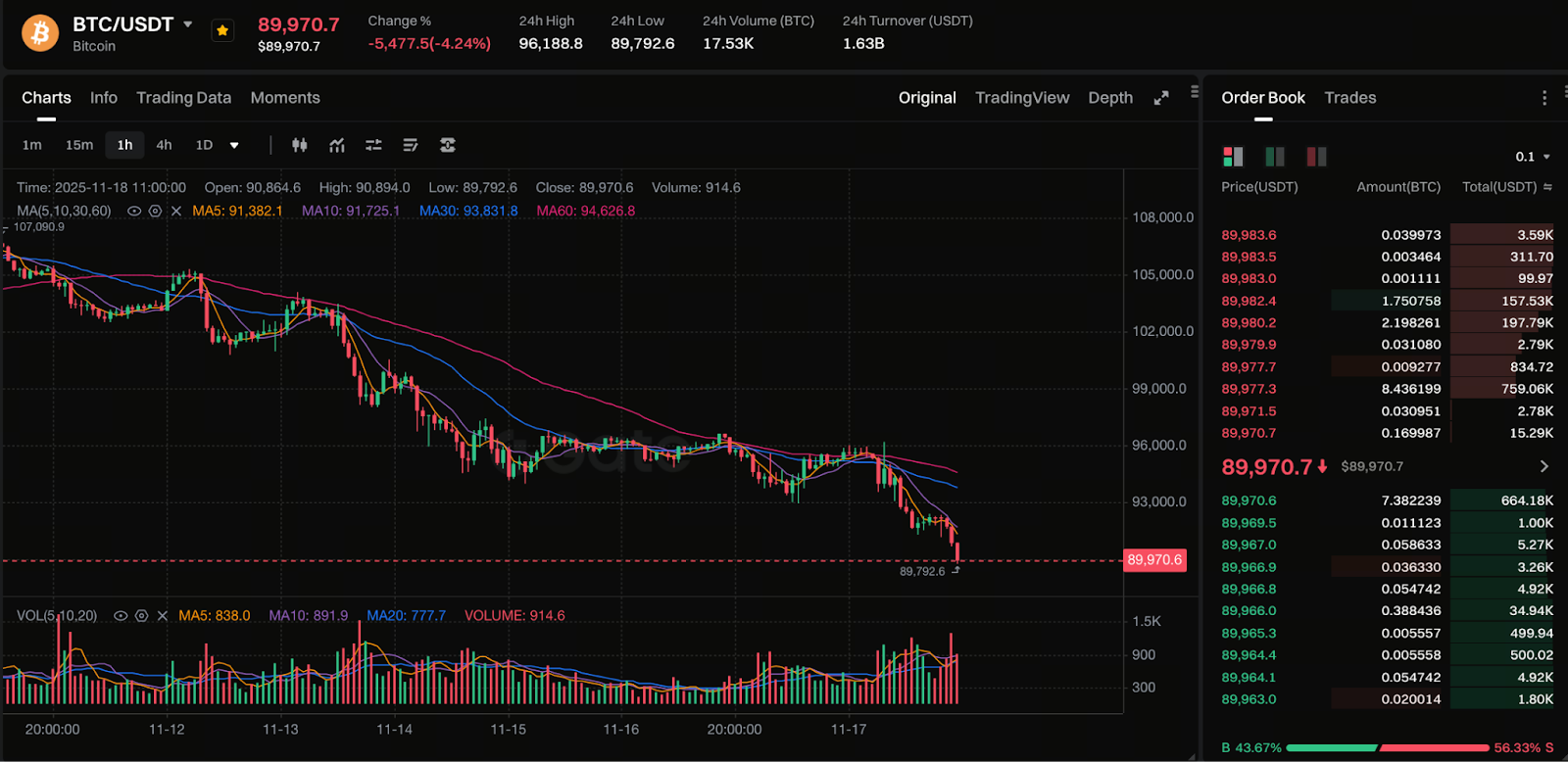
Image: https://www.gate.com/trade/BTC_USDT

Japan has been advancing regulatory innovation in the cryptocurrency sector over the past several years. According to the latest reports, the Financial Services Agency (FSA) is planning significant reforms to directly regulate select crypto assets and revise the tax framework. The heart of these changes, slated for 2026, is a switch from the current progressive capital gains tax—capped at 55%—to a flat 20% rate for crypto assets. This move reflects Japan’s commitment to supporting a stable and broader crypto market by lowering taxes and simplifying the tax system.

Current Crypto Taxation: Why Is It As High As 55%?

At present, Japan classifies cryptocurrency gains as “ordinary income.” Depending on an individual’s total income, these gains are subject to progressive taxation, which, when combined with local resident taxes, can reach a maximum rate of 55%. This steep tax rate discourages active traders and investors and can deter them from realizing gains.

Highlights of the New Policy: 20% Flat Tax + Crypto Classified as Financial Products

According to the FSA’s proposal, roughly 105 crypto assets—including major tokens like Bitcoin and Ethereum—will be redefined as financial products and regulated under the Financial Instruments and Exchange Act. Crypto asset gains will be treated as capital gains and taxed at a uniform 20% rate, aligning with taxes on stocks and other financial instruments. The plan also introduces loss carryforward, enabling investors to offset future gains with prior years’ losses, which is not available under the current system. Another key update is stricter market compliance: Exchanges must disclose more information, including issuer’s identity, technical infrastructure, and volatility risks, and will face new restrictions on insider trading.

Potential Impact: Individual Investors vs. Institutional Players

  • Individual Investors: The substantial tax cut could encourage individuals to return to or increase their crypto investments. Many who previously held coins and hesitated to realize gains due to high taxes may now rethink their trading approaches.
  • Institutional Capital: With crypto assets reclassified as financial products, banks, insurers, and other financial institutions will have opportunities to participate in the crypto market through their securities subsidiaries.
  • Exchanges and Product Innovation: A clearer legal framework and flat tax rate lay the groundwork for innovative products, such as crypto ETFs (exchange-traded funds).

Risks and Controversies: Legislation and Market Stability

While the FSA’s proposal is ambitious, it must pass through parliamentary legislation to take effect. The market could experience increased volatility. Large-scale realizing of gains ahead of or following the tax overhaul may trigger selling pressure. Regulating crypto as financial products may also increase compliance costs. Some critics argue that the 20% flat tax, though much lower than 55%, is still higher than rates in certain low-tax or tax-free jurisdictions, potentially dampening international investor interest.

Japan Poised to Become a More Competitive Crypto Hub

Tax reform and regulatory enhancements have strengthened Japan’s position in the global crypto industry. By lowering taxes and clarifying financial market regulations, Japan may attract more domestic and international investors. This approach aligns with Japan’s strategy to promote a cashless economy and encourage Web3 development. If the reforms progress smoothly, Japan could emerge as a key hub for the convergence of crypto assets and traditional finance.

How Should Investors Prepare?

  • Monitor Regulatory Developments: Closely follow FSA and parliamentary updates on relevant legislation.
  • Tax Planning: Strategize profit realization before and after the reform and assess opportunities for loss carryforward.
  • Asset Classification: Identify which crypto assets are included in the FSA’s proposed list of 105 types.
  • Exchange Selection: Favor local trading platforms with robust compliance and transparent disclosures.
  • Risk Management: While the outlook is positive, maintain vigilance regarding macroeconomic policy changes, market volatility, and tax compliance risks.
Disclaimer
* The information is not intended to be and does not constitute financial advice or any other recommendation of any sort offered or endorsed by Gate.
* This article may not be reproduced, transmitted or copied without referencing Gate. Contravention is an infringement of Copyright Act and may be subject to legal action.

Related Articles

What is Fartcoin? All You Need to Know About FARTCOIN
Intermediate

What is Fartcoin? All You Need to Know About FARTCOIN

Fartcoin (FARTCOIN) is a representative meme coin within the Solana ecosystem based on an AI-driven narrative. Its core concept originated from an experiment aimed at exploring the "boundaries between AI Agents and humor." More than just a digital asset with social attributes, the project deeply couples absurd humor culture with on-chain financial logic by integrating autonomous AI interaction models.
2026-04-04 22:01:19
Gold Price Forecast for the Next Five Years: 2026–2030 Trend Outlook and Investment Implications, Could It Reach $6,000?
Beginner

Gold Price Forecast for the Next Five Years: 2026–2030 Trend Outlook and Investment Implications, Could It Reach $6,000?

Analyze current gold price trends alongside authoritative five-year forecasts, integrating an evaluation of market risks and opportunities. This gives investors insight into the potential trajectory of gold prices and the main drivers expected to shape the market over the next five years.
2026-03-25 18:13:30
Aster vs Hyperliquid: Which Perp DEX Will Prevail?
Beginner

Aster vs Hyperliquid: Which Perp DEX Will Prevail?

Aster and Hyperliquid are the two representative protocols of the "purpose-built L1 path" within the current decentralized perpetual exchange (Perp DEX) sector. As a pioneer in the field, Hyperliquid has built a deep liquidity moat through its highly mature order book architecture and strong community consensus. Conversely, Aster, as a rising challenger, seeks to leapfrog the competition in high-performance trading through more aggressive multi-chain aggregation logic, private transaction modules, and an underlying execution environment optimized for 2026 market demands.
2026-03-24 11:58:33
AI-Native Settlement Layers: How United Stables Is Building the Next Financial Rail
Beginner

AI-Native Settlement Layers: How United Stables Is Building the Next Financial Rail

Stablecoins were originally designed as dollar substitutes within exchanges, primarily used for asset pricing and trade settlement. As on-chain financial ecosystems have matured, their role has expanded beyond simple payments to include collateral assets, cross-chain liquidity mediums, and unified settlement units. In particular, as AI systems and automated agents begin to participate directly in economic activity, demand has risen sharply for programmable value units capable of instant settlement. This shift is pushing stablecoins toward the role of foundational financial infrastructure.
2026-03-25 03:16:17
ASTER Tokenomics: Buybacks, Burns, and Staking as the Value Foundation of ASTER in 2026
Beginner

ASTER Tokenomics: Buybacks, Burns, and Staking as the Value Foundation of ASTER in 2026

ASTER is the native equity and governance token of the Aster ecosystem, with its core value built upon a radical "Deflationary Engine." Beyond serving as a governance tool, ASTER integrates multiple utilities including staking rewards, trading fee discounts, and liquidity incentives. Through its deep integration with the upcoming dedicated Layer 1 mainnet, it enables direct value capture from protocol cash flow to token holders.
2026-03-25 07:38:07
2026 Silver Price Forecast: Bull Market Continuation or High-Level Pullback? In-Depth Analysis of Silver Candlestick Chart
Beginner

2026 Silver Price Forecast: Bull Market Continuation or High-Level Pullback? In-Depth Analysis of Silver Candlestick Chart

2026 Silver Price Forecast: Latest Outlook This article integrates current market trends, silver candlestick chart analysis, and momentum factors to assess the potential key support and resistance levels, upside targets, and pullback risks for silver prices. The goal is to help investors make informed, rational decisions.
2026-03-25 16:08:59