Рост активности на рынках прогнозов: Рик Ридер из BlackRock становится главным претендентом на пост председателя ФРС
В преддверии объявления нового финансово-экономического руководства США на рынках прогнозов происходят значительные изменения. Рик Ридер, глобальный руководитель направления долговых инвестиций BlackRock — одного из крупнейших управляющих активами в мире — резко увеличил свои шансы на назначение председателем Федеральной резервной системы на различных платформах прогнозов, став ключевой фигурой для участников рынка.
Рост ставок отражает не только перемену политических ожиданий, но и начинает влиять на курс доллара, доходности казначейских облигаций США и склонность к риску на фондовом рынке, превращаясь в важную тему для актуальных макроэкономических торговых стратегий.
Почему рынки прогнозов быстро поддерживают руководство BlackRock?
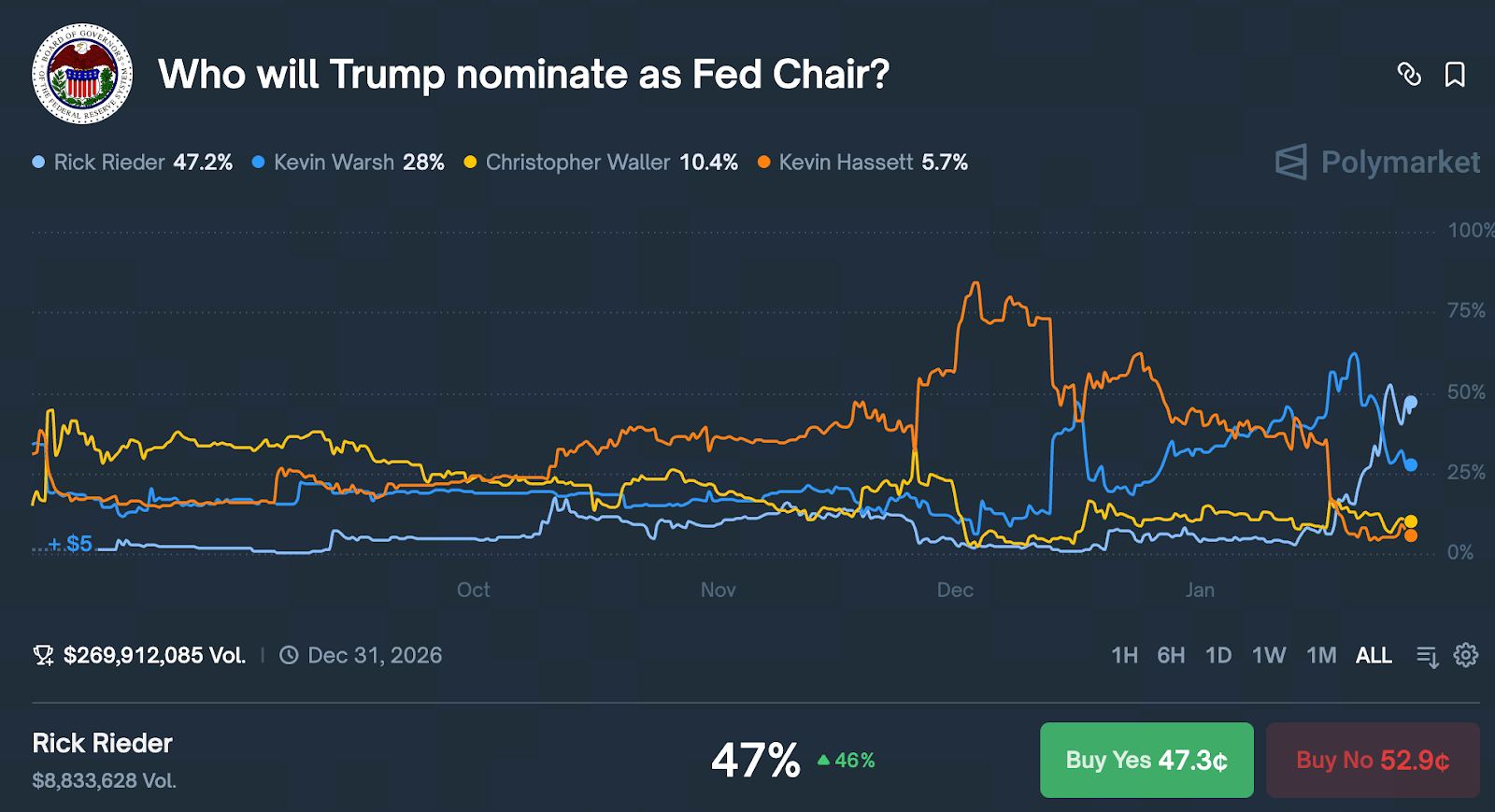
Источник: https://polymarket.com/event/who-will-trump-nominate-as-fed-chair
Рынки прогнозов используют реальные средства и считаются более чувствительными к оперативным изменениям настроений, чем традиционные опросы. За последнюю неделю вероятность назначения Рика Ридера выросла с однозначных значений до диапазона 30%–50%, чему способствуют следующие факторы:
1. Команда Трампа усиливает контакты с Уолл-стрит
Множество СМИ отмечают, что новая администрация делает ставку на кандидатов с реальным рыночным опытом для ключевых должностей в финансовом регулировании и экономическом управлении, чтобы справиться со сложностями высоких ставок, долгового давления и необходимости финансовой стабильности.
2. Макроэкономическая среда благоприятствует «рыночным» политикам
Инфляция снижается, но бюджетные и долговые проблемы сохраняются, и рынки все чаще ищут руководителей, разбирающихся в ликвидности, передаче рисков и ценообразовании активов. Опыт Ридера полностью соответствует этим требованиям.
Рик Ридер: биография и восприятие рынком
Как глобальный руководитель направления долговых инвестиций BlackRock, Рик Ридер управлял сотнями миллиардов долларов в облигациях и считается одним из самых влиятельных игроков на мировом рынке долговых инструментов.
Участники рынка в целом оценивают его политическую позицию как:
- Умеренную и нейтральную, с прагматичным уклоном
- С акцентом на рыночную ликвидность и финансовую стабильность
- С меньшей зависимостью от макроэкономических моделей и большим вниманием к ценовым сигналам и обратной связи по рискам
Многие инвесторы считают, что если Ридер станет председателем ФРС, денежно-кредитная политика станет более предсказуемой и стабильной, а неопределенность снизится, что обеспечит поддержку акциям и облигациям на среднесрочном горизонте.
Однако на рынке есть и опасения:
- Его опыт работы на Уолл-стрит вызывает вопросы о независимости ФРС
- Масштаб BlackRock может привести к потенциальному конфликту интересов
Поэтому, несмотря на рост ставок на рынках прогнозов, неопределенность относительно его назначения сохраняется.
Первые реакции цен активов: макрооценка корректируется
Поскольку Ридер рассматривается как сравнительно «мягкий/умеренный» кандидат, связанные активы уже подверглись частичной переоценке:
1. Индекс доллара США (DXY) слабеет в краткосрочной перспективе
Рынок немного повысил вероятность снижения ставок в среднесрочной перспективе, что оказывает давление на доллар.
2. Цены казначейских облигаций растут, доходности снижаются
Доходность десятилетних казначейских облигаций США снизилась, поскольку участники рынка пересматривают вероятную траекторию будущих ставок.
3. Улучшается настроение по технологическим и быстрорастущим акциям
Если давление со стороны ставок ослабнет, активы с высокой оценкой получат прямую выгоду, а аппетит к риску на Nasdaq явно восстанавливается.
Если Рик Ридер станет председателем, каким будет вероятное направление политики?
Текущие рыночные оценки отражают несколько ожидаемых сценариев:
Темп политики, скорее всего, останется стабильным, без крайностей: опыт Ридера предполагает акцент на стабильности, что снижает вероятность резких изменений ставок или быстрых разворотов.
Коммуникация политики будет строиться на рыночной обратной связи: его долгосрочная работа с институциональными инвесторами формирует сильные навыки управления ожиданиями и коммуникации.
Больше внимания финансовой стабильности рынков: особенно ликвидности долгового рынка, которая может стать ключевым фактором при принятии решений.
Неопределенность и потенциальные риски сохраняются
Несмотря на позитивные сигналы с рынков прогнозов, остаются следующие факторы риска:
- Внутренний отбор кандидатов командой Трампа еще не завершен
- Назначение председателя ФРС требует подтверждения Сената
- Рынки прогнозов подвержены эмоциональным колебаниям и стадному поведению
- Внезапные изменения макроэкономических данных или финансовых условий могут в любой момент изменить список кандидатов
Таким образом, вероятности на рынках прогнозов служат скорее индикатором настроений и направления, чем окончательным выводом.
Заключение
Изменения на рынках прогнозов сделали Рика Ридера одним из самых обсуждаемых кандидатов на пост председателя ФРС, однако окончательный результат зависит от официального назначения. Для инвесторов сейчас важнее следить за структурными изменениями в динамике доллара, казначейских облигаций и рискованных активов, чем реагировать на одну номинацию.
До принятия официального решения по политике рыночное ценообразование остается ориентированным на «ожидания».