UAE-Backed Fund Quietly Takes Major Stake in World Liberty Financial

Beginner
Quick Reads
Last Updated 2026-03-25 13:41:58
Reading Time: 1m
A Wall Street Journal investigation revealed that, on the eve of President Trump's inauguration, an investment entity backed by senior United Arab Emirates officials discreetly acquired nearly half of World Liberty Financial's equity for $500 million. This previously undisclosed deal has not only transformed the project's ownership structure but also highlighted its close ties with the UAE in both artificial intelligence and the cryptocurrency sector.

Mysterious Transaction Occurs at Critical Pre-Inauguration Juncture

Investigations reveal that a pivotal investment agreement was quietly finalized just four days before Trump’s official inauguration in January 2025. Eric Trump signed on behalf of the project, while the actual funding originated from Aryam Investment 1, a firm registered in Abu Dhabi and backed by UAE National Security Advisor and presidential brother, Sheikh Tahnoon bin Zayed.

This $500 million investment was not disclosed in advance, and the transaction only became public knowledge after recent media reports.

Capital Flows and Relationship Network

Contract details indicate that about half of the investment was paid immediately, with funds allocated as follows:

  • Roughly $187 million was transferred to entities controlled by the Trump family
  • At least $31 million went to companies associated with the Steve Witkoff family

Steve Witkoff is a co-founder of World Liberty Financial. His son, Zach Witkoff, currently serves as CEO and was later appointed as a U.S. Middle East envoy. Senior leadership from UAE AI conglomerate G42 also helped manage the investment vehicle and, following the deal, obtained a board seat at World Liberty, making Tahnoon’s investment platform the largest external shareholder in the project.

Equity Structure Shift Finally Clarified

As early as June 2025, observers noted that DT Marks DeFi LLC, a Trump-affiliated company, saw its stake drop from 75% to about 40%, but the destination of the shares was not disclosed at the time. Now, with Aryam’s investment exposed, the figures align: if the new investor acquired a 49% stake and existing shareholders were diluted proportionally, DT Marks’ actual ownership would fall within the 38%–40% range, closely matching figures released on the official site.

Overlap With AI Chip Policy Timeline

Within weeks of the investment’s completion, the U.S. government announced it would ease restrictions on advanced AI chip exports to the UAE. Soon after, another Tahnoon-led company, MGX, used the World Liberty-issued USD1 stablecoin to invest up to $2 billion in Binance.


(Source: The Block)

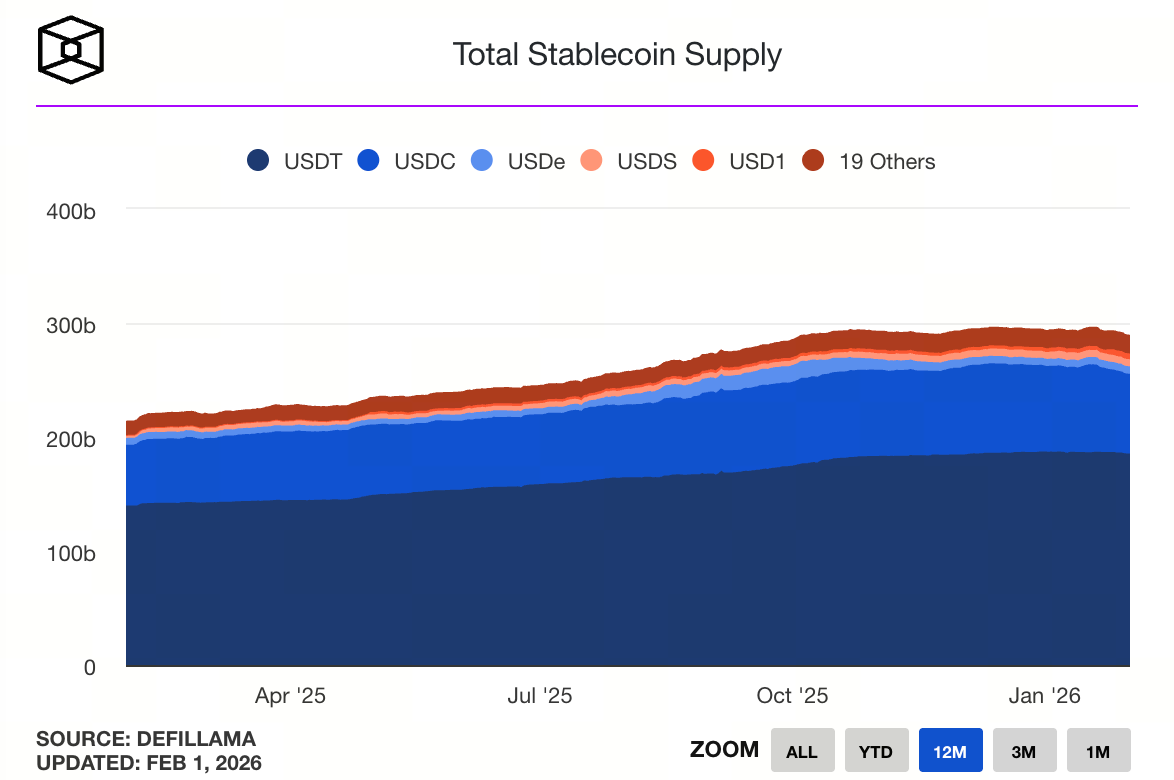
This transaction directly expanded USD1’s market circulation, pushing its market cap above $5 billion and making it one of the fastest-growing stablecoins.

Tahnoon and the UAE’s Technology Strategy

Tahnoon has long driven the UAE’s AI and technology sector strategy. His G42 group previously faced U.S. restrictions on chip supplies due to close ties with Chinese companies. However, under the Trump administration, these restrictions were lifted, and in 2025, G42 was approved to receive high-performance computing resources equivalent to 35,000 Nvidia GB300 chips.

World Liberty’s Development Blueprint

World Liberty Financial was established in October 2024. Its current operations include:

  • Stablecoin issuance (USD1)
  • DeFi lending services
  • Application for a national trust bank charter

The official website still lists Trump and his three sons as co-founders, but day-to-day operations are managed by a crypto-native team.

To learn more about Web3, click to register: https://www.gate.com/

Summary

The discreet partnership between World Liberty Financial and UAE capital has not only reshaped the project’s equity structure but also created unprecedented intersections among crypto finance, geopolitics, and AI technology policy. As financial flows and policy timelines come to light, this deal stands as a hallmark case at the intersection of global crypto finance and international power dynamics.

Author: Allen
Disclaimer
* The information is not intended to be and does not constitute financial advice or any other recommendation of any sort offered or endorsed by Gate.
* This article may not be reproduced, transmitted or copied without referencing Gate. Contravention is an infringement of Copyright Act and may be subject to legal action.

Related Articles

What is Fartcoin? All You Need to Know About FARTCOIN
Intermediate

What is Fartcoin? All You Need to Know About FARTCOIN

Fartcoin (FARTCOIN) is a representative meme coin within the Solana ecosystem based on an AI-driven narrative. Its core concept originated from an experiment aimed at exploring the "boundaries between AI Agents and humor." More than just a digital asset with social attributes, the project deeply couples absurd humor culture with on-chain financial logic by integrating autonomous AI interaction models.
2026-04-04 22:01:19
Gold Price Forecast for the Next Five Years: 2026–2030 Trend Outlook and Investment Implications, Could It Reach $6,000?
Beginner

Gold Price Forecast for the Next Five Years: 2026–2030 Trend Outlook and Investment Implications, Could It Reach $6,000?

Analyze current gold price trends alongside authoritative five-year forecasts, integrating an evaluation of market risks and opportunities. This gives investors insight into the potential trajectory of gold prices and the main drivers expected to shape the market over the next five years.
2026-03-25 18:13:30
Aster vs Hyperliquid: Which Perp DEX Will Prevail?
Beginner

Aster vs Hyperliquid: Which Perp DEX Will Prevail?

Aster and Hyperliquid are the two representative protocols of the "purpose-built L1 path" within the current decentralized perpetual exchange (Perp DEX) sector. As a pioneer in the field, Hyperliquid has built a deep liquidity moat through its highly mature order book architecture and strong community consensus. Conversely, Aster, as a rising challenger, seeks to leapfrog the competition in high-performance trading through more aggressive multi-chain aggregation logic, private transaction modules, and an underlying execution environment optimized for 2026 market demands.
2026-03-24 11:58:33
AI-Native Settlement Layers: How United Stables Is Building the Next Financial Rail
Beginner

AI-Native Settlement Layers: How United Stables Is Building the Next Financial Rail

Stablecoins were originally designed as dollar substitutes within exchanges, primarily used for asset pricing and trade settlement. As on-chain financial ecosystems have matured, their role has expanded beyond simple payments to include collateral assets, cross-chain liquidity mediums, and unified settlement units. In particular, as AI systems and automated agents begin to participate directly in economic activity, demand has risen sharply for programmable value units capable of instant settlement. This shift is pushing stablecoins toward the role of foundational financial infrastructure.
2026-03-25 03:16:17
Aerodrome Tokenomics: How ve(3,3) Powers Base's Most Profitable DEX
Beginner

Aerodrome Tokenomics: How ve(3,3) Powers Base's Most Profitable DEX

AERO is the native token of Aerodrome Finance, a core decentralized exchange and liquidity protocol in the Base ecosystem. It is primarily used for liquidity incentives and ecosystem operations. veAERO is a governance NFT that users receive by locking AERO, representing both voting power and the right to share protocol revenue. Through a dual track structure of AERO as a utility token and veAERO as a governance credential, Aerodrome separates liquidity usage value from long term governance power, allowing participants to act as liquidity providers, governance decision makers, and revenue sharers within the same system.
2026-03-25 06:40:31
The ve(3,3) Flywheel Explained: How AERO Tokenomics Powers Aerodrome’s DeFi Economy
Beginner

The ve(3,3) Flywheel Explained: How AERO Tokenomics Powers Aerodrome’s DeFi Economy

In the competition for DeFi liquidity, high-inflation mining alone is no longer enough to build lasting advantages. Aerodrome applies the ve(3,3) economic model to redesign token emissions, voting mechanisms, and revenue distribution, creating a liquidity flywheel centered on governance and cash flow. This article examines AERO tokenomics, the veAERO locking mechanism, and protocol revenue models to explain how Aerodrome builds a sustainable DeFi economic system.
2026-03-25 06:41:58