On traditional internet games or social platforms, users may be able to buy virtual items or take part in online activities, but ownership of those assets usually remains under the control of the platform. Once the platform shuts down its servers, changes its rules, or restricts an account, the user’s control over virtual assets may also be affected.
Decentraland attempts to use blockchain and NFT structures to turn land, Avatars, Wearables, and digital identities in virtual spaces into on-chain assets. This allows users to truly own these digital items and freely trade or use them in open markets.
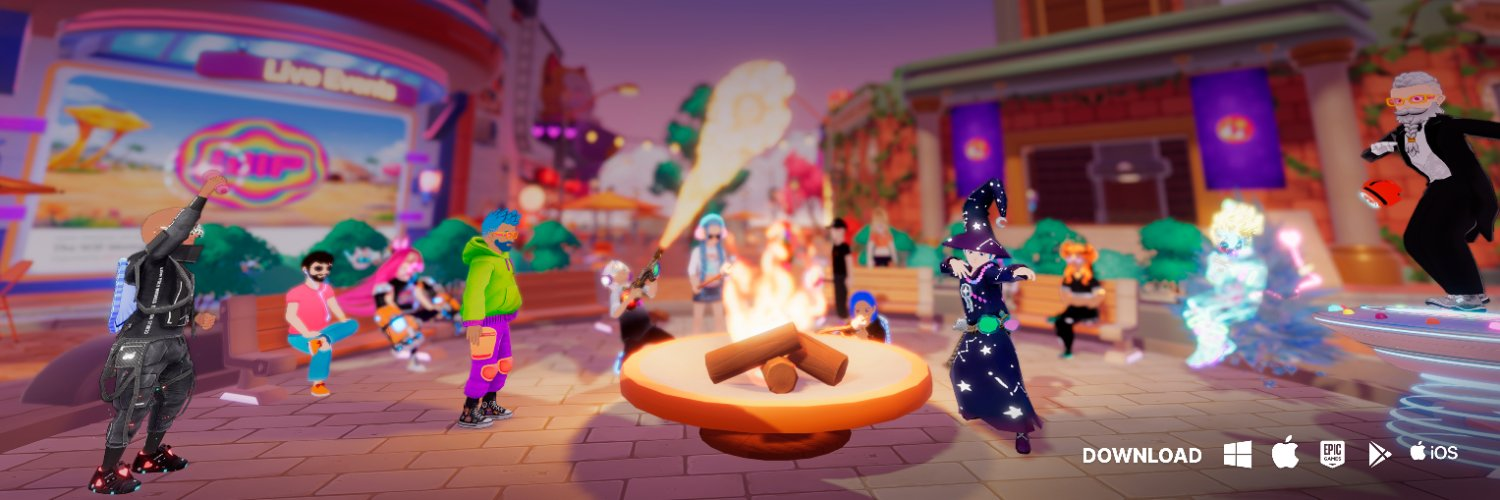
Source: decentraland.org
What Is Decentraland (MANA)
Decentraland is a type of “on-chain virtual world” platform, and it is also commonly classified as a metaverse project.
At its core, the metaverse is a persistent digital space that stays online and allows users to interact and create content. What makes Decentraland different is that it is not just an online game. It is an open virtual world built on blockchain.
In Decentraland, users can enter the virtual space through an Avatar and participate in:
At the same time, important assets on the platform are not stored in a centralized database. Their ownership is recorded through the blockchain.
For example, LAND in Decentraland is an NFT asset. Each parcel of land corresponds to unique coordinates and ownership records on the blockchain. This means users can truly own virtual space, rather than merely “renting game data.”
MANA is the core token of the entire ecosystem. It is used to buy LAND, pay for virtual goods, participate in governance, and support the platform’s internal economic cycle.
For this reason, Decentraland is closer to an on-chain virtual society than a traditional multiplayer online game.
The Background of Decentraland: Why On-Chain Virtual Worlds Emerged
The emergence of Decentraland is closely tied to the development of digital asset ownership.
Traditional gaming platforms have long had a fundamental problem: users spend time and money acquiring virtual items, yet those assets do not truly belong to them. The platform retains final control, and users cannot freely transfer, trade, or use those items across platforms.
With the development of blockchain and NFT technology, the industry began exploring ways to give digital assets real ownership properties.
Against this backdrop, the concept of the “on-chain virtual world” gradually emerged.
Compared with traditional gaming platforms, on-chain metaverse projects place greater emphasis on:
Decentraland was one of the earlier projects to push this direction forward.
Its core idea is to record ownership of virtual land and digital assets on the blockchain, then combine that ownership layer with real-time interactive environments to build an open virtual space where users can participate, create, and trade over the long term.
At the same time, as NFT markets, Web3 social interaction, and digital identity systems have developed, the metaverse has gradually expanded beyond simple “virtual games” and become part of the broader digital economy and online social space.
The Role of MANA in the Decentraland Ecosystem and Its Token Mechanism
MANA is the native token of the Decentraland ecosystem and an important part of its virtual economy.
At the most basic level, MANA is used to:
-
Purchase LAND
-
Purchase Wearables and Emotes
-
Pay for virtual goods
-
Participate in DAO governance
-
Support ecosystem trading activities
Among these uses, LAND transactions are one of the most important application scenarios for MANA. When users buy virtual land, they need to complete the transaction using MANA, and part of the MANA is burned during the LAND minting process. This mechanism means that MANA is not only a payment tool, but is also directly connected to the supply structure of ecosystem resources.
MANA is also integrated with the platform’s governance mechanism. Decentraland uses a DAO, or decentralized autonomous organization, structure. The community can vote on certain ecosystem rules, platform updates, and the use of funds, while MANA is one of the important components of governance participation.
As the platform’s content ecosystem expands, MANA has also gradually formed an economic cycle connected to virtual events, digital goods, and social interaction. For example, users may earn rewards by joining events, then return to the Marketplace to buy Wearables, Avatar accessories, or virtual items. This creates an internal consumption structure as well as income opportunities for creators.
The Role of LAND in Decentraland: Understanding Virtual Land Ownership
LAND is one of the core NFT assets in Decentraland.
Each parcel of LAND corresponds to fixed coordinates in the virtual world and is recorded on the blockchain. This means LAND is not just an image or a game item. It is on-chain proof of ownership over digital space.
Users can use LAND to:
This structure means virtual land is no longer merely a “game map.” It is more like an ownable space resource in the digital world. At the same time, LAND has also helped drive the development of the user-generated content, or UGC, ecosystem.
As Creator Hub and the unified SDK toolchain continue to mature, more creators can publish content directly on LAND and complete deployment and updates through a unified process. This mechanism allows Decentraland’s virtual spaces to gradually evolve from “one-time event venues” into continuously operated digital community spaces.
How Decentraland’s Virtual World Works
Decentraland operates through a combination of a real-time client, an on-chain asset system, and a community content ecosystem.
After entering the platform, users move through the virtual world using an Avatar, while scene content deployed on different LAND parcels loads in real time.
These scenes may include:
At the same time, asset ownership and identity information on the platform are recorded through the blockchain.
To lower the barrier to creation, Decentraland has gradually built a unified Creator Pipeline and promoted SDK 7 as its main development standard. This structure makes content creation, scene deployment, and asset management more standardized.
Beyond the content ecosystem, Decentraland also continues to optimize client performance and social systems.
For example:
The goal of these updates is not simply to improve the “game experience,” but to strengthen users’ ability to stay for longer periods and maintain ongoing social interaction.
Therefore, Decentraland’s focus is not only “virtual space.” It aims to build a persistently online digital social environment.
User Identity, Avatars, and the On-Chain Asset System in Decentraland
In Decentraland, an Avatar is not just a game character. It is an important part of on-chain identity.
Users can enter the platform by connecting a wallet and link the following to their on-chain address:
-
Wearables
-
NFTs
-
LAND
-
Emotes
-
Community identity
This structure is clearly different from traditional gaming platforms. Accounts in traditional games are usually controlled by the platform’s database, while Decentraland places greater emphasis on allowing users to directly manage their digital identity through a wallet. At the same time, Wearables and Emotes on the platform have gradually become an important part of the creator economy.
A large share of trading activity in the Marketplace revolves around personalized Avatar assets. Clothing, actions, and digital collectibles, for example, directly affect how users present themselves in the virtual world.
As the social system continues to mature, the Avatar is no longer just a “game character.” It is becoming more like a Web3 tool for expressing digital identity.
Decentraland Use Cases: Virtual Social Interaction, Digital Events, Games, and Brand Spaces
Decentraland’s use cases are not limited to traditional gaming.
As the concept of the metaverse has developed, its main uses have gradually expanded to include:
-
Virtual social spaces
-
Digital art exhibitions
-
Online concerts
-
Virtual conferences
-
Web3 community events
-
NFT displays
-
Brand marketing spaces
Among these, long-term social spaces have become one of the platform’s important development directions. Compared with one-off events, Decentraland places more emphasis on encouraging users to return continuously and form community relationships. For example, some communities regularly organize events, game nights, creator meetups, and online interactions, gradually forming sustained social structures.
At the same time, Wearables and the Marketplace have also become important parts of the creator economy. Many creators earn income by making Avatar assets, scene content, and interactive experiences, rather than relying entirely on official platform content.
For this reason, Decentraland is more like an open virtual society than a traditional online game world.
The biggest difference between Decentraland and traditional gaming platforms lies in digital asset ownership. In traditional games, items purchased by users are usually just records in the platform’s database, and final control still belongs to the platform.
In Decentraland, however, LAND, Wearables, and some digital assets are on-chain NFTs. Users can truly own and freely transfer these assets. At the same time, Decentraland also differs in positioning from other metaverse projects. Some metaverse projects lean more toward gamified experiences, while Decentraland places greater emphasis on open social spaces and user-created content.
In addition, Decentraland’s governance structure also leans more toward the DAO model, allowing the community to participate directly in certain ecosystem decisions. As a result, its overall structure is closer to an “on-chain open virtual society” than a single game product.
Decentraland (MANA): Advantages, Limitations, and Common Misconceptions
Decentraland’s core advantage lies in digital asset ownership and an open virtual economy structure. Through NFTs and blockchain mechanisms, users can truly own virtual land, Avatar assets, and digital identities, and trade them freely in open markets.
At the same time, the platform has gradually developed a relatively stable creator ecosystem and community activity structure. Still, Decentraland has certain limitations.
Compared with large traditional games, its user scale and graphical performance remain limited. The metaverse itself is also still in an early stage of development, and long-term user activity and the content ecosystem are still being built. Another common misconception is to understand Decentraland simply as a “VR game” or a “virtual real estate platform.” In reality, Decentraland’s core value lies in on-chain digital identity, an open social structure, and the ability for users to own content. Its positioning is therefore closer to Web3 virtual society infrastructure, not merely a gaming project.
Summary
Decentraland (MANA) is a blockchain-based metaverse platform that uses LAND, Avatars, and an on-chain asset system to build an open virtual world and digital social space.
Unlike traditional gaming platforms, Decentraland places greater emphasis on digital asset ownership, user-created content, and community governance mechanisms, allowing users to truly own and manage digital resources in the virtual world.
As NFTs, Web3, and on-chain identity systems continue to develop, Decentraland has gradually evolved from an early metaverse concept into an on-chain virtual space ecosystem centered on virtual social interaction, the digital economy, and open communities.
FAQs
What Is Decentraland (MANA)?
Decentraland is a blockchain-based metaverse platform that allows users to own virtual land, digital assets, and on-chain identities.
What Role Does MANA Play in Decentraland?
MANA is the platform’s native token. It is used to purchase LAND, pay for virtual goods, participate in governance, and support ecosystem economic activity.
Why Is LAND an NFT?
Each parcel of LAND has unique coordinates and an on-chain ownership record, which allows it to exist as an NFT.
Is Decentraland a Game?
Decentraland has gaming and social features, but its positioning leans more toward an open on-chain virtual world and digital social platform.
The biggest difference is digital asset ownership. Some assets in Decentraland are truly held by users through the blockchain, rather than being controlled by a platform database.
Does Decentraland Require a Crypto Wallet?
At present, wallets remain one of the main identity systems, but the platform is also gradually adding Web2 login options and lower-barrier entry points for users.