Традиционные интернет-платежные системы изначально ориентированы на взаимодействие людей и платформ, но экономическая деятельность между машинами требует инфраструктуры с более низкой задержкой, повышенной автоматизацией и усиленным доверием. SEALCOIN предлагает масштабируемую децентрализованную архитектуру для транзакций между машинами (M2M), основанную на верификации устройств, ончейн-расчетах и смарт-контрактах.
По мере выхода блокчейна за пределы финансов в сферы ИИ, IoT и реальной инфраструктуры машинная экономика становится ключевым направлением, где Web3 объединяется с умными устройствами. Транзакционная сеть IoT, представленная SEALCOIN, выходит за рамки простого подключения устройств, наделяя их возможностью автономной торговли и сотрудничества.
Какова основная цель SEALCOIN?
Основная миссия SEALCOIN — дать машинам (как пользователям интернета) возможность самостоятельно обрабатывать платежи, запросы ресурсов и обмен данными. В то время как традиционные платформы IoT сосредоточены на «подключении устройств», SEALCOIN делает следующий шаг, создавая экономическую систему для машин.

В автономной машинной экономике устройствам необходимы верификация личности, платежи в реальном времени и доверенные взаимодействия. Например, беспилотные автомобили могут автоматически оплачивать парковку, промышленные роботы — покупать услуги по работе с данными в реальном времени, а ИИ-агенты — самостоятельно вызывать API и вычислительные ресурсы.
Как работает SEALCOIN?
Логику работы SEALCOIN можно описать как «децентрализованную платежную сеть для мира машин». Система состоит из четырех уровней: идентификация устройств, распределенный реестр, автоматические расчеты и рынок.
Аутентификация устройств
SEALCOIN присваивает каждому устройству IoT и ИИ-агенту доверенную цифровую идентификацию. Устройства проходят проверку безопасности и верификацию ключей, чтобы гарантировать надежность и проверяемость источников транзакций.
Этот механизм идентификации влияет не только на безопасность транзакций, но и на возможность устройств участвовать в машинном рынке и сервисной сети. С ним тесно связаны два ключевых компонента машинной экономики: «модель безопасности PoSy от SEALCOIN» и «стейкинг устройств».
Сеть распределенного реестра Hedera
SEALCOIN построен на базе Hedera для записи транзакций, достижения консенсусного упорядочивания и проведения ончейн-платежей. Высокая пропускная способность и низкие комиссии делают Hedera идеальной для высокочастотных микроплатежей между машинами.
По сравнению с традиционными блокчейнами, Hedera делает упор на производительность в реальном времени и корпоративную масштабируемость, что делает ее популярным выбором для инфраструктуры IoT и торговли данными.
Смарт-контракты и автоматические расчеты
SEALCOIN использует смарт-контракты для автоматизации транзакций между машинами. Например, дроны могут автоматически находить зарядные станции и оплачивать зарядку при низком уровне батареи; умные датчики могут продавать данные в реальном времени и автоматически проводить расчеты.
Весь процесс работает без централизованной платежной платформы — транзакции и расчеты выполняются автоматически по ончейн-правилам.
Какую роль играет QAIT в экосистеме SEALCOIN?
QAIT — это собственный утилитарный токен и токен управления экосистемы SEALCOIN, выполняющий функции в области платежей, безопасности сети и управления экосистемой.
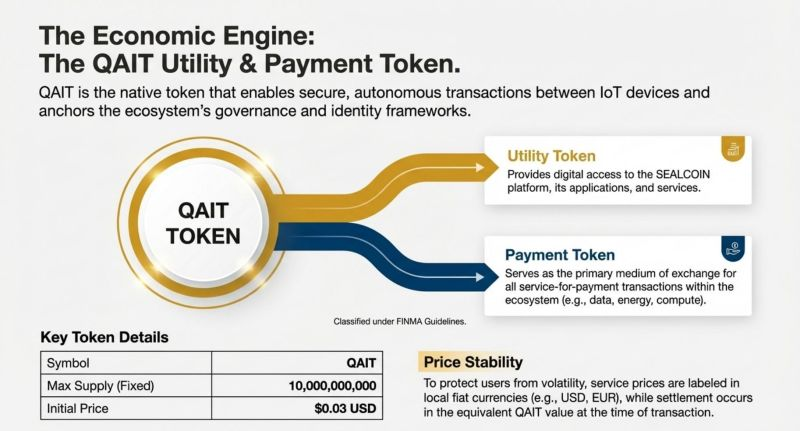
Средство машинных платежей
QAIT используется для платежей и расчетов между машинами в реальном времени — включая комиссии за вызов данных, API-услуги, автоматизированное приобретение ресурсов и выполнение задач ИИ-агентов. Поскольку многие транзакции машинной экономики высокочастотны и мелкостоимостны, необходимо недорогое и автоматизированное платежное средство.
Управление и участие в экосистеме
Держатели QAIT могут участвовать в управлении протоколом, включая решения по корректировке параметров сети, предложениям по развитию экосистемы и обновлению системы. Такая структура управления позволяет SEALCOIN непрерывно развиваться без централизованного контроля.
Механизм безопасности PoSy
SEALCOIN внедряет механизм Proof-of-Security (PoSy) для проверки доверия к устройствам. Устройства должны использовать QAIT для участия в проверке безопасности и стейкинге. Если устройство действует злонамеренно или нарушает правила, застейканные активы могут быть конфискованы. Механизм PoSy позволяет машинной сети создать ончейн-систему доверия.
Что такое автономная машинная экономика?
Автономная машинная экономика — это сеть, в которой устройства, ИИ-агенты и автоматизированные системы самостоятельно выполняют экономические действия. В этой системе машины не только выполняют задачи, но и обладают способностью платить, торговать и координировать ресурсы.
В традиционной интернет-среде транзакции обычно инициируются пользователями. Машинная экономика, напротив, делает акцент на автономном сотрудничестве между устройствами. Например, умные автомобили могут автоматически оплачивать зарядку, умные электросети — автоматически проводить расчеты за энергию, AI-агенты — самостоятельно приобретать вычислительные ресурсы, а промышленное оборудование — обмениваться данными с датчиков в реальном времени.
Вместе эти сценарии формируют экономическую систему M2M. SEALCOIN рассматривается как одна из ключевых инфраструктурных составляющих для платежей и идентификации в этой машинной экономике.
В чем разница между SEALCOIN и традиционными платформами IoT?
Главное отличие SEALCOIN от традиционных платформ IoT заключается в поддержке «автономных машинных транзакций».
| Аспект сравнения |
Традиционная платформа IoT |
SEALCOIN |
| Основная цель |
Подключение устройств |
Автономные транзакции устройств |
| Система идентификации |
Централизованные аккаунты |
Децентрализованные идентификаторы устройств |
| Модель платежей |
Расчеты на платформе |
Ончейн-платежи в реальном времени |
| Обмен данными |
Централизованный API |
Децентрализованный рынок |
| Возможности автоматизации |
Ограниченные |
Автономное сотрудничество AI-агентов |
| Механизм доверия |
Гарантии платформы |
Криптография и PoSy |
Традиционный IoT фокусируется на подключении устройств и управлении данными, тогда как SEALCOIN делает упор на потоки стоимости и экономическое взаимодействие между машинами.
Каковы сценарии применения SEALCOIN?
SEALCOIN спроектирован вокруг «автономных транзакций устройств», а варианты использования охватывают множество областей IoT и AI.
Умные энергетические сети
Умные электросети и энергоустройства могут автоматически совершать сделки по купле-продаже электроэнергии и проводить расчеты, создавая децентрализованный энергетический рынок.
Автономное вождение и умный транспорт
Транспортные средства могут автоматически оплачивать парковку, дорожные сборы и зарядку, уменьшая необходимость вмешательства человека.
Рынок услуг AI-агентов
ИИ-агенты могут самостоятельно запрашивать данные, покупать API-услуги и выполнять автоматизированные задачи.
Промышленный IoT
Промышленное оборудование может координировать производственные ресурсы и услуги по обслуживанию в реальном времени, повышая эффективность автоматизированного сотрудничества.
DePIN и сети устройств
SEALCOIN также используется в сценариях DePIN, обеспечивая поддержку платежного и идентификационного уровня для реальных сетей устройств.
С какими трудностями сталкивается SEALCOIN?
Хотя машинная экономика обладает долгосрочным потенциалом, ее инфраструктура все еще находится на ранней стадии развития.
В индустрии IoT наблюдается фрагментация стандартов: разные производители оборудования и протоколы не имеют единых стандартов, что может затруднить совместимость устройств. Системы ИИ, совершающие автономные транзакции, также могут поднимать вопросы ответственности и регулирования данных.
Ценность машинной экономики зависит от масштаба устройств и участия экосистемы, что требует долгосрочного расширения сети. Кроме того, идентификация устройств, конфиденциальность данных и безопасность автоматических транзакций остаются серьезными проблемами.
Итоги
SEALCOIN строит децентрализованную инфраструктуру платежей и идентификации устройств вокруг автономной машинной экономики, позволяя устройствам IoT, ИИ-агентам и интеллектуальным системам самостоятельно обрабатывать платежи, координировать ресурсы и торговать данными.
Как основной токен экосистемы, QAIT не только выполняет функции платежей и управления, но и поддерживает доверие к устройствам через механизм PoSy.
Часто задаваемые вопросы
Для чего используется QAIT?
QAIT используется для машинных платежей, доступа устройств, ончейн-управления, рыночных расчетов и механизма безопасности PoSy. Это основной функциональный токен экосистемы SEALCOIN.
Что такое автономная машинная экономика?
Автономная машинная экономика — это экономическая сеть, в которой устройства и ИИ-агенты могут самостоятельно завершать платежи, обмен данными и координацию ресурсов без участия человека.
Какой блокчейн использует SEALCOIN?
SEALCOIN построен на технологии распределенного реестра Hedera, что обеспечивает высокую пропускную способность и низкую стоимость машинных платежей.
Что такое PoSy (Proof-of-Security)?
PoSy — это механизм верификации безопасности SEALCOIN, который повышает доверие к устройствам через стейкинг и аутентификацию, снижая риск злонамеренных устройств.