# Article Overview: 2025 BRKL Price Prediction - Expert Analysis and Investment Strategy
This comprehensive analysis examines Brokoli (BRKL), an environmental impact-focused DeFi token currently trading at $0.002695, providing detailed price forecasts from 2026-2031 and professional investment strategies. The article addresses critical questions for ESG-conscious investors and crypto traders: understanding BRKL's market position, predicting future price movements, and managing investment risks effectively. Structured in five major sections—market analysis, price forecasting, investment methodology, risk management framework, and action recommendations—the guide progresses logically from current market assessment to strategic portfolio allocation. Designed for beginners through institutional investors, this resource delivers actionable insights on spot trading via Gate, position sizing, security protocols, and hedging strategies while transparently addressing extreme volatility risks, liquidity constraints, a
Introduction: Market Position and Investment Value of BRKL
Brokoli (BRKL) is an innovative climate-focused platform that enables users to make a positive environmental impact through decentralized finance. Since its launch in 2021, the project has established itself as a pioneering force in the impact-to-earn ecosystem. As of January 2, 2026, BRKL maintains a market capitalization of approximately $144,108.72, with a circulating supply of 53,472,622 tokens trading at $0.002695. This environmentally-conscious digital asset is playing an increasingly vital role in the intersection of DeFi innovation and sustainable impact initiatives.
This article will provide a comprehensive analysis of BRKL's price trajectory from 2026 to 2031, integrating historical price patterns, market dynamics, ecosystem development, and macroeconomic factors to deliver professional price forecasts and practical investment strategies for market participants.
Brokoli (BRKL) Market Analysis Report
I. BRKL Price History Review and Current Market Status
BRKL Historical Price Evolution
-
December 2021: Project reached all-time high (ATH) of $1.83, marking the peak of early market enthusiasm during the 2021 bull market cycle.
-
December 2025: Token declined to all-time low (ATL) of $0.00261979, reflecting significant long-term depreciation over the four-year period.
BRKL Current Market Situation
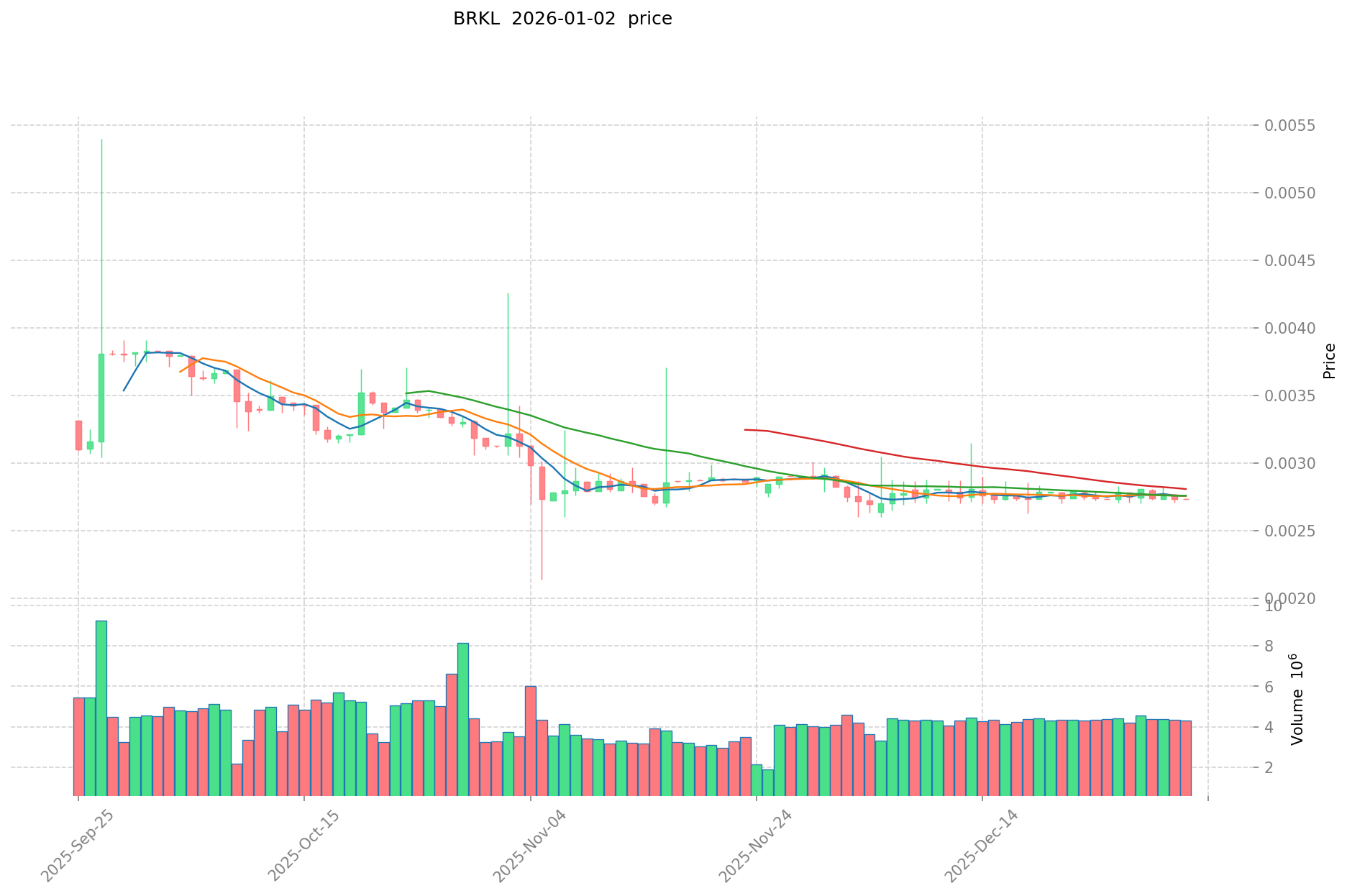
As of January 2, 2026, BRKL is trading at $0.002695, representing a decline of 1.49% in the last 24 hours. The token has experienced a steep downward trend over the trailing twelve-month period, with a year-to-date loss of -39.51%.
Key Market Metrics:
- 24-Hour Price Range: $0.002658 to $0.002872
- Trading Volume (24H): $12,482.91
- Market Capitalization: $144,108.72
- Fully Diluted Valuation: $336,875.00
- Circulating Supply: 53,472,622 BRKL (42.78% of total supply)
- Total Supply: 125,000,000 BRKL
- Token Holders: 627 addresses
- Market Dominance: 0.000010%
- Current Market Ranking: #4495
Short-Term Price Performance:
- 1-Hour: -0.22%
- 7-Day: -3.2%
- 30-Day: +2.55% (modest recovery)
The token exhibits subdued trading activity, with the 24-hour volume indicating limited market liquidity. The sharp divergence between the token's historical peak and current valuation reflects the challenging market conditions that have affected the broader DeFi ecosystem, particularly projects focused on environmental impact initiatives.
View current BRKL market price
BRKL Market Sentiment Indicator
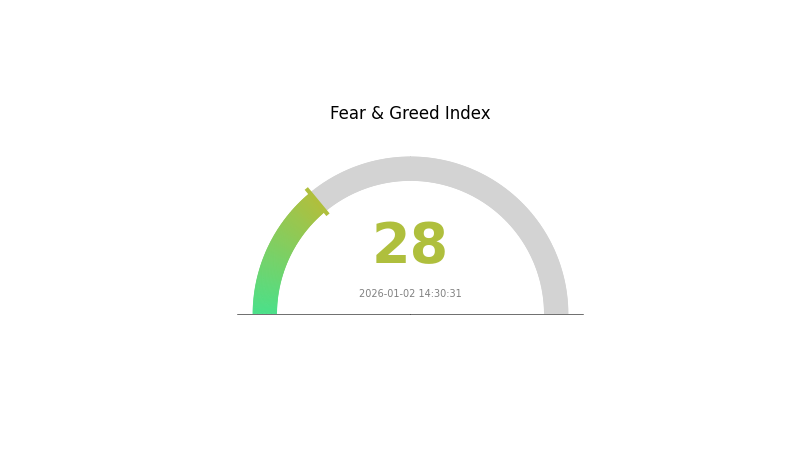
2026-01-02 Fear and Greed Index: 28 (Fear)
Click to view current Fear & Greed Index
The cryptocurrency market is currently experiencing a fear sentiment with an index reading of 28. This indicates heightened market anxiety and risk aversion among investors. When fear dominates, market participants tend to adopt defensive strategies and reduce exposure to volatile assets. This environment often presents opportunities for long-term investors to accumulate positions at lower valuations. However, traders should remain cautious and conduct thorough risk management. Monitor key support levels and market developments closely to navigate this period effectively. Consider using Gate.com's analytical tools to track sentiment shifts and make informed trading decisions.
BRKL Holdings Distribution
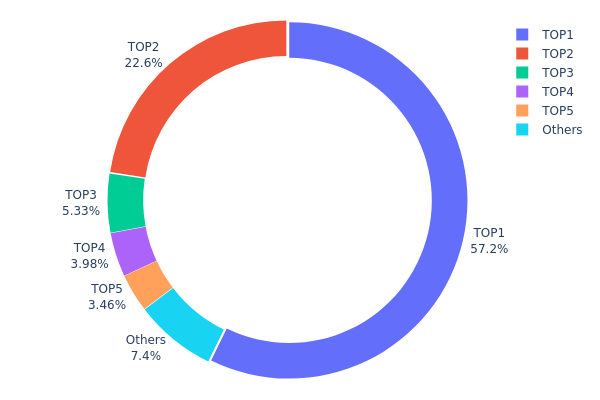
The address holdings distribution map illustrates how BRKL tokens are concentrated across different wallet addresses on the blockchain. This metric is essential for assessing the decentralization level and potential market structure risks of the token. By analyzing the top holders and their respective percentages, investors can evaluate liquidity conditions, price stability, and the susceptibility of the asset to potential manipulation.
BRKL exhibits a highly concentrated holding structure, raising concerns about centralization risk. The top two addresses alone control 79.83% of total supply, with the leading address holding 57.22% and the second-largest holder accounting for 22.61%. This extreme concentration is further compounded by the top five addresses collectively controlling 92.57% of the token supply, leaving only 7.43% distributed among remaining addresses. Such pronounced centralization suggests limited decentralization and indicates that a small number of stakeholders exert disproportionate influence over the token's circulating supply.
The highly skewed distribution pattern creates significant implications for market dynamics and price stability. With nearly 80% of tokens held by just two addresses, the market faces substantial volatility risk, as large-scale transfers or sales from these addresses could trigger sharp price movements. This structural vulnerability limits organic market discovery and increases the potential for coordinated actions that could disadvantage smaller holders. The fragmented distribution among remaining addresses, combined with the overwhelming dominance of top holders, suggests limited resilience in the token's on-chain structure and warrants careful monitoring of whale activity.
Check current BRKL holdings distribution
| Top |
Address |
Holding Qty |
Holding (%) |
| 1 |
0x7b9d...751c26 |
71527.38K |
57.22% |
| 2 |
0x7b8f...16ea19 |
28270.94K |
22.61% |
| 3 |
0x8730...81be87 |
6659.00K |
5.32% |
| 4 |
0xca9a...499a46 |
4974.00K |
3.97% |
| 5 |
0x0d07...b492fe |
4323.91K |
3.45% |
| - |
Others |
9244.78K |
7.43% |
II. Core Factors Influencing BRKL's Future Price
Supply Mechanism
-
Circulating Supply: BRKL currently has a circulating supply of 53.47 million tokens, representing the quantity currently held by the public. Circulating supply significantly impacts price discovery and market valuation, particularly for emerging assets.
-
Historical Performance: BRKL has demonstrated substantial price volatility throughout its history, with an all-time high of $1.83 and an all-time low of $0.00261979. Over the past 60 days, the token experienced a price decline of $0.0003756409, indicating downward pressure during this period.
-
Current Price Dynamics: As of January 2, 2026, BRKL trades at $0.0027631, representing a 1.16% change over the past 24 hours. The token continues to exhibit market fluctuations within a relatively tight range, with trading occurring between $0.00269466 (low) and $0.00280925 (high) in recent sessions.
Macro Economic Environment
-
Market Sentiment Impact: BRKL's price trajectory remains influenced by broader cryptocurrency market conditions. Recent industry dynamics, including Bitcoin's 2025 performance and fluctuations in overall market sentiment, create the macroeconomic backdrop within which BRKL operates. The crypto fear and greed index declining to 20 reflects an "extreme fear" state that may constrain investment appetite across smaller-cap tokens like BRKL.
-
Adoption and Demand Factors: BRKL's future price is fundamentally influenced by market demand, overall cryptocurrency trends, and its adoption rate. Performance depends on regulatory changes and the broader acceptance of the Brokoli Network ecosystem within the cryptocurrency marketplace.
III. BRKL Price Forecast 2026-2031
2026 Outlook
- Conservative Forecast: $0.00175 - $0.00269
- Base Forecast: $0.00269
- Optimistic Forecast: $0.00277 (requires sustained market interest and positive ecosystem development)
2027-2029 Medium-term Outlook
- Market Stage Expectation: Gradual accumulation phase with consolidation patterns, characterized by incremental price appreciation and increasing market participation
- Price Range Forecast:
- 2027: $0.00161 - $0.00322
- 2028: $0.00259 - $0.00345
- 2029: $0.0026 - $0.00479
- Key Catalysts: Protocol upgrades, expanded partnership announcements, increased institutional adoption, and positive regulatory developments in major markets
2030-2031 Long-term Outlook
- Base Scenario: $0.0034 - $0.00544 (assuming moderate ecosystem growth and stable market conditions through 2030)
- Optimistic Scenario: $0.00552 - $0.00544 (contingent on accelerated adoption rates and significant technological breakthroughs)
- Transformational Scenario: $0.00552+ (driven by mainstream integration, major exchange listings on platforms like Gate.com, and breakthrough use case adoption)
- 2031-12-31: BRKL reaches potential peak valuation at $0.00552 (75% cumulative gain from current levels, reflecting substantial market maturation)
| 年份 |
预测最高价 |
预测平均价格 |
预测最低价 |
涨跌幅 |
| 2026 |
0.00277 |
0.00269 |
0.00175 |
0 |
| 2027 |
0.00322 |
0.00273 |
0.00161 |
1 |
| 2028 |
0.00345 |
0.00297 |
0.00259 |
10 |
| 2029 |
0.00479 |
0.00321 |
0.0026 |
19 |
| 2030 |
0.00544 |
0.004 |
0.0034 |
48 |
| 2031 |
0.00552 |
0.00472 |
0.00255 |
75 |
BRKL Professional Investment Strategy and Risk Management Report
I. Executive Summary
Brokoli (BRKL) is an environmental impact-focused DeFi platform that enables users to participate in climate action through "Impact-to-Earn" mechanisms. As of January 2, 2026, BRKL is trading at $0.002695, with a market capitalization of $144,108.72 and a circulating supply of 53,472,622 tokens out of a maximum supply of 125,000,000.
Key Metrics:
- Current Price: $0.002695
- 24H Change: -1.49%
- Market Cap Rank: 4495
- All-Time High: $1.83 (December 1, 2021)
- All-Time Low: $0.00261979 (December 3, 2025)
- 24H Trading Volume: $12,482.91
II. BRKL Investment Methodology
(1) Long-term Holding Strategy
Target Investor Profile: ESG-focused investors, climate-conscious individuals, and portfolio diversifiers seeking exposure to sustainable finance innovation.
Operation Recommendations:
- Accumulate during market downturns when sentiment is bearish, particularly when the token trades near its all-time low of $0.00261979
- Dollar-cost averaging (DCA) strategy: regular fixed investments regardless of market conditions to mitigate volatility risk
- Hold through DAO governance participation to benefit from potential protocol improvements and climate fund allocations
Storage Solution:
- Utilize Gate.com's secure custody solutions for large holdings
- For smaller positions, employ hardware wallet storage with proper key management protocols
- Maintain redundant backup of private keys in secure, geographically distributed locations
(2) Active Trading Strategy
Technical Analysis Tools:
- Support/Resistance Levels: Monitor $0.00261979 (all-time low) as critical support and $0.002872 (24H high) as near-term resistance
- Moving Averages: Employ 50-day and 200-day moving averages to identify medium and long-term trends
- Volume Analysis: Track 24-hour trading volume ($12,482.91) relative to historical averages to identify breakout opportunities
- RSI (Relative Strength Index): Use standard 14-period RSI to identify overbought (>70) and oversold (<30) conditions
Swing Trading Key Points:
- Capitalize on the token's -3.2% 7-day decline by identifying potential reversal patterns near support levels
- Monitor the 30-day positive performance (+2.55%) as an indicator of potential consolidation phases
- Execute profit-taking at $0.003000-$0.003500 resistance levels during recovery rallies
III. BRKL Risk Management Framework
(1) Asset Allocation Principles
Conservative Investors: 1-3% portfolio allocation
- Focus on long-term holding with minimal trading activity
- Prioritize regular monitoring of climate fund deployments through DAO governance
Active Investors: 3-8% portfolio allocation
- Combine 60% long-term holdings with 40% active trading positions
- Maintain stop-loss orders at 15-20% below entry points
Professional/Institutional Investors: 5-15% portfolio allocation
- Implement sophisticated hedging strategies
- Engage actively in DAO governance and protocol development discussions
(2) Risk Hedging Strategies
Strategy 1 - Portfolio Diversification: Combine BRKL holdings with established cryptocurrency assets to reduce concentrated exposure to a single protocol with relatively limited liquidity ($12,482.91 daily volume)
Strategy 2 - Position Sizing: Limit individual position size to prevent catastrophic losses, given the token's 39.51% annual decline and highly volatile price history ranging from all-time high of $1.83 to current levels
(3) Secure Storage Solutions
Custody Method - Gate.com Storage: Recommended for traders maintaining frequent positions on Gate.com, offering institutional-grade security infrastructure with insurance coverage
Self-Custody Method: For long-term holders, utilize private key management with multiple redundant backups stored in secure locations
Security Precautions:
- Never share private keys or seed phrases under any circumstances
- Verify contract addresses before token transfers (ETH: 0x4674a4F24C5f63D53F22490Fb3A08eAAAD739ff8; BSC: 0x66cafcf6c32315623c7ffd3f2ff690aa36ebed38)
- Enable two-factor authentication on all exchange and platform accounts
- Use hardware security modules for enterprise-scale holdings
IV. BRKL Potential Risks and Challenges
Market Risks
Risk 1 - Extreme Volatility: BRKL exhibits severe price volatility, having declined 39.51% year-over-year and 94.5% from its all-time high of $1.83. This extreme volatility creates substantial risk for retail investors.
Risk 2 - Limited Liquidity: With only $12,482.91 in 24-hour trading volume and market cap of $144,108.72, the token demonstrates shallow liquidity. Large transactions may face significant slippage and price impact.
Risk 3 - Market Concentration Risk: Only 627 token holders create potential concentration risk, where major holders can significantly influence price movements through coordinated actions or exits.
Regulatory Risks
Risk 1 - Environmental Claims Regulation: As an "Impact-to-Earn" platform making specific environmental impact claims, BROKLI faces potential regulatory scrutiny from securities regulators and environmental authorities regarding the legitimacy and verifiability of its carbon offset mechanisms.
Risk 2 - DeFi Protocol Compliance: Growing global regulatory focus on decentralized finance may introduce restrictions on the protocol's core functions, including lending, liquidity mining, or API integration capabilities.
Risk 3 - DAO Governance Uncertainty: Regulatory treatment of DAO-governed protocols remains unclear in most jurisdictions, creating potential liability exposure for BRKL token holders who participate in governance decisions.
Technology Risks
Risk 1 - Smart Contract Vulnerability: Like all DeFi protocols, BROKLI faces potential smart contract bugs or security vulnerabilities that could result in fund loss or protocol disruption.
Risk 2 - Cross-Chain Bridge Risk: BRKL operates on both Ethereum and BSC, requiring bridge mechanisms that introduce additional technical and security risks associated with cross-chain token transfers.
Risk 3 - Protocol Adoption Risk: Limited project visibility and adoption relative to leading DeFi platforms create uncertainty around the protocol's long-term viability and ability to achieve meaningful climate impact at scale.
V. Conclusion and Action Recommendations
BRKL Investment Value Assessment
Brokoli represents a niche investment opportunity targeting the intersection of decentralized finance and environmental sustainability. The protocol's DAO-governed model with 100% token holder control over climate fund allocation presents an interesting governance innovation. However, the significant 94.5% price decline from all-time highs, limited daily trading volume of $12,482.91, and relatively small holder base of 627 investors indicate an early-stage, high-risk asset class. The platform's environmental value proposition depends heavily on the verifiability and scale of its climate impact claims, which remain largely unproven at the current stage.
BRKL Investment Recommendations
✅ Beginners: Start with a minimal 1-2% portfolio allocation through dollar-cost averaging over 6-12 months. Focus on understanding the platform's climate impact mechanisms before increasing exposure. Trade exclusively through Gate.com to minimize security risks.
✅ Experienced Investors: Consider a 3-5% allocation combining buy-and-hold positions at current depressed valuations with selective swing trading around identified support/resistance levels. Actively participate in DAO governance to influence climate fund deployments.
✅ Institutional Investors: Conduct comprehensive due diligence on climate offset verification mechanisms before considering 5-15% allocation sizes. Negotiate OTC trading arrangements through Gate.com for large positions to minimize market impact.
BRKL Trading Participation Methods
Method 1 - Spot Trading on Gate.com: Purchase BRKL directly using fiat or cryptocurrency through Gate.com's spot trading interface. This method offers institutional-grade security and transparent pricing.
Method 2 - DeFi Protocol Integration: For advanced users, interact directly with Brokoli's smart contracts on Ethereum and BSC networks to access lending, liquidity mining, and token swaps while contributing to environmental impact measurement.
Method 3 - NFT Digital Forest Participation: Accumulate seeds through green DeFi product usage and complete climate-related challenges. Convert seeds into NFT trees through DAO voting, then trade digital forest assets as carbon impact representations.
Cryptocurrency investment carries extreme risk and high volatility. This report does not constitute investment advice. Investors must conduct thorough due diligence aligned with their risk tolerance and investment objectives. Consult qualified financial advisors before making investment decisions. Never invest capital that you cannot afford to lose entirely.
FAQ
What is BRKL? What are its basic functions and use cases?
BRKL is a cryptocurrency token designed for decentralized finance applications. It serves as a utility token enabling governance participation, transaction settlements, and access to protocol features within the BRKL ecosystem. The token facilitates liquidity provision and reward mechanisms.
How to predict BRKL price? What are the analysis methods?
Analyze BRKL through technical analysis(trend lines, support/resistance levels), fundamental analysis(market cap, trading volume, ecosystem development), and on-chain metrics. Monitor price charts, trading volume trends, and community sentiment for comprehensive prediction insights.
What are the main factors affecting BRKL price?
BRKL price is primarily influenced by market sentiment, trading volume, technological developments, regulatory policies, and overall crypto market conditions. Investor confidence and ecosystem adoption also play crucial roles in price fluctuations.
What are the risks of BRKL price prediction?
BRKL price prediction risks include market volatility, regulatory changes, and liquidity fluctuations. Price movements can be influenced by broader crypto market sentiment and trading volume variations, potentially affecting prediction accuracy.
What are BRKL's advantages compared to similar projects?
BRKL stands out through enhanced decentralization, superior transparency, and robust blockchain security. It offers efficient asset management with lower fees and faster transaction volumes, delivering better user control and data protection than traditional competitors.
What is the historical price trend of BRKL?
BRKL reached its all-time high of over $1.83 USD on November 30, 2021. Since then, the price has experienced fluctuations. The token has shown dynamic market movements reflecting investor sentiment and broader crypto market conditions throughout its trading history.
What are professional institutions' predictions for BRKL's future price?
Professional institutions predict BRKL will maintain stable performance over the next 12 months, though influenced by market conditions and competitive factors. Specific forecasts require consulting latest analysis reports for detailed insights.
* The information is not intended to be and does not constitute financial advice or any other recommendation of any sort offered or endorsed by Gate.