# Article Introduction
**HAMSTER Price Prediction 2025: Comprehensive Investment Analysis & Market Outlook**
This professional investment guide examines HAMSTER's market position, price trajectory, and future potential through 2031. Covering historical performance, tokenomics, supply mechanisms, and market sentiment analysis, this article delivers detailed price forecasts ranging from conservative to bullish scenarios. Designed for crypto investors across all experience levels, it provides actionable trading strategies on Gate, risk management frameworks, and regulatory considerations. Whether you're a beginner exploring meme coins or an experienced trader seeking technical insights, this analysis equips you with data-driven recommendations to navigate HAMSTER's volatility and make informed investment decisions in the dynamic Web3 ecosystem.
---
**Core Value Proposition:** Data-driven HAMSTER price predictions, investment strategies, and risk management guidance for Gate traders
**Problem Resolution:** A
Introduction: HAMSTER's Market Position and Investment Value
HAMSTER, a Telegram-based token rooted in the hamster culture ecosystem, has garnered significant attention from both Telegram communities and Web3 native users since its launch. As of January 6, 2026, HAMSTER maintains a market capitalization of $42,370 with a circulating supply of 1 billion tokens, currently trading at $0.00004237. This community-driven digital asset, known for its engaging Telegram-based mini-app experience that combines mining, interaction, and entertainment, is playing an increasingly important role in the Telegram ecosystem's Web3 integration.
This article provides a comprehensive analysis of HAMSTER's price trajectory and market dynamics, examining historical price movements, market supply-demand patterns, ecosystem developments, and macroeconomic factors to deliver professional price forecasts and practical investment strategies for the period through 2031.
I. HAMSTER Price History Review and Current Market Status
HAMSTER Historical Price Evolution Trajectory
-
November 2024: HAMSTER reached its all-time high (ATH) of $0.0141501 on November 10, 2024, marking the peak of its initial market performance following its launch.
-
July 2025: HAMSTER hit its all-time low (ATL) of $0.000025 on July 6, 2025, representing a significant decline from its previous highs and indicating substantial market correction.
-
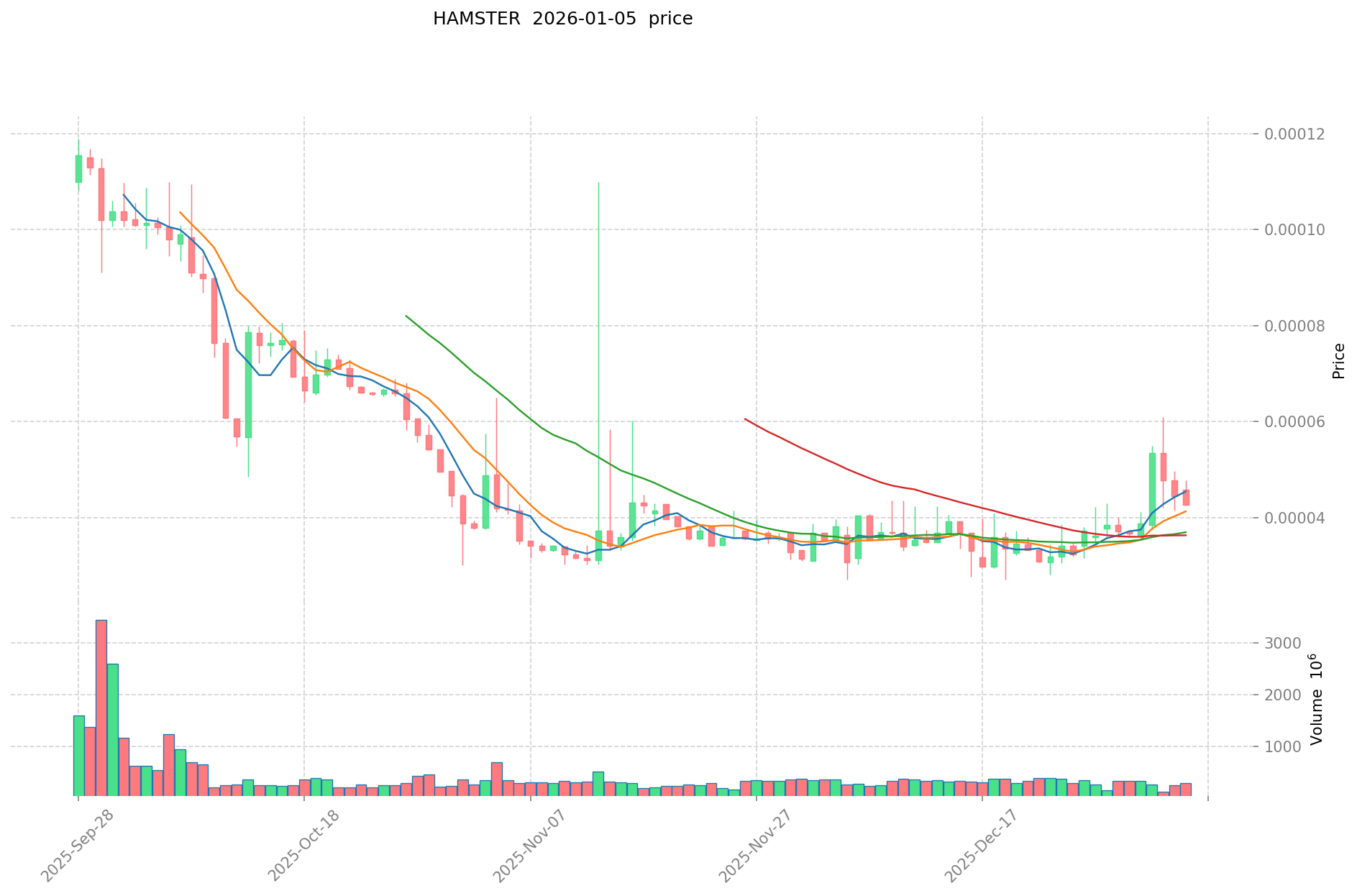
January 2026: The token has recovered from its lows, currently trading at $0.00004237, reflecting a 69% increase from the ATL while remaining 70.1% below the ATH.
HAMSTER Current Market Status
As of January 6, 2026, HAMSTER is trading at $0.00004237 with a 24-hour trading volume of $12,491.77. The token demonstrates mixed short-term performance, declining 7.25% over the past 24 hours while showing positive momentum on longer timeframes with a 7-day gain of 11.84% and 30-day increase of 21.18%.
The circulating supply stands at 1,000,000,000 tokens out of a total maximum supply of 10,000,000,000 tokens, representing 10% circulation. With a current market capitalization of $42,370 and a fully diluted valuation of $423,700, HAMSTER maintains a minimal market dominance of 0.000012%. The token is distributed among 239 holders and is built on the Solana (SOL) blockchain.
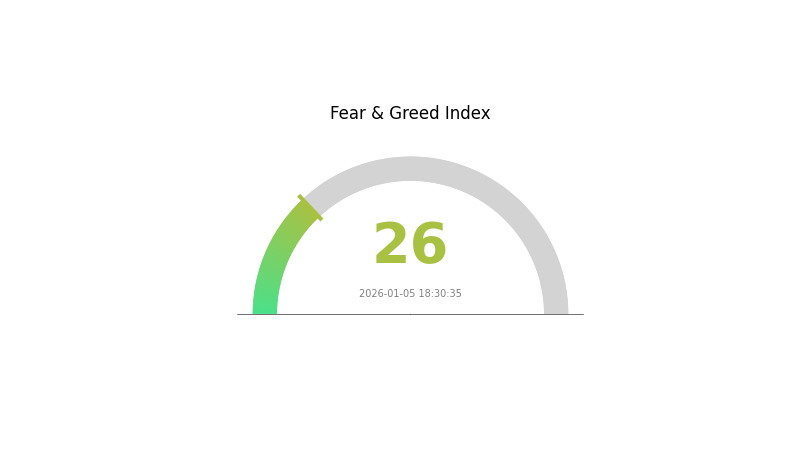
Current market sentiment indicates fear conditions (VIX reading: 26), which typically characterizes periods of elevated market uncertainty. The token's 1-year performance shows a substantial decline of 95.78%, reflecting the challenging market conditions that have affected the broader cryptocurrency ecosystem.
Click to view current HAMSTER market price
HAMSTER Market Sentiment Indicator
2026-01-05 Fear and Greed Index: 26 (Fear)
Click to view the current Fear & Greed Index
The crypto market is currently experiencing a fearful sentiment with an index reading of 26. This low level indicates heightened market anxiety and cautious investor behavior. During periods of fear, price volatility typically increases as traders reassess their positions. However, such conditions often present opportunities for long-term investors to accumulate assets at potentially favorable prices. Market participants should monitor key support levels and consider their risk tolerance carefully. On Gate.com, you can track real-time market data and sentiment indicators to inform your investment decisions during this volatile period.
HAMSTER Holdings Distribution
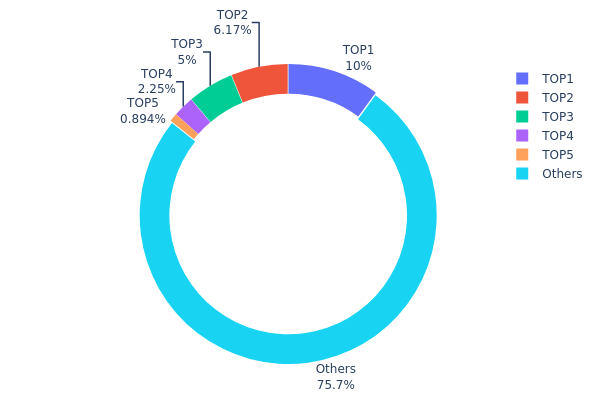
The address holdings distribution map illustrates the concentration of token ownership across blockchain wallets, serving as a critical indicator for assessing market decentralization and potential systemic risks. By analyzing the percentage of total supply held by top addresses, this metric reveals the distribution patterns that influence token liquidity, price stability, and governance dynamics within the ecosystem.
HAMSTER's current holdings distribution demonstrates a relatively healthy decentralization profile. The top five addresses collectively hold approximately 24.3% of the total supply, with the largest holder accounting for 10.00%. The second-largest position represents 6.16% of circulating tokens, followed by a 5.00% concentration. Notably, the remaining 75.7% of tokens are distributed across other addresses, indicating substantial retail and medium-sized holder participation. This composition suggests that no single entity maintains dominant control sufficient to unilaterally influence network governance or execute large-scale market manipulation.
From a market structure perspective, HAMSTER's distribution pattern reflects a balanced ecosystem characterized by institutional accumulation alongside grassroots community engagement. The presence of multiple mid-sized holders reduces the likelihood of catastrophic sell-off scenarios that could trigger cascading price collapses. The significant percentage held by smaller addresses strengthens the protocol's resistance to concentrated token dumps and enhances the probability of sustained market participation. This fragmented ownership structure is conducive to price discovery mechanisms and reduces counterparty concentration risk, ultimately contributing to a more resilient and mature market microstructure.
Click to view current HAMSTER Holdings Distribution
| Top |
Address |
Holding Qty |
Holding (%) |
| 1 |
CCN1FM...Piq6DG |
1000000.00K |
10.00% |
| 2 |
u6PJ8D...ynXq2w |
616858.17K |
6.16% |
| 3 |
AXkjJG...EkDe6c |
500000.00K |
5.00% |
| 4 |
HXwhio...R4ULtM |
225000.00K |
2.25% |
| 5 |
6SAHpE...yTcsGw |
89439.67K |
0.89% |
| - |
Others |
7568692.15K |
75.7% |
II. Core Factors Affecting HAMSTER's Future Price
Supply Mechanism
-
Airdrop Distribution Model: 60% of total supply (6 billion HMSTR tokens) is allocated for airdrops, representing one of the largest airdrops in crypto history. This allocation is designed to reward the massive player base of over 300 million users.
-
Token Economics Structure: Total supply cap is fixed at 10 billion HMSTR tokens with strategic allocation including 5.75% for team allocation, 7.75% for partnerships and liquidity, and 1% for community rewards. Initial circulating supply is intentionally kept low at only 1.28% of fully diluted valuation (FDV) at launch.
-
Historical Impact: Early price dynamics were influenced by initial airdrops and community participation. The token experienced price volatility following its launch, with early adopters taking profits causing price corrections as market enthusiasm stabilized.
-
Current Impact: The structured token release schedule, combined with the project's lack of venture capital funding, is expected to mitigate immediate selling pressure post-launch. However, the large user base from developing countries (Nigeria, Russia, and others) poses a risk of significant profit-taking that could lead to sharp value declines.
Market Sentiment and Community Dynamics
-
Social Media Influence: HMSTR's influence is largely driven by discussions on Telegram and other social platforms. Positive sentiment increases, effective marketing strategies, and widespread user engagement directly drive token popularity and stimulate demand.
-
Community Scale: With over 300 million players and 12.5 million followers on X, Hamster Kombat has rapidly become one of the most popular mobile games, creating significant community momentum.
-
Price Volatility: Market sentiment and hype from communities and external investors drive substantial price fluctuations. Token value is heavily influenced by social platform dynamics rather than fundamental developments.
Technology Development and Ecosystem Construction
-
Tap-to-Earn Game Model: Hamster Kombat operates as a Telegram-based tap-to-earn game where players accumulate in-game currency by clicking, upgrading virtual crypto exchanges, and participating in referral programs. This simple yet engaging mechanic has driven mass adoption.
-
Game Enhancement Features: The project has introduced daily challenges including Daily Combos (card selection puzzles offering up to 5 million coins), Daily Cipher (Morse code decryption challenges), and Mini-games (maze navigation challenges) that add variety and engagement to gameplay.
-
Long-term Sustainability Challenges: The tap-to-earn model's initial appeal may diminish as more sophisticated play-to-earn games enter the market. Long-term success depends on continuous innovation and ecosystem expansion. Without sustained development and new features to reignite interest, the token value could gradually decline.
-
Growth Potential Scenarios: Optimistic scenarios include Hamster Kombat evolving into a broader gaming platform or integrating with emerging trends such as the metaverse, which could help maintain or increase token value.
III. HAMSTER Price Forecast for 2026-2031
2026 Outlook
- Conservative Forecast: $0.00002 - $0.00004
- Neutral Forecast: $0.00004 (average expectation)
- Bullish Forecast: $0.00006 (requires sustained market interest and community engagement)
2027-2029 Mid-Term Outlook
- Market Phase Expectations: Gradual accumulation phase with potential recovery momentum as the broader crypto market stabilizes and institutional adoption increases
- Price Range Predictions:
- 2027: $0.00003 - $0.00007 (15% potential upside)
- 2028: $0.00004 - $0.00008 (42% potential upside)
- 2029: $0.00005 - $0.00009 (69% potential upside)
- Key Catalysts: Enhanced tokenomics implementation, increased listing on major platforms like Gate.com, growing community ecosystem development, and favorable regulatory clarity in major markets
2030-2031 Long-Term Outlook
- Base Case: $0.00005 - $0.0001 (93% potential appreciation by 2030, assuming steady market conditions and continued project development)
- Bullish Case: $0.00008 - $0.00013 (111% potential appreciation by 2031, assuming accelerated adoption and positive macroeconomic sentiment)
- Transformational Case: $0.00015+ (extreme upside under exceptional circumstances including breakthrough utility adoption and mainstream recognition)
- 2031-12-31: HAMSTER reaches $0.00013 at maximum (representing sustained institutional interest and mainstream acceptance)
| 年份 |
预测最高价 |
预测平均价格 |
预测最低价 |
涨跌幅 |
| 2026 |
0.00006 |
0.00004 |
0.00002 |
0 |
| 2027 |
0.00007 |
0.00005 |
0.00003 |
15 |
| 2028 |
0.00008 |
0.00006 |
0.00004 |
42 |
| 2029 |
0.00009 |
0.00007 |
0.00005 |
69 |
| 2030 |
0.0001 |
0.00008 |
0.00005 |
93 |
| 2031 |
0.00013 |
0.00009 |
0.00005 |
111 |
Hamster (HAMSTER) Professional Investment Analysis Report
IV. HAMSTER Professional Investment Strategy and Risk Management
HAMSTER Investment Methodology
(1) Long-term Holding Strategy
- Target Audience: Community enthusiasts and Telegram ecosystem participants with moderate to long-term investment horizons
- Operational Recommendations:
- Accumulate HAMSTER during periods of market weakness, particularly when 24-hour volatility exceeds -7%, viewing dips as entry opportunities
- Hold tokens through multiple market cycles to benefit from ecosystem development within the Telegram-based mini-app platform
- Establish a core position representing 3-5% of your portfolio, avoiding overconcentration given the token's current market position (ranked #5936)
(2) Active Trading Strategy
HAMSTER Risk Management Framework
(1) Asset Allocation Principles
- Conservative Investors: 0.5-1% of total portfolio allocation
- Active Investors: 1-3% of total portfolio allocation
- Professional Investors: 2-5% of total portfolio allocation, contingent on risk assessment protocols
(2) Risk Hedging Solutions
- Position Sizing: Implement strict position limits to no more than 2-3% per transaction given the token's high volatility and limited market liquidity
- Stop-Loss Orders: Establish automated stop-loss mechanisms at 20-25% below purchase price to protect against catastrophic losses
(3) Secure Storage Solutions
- Hot Wallet Options: Gate.com Web3 wallet for frequent trading and interaction with Telegram-based mini-app features
- Cold Storage Strategy: Transfer core holdings to hardware-secured solutions for long-term preservation when not actively trading
- Security Best Practices: Never share private keys or seed phrases; enable multi-signature authentication where available; verify all contract addresses (HAMSTER contract on Solana: APQd2J9FQLbMy4jYa6A4oe2jXVvKgy2uGKfQbhdGeXpk) before transactions
V. HAMSTER Potential Risks and Challenges
HAMSTER Market Risks
- Extreme Volatility: The token has declined 95.78% over one year (from launch price of $0.002 to current $0.00004237), indicating severe price instability and potential for further drawdowns
- Liquidity Risk: Daily trading volume of $12,491.77 against a market cap of $42,370 demonstrates thin liquidity, making large position exits challenging
- Market Sentiment Deterioration: Current 24-hour negative momentum (-7.25%) combined with year-over-year collapse (-95.78%) suggests eroding market confidence
HAMSTER Regulatory Risks
- Telegram Platform Dependency: Changes to Telegram's policies regarding mini-apps or token-based incentives could severely impact the project's core utility mechanism
- Token Classification Uncertainty: Regulatory authorities may reclassify gaming or reward tokens, affecting HAMSTER's legal status and trading availability across jurisdictions
- Geographic Restrictions: Future compliance requirements could exclude certain markets from accessing Telegram-based trading or mining features
HAMSTER Technical Risks
- Smart Contract Vulnerability: As a Solana-based token (SPL standard), any exploits in the contract code or Solana network could compromise token security
- Limited Exchange Presence: Currently listed on only one exchange, creating dependency risk and limiting trading opportunities during market stress
- Small Holder Base: With only 239 token holders, concentration risk is significant; large exits by early holders could trigger panic selling
VI. Conclusion and Action Recommendations
HAMSTER Investment Value Assessment
Hamster operates as a community-driven, Telegram-integrated token with a novel approach to gamified engagement within the Web3 ecosystem. However, the project faces substantial headwinds: a 95.78% one-year decline, minimal market capitalization ($42,370), extremely limited liquidity, and heavy reliance on Telegram's platform policies. While the Telegram integration presents differentiation potential, the token's catastrophic performance history and concentrated holder structure indicate significant downside risk. The project remains highly speculative and unsuitable for conservative investors.
HAMSTER Investment Recommendations
✅ Beginners: Avoid this asset unless you have advanced crypto knowledge and can afford total loss; if you choose to participate, limit exposure to no more than 0.5% of your portfolio as a high-risk experimental allocation
✅ Experienced Traders: Consider tactical positions only during extreme oversold conditions (>-15% daily moves) with strict 15% stop-losses; focus on trading volatility rather than holding for fundamentals given the weak year-over-year trend
✅ Institutional Investors: Not recommended for institutional portfolios due to minimal market capitalization, single-exchange liquidity, and regulatory uncertainties surrounding Telegram-based token mechanics; reputational and compliance risks outweigh speculative upside
HAMSTER Trading Participation Methods
- Gate.com Spot Trading: Direct HAMSTER/USDT trading pairs for real-time price discovery and execution
- Limit Orders: Use Gate.com's advanced order types to establish positions at predetermined price levels, reducing emotional decision-making
- Telegram Mini-App Mining: Participate in project's native Telegram-based mini-app features for potential token rewards, though returns cannot be guaranteed
Cryptocurrency investment carries extreme risk. This report does not constitute investment advice. Investors must make decisions based on their individual risk tolerance and financial situation. Always consult a qualified financial advisor before investing. Never invest more capital than you can afford to lose completely.
FAQ
What is HAMSTER? What are its uses and value?
HAMSTER is a meme cryptocurrency combining meme culture with DeFi functionality. It features staking rewards, deflationary tokenomics, and community-driven value. As a speculative asset, HAMSTER's price is driven by social trends and community sentiment, offering potential growth opportunities in the meme coin sector.
What is the historical price trend of HAMSTER? What are the main factors affecting its price?
HAMSTER's price has been shaped by market demand, adoption trends, and institutional participation. Key factors include overall crypto market sentiment, trading volume, project developments, and macroeconomic conditions. Real-time price data reflects these dynamic market forces.
What is the 2024 HAMSTER price prediction? How do experts view it?
Experts predict HAMSTER price in 2024 ranged between 0.0000000015 to 0.0000000035 USD. Continued modest growth was anticipated based on public interest and trading volume trends on micro-trading platforms.
HAMSTER and other mainstream cryptocurrencies compare what advantages and disadvantages?
HAMSTER excels in viral Telegram gaming adoption with rapid user growth. However, it lacks technical differentiation and infrastructure compared to mainstream cryptocurrencies. Its sustainability depends on user retention beyond initial hype.
What are the risks of investing in HAMSTER? How should I evaluate them?
HAMSTER investment carries market volatility risk. Evaluate based on your risk tolerance, market conditions, and portfolio allocation. Monitor price movements and trading volume closely to make informed decisions.
What is the supply and circulation volume of HAMSTER? How does it affect the price?
HAMSTER has a maximum supply of 1 billion tokens with a current circulation of 1 billion. Since supply equals circulation, there is minimal dilution pressure. This equilibrium supports price stability and reduces future inflation concerns, potentially creating upward price momentum.
What is HAMSTER's future development roadmap? What new features will there be?
HAMSTER will enter the next phase of its roadmap in June 2025, focusing on expanding gameplay features and introducing new mechanics to enhance user experience. Specific details will be announced soon.
How to buy HAMSTER? Which exchanges support trading?
You can purchase HAMSTER through centralized exchanges. Register and verify your account, then deposit funds and place a buy order. Transfer your HAMSTER to a secure crypto wallet for safekeeping.
* The information is not intended to be and does not constitute financial advice or any other recommendation of any sort offered or endorsed by Gate.