# Article Overview: 2025 PELL Price Prediction: Expert Analysis and Market Forecast for the Upcoming Year
This comprehensive analysis examines Pell Network (PELL), an omnichain BTC restaking infrastructure token, providing professional price forecasts from 2026-2031 alongside investment strategies. The report addresses critical needs for cryptocurrency investors by analyzing PELL's market position, historical price evolution, and future growth potential within the emerging Bitcoin restaking ecosystem. Readers will discover detailed price predictions, risk management frameworks, and trading methodologies suitable for beginners through institutional investors. The article combines technical market analysis, ecosystem development assessment, and macroeconomic factors to deliver actionable insights for PELL token investments on Gate, helping investors make informed decisions during extreme market volatility and identifying both opportunities and critical risks in this emerging DeFAI infrastructure protocol.
Introduction: Market Position and Investment Value of PELL
PELL (PELL), as an omnichain decentralized validated service network driven by BTC restaking, has established itself as a notable player in the cryptoeconomic security domain since its launch. As of January 2026, PELL has achieved a market capitalization of approximately $203,683, with a circulating supply of 336 million tokens trading at around $0.0006062. This innovative asset, which extends BTCFi into new frontiers of decentralized finance infrastructure, is playing an increasingly important role in building efficient and secure validation services for the broader blockchain ecosystem.
This article will provide a comprehensive analysis of PELL's price trajectories from 2026 through 2031, integrating historical price patterns, market supply dynamics, ecosystem developments, and macroeconomic factors to deliver professional price forecasts and practical investment strategies for investors considering exposure to this emerging token.
Pell Network (PELL) Market Analysis Report
I. PELL Price History Review and Current Market Status
PELL Historical Price Evolution
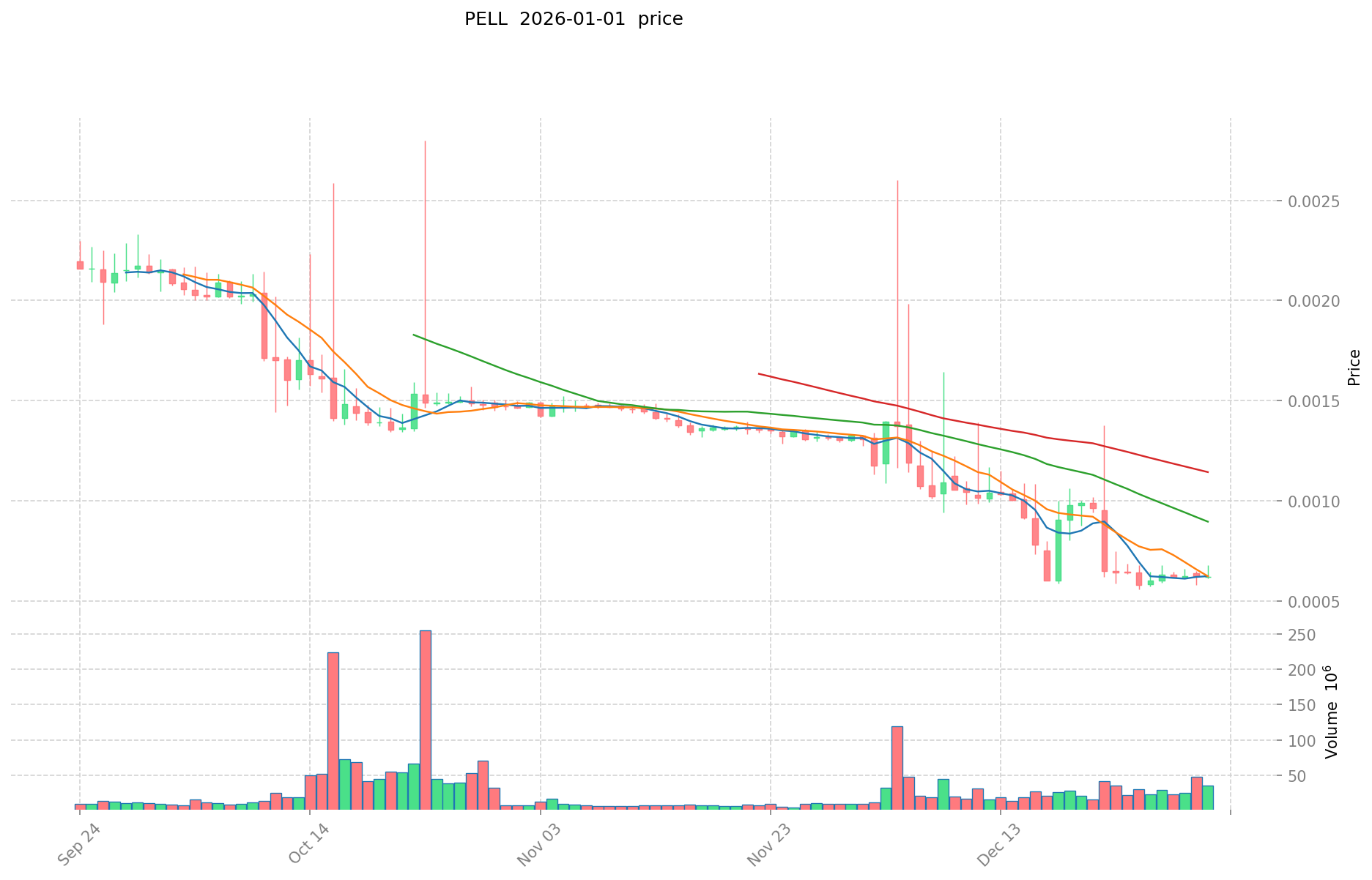
Based on available data, Pell Network's price trajectory shows the following key points:
- March 13, 2025: All-time high (ATH) of $0.0774 reached
- December 25, 2025: All-time low (ATL) of $0.0005566 recorded
- Current Period (January 2, 2026): Trading at $0.0006062, reflecting significant decline from peak levels
The token has experienced a substantial correction of approximately 92% from its all-time high, indicating a pronounced bearish market cycle over the observed period.
PELL Current Market Status
Price and Market Capitalization:
- Current Price: $0.0006062
- 24-Hour High/Low: $0.0006497 / $0.0006044
- Market Capitalization: $203,683.20
- Fully Diluted Valuation (FDV): $1,273,020.00
- 24-Hour Trading Volume: $13,466.34
Price Performance Metrics:
- 1-Hour Change: +0.02%
- 24-Hour Change: -4.75%
- 7-Day Change: -6.67%
- 30-Day Change: -50.22%
Token Supply Information:
- Circulating Supply: 336,000,000 PELL (16.0% of total supply)
- Total Supply: 2,100,000,000 PELL
- Maximum Supply: 2,100,000,000 PELL
- Current Holders: 53,371
Market Position:
- Market Ranking: #4,125
- Market Share: 0.000040%
- Number of Trading Exchanges: 2
- Market Sentiment: Extreme Fear (VIX Score: 20)
The token exhibits continued downward pressure over the 30-day period with a -50.22% decline, though recent hourly movements show slight stabilization. The market sentiment index indicates extreme fear conditions in the current trading environment.
Click to view current PELL market price
PELL Market Sentiment Index
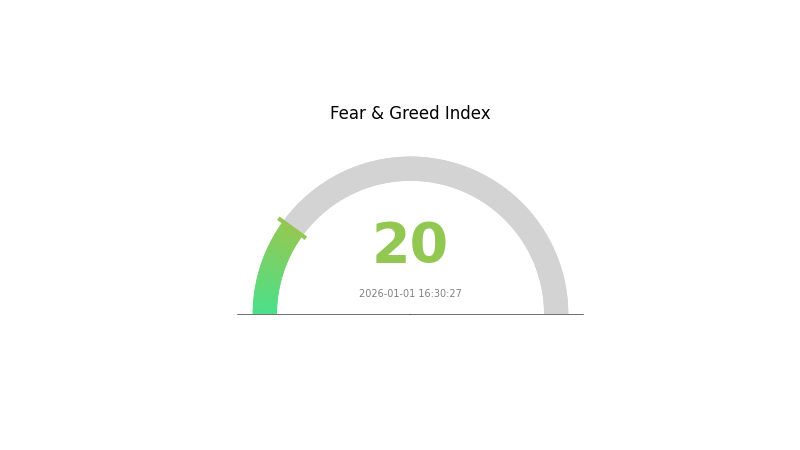
2026-01-01 Fear and Greed Index: 20 (Extreme Fear)
Click to view current Fear & Greed Index
The crypto market is currently experiencing extreme fear, with the Fear and Greed Index standing at 20. This reading indicates significant market pessimism and heightened investor anxiety. During periods of extreme fear, markets often present contrarian opportunities for long-term investors, as prices may be oversold. However, caution is warranted as underlying bearish momentum could persist. Monitor key support levels closely and consider dollar-cost averaging strategies. Keep risk management protocols in place and stay informed through Gate.com's real-time market data to make informed trading decisions during this volatile period.
PELL Holdings Distribution
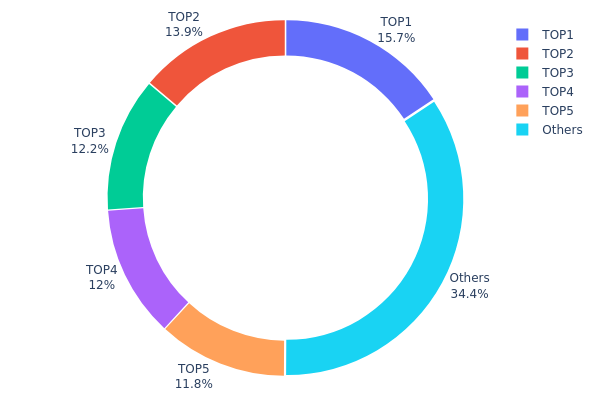
The holdings distribution chart illustrates the concentration of PELL tokens across blockchain addresses, providing critical insight into the token's decentralization level and potential market dynamics. By analyzing the top holders and their respective percentages of total supply, we can assess the vulnerability to whale manipulation and the overall health of the token's distribution structure.
Current data reveals a moderately concentrated distribution pattern, with the top five addresses collectively holding approximately 65.6% of the total supply. The largest holder commands 15.71% of tokens, while the second and third-largest holders maintain 13.85% and 12.22% respectively. This concentration level indicates a significant presence of major stakeholders whose actions could potentially influence market movements. However, the remaining 34.4% distributed across other addresses suggests a meaningful portion of the supply is dispersed among smaller participants, which provides some degree of decentralization.
The existing distribution presents a dual-edged landscape for market structure. While the concentration among top holders creates potential liquidity risks and price volatility concerns, the substantial minority stake held by dispersed addresses (34.4%) offers a stabilizing counterbalance. This configuration suggests PELL exhibits a semi-decentralized structure where institutional or major stakeholders maintain considerable influence, yet does not face extreme centralization risks that would render the token's governance or price discovery mechanisms fundamentally compromised. Continued monitoring of these addresses' movement patterns would be essential for assessing whether this distribution evolves toward greater decentralization or becomes increasingly concentrated.
Click to view current PELL Holdings Distribution
| Top |
Address |
Holding Qty |
Holding (%) |
| 1 |
0x858a...2c5606 |
314999.77K |
15.71% |
| 2 |
0x6b79...1f1f68 |
277830.00K |
13.85% |
| 3 |
0xd76a...8e8a4f |
245049.00K |
12.22% |
| 4 |
0x60cd...c625ce |
241446.09K |
12.04% |
| 5 |
0x75be...465449 |
236250.00K |
11.78% |
| - |
Others |
688986.42K |
34.4% |
Core Factors Influencing PELL's Future Price
Technology Development and Ecosystem Construction
-
Bitcoin Re-staking Infrastructure: Pell Network is an actively validated service (AVS) network built on Bitcoin re-staking protocols. It aggregates BTC and its liquid staking derivative (LSD) assets scattered across various Layer 2 solutions into a unified Pell Network ledger, creating a decentralized AVS ecosystem service network. This positions PELL within the rapidly growing Bitcoin staking and re-staking sector, which represents the second-largest unified track in the Bitcoin ecosystem after Bitcoin Layer 2s.
-
Ecosystem Application: Pell Network operates within the broader Bitcoin re-staking landscape alongside infrastructure providers like Babylon. As a re-staking AVS, it enables capital-efficient Bitcoin utilization by allowing BTC holders to participate in network security validation while generating yield. The protocol's integration with multiple Layer 2 solutions enhances its ecosystem reach and utility.
Institutional and Market Dynamics
-
Exchange Listings and Market Presence: PELL token is listed on Gate.com and benefits from active trading activities and promotional campaigns. Gate.com has conducted multiple trading campaigns including lucky draw events with substantial rewards (up to USD 13,000) and knowledge challenge events distributing significant PELL token prizes (840,336 PELL), indicating institutional support and market visibility.
-
Trading Volume and Market Sentiment: Market price fluctuations are driven by liquidity, trading volume, and overall market sentiment. PELL's price movements are influenced by real-time trading activity across major exchanges and shifts in cryptocurrency market conditions.
Overall, PELL's price trajectory is shaped by ecosystem development maturity, partnership expansion, exchange listings visibility, market trading dynamics, and the broader adoption of Bitcoin re-staking infrastructure in the cryptocurrency landscape.
III. 2026-2031 PELL Price Forecast
2026 Outlook
- Conservative Forecast: $0.00047-$0.00061
- Neutral Forecast: $0.00061
- Optimistic Forecast: $0.00080 (requiring sustained ecosystem development and increased adoption)
2027-2029 Medium-term Outlook
- Market Stage Expectation: Recovery and consolidation phase with gradual price appreciation driven by ecosystem expansion and market sentiment improvement
- Price Range Forecast:
- 2027: $0.00041-$0.00103
- 2028: $0.00050-$0.00104
- 2029: $0.00053-$0.00099
- Key Catalysts: Enhanced platform functionality, increased user adoption through Gate.com and other trading platforms, positive regulatory developments, and strengthened tokenomics mechanisms
2030-2031 Long-term Outlook
- Base Case Scenario: $0.00087-$0.00142 (assuming moderate ecosystem growth and stable market conditions)
- Optimistic Scenario: $0.00142-$0.00176 (assuming significant network expansion, institutional adoption, and favorable macroeconomic conditions)
- Transformative Scenario: $0.00176+ (under conditions of breakthrough technological innovation, mass-market adoption, and sustained bull market momentum)
- 2031-12-31: PELL reaching $0.00176 (representing 97% cumulative appreciation from baseline projections through sustained long-term development)
| 年份 |
预测最高价 |
预测平均价格 |
预测最低价 |
涨跌幅 |
| 2026 |
0.0008 |
0.00061 |
0.00047 |
0 |
| 2027 |
0.00103 |
0.0007 |
0.00041 |
15 |
| 2028 |
0.00104 |
0.00087 |
0.0005 |
43 |
| 2029 |
0.00099 |
0.00095 |
0.00053 |
57 |
| 2030 |
0.00142 |
0.00097 |
0.00087 |
60 |
| 2031 |
0.00176 |
0.0012 |
0.00066 |
97 |
Pell Network (PELL) Professional Investment Report
IV. PELL Professional Investment Strategy and Risk Management
PELL Investment Methodology
(1) Long-term Holding Strategy
- Suitable for: Cryptocurrency investors with medium to long-term investment horizons who believe in Bitcoin restaking infrastructure and DeFAI ecosystem development
- Operational Recommendations:
- Establish a core position during market downturns when PELL trades at lower valuations relative to all-time highs ($0.0774)
- Dollar-cost averaging (DCA) to reduce timing risk, given the token's current price of $0.0006062 represents significant depreciation from ATH
- Hold through multiple market cycles to benefit from potential ecosystem expansion and adoption of the Omnichain BTC Restaking Network
(2) Active Trading Strategy
- Technical Analysis Tools:
- Support and Resistance Levels: Utilize the historical price range between ATL ($0.0005566 on December 25, 2025) and recent trading levels ($0.0006044-$0.0006497 in 24-hour range) to identify entry and exit points
- Moving Average Convergence: Monitor short-term momentum using 7-day and 30-day price trends (-6.67% and -50.22% respectively) to identify trend reversals
- Wave Trading Key Points:
- Entry signals: Consider positions when daily price approaches the 24-hour low ($0.0006044)
- Exit signals: Take profits near 24-hour highs ($0.0006497) or when positive sentiment shifts negative
PELL Risk Management Framework
(1) Asset Allocation Principles
- Conservative Investors: 1-2% of portfolio allocation to PELL and similar early-stage DeFAI infrastructure tokens
- Active Investors: 3-5% of portfolio allocation with tactical trading positions
- Professional Investors: 5-10% of portfolio allocation with sophisticated hedging strategies
(2) Risk Hedging Solutions
- Position Sizing Management: Limit individual trade size to 1-3% of total trading capital to protect against sudden price volatility given PELL's 24-hour decline of -4.75%
- Diversification Strategy: Balance PELL holdings with other Bitcoin-related assets and established DeFi tokens to reduce concentration risk in emerging protocols
(3) Secure Storage Solutions
- Hot Wallet Solution: Gate.com Web3 Wallet for frequent trading activities and accessing DeFAI services
- Cold Storage Approach: For long-term holders, maintain PELL tokens offline on hardware wallets to protect against smart contract vulnerabilities or exchange compromise
- Security Precautions: Enable multi-signature authentication, use hardware wallets for large holdings, never share private keys, and verify smart contract addresses before token transfers on BSC network
V. PELL Potential Risks and Challenges
PELL Market Risks
- Extreme Price Volatility: PELL has experienced a 50.22% decline over 30 days and a -6.67% decline over 7 days, indicating high volatility unsuitable for risk-averse investors
- Limited Trading Liquidity: With 24-hour volume of only $13,466.34 and presence on only 2 exchanges, PELL suffers from low liquidity that may result in significant slippage on larger orders
- Market Cap Vulnerability: A fully diluted valuation of $1,273,020 with only 16% of maximum supply circulating means substantial dilution risk when additional tokens enter circulation
PELL Regulatory Risks
- DeFAI Regulatory Uncertainty: AI-driven decentralized finance remains largely unregulated globally, exposing PELL to potential regulatory crackdowns or compliance requirements
- Cross-Chain Compliance: Operating as an Omnichain protocol across multiple blockchains introduces complexity in navigating different jurisdictional requirements
- Bitcoin Restaking Regulatory Status: Regulatory treatment of Bitcoin restaking mechanisms remains unclear, creating potential compliance uncertainties for the core protocol
PELL Technical Risks
- Protocol Security Vulnerabilities: As a relatively new Omnichain BTC Restaking Network, undiscovered smart contract vulnerabilities could expose user funds to exploitation
- Cross-Chain Bridge Risks: Omnichain architecture increases attack surfaces through bridge mechanisms, creating potential points of failure
- Oracle Dependency: DeFAI infrastructure reliance on external data sources creates risks if oracle providers are compromised or provide inaccurate information
VI. Conclusion and Action Recommendations
PELL Investment Value Assessment
Pell Network represents an innovative approach to Bitcoin restaking and DeFAI infrastructure, positioning itself at the intersection of BTCFi expansion and AI-driven decentralized finance. However, the project's recent steep price decline (down 50.22% in 30 days), extremely limited trading liquidity, and unproven market adoption create significant risks. The protocol's long-term value depends on successful ecosystem development, institutional adoption of its validated services, and regulatory clarity around Bitcoin restaking mechanisms. Current market valuation and early-stage status suggest this is a high-risk, potentially high-reward investment suitable only for risk-tolerant investors.
PELL Investment Recommendations
✅ Beginners: Start with minimal allocations (0.5-1% of portfolio) through Gate.com's spot trading, using dollar-cost averaging over several months to reduce timing risk. Prioritize education on Bitcoin restaking mechanics and DeFAI concepts before expanding positions.
✅ Experienced Investors: Consider tactical positions sized at 2-5% of trading capital, utilizing technical analysis of support/resistance levels to optimize entry points. Implement disciplined stop-loss orders at 15-20% below entry prices to manage downside risk.
✅ Institutional Investors: Evaluate PELL as a component of broader DeFAI infrastructure exposure, implementing sophisticated hedging strategies and conducting thorough due diligence on protocol security audits and regulatory compliance. Consider positions only after comprehensive analysis of tokenomics and competitive positioning.
PELL Trading Participation Methods
- Spot Trading on Gate.com: Purchase PELL directly using supported trading pairs for long-term holdings or active trading strategies
- BSC Network Direct Purchase: Acquire PELL through BSC network using the token contract address (0xc65d8d96cdddb31328186efa113a460b0af9ec63) via supported decentralized protocols
- Strategic Accumulation: Utilize multiple purchase methods to execute dollar-cost averaging strategies over extended periods
Cryptocurrency investment carries extreme risk. This report does not constitute investment advice. Investors must make decisions based on personal risk tolerance and should consult professional financial advisors. Never invest more capital than you can afford to lose completely.
FAQ
What is PELL token? What are its main uses and value?
PELL is the native token of Pell Network, enabling Bitcoin users to participate in decentralized finance products and unlock Bitcoin's value. It incentivizes network participants and rewards protocol contributors, bridging Bitcoin with DeFi opportunities.
What is the current price of PELL? What are the all-time high and low prices?
PELL is currently trading at BTC0.086896. The all-time high price reached BTC0.062952, while the all-time low stands at BTC0.086515. The 24-hour trading volume is $73,297.00.
What price predictions do experts have for PELL? Will it rise or fall in 2024-2025?
Experts predict PELL will decline to historical lows of 0.001001 USD during 2024-2025, with bearish market trends expected to persist. Price movement depends on market conditions and ecosystem development factors.
What are the main risks of investing in PELL? How should you assess these risks?
Main risks include market volatility, project execution risks, and regulatory uncertainty. Assess by analyzing the project's technology roadmap, team credentials, trading volume, and community engagement. Monitor market trends and competitive landscape.
What are the advantages and disadvantages of PELL compared to mainstream cryptocurrencies such as BTC and ETH?
PELL offers lower transaction fees and faster transaction speeds, but has lower market recognition and community support. Compared to BTC and ETH, its technical maturity and security require further verification.
How is PELL's technical team and project progress? How do these factors affect its price trend?
PELL's technical team strength and project milestones directly drive price appreciation. Strong development progress, successful product launches, and ecosystem expansion typically correlate with bullish price momentum. Monitoring official announcements provides insight into future value growth potential.
* The information is not intended to be and does not constitute financial advice or any other recommendation of any sort offered or endorsed by Gate.