# ACP vs BTC: Comprehensive Investment Comparison Guide
This article delivers an in-depth analysis comparing ACP and BTC across market performance, tokenomics, and investment value in 2024. It addresses critical investment decisions by examining price trends, institutional adoption, technology ecosystems, and macroeconomic factors affecting both assets. Designed for beginner to institutional investors, this guide provides concrete allocation strategies, risk assessments, and price forecasts through 2030. The article systematically evaluates ACP's emerging Web3 gaming infrastructure against Bitcoin's established store-of-value characteristics, equipping readers with data-driven insights for portfolio diversification. Real-time pricing data and trading volume metrics sourced from Gate enable transparent market comparison, while actionable investment recommendations cater to different risk profiles and investment horizons.
Introduction: ACP vs BTC Investment Comparison
In the cryptocurrency market, the comparison between ACP and BTC is an inevitable topic for investors. The two not only exhibit significant differences in market capitalization ranking, application scenarios, and price performance, but also represent distinct positioning within the crypto asset landscape.
ACP (ACP): As the platform token for the Arena of Faith ecosystem launched in 2025, it has gained market recognition through its innovative Web3-based gaming infrastructure combining MOBA, ACT, ARPG, and other ecosystem games.
BTC (BTC): Since its inception in 2008, Bitcoin has been recognized as "digital gold" and remains one of the most traded and highest market-capitalized cryptocurrencies globally.
This article will comprehensively analyze the investment value comparison between ACP and BTC across historical price trends, supply mechanisms, and market positioning, while attempting to answer the question most investors care about:
"Which is the better buy right now?"
ACP vs BTC Price History and Market Analysis
I. Historical Price Comparison and Current Market Status
ACP (Arena of Faith) and BTC (Bitcoin) Historical Price Trends
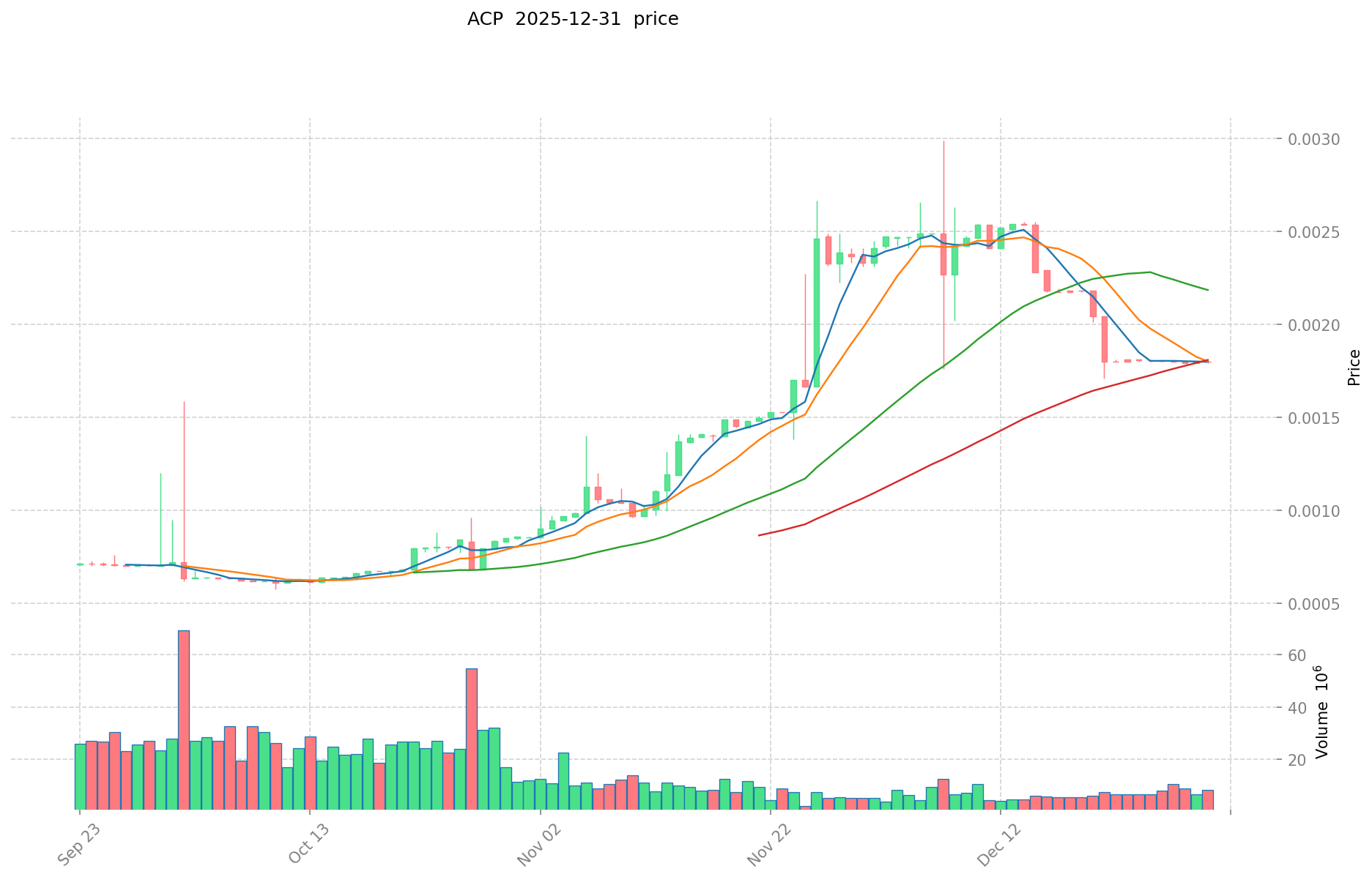
- 2025: Arena of Faith (ACP) was launched as the platform token for the Arena of Faith gaming ecosystem, incorporating Web3-based MOBA games, ACT, ARPG, and other eco-games. The token achieved an all-time high (ATH) of $0.15555 on January 21, 2025.
- 2025: Bitcoin reached its all-time high of $126,080 on October 7, 2025, representing a significant milestone for the leading cryptocurrency and demonstrating continued institutional adoption and market confidence.
- Comparative Analysis: In 2025, ACP experienced a substantial decline from its peak of $0.15555 to a low of $0.0005729 (reached October 10, 2025), representing an approximately 99.6% decline from its ATH. During the same period, Bitcoin exhibited greater price stability, declining approximately 29.4% from its October peak to current trading levels around $89,011.50.
Current Market Status (December 31, 2025)
- ACP current price: $0.0017901.
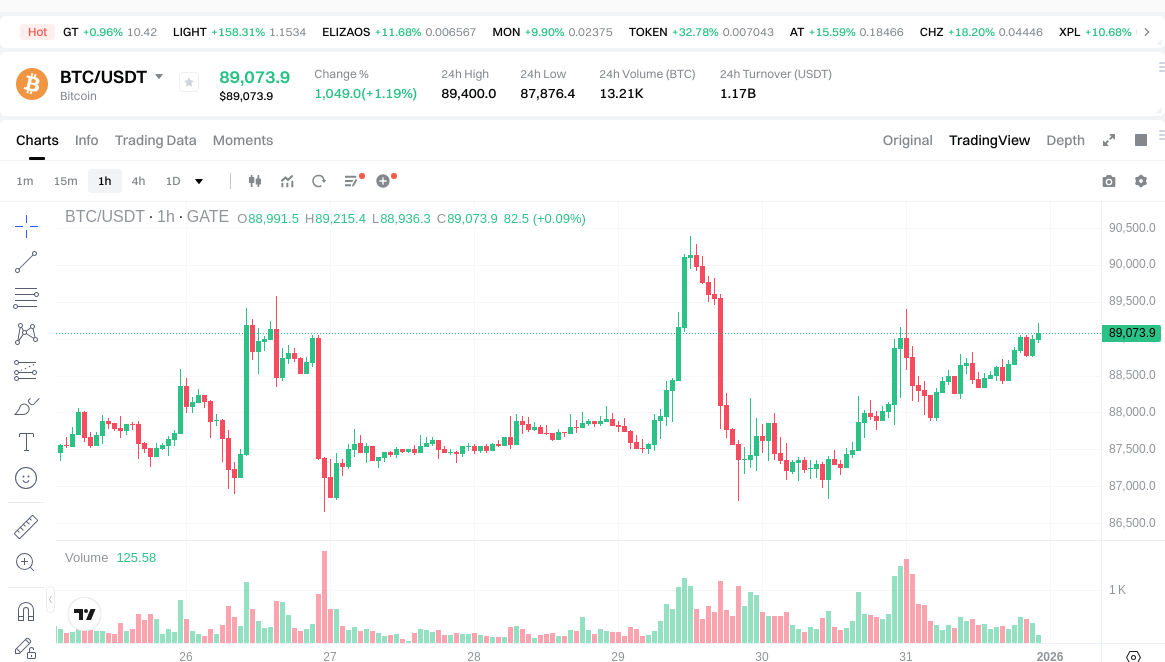
- BTC current price: $89,011.5.
- 24-hour trading volume: ACP $13,642.58 vs BTC $1,172,627,986.10.
- Market Sentiment Index (Fear & Greed Index): 21 (Extreme Fear).
Click to view real-time prices:
II. Core Factors Affecting Investment Value of ACP vs BTC
Supply Mechanism Comparison (Tokenomics)
- Bitcoin (BTC): Fixed supply cap of 21 million coins with a halving mechanism occurring approximately every four years, reducing mining rewards by 50%. This deflationary design creates programmed scarcity
- ACP (Aberdeen Credit Strategies): As an equity instrument rather than a cryptocurrency, ACP operates under traditional corporate structures with share issuance determined by company operations and capital management policies, not algorithmic scarcity
📌 Historical Pattern: Bitcoin's halving cycles have historically coincided with price appreciation cycles, as reduced supply growth intersects with increasing demand from network adoption and institutional acceptance. ACP's value derives from underlying credit strategy performance rather than supply constraints
Institutional Adoption and Market Application
- Institutional Holdings: Bitcoin has achieved significant institutional adoption with major asset managers, hedge funds, and corporations adding BTC to balance sheets. ACP, as a credit-focused equity security, attracts institutional investors primarily through traditional credit strategy mandates and fixed-income allocation processes
- Enterprise Adoption: Bitcoin demonstrates expanding application in cross-border settlements and as a store of value alternative. ACP functions within traditional financial frameworks, serving institutional credit portfolio requirements rather than emerging payment or settlement infrastructure
- National Policy: Regulatory approaches vary significantly. Bitcoin faces jurisdictional restrictions in some countries while gaining recognition as an asset class in others. ACP operates within established equity and securities regulatory frameworks across most developed markets
Technology Development and Ecosystem Construction
-
Bitcoin Technology Evolution: Development focuses on Layer 2 solutions (Lightning Network), privacy enhancements, and scalability improvements. These upgrades facilitate faster transactions and reduce settlement costs while maintaining core network security
-
ACP Development: As a traditional financial product, advancement centers on portfolio management techniques, credit analytics capabilities, and operational efficiency rather than distributed ledger technology
-
Ecosystem Comparison: Bitcoin's ecosystem encompasses DeFi protocols, payment processors, and custody solutions integrated with blockchain infrastructure. ACP operates within conventional credit markets, securities exchanges, and traditional financial infrastructure without blockchain integration
Macroeconomic Environment and Market Cycles
-
Performance During Inflation: Bitcoin has been promoted as inflation protection due to fixed supply mechanics, though actual performance correlates strongly with broader risk asset sentiment. ACP performance depends on credit spread dynamics and default risk, potentially offering different inflationary hedging characteristics through credit exposure
-
Macroeconomic Monetary Policy: Federal Reserve policy intensity, interest rate trajectories, and USD index strength significantly impact both assets. Rising rates typically pressure risk assets including Bitcoin, while ACP valuations may compress during rate increases due to credit spread widening. Employment data volatility and inflation persistence influence overall market risk appetite affecting both instruments
-
Geopolitical Factors: Cross-border transaction demand, international sanctions regimes, and capital flow restrictions enhance Bitcoin's utility in certain scenarios. ACP performance remains primarily domestic market-dependent, influenced by credit cycle positioning and counterparty risk assessment within traditional financial systems
III. 2025-2030 Price Forecast: ACP vs BTC
Short-term Forecast (2025)
- ACP: Conservative $0.00165508 - $0.001799 | Bullish $0.001799 - $0.00232071
- BTC: Conservative $67,635.82 - $88,994.5 | Bullish $88,994.5 - $128,152.08
Medium-term Forecast (2026-2027)
- ACP is expected to enter an accumulation phase, with projected price range of $0.00170968 - $0.003626993
- BTC is expected to enter an appreciation phase, with projected price range of $66,229.71 - $149,874.57
- Key drivers: institutional capital inflows, ETF expansion, ecosystem development
Long-term Forecast (2028-2030)
- ACP: Base case $0.00237977 - $0.004513831 | Bullish case $0.004513831 - $0.005808980
- BTC: Base case $99,072.26 - $206,105.18 | Bullish case $206,105.18 - $246,966.73
View detailed price forecasts for ACP and BTC
ACP:
| 年份 |
预测最高价 |
预测平均价格 |
预测最低价 |
涨跌幅 |
| 2025 |
0.00232071 |
0.001799 |
0.00165508 |
0 |
| 2026 |
0.0030485854 |
0.002059855 |
0.00170967965 |
15 |
| 2027 |
0.003626992684 |
0.0025542202 |
0.001890122948 |
42 |
| 2028 |
0.0040177883746 |
0.003090606442 |
0.00237976696034 |
72 |
| 2029 |
0.004513830708541 |
0.0035541974083 |
0.003163235693387 |
98 |
| 2030 |
0.005808980244125 |
0.00403401405842 |
0.003711292933746 |
125 |
BTC:
| 年份 |
预测最高价 |
预测平均价格 |
预测最低价 |
涨跌幅 |
| 2025 |
128152.08 |
88994.5 |
67635.82 |
0 |
| 2026 |
149831.1402 |
108573.29 |
66229.7069 |
22 |
| 2027 |
149874.569516 |
129202.2151 |
83981.439815 |
45 |
| 2028 |
180004.52607732 |
139538.392308 |
99072.25853868 |
56 |
| 2029 |
206105.1823585314 |
159771.45919266 |
111840.021434862 |
79 |
| 2030 |
246966.733047054195 |
182938.3207755957 |
142691.890204964646 |
105 |
IV. Investment Strategy Comparison: ACP vs BTC
Long-term vs Short-term Investment Strategy
- ACP: Suitable for investors focused on emerging ecosystem participation and early-stage Web3 gaming infrastructure adoption, seeking exposure to platform token appreciation potential during ecosystem development phases
- BTC: Suitable for investors seeking established store of value characteristics, inflation protection through fixed supply mechanics, and institutional-grade asset allocation with reduced volatility relative to emerging tokens
Risk Management and Asset Allocation
- Conservative Investors: ACP 5-10% vs BTC 60-75% (with 15-30% stablecoins for downside protection)
- Aggressive Investors: ACP 20-30% vs BTC 40-50% (with 10-20% alternative altcoins and derivatives positioning)
- Hedging Tools: Stablecoin reserves for market timing, options strategies for volatility management, cross-asset diversification between store-of-value and ecosystem-play positions
V. Potential Risk Comparison
Market Risk
- ACP: Extreme volatility with 99.6% decline from ATH demonstrates significant liquidity risk and token concentration challenges. Early-stage ecosystem tokens face abandonment risk if gaming platforms fail to achieve adoption metrics
- BTC: Regulatory restriction risk in certain jurisdictions, though established market structure provides greater price discovery mechanisms and lower liquidity gap risk
Technology Risk
- ACP: Ecosystem dependency on gaming platform performance and smart contract security of underlying MOBA, ACT, and ARPG protocols. Platform token utility directly tied to game adoption and retention rates
- BTC: Mining centralization concentration in select geographic regions and pools, historical security vulnerabilities in custodial solutions, protocol upgrade coordination challenges
Regulatory Risk
- Global Regulatory Landscape: Bitcoin faces categorical asset classification uncertainty across jurisdictions but increasingly gains recognition in regulated markets. ACP operates within traditional equity and securities frameworks in developed markets, yet faces emerging regulatory scrutiny on gaming-linked tokenomics and secondary market trading restrictions. Jurisdictional approaches diverge significantly between permissive crypto-friendly regions and restrictive environments implementing stablecoin bans or derivative trading prohibitions
VI. Conclusion: Which Is the Better Buy?
📌 Investment Value Summary
- ACP Advantages: Early ecosystem positioning within Web3 gaming infrastructure, potential for exponential growth if Arena of Faith gaming platforms achieve mainstream adoption, platform token mechanics offering ecosystem-native utility beyond pure store-of-value characteristics
- BTC Advantages: Established market leadership with $89,011.50 current pricing and $1.17 billion daily trading volume, fixed 21 million coin supply creating programmed scarcity, institutional adoption through ETF structures and corporate treasury allocations, historical performance correlation with macroeconomic inflation cycles and geopolitical uncertainty
✅ Investment Recommendations
- Beginner Investors: Allocate primary exposure to BTC (60-75%) for portfolio stability and reduced technical dependency, with secondary 5-10% allocation to ACP for ecosystem upside exposure while maintaining 15-30% stablecoin reserves for market entry opportunities during extreme fear periods (current Fear & Greed Index: 21)
- Experienced Investors: Deploy tactical ACP positions during ecosystem development milestones (gaming platform launches, user adoption metrics), maintain BTC as portfolio anchor with medium-term target range $99,072-$149,874 (2028-2027), implement options strategies to define downside risk boundaries and capture volatility premiums
- Institutional Investors: Bitcoin allocation through regulated spot ETF and custody solutions remains primary vehicle for crypto exposure with transparent regulatory compliance. ACP exposure requires direct market participation analysis of underlying gaming ecosystem metrics, platform revenue generation, and token utility realization before institutional mandate consideration
⚠️ Risk Disclaimer: Cryptocurrency markets exhibit extreme volatility with ACP demonstrating 99.6% decline from 2025 peak pricing. This analysis does not constitute investment advice. Prior to any investment decision, conduct independent research, assess personal risk tolerance, and consult qualified financial advisors. Historical price performance and forecasts do not guarantee future results.
FAQ
ACP和BTC分别是什么?两者的基本定义和发行背景有什么区别?
BTC是去中心化的全球数字货币,由匿名创造者于2009年推出,交易额巨大。ACP是新兴加密资产,具有特定的应用场景和发行背景,两者在发行机制、应用生态和市场地位上存在差异。
ACP和BTC在技术架构上有什么主要差异?
BTC采用工作量证明(PoW)共识机制,而ACP采用更高效的共识算法。BTC区块时间约10分钟,交易额较低;ACP网络规模更灵活,交易额处理能力更强,技术架构更新颖。
ACP相比BTC有什么优势和劣势?
ACP优势:交易速度更快,手续费更低。劣势:市值规模较小,认可度不如BTC。BTC拥有更强的流动性和更广泛的信任基础。
ACP和BTC的价格波动性和风险特征有什么不同?
BTC作为市值最大的加密资产,波动性相对较低,风险特征更趋稳定。ACP作为新兴AI协议代币,交易额相对较小,价格波动性更大,风险收益比更高,适合风险承受能力较强的投资者。
作为投资者,应该如何在ACP和BTC之间选择?
BTC是稳定的价值储存资产,历史悠久;ACP则聚焦于AI驱动的金融服务,具有创新潜力。建议根据风险偏好和市场前景综合考虑,两者可配置不同比例以实现投资组合多元化。
ACP和BTC的市场流动性和交易深度哪个更好?
BTC的市场流动性和交易深度优于ACP。BTC在全球市场中的交易额更大,流动性更充足,价格发现机制更完善,交易对更丰富。
* The information is not intended to be and does not constitute financial advice or any other recommendation of any sort offered or endorsed by Gate.