# Article Overview: BAC vs AAVE - DeFi Governance Token Investment Analysis
This comprehensive guide compares Basis Cash (BAC) and AAVE as DeFi governance tokens, examining their investment potential in 2024. The article analyzes price history, tokenomics, market adoption, and technical ecosystems to answer which token offers superior value. AAVE emerges as the more stable choice, backed by real lending activity and continuous protocol upgrades, while BAC presents high-risk speculation due to its failed algorithmic stablecoin mechanism. The analysis includes 2026-2031 price predictions, risk assessments, and tailored investment strategies for beginners, experienced investors, and institutions. Readers will discover detailed comparisons of supply mechanisms, institutional adoption rates, and ecosystem development to make informed DeFi investment decisions on Gate, supplemented by FAQs addressing key differences in borrowing mechanics and security protocols.
Introduction: BAC vs AAVE Investment Comparison
In the cryptocurrency market, the comparison between Basis Cash and AAVE has always been a topic investors cannot avoid. The two not only differ significantly in market capitalization ranking, application scenarios, and price performance, but also represent different positioning in the crypto asset landscape.
Basis Cash (BAC): Since its launch in 2020, it has gained market recognition through its dual-token model featuring Basis Cash as a stablecoin pegged 1:1 to the US dollar and Basis Share as an ownership token that captures inflation rewards.
AAVE (AAVE): Since its launch in 2020, it has been recognized as an open-source decentralized lending protocol that provides deposit and lending services, with deposit and loan rates algorithmically determined based on platform supply and demand dynamics, utilizing Chainlink's oracle to ensure collateral price fairness.
This article will comprehensively analyze the investment value comparison between BAC and AAVE from the perspectives of historical price trends, supply mechanisms, holder distribution, and technical ecosystems, while attempting to answer the question investors care most about:
"Which is the better buy right now?"
I. Price History Comparison and Current Market Status
Basis Cash (BAC) and AAVE Price Trends
- 2020: Basis Cash launched on November 30, 2020, reaching an all-time high of $1,010.99. AAVE was established on October 2, 2020, with an initial price of $1.70, later reaching an all-time high of $661.69 on May 18, 2021.
- Market comparison: Basis Cash experienced a dramatic decline from its peak of $1,010.99 to a low of $0.00130316 on October 27, 2024, representing a significant correction. In contrast, AAVE peaked at $661.69 but maintained relatively higher trading activity and market presence throughout its history.
- Historical performance: BAC's price movement reflects the challenges faced by algorithmic stablecoin projects, while AAVE demonstrated resilience as a leading DeFi protocol with sustained market interest despite experiencing a 52.6% decline over the past year.
Current Market Status (January 3, 2026)
- Basis Cash (BAC) current price: $0.001686
- AAVE current price: $158.06
- 24-hour trading volume: BAC $11,951.92 vs AAVE $3,531,129.50
- Market Sentiment Index (Fear & Greed Index): 29 (Fear)
Click to view real-time prices:
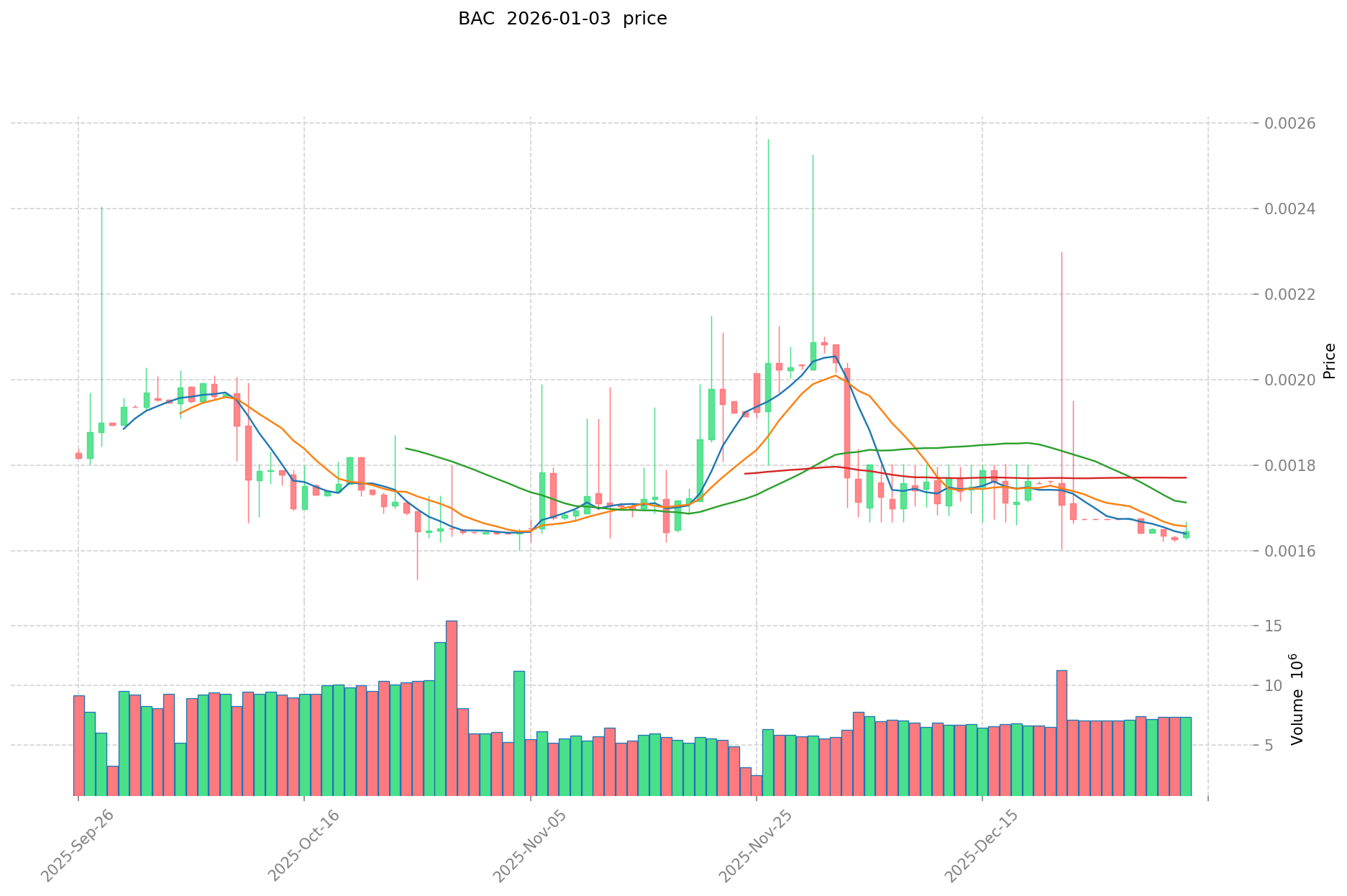
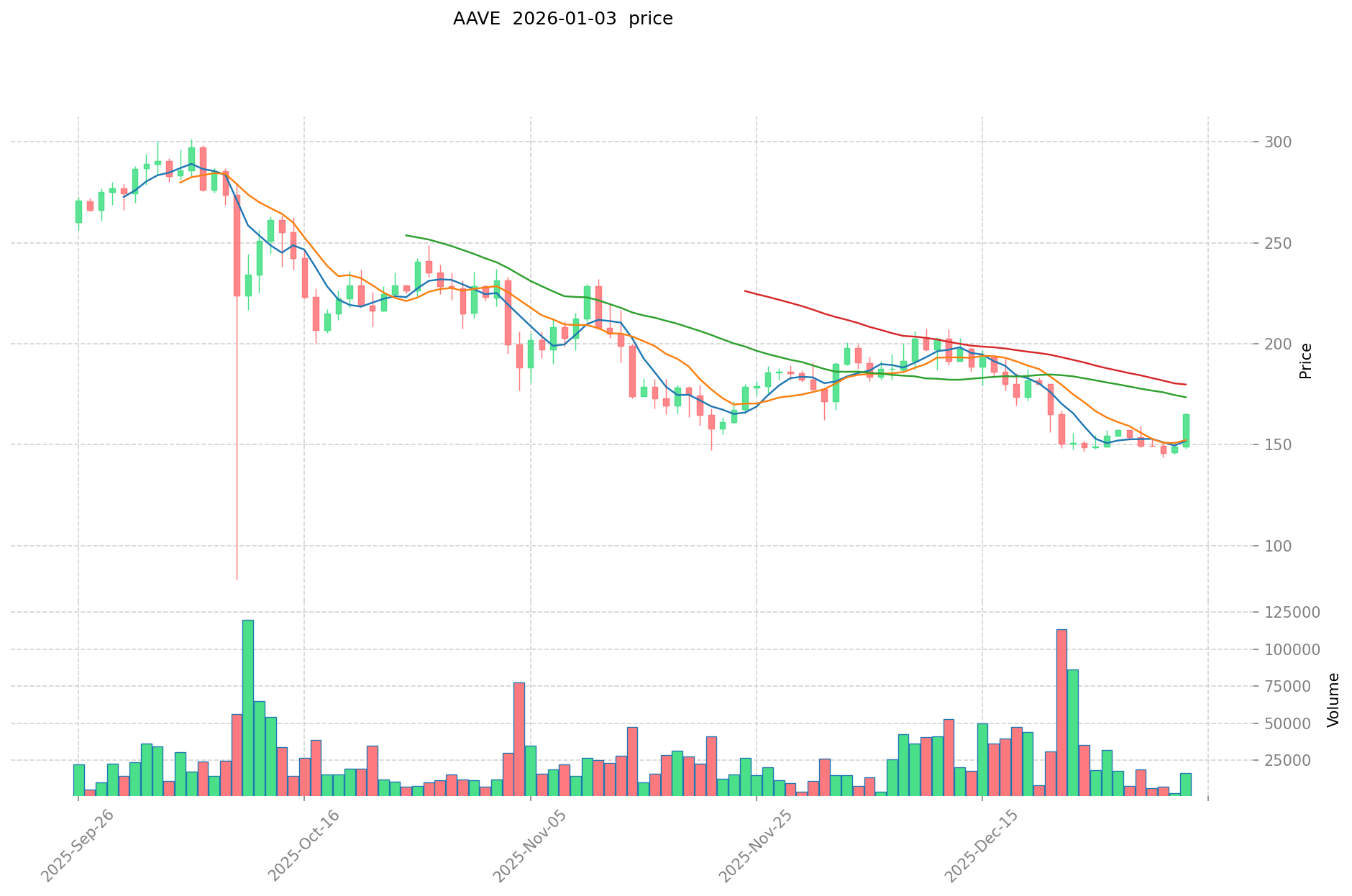
二、影响 BAC vs AAVE 投资价值的核心因素
供应机制对比(Tokenomics)
-
BAC(Basis Cash):采用铸币税股份模型,包含三种代币系统(BAC稳定币、BAS股份代币、BAB债券)。当BAC价格高于1美元时,协议铸造新的BAC分配给BAS持有者;当低于1美元时,用户可以用折扣价购买BAB债券。这种供应机制依赖于对未来增长的市场信心,缺乏外部价值支撑。
-
AAVE:作为去中心化借贷协议的治理代币,其供应量由协议收入驱动,而非固定发行。AAVE的价值与协议收入、用户借贷需求、流动性供应直接关联,体现真实经济活动。
-
📌 历史规律:BAC因依赖市场信心而在2021年初经历死亡螺旋,价格从接近1美元跌至0.2美元以下,债券持有者遭受重大损失。AAVE则因其与实际借贷活动的结合,在DeFi市场波动中表现相对稳定。
机构采用与市场应用
-
机构持仓:AAVE作为DeFi基础设施代币,获得更广泛的机构关注和持仓。BAC因其算法稳定币属性失败,机构采用度严重下降。
-
企业采用:AAVE在去中心化借贷、流动性管理中形成实际应用场景,被多个DeFi项目和机构采用作为借贷基础。BAC的失败案例表明,缺乏实际应用支撑的算法稳定币难以获得持续的企业级采用。
-
国家政策:两者均面临全球稳定币监管趋严的环境。BAC因其算法稳定币属性面临更高的监管风险,AAVE作为治理代币的监管风险相对明确。
技术发展与生态建设
-
BAC技术升级:项目已基本停滞,无持续的技术迭代。算法稳定币机制在2021年的失败证明了其内在缺陷——在面对大规模挤兑时,纯算法机制无法维持价格稳定。
-
AAVE技术发展:持续推出新版本升级(V3已上线),引入资本效率提升、风险管理优化、多链部署等功能。AAVE v3允许用户在收益率和借贷能力间做出自主选择,提高了平台灵活性。
-
生态对比:AAVE生态完整,支持多条公链部署、多样化资产抵押、衍生品交易。BAC生态已基本瓦解,无持续的DeFi、NFT或支付应用发展。
宏观经济与市场周期
-
通胀环境下的表现:AAVE通过协议收入与借贷需求的增长具有一定的通胀对冲能力。BAC在高通胀环境中因缺乏真实资产支撑而更易崩溃。
-
宏观货币政策:利率上升时,AAVE的借贷需求可能受益于投资者寻求收益。BAC则因市场信心下降而加速风险积聚。美元升值不利于两种代币,但对依赖套利机制的BAC冲击更大。
-
地缘政治因素:跨境流动性需求增加时,AAVE因其在DeFi生态中的基础地位获益。BAC因项目失败而无法从地缘政治动荡中获得需求支撑。
III. 2026-2031 Year Price Prediction: BAC vs AAVE
Short-term Prediction (2026)
- BAC: Conservative $0.0009273 - $0.001686 | Optimistic $0.001686 - $0.0023604
- AAVE: Conservative $109.0614 - $158.06 | Optimistic $158.06 - $167.5436
Mid-term Prediction (2028-2029)
- BAC may enter a recovery phase, with predicted price range of $0.0018199 - $0.003939
- AAVE may enter a consolidation phase, with predicted price range of $110.77 - $261.69
- Key drivers: Institutional capital inflows, ETF listings, ecosystem development
Long-term Prediction (2030-2031)
- BAC: Base case scenario $0.0031944 - $0.003528 | Optimistic scenario $0.003761 - $0.004359
- AAVE: Base case scenario $149.02 - $292.19 | Optimistic scenario $292.19 - $417.84
View detailed price predictions for BAC and AAVE
BAC:
| 年份 |
预测最高价 |
预测平均价格 |
预测最低价 |
涨跌幅 |
| 2026 |
0.0023604 |
0.001686 |
0.0009273 |
0 |
| 2027 |
0.002893176 |
0.0020232 |
0.001901808 |
20 |
| 2028 |
0.00297440748 |
0.002458188 |
0.00186822288 |
45 |
| 2029 |
0.003938631723 |
0.00271629774 |
0.0018199194858 |
61 |
| 2030 |
0.003760035146595 |
0.0033274647315 |
0.00319436614224 |
97 |
| 2031 |
0.004358812425028 |
0.003543749939047 |
0.002019937465257 |
110 |
AAVE:
| 年份 |
预测最高价 |
预测平均价格 |
预测最低价 |
涨跌幅 |
| 2026 |
167.5436 |
158.06 |
109.0614 |
0 |
| 2027 |
232.806574 |
162.8018 |
94.425044 |
2 |
| 2028 |
217.5846057 |
197.804187 |
110.77034472 |
24 |
| 2029 |
261.694939401 |
207.69439635 |
155.7707972625 |
31 |
| 2030 |
349.695055134495 |
234.6946678755 |
152.551534119075 |
48 |
| 2031 |
417.838651952146425 |
292.1948615049975 |
149.019379367548725 |
84 |
四、投资策略对比:BAC vs AAVE
长期 vs 短期投资策略
- BAC:适合承受极高风险、对算法稳定币复兴抱有信心的投机者,短期内不建议配置
- AAVE:适合关注DeFi生态发展、寻求借贷基础设施投资机会的长期投资者
风险管理与资产配置
- 保守型投资者:BAC 0% vs AAVE 5-10%
- 激进型投资者:BAC 5-15% vs AAVE 15-25%
- 对冲工具:稳定币配置、DeFi协议代币组合、期权对冲
五、潜在风险对比
市场风险
- BAC:项目已基本停滞,市场认可度极低,流动性严重不足(日交易量仅$11,951.92),极易遭遇价格崩溃或清零风险
- AAVE:受DeFi市场整体波动影响,利率环境变化可能压低借贷需求,但市场深度相对充分(日交易量$3,531,129.50)
技术风险
- BAC:算法稳定币机制已被证明存在内在缺陷,在2021年经历死亡螺旋,无持续技术迭代支撑恢复
- AAVE:持续升级迭代(V3已上线),多链部署增加系统复杂度,存在跨链风险和智能合约漏洞风险
监管风险
- BAC:作为算法稳定币面临全球监管趋严,各地央行数字货币(CBDC)政策可能限制其应用空间
- AAVE:作为治理代币监管风险相对明确,但DeFi借贷业务面临各国金融监管部门审查
六、结论:Which Is the Better Buy?
📌 投资价值总结:
- BAC优势:极低的当前价格($0.001686)提供超长远期收益潜力,若项目重启可获得倍数级回报
- AAVE优势:与真实经济活动挂钩、机构采用广泛、技术持续演进、市场流动性充足、DeFi基础设施地位确立
✅ 投资建议:
- 新手投资者:优先选择AAVE,关注DeFi借贷需求增长,避免BAC高风险特性
- 有经验投资者:AAVE作为主要配置,BAC仅作极小比例投机配置(若有风险承受力)
- 机构投资者:AAVE符合机构级风险管理标准,BAC不建议机构配置
⚠️ 风险提示:加密货币市场波动性极高,BAC历史表现显示算法稳定币机制存在根本缺陷,投资前应充分评估风险承受能力。本文不构成投资建议。
FAQ
BAC和AAVE分别是什么,它们各自的核心功能是什么?
BAC是美国银行公司。AAVE是去中心化流动性市场协议,允许用户存入资产获取收益或通过超额抵押借款,是Web3领域的借贷基础设施。
BAC和AAVE在借贷机制上有什么主要区别?
BAC采用中心化借贷模式,依赖传统金融机构审批。AAVE是去中心化借贷协议,通过智能合约自动匹配供需,无需中介,借贷利率由市场动态决定,用户可直接参与流动性挖矿获得收益。
BAC和AAVE的治理代币有什么不同,如何分别获得?
BAC是算法型稳定币,主要用于价格稳定;AAVE是治理代币,用于协议决策。BAC通过市场交易获得,AAVE通过参与协议治理和流动性挖矿获得。两者经济模型和用途完全不同。
使用BAC和AAVE进行借贷时,风险和收益分别是什么?
收益方面,BAC和AAVE提供高利率收益和流动性挖矿机会。风险方面,需要承受加密资产价格波动风险,抵押品可能因市场下跌而被强平,同时还需关注智能合约安全风险。
BAC和AAVE哪个更适合初学者,为什么?
AAVE更适合初学者。AAVE是成熟的借贷协议,流动性大、风险相对可控,功能清晰易上手。BAC机制复杂,波动性大,不够友好。
BAC和AAVE在安全性和审计方面的差异是什么?
AAVE定期进行第三方安全审计,系统性覆盖漏洞检测和内部测试。BAC缺少详细的公开审计信息。总体而言,AAVE在安全性透明度和审计力度上更具优势。
* The information is not intended to be and does not constitute financial advice or any other recommendation of any sort offered or endorsed by Gate.