# Article Overview: BSCS vs GRT Investment Comparison
This comprehensive analysis compares two distinct cryptocurrency assets—BSCS, a decentralized finance platform on Binance Smart Chain, and GRT (The Graph), a blockchain data indexing infrastructure protocol. The article examines historical price performance, tokenomics, market positioning, and investment potential across 2026-2031. It addresses critical questions for investors: Which token offers better recovery prospects? How do supply mechanisms and ecosystem adoption differ? Through detailed forecasts, risk assessments, and strategic allocation recommendations, this guide helps beginner, experienced, and institutional investors make informed decisions. Readers will discover that GRT presents lower execution risk through superior liquidity on Gate, while BSCS offers asymmetric upside potential. The structured comparison of technical architecture, regulatory risks, and market cycles enables investors to align cryptocurrency positions with their risk tole
Introduction: BSCS vs GRT Investment Comparison
In the cryptocurrency market, comparisons between BSCS and GRT have always been a focal point for investors. The two projects not only differ significantly in market capitalization ranking, application scenarios, and price performance, but also represent different positioning within the crypto asset landscape.
BSCS (BSCS): Since its launch in 2021, it has gained market recognition through its all-in-one decentralized incubation hub model, offering exclusive services including Launchpad, Yield farming, Tools, NFT Auction, Marketplace, and DEX Aggregator across multiple blockchain networks.
GRT (The Graph): Since its debut in December 2020, it has been recognized as a decentralized protocol for indexing and querying blockchain data, providing essential infrastructure for data accessibility and enabling developers to build and publish open APIs known as subgraphs.
This article will comprehensively analyze the investment value comparison between BSCS and GRT from the perspectives of historical price trends, supply mechanisms, token utility, and ecosystem positioning, while attempting to answer the question investors care most about:
"Which is the better investment choice?"
I. Price History Comparison and Current Market Status
BSCS and GRT Historical Price Trends
- 2021: BSCS reached its all-time high of $1.17 on May 3, 2021, driven by early market enthusiasm for decentralized incubation platforms.
- 2021: GRT achieved its all-time high of $2.84 on February 12, 2021, following strong adoption interest in blockchain data indexing protocols.
- Comparative Analysis: Over the market cycle from 2021 to 2026, BSCS declined from $1.17 to $0.0009267, representing a 99.9% loss. GRT similarly fell from $2.84 to $0.03342, representing an 88.2% decline. Both tokens experienced substantial corrections, though GRT maintained relatively higher price resilience.
Current Market Status (January 1, 2026)
- BSCS current price: $0.0009267
- GRT current price: $0.03342
- 24-hour trading volume: BSCS $11,766.06 vs GRT $311,638.04
- Market sentiment index (Fear & Greed Index): 20 (Extreme Fear)
Click to view real-time prices:
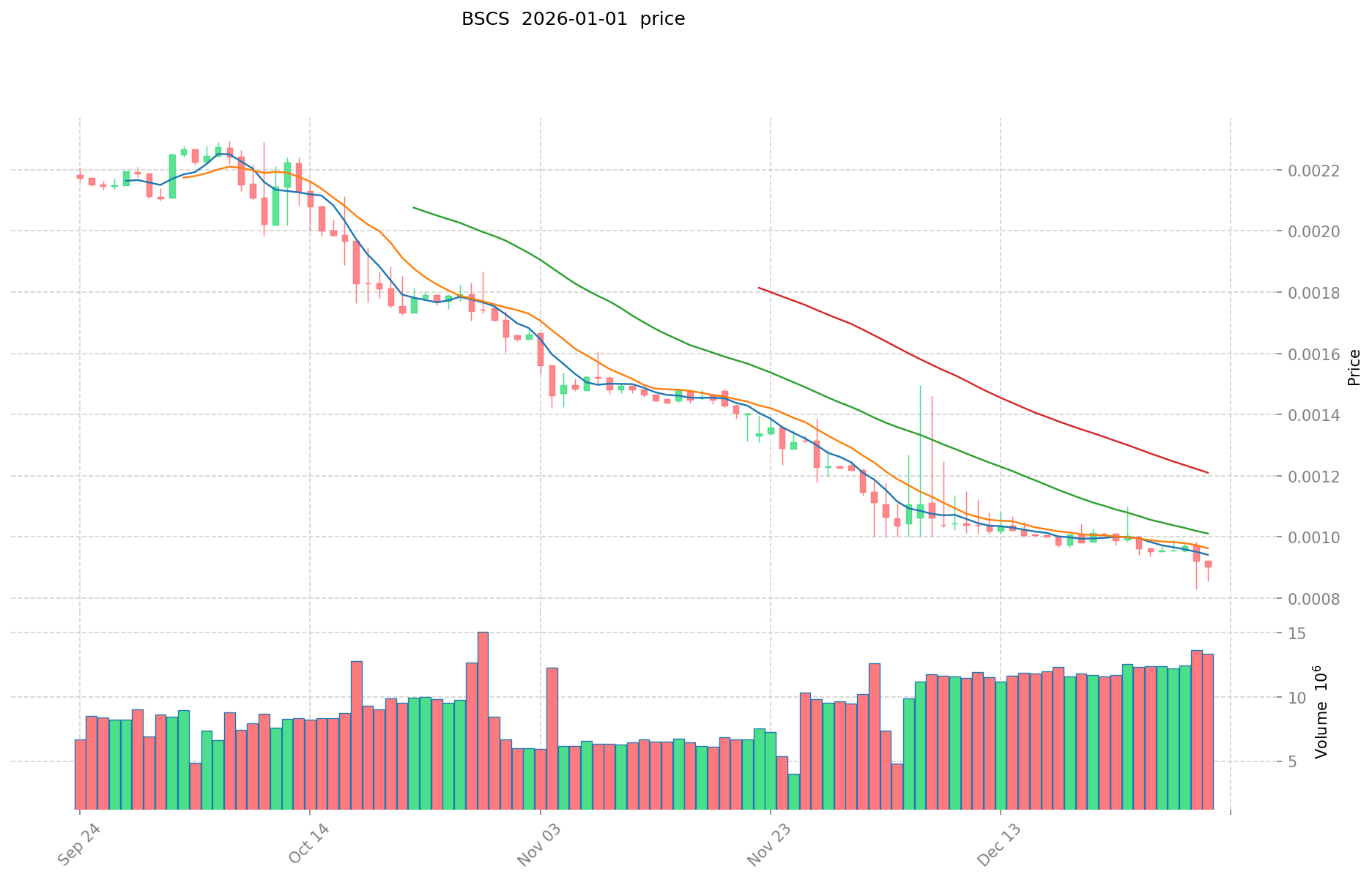
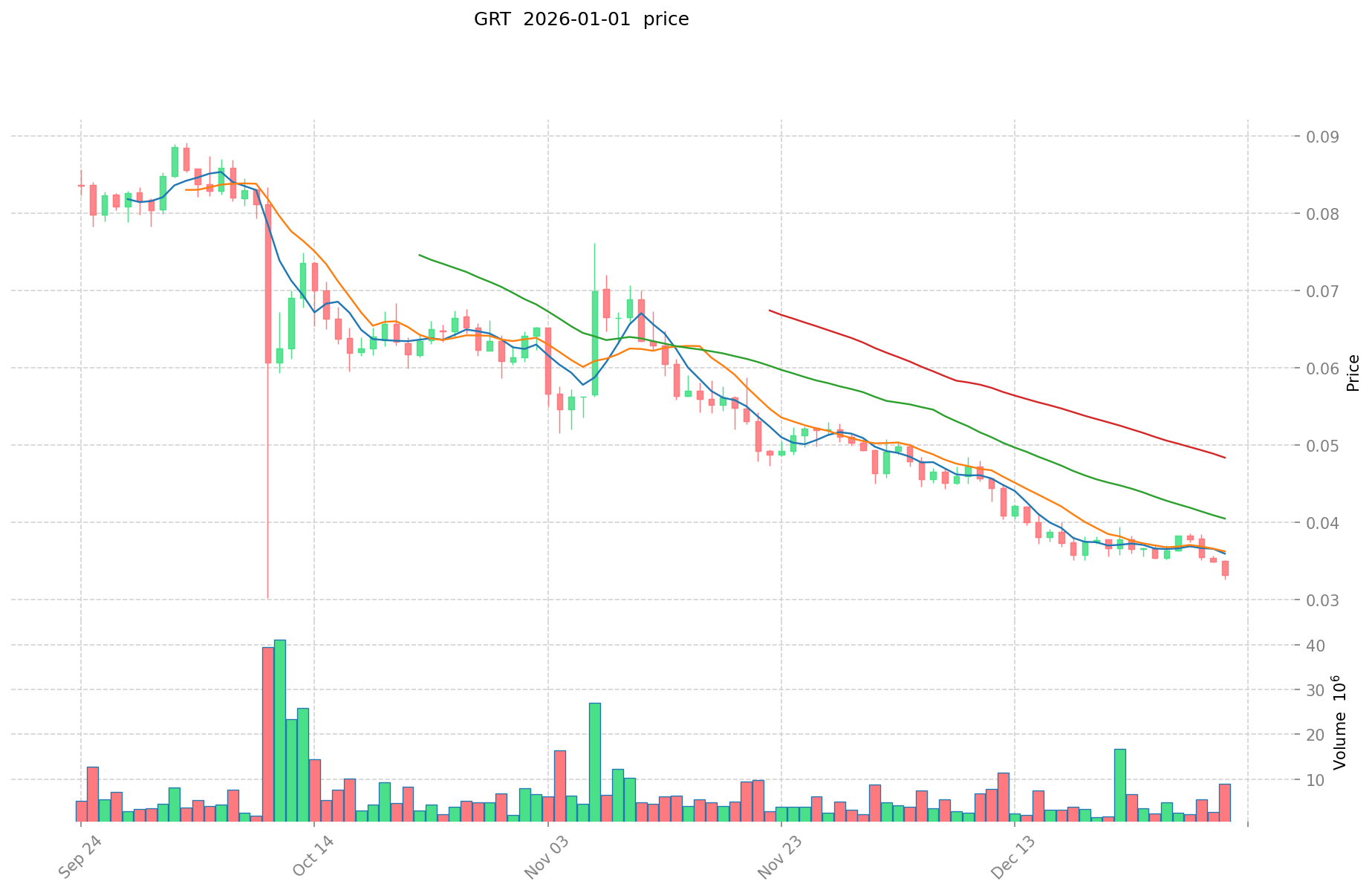
Analysis of BSCS Investment Value
II. Core Factors Affecting BSCS Investment Value
Tokenomics and Supply Mechanism
- BSCS: BSCS operates on a fixed supply model with a maximum issuance of 500,000,000 tokens. Current circulating supply stands at 269,957,380 BSCS, with total issued supply of 392,544,039.97 BSCS. The token is built on the Binance Smart Chain (BSC) ecosystem and functions as part of the BSCStation decentralized finance platform.
- 📌 Supply Impact on Price Cycles: The relationship between circulating supply, total issuance, and maximum supply creates a specific inflation trajectory that may influence long-term price dynamics as the circulating supply approaches maximum issuance levels.
Institutional Adoption and Market Application
- Institutional Holdings: Reference materials provided do not contain specific data on institutional investor positions in BSCS.
- Enterprise Adoption: BSCS is designed to provide decentralized financial infrastructure and innovative financial products and services within the BSC ecosystem. Application scope remains primarily within blockchain-based DeFi platforms rather than traditional cross-border payment or settlement channels.
- Regulatory Environment: Reference materials do not provide comprehensive information regarding governmental regulatory policies toward BSCS across different jurisdictions.
Technology Development and Ecosystem Construction
- BSCS Technical Infrastructure: As a BSC-based project, BSCS leverages Binance Smart Chain's security and efficiency characteristics, positioning itself as a decentralized finance platform with safe and high-efficiency financial infrastructure.
- Ecosystem Scope: The platform provides innovative financial products and services, though specific details regarding DeFi protocols, NFT integration, smart contract capabilities, and payment functionalities are not detailed in available reference materials.
Macroeconomic Factors and Market Cycles
- Inflation Environment: Reference materials do not provide comparative analysis of BSCS performance during inflationary periods or assessment of its inflation-hedging properties.
- Monetary Policy Impact: Analysis of how interest rates, US dollar index movements, and central bank policies specifically affect BSCS valuation is not covered in provided sources.
- Geopolitical Factors: Reference materials contain no information regarding geopolitical influences on BSCS demand or cross-border transaction trends.
III. 2026-2031 Price Forecast: BSCS vs GRT
Short-term Forecast (2026)
- BSCS: Conservative $0.000706 - $0.000916 | Optimistic $0.001264
- GRT: Conservative $0.022084 - $0.033460 | Optimistic $0.044836
Mid-term Forecast (2027-2029)
- BSCS may enter accumulation phase, with expected price range $0.000567 - $0.001528
- GRT may enter growth phase, with expected price range $0.025055 - $0.052768
- Key drivers: institutional capital inflows, ETF adoption, ecosystem development
Long-term Forecast (2030-2031)
- BSCS: Base scenario $0.001302 - $0.001662 | Optimistic scenario $0.001967 - $0.002044
- GRT: Base scenario $0.044284 - $0.050813 | Optimistic scenario $0.055895 - $0.070427
View detailed price predictions for BSCS and GRT
BSCS:
| 年份 |
预测最高价 |
预测平均价格 |
预测最低价 |
涨跌幅 |
| 2026 |
0.001264218 |
0.0009161 |
0.000705397 |
-1 |
| 2027 |
0.00118827331 |
0.001090159 |
0.00056688268 |
17 |
| 2028 |
0.0012303534474 |
0.001139216155 |
0.00076327482385 |
22 |
| 2029 |
0.001528372393548 |
0.0011847848012 |
0.000616088096624 |
27 |
| 2030 |
0.001967038966192 |
0.001356578597374 |
0.001302315453479 |
46 |
| 2031 |
0.002044024801593 |
0.001661808781783 |
0.00091399482998 |
79 |
GRT:
| 年份 |
预测最高价 |
预测平均价格 |
预测最低价 |
涨跌幅 |
| 2026 |
0.0448364 |
0.03346 |
0.0220836 |
0 |
| 2027 |
0.046194876 |
0.0391482 |
0.025054848 |
17 |
| 2028 |
0.05504628402 |
0.042671538 |
0.0298700766 |
27 |
| 2029 |
0.0527676238908 |
0.04885891101 |
0.043973019909 |
46 |
| 2030 |
0.05589459419544 |
0.0508132674504 |
0.04827260407788 |
52 |
| 2031 |
0.070427188686254 |
0.05335393082292 |
0.044283762583023 |
59 |
IV. Investment Strategy Comparison: BSCS vs GRT
Long-term vs Short-term Investment Strategy
- BSCS: Suitable for investors focusing on decentralized finance ecosystem development and BSC network growth, with expectations for accumulation phase opportunities during market downturns
- GRT: Suitable for investors seeking blockchain infrastructure exposure and data indexing protocol adoption, with relatively higher price resilience and established market positioning
Risk Management and Asset Allocation
- Conservative investors: BSCS 20% vs GRT 80%
- Aggressive investors: BSCS 40% vs GRT 60%
- Hedging tools: Stablecoin positioning, options strategies, cross-token portfolio diversification
V. Potential Risk Comparison
Market Risk
- BSCS: Experienced 99.9% price decline from 2021 peak, currently trading at extremely low price levels with limited daily trading volume ($11,766.06), indicating substantial liquidity risk and potential difficulty in position exit
- GRT: While experiencing 88.2% price decline, maintains significantly higher trading volume ($311,638.04) and relatively stronger market liquidity, though still subject to substantial market volatility
Technology Risk
- BSCS: Dependency on Binance Smart Chain ecosystem stability and performance; limited information available regarding smart contract security audits and protocol upgrades
- GRT: Blockchain data indexing protocol complexity creates potential vulnerabilities in data accuracy and query reliability; network consensus mechanism security requires ongoing evaluation
Regulatory Risk
- Regulatory policies toward DeFi platforms and decentralized protocols continue evolving globally, potentially affecting both BSCS and GRT operational frameworks
- Jurisdictional uncertainty regarding token classification and compliance requirements may impact institutional adoption for both assets
VI. Conclusion: Which Is the Better Buy?
📌 Investment Value Summary:
- BSCS Advantages: All-in-one decentralized finance platform offering diversified services (Launchpad, DEX Aggregator, NFT Marketplace), positioned within major BSC ecosystem, potential for substantial upside recovery from depressed price levels
- GRT Advantages: Established infrastructure protocol with clear utility in blockchain data indexing, higher price resilience despite market downturn, significantly stronger trading liquidity, recognized positioning in blockchain development ecosystem
✅ Investment Recommendations:
- Beginner investors: GRT presents lower execution risk due to higher liquidity and established market presence, though both assets carry substantial volatility risks
- Experienced investors: Consider portfolio allocation favoring GRT (60-80%) for stability with selective BSCS positioning (20-40%) for asymmetric upside potential during ecosystem expansion
- Institutional investors: GRT offers superior liquidity conditions for institutional-scale positions; BSCS requires careful due diligence regarding trading depth and custody arrangements
⚠️ Risk Disclaimer: Cryptocurrency markets exhibit extreme volatility. Both BSCS and GRT have experienced severe price declines exceeding 88%. This content does not constitute investment advice. Investors should conduct independent research and consult financial professionals before making investment decisions.
FAQ
BSCS和GRT分别是什么?各自的主要功能是什么?
BSCS和GRT是web3生态中的两个不同项目。BSCS主要提供区块链基础设施服务。GRT(Graph Token)是Graph Network的原生代币,用于索引和查询区块链数据,为去中心化应用提供数据服务支持。
BSCS和GRT在技术架构上有什么区别?
BSCS基于币安智能链,采用权益证明机制;GRT是建立在以太坊上的索引协议,用于组织和查询区块链数据。两者定位不同,BSCS是公链,GRT是数据索引层。
BSCS和GRT的应用场景分别是什么?
BSCS主要应用于币安智能链生态的DeFi和NFT领域。GRT是The Graph的原生代币,用于索引和查询区块链数据,为Web3应用提供数据服务支撑。
BSCS和GRT在性能、速度、成本方面如何对比?
BSCS专注区块链扩容,GRT提供去中心化数据服务,两者用途不同。BSCS性能更强、速度更快、成本更低,GRT则在数据精准性上优势明显。具体选择需根据应用场景决定。
BSCS和GRT各自的优势和劣势是什么?
BSCS处理复杂问题精度高但计算复杂度大。GRT计算速度快但精度较低。BSCS适合精确分析,GRT适合快速估算。选择取决于实际需求侧重。
选择BSCS还是GRT应该考虑哪些因素?
选择BSCS还是GRT应考虑:项目应用场景、技术架构特性、生态发展潜力、交易额规模、社区活跃度和个人投资偏好。BSCS侧重跨链互操作,GRT聚焦数据索引,根据需求选择。
BSCS和GRT的安全性和风险评估对比如何?
GRT作为The Graph生态治理代币,基于以太坊网络,安全性经过验证。BSCS相对新兴,安全审计相对较少。GRT风险主要源于市场波动,BSCS风险则包括流动性和生态发展不确定性。总体GRT安全性优于BSCS。
BSCS和GRT的生态和社区发展现状如何?
BSCS和GRT生态发展势头良好,社区规模持续扩大。GRT作为图表协议,在数据索引领域建立了庞大开发者社区。BSCS生态应用不断丰富,用户参与度高。两者均在完善治理机制,推动社区驱动的发展模式。
* The information is not intended to be and does not constitute financial advice or any other recommendation of any sort offered or endorsed by Gate.