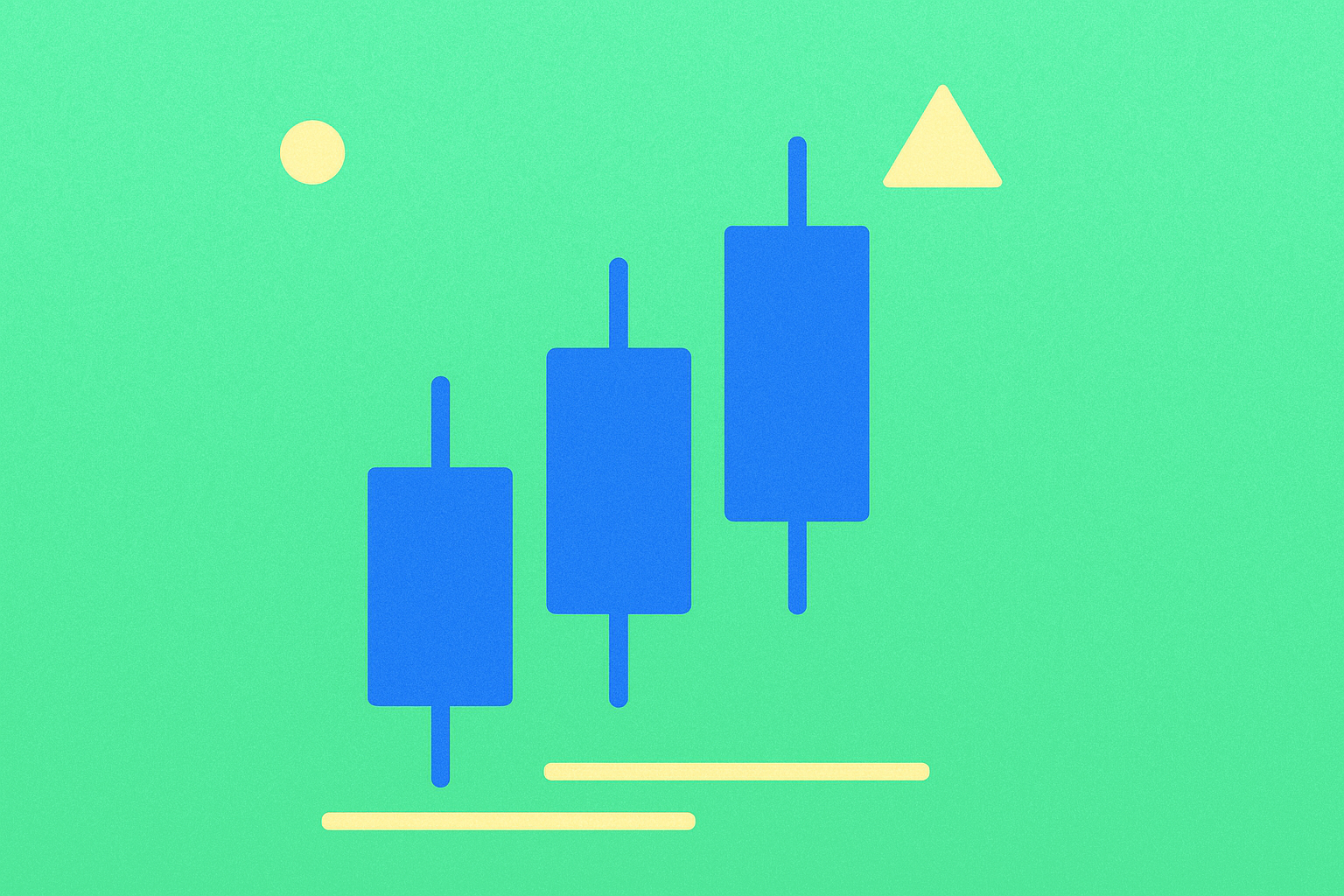
Bullish candlestick patterns

2026-01-07 10:05:35
Crypto Trading
Crypto Tutorial
K-line
Spot Trading
Trading Bots
Article Rating : 4
154 ratings
Discover the key bullish candlestick patterns for cryptocurrency trading on Gate. Learn how to identify the hammer, engulfing, and morning star patterns. This in-depth guide covers pattern recognition, trading strategies, and analysis for both novice and seasoned traders.
Bullish candlestick patterns

Introduction

Candlestick analysis is a cornerstone of technical analysis in the financial markets. For traders and investors, understanding bullish candlestick patterns is critical for identifying potential trend reversals and optimal entry points. This article examines the most common and reliable bullish candlestick patterns, each signaling a higher probability of upward price movement.

Bullish candlestick patterns emerge when the balance of power shifts from sellers to buyers. As buying pressure overtakes selling pressure, specific formations appear on the chart, pointing to a potential reversal from a downtrend or the continuation of upward momentum.

The most significant bullish candlestick patterns include:

  • ① Hammer pattern
  • ② Inverted Hammer pattern
  • ③ Bullish Engulfing pattern
  • ④ Morning Star pattern
  • ⑤ Three White Soldiers pattern

It's important to note how candlesticks are displayed on cryptocurrency charts: unlike traditional markets, where green candles often represent bearish moves, crypto charts use green for price increases and red for declines. Correctly interpreting these colors is essential for pattern analysis.

Each pattern has unique characteristics and formation criteria, which we will analyze in detail in the following sections. Grasping the market psychology behind each pattern can help traders make better-informed decisions.

1. Hammer Pattern

The Hammer candlestick pattern is among the most recognizable and reliable bullish reversal signals. It features a small real body positioned near the top of the range and a long lower shadow, typically two to three times the size of the body. The upper shadow is either minimal or absent.

The Hammer most often appears at the bottom of a downtrend when an asset hits a local low. This pattern reflects critical market psychology: sellers dominate early in the session, pushing the price down and creating a long lower shadow. As the session progresses, buyers step in and apply strong buying pressure, driving the price back up to or above the opening level.

This battle between buyers and sellers—where buyers ultimately prevail—signals the exhaustion of bearish momentum and lays the foundation for a potential trend reversal. The longer the lower shadow compared to the body, the stronger the bullish signal, as it represents a decisive rejection of sellers' efforts to push prices lower.

To increase the reliability of the Hammer signal, traders should consider these factors:

  • Formation near major support levels strengthens the bullish signal
  • Higher trading volume during the pattern confirms active buyers
  • Confirmation by the next bullish candle increases the likelihood of a successful trade
  • A green candle body is preferable to red, as it reinforces the bullish signal

The appearance of a Hammer pattern suggests a high probability of an ensuing upward trend, especially when supported by additional technical confirmation.

2. Inverted Hammer Pattern

The Inverted Hammer candlestick pattern is the mirror image of the classic Hammer and is equally important as a bullish reversal signal. It features a small real body at the lower end of the trading range and a long upper shadow that greatly exceeds the body. The lower shadow is either absent or minimal.

The Inverted Hammer typically forms at the bottom of a downtrend and serves as a potential bullish reversal signal. The psychology behind this pattern differs from the classic Hammer: at the start of the session, buyers attempt to drive the price significantly above the opening level

FAQ

What are bullish candlestick patterns? What are the most common types?

Bullish candlestick patterns are chart formations that indicate a potential price increase. The main types include: Bullish Engulfing (where a large upward candle engulfs a prior downward one), Bullish Harami (a small candle within a larger previous one), and Hammer (a candle with a long lower wick).

How do you identify and confirm bullish candlestick patterns? What are the key characteristics?

The Bullish Engulfing pattern consists of two candles: the first closes bearish, and the second completely engulfs its body. This is a strong reversal signal. Look for rising volume and confirmation at a support level.

How accurate are bullish candlestick pattern trading signals? How should they be used in practice?

Bullish patterns typically have an accuracy rate of 60–70%, depending on market conditions. Use them alongside support/resistance levels, trading volume, and other indicators to improve the effectiveness of your signals.

What do Hammers, Morning Stars, Engulfing patterns, and other common bullish patterns represent?

The Hammer signals a potential reversal at a market bottom. The Morning Star is a bullish combination pattern. The Engulfing pattern means the price engulfs both the open and close of the previous day.

What risks are associated with trading candlestick patterns? What should traders watch for?

Candlestick patterns do not guarantee future outcomes. Key risks include the unpredictability of market movements and the amplification of losses through excessive leverage. Only trade with capital you can afford to lose and conduct your own research before every trade.

How do bullish candlestick patterns differ from bearish patterns?

Bullish patterns signal an uptrend and form after a decline, indicating a possible upward reversal. Bearish patterns signal a downtrend and appear after a rally, pointing to a potential reversal downward. Both are used for trend reversal analysis in the market.

Does the effectiveness of candlestick pattern analysis vary across timeframes?

Yes, candlestick analysis effectiveness varies by timeframe. Short-term periods show rapid price swings and volatility; long-term periods reveal more sustained trends. Candlestick patterns are useful across all timeframes, but interpretation of the signals will differ accordingly.

* The information is not intended to be and does not constitute financial advice or any other recommendation of any sort offered or endorsed by Gate.
Related Articles
What is a red hammer Candlestick and how to use it

What is a red hammer Candlestick and how to use it

Understanding how the red hammer Candlestick pattern serves as a powerful bullish reversal signal is crucial for cryptocurrency traders operating in volatile markets. This article helps identify genuine red hammer patterns, emphasizing their formation after downtrends and at key support levels, and validating them with higher trading volume. Learn strategic trading implementation, utilizing technical indicators and risk management to enhance profitability. Gate's advanced tools assist in pattern recognition and real-time alerts. Optimize your trading approach through red hammer analysis to enhance your cryptocurrency investment strategy.
2025-11-03 03:11:16
Decoding the KDJ Indicator: A Comprehensive Guide

Decoding the KDJ Indicator: A Comprehensive Guide

"Decoding the KDJ Indicator" is a comprehensive guide for traders and analysts, focusing on the KDJ as a short-term analysis tool in financial markets. It explains the indicator's components: K-line, D-line, and J-line, and their roles in identifying overbought and oversold conditions. The article highlights key usage rules and signals like Golden and Death Crosses, and divergence detection. It also discusses the practical application of KDJ in day trading and crypto markets, guiding readers on decision-making with it and addressing FAQs for deeper understanding. Suitable for traders seeking clearer insights into price movements and market sentiment.
2025-11-26 09:10:48
How to Use the MACD Indicator for Crypto Trading Success

How to Use the MACD Indicator for Crypto Trading Success

The article delves into using the MACD indicator for successful crypto trading by breaking down its components: DIF, DEA, and histogram. It explains how these elements work together to identify market momentum and potential trading opportunities. Key insights include recognizing "golden cross" buy signals, leveraging MACD for analyzing market trends, and generating trading signals for optimal entry and exit points. The content is tailored for traders seeking actionable insights to enhance their trading strategies. This comprehensive guide emphasizes clear, structured analysis to facilitate informed trading decisions.
2025-12-02 09:23:50
Mastering the Exponential Moving Average (EMA): A Comprehensive Trading Strategy Guide

Mastering the Exponential Moving Average (EMA): A Comprehensive Trading Strategy Guide

This article serves as a comprehensive guide to mastering the Exponential Moving Average (EMA) as a trading strategy, highlighting its enhanced responsiveness to recent market changes. It addresses how EMA aids in trend identification, crossover strategies, and trading in volatile markets like cryptocurrency. The content is structured to first clarify what EMA is, followed by a step-by-step calculation guide, and practical examples in cryptocurrency trading. Ideal for traders seeking to refine their technical analysis skills, it also discusses combining EMA with other indicators for optimal trading decisions. Enhanced keyword density ensures clarity and readability for quick scanning.
2025-12-23 22:37:39
What Is a Breakout in the Cryptocurrency Sector?

What Is a Breakout in the Cryptocurrency Sector?

Explore the concept of breakouts in cryptocurrency markets and learn how to spot them to refine your trading strategies on Gate. Gain insights into the significance of trading volume, key pattern types, and practical methods to apply technical theory to your trades. Identify buy and sell signals and develop tactics to avoid false breakouts. Empower your trading decisions with this indispensable guide.

2025-12-23 11:31:09
Ultimate Guide to Understanding Popular Candlestick Patterns

Ultimate Guide to Understanding Popular Candlestick Patterns

# Ultimate Guide to Understanding Popular Candlestick Patterns Master candlestick analysis to elevate your trading on Gate. This comprehensive guide decodes essential candlestick patterns—from bullish hammers and three white soldiers to bearish shooting stars and dark cloud covers—enabling traders to identify trend reversals and continuations. Learn how to read candlestick charts, recognize bullish and bearish signals, and combine multiple patterns with technical indicators like RSI and MACD for stronger trade confirmation. Discover proven strategies for multi-timeframe analysis, risk management, and pattern implementation that work for both beginners and experienced traders seeking reliable technical analysis tools on Gate.
2025-12-26 18:36:34
Recommended for You
How to Use MACD, RSI, and KDJ Technical Indicators for Crypto Trading Signals in 2026

How to Use MACD, RSI, and KDJ Technical Indicators for Crypto Trading Signals in 2026

This comprehensive guide explores three essential technical indicators—MACD, RSI, and KDJ—for generating reliable crypto trading signals in 2026. The article equips traders with methods to identify divergence patterns that signal potential reversals, utilize moving average crossovers (Golden and Death Crosses) for trend confirmation, and analyze volume-price relationships for institutional accumulation and distribution phases. By mastering divergence formations where price and indicators move opposite directions, traders gain early reversal detection capabilities. The guide demonstrates how combining MACD momentum shifts, RSI overbought/oversold zones, and KDJ stochastic crossovers creates a synchronized trading system achieving approximately 73% accuracy. Professional traders on Gate can implement optimized parameters—MACD (6,13,5), RSI (14,70,30), KDJ (9,3,3)—while managing false signals through multi-indicator confirmation. This resource serves swing traders, day traders, and long-term investors seeking da
2026-01-09 09:47:25
Kiyosaki Predicts Market Collapse and Recommends Gold, Silver, and Cryptocurrencies

Kiyosaki Predicts Market Collapse and Recommends Gold, Silver, and Cryptocurrencies

This article presents financial strategist Robert Kiyosaki's guidance on portfolio protection amid global economic uncertainties. The piece explores three primary alternative asset classes: gold, silver, and cryptocurrencies—each offering distinct advantages as diversification tools and wealth preservation mechanisms. Kiyosaki outlines significant price projections for precious metals while highlighting Bitcoin and Ethereum's emerging role as digital safe havens. The article provides balanced risk assessment, emphasizing that while these assets offer valuable portfolio diversification, they require careful consideration of individual risk tolerance and investment timelines. Additionally, practical FAQ sections address investor concerns about allocation strategies, historical accuracy, and comparative advantages across asset types. Readers gain comprehensive insights into constructing resilient investment portfolios during periods of macroeconomic stress, with guidance on integrating precious metals and digita
2026-01-09 09:43:40
What Is the ANI Token? An In-Depth Look at Its Relationship with the GROK Ecosystem, Market Performance, and Future Outlook

What Is the ANI Token? An In-Depth Look at Its Relationship with the GROK Ecosystem, Market Performance, and Future Outlook

A comprehensive analysis of the positioning, technical background, and application scenarios of the ANI Token, along with an explanation of its connection to the GROK community ecosystem. Combining the latest market performance, this will help readers understand the potential value and future trends of ANI.
2026-01-09 09:43:00
What is TOWNS price volatility: support and resistance levels analysis with 1.55% 24-hour fluctuations

What is TOWNS price volatility: support and resistance levels analysis with 1.55% 24-hour fluctuations

This comprehensive guide analyzes TOWNS token volatility and price dynamics, examining current trading at $0.006606 with 1.55% 24-hour decline. The article identifies critical support at $0.00724 and resistance at $0.00725, revealing tight consolidation patterns that limit short-term upside potential. Designed for traders and investors, this analysis explores how TGE mechanics and airdrop distribution create pronounced price fluctuations, highlighting the 76% collapse from initial $0.03159 levels. Correlation analysis demonstrates TOWNS operates independently from Bitcoin (-1.17%), Ethereum (-0.70%), and XRP (-4.13%), suggesting protocol-specific valuation drivers. The guide provides actionable technical frameworks for identifying entry and exit points on Gate and other trading venues, along with practical risk management strategies for navigating the messaging protocol's early-stage market volatility.
2026-01-09 09:42:53
“我踏马来了” Token Gains Momentum: The Year of the Horse Effect Meets Chinese Meme Culture

“我踏马来了” Token Gains Momentum: The Year of the Horse Effect Meets Chinese Meme Culture

I came here on horseback. The Token on Gate experienced a rapid increase in popularity after the announcement of the flash exchange launch on January 8th, combined with the cultural influence of the Year of the Horse in the Lunar Calendar 2026, making it one of the most关注的中文 Meme coins. This article delves into the reasons for its sudden popularity, market sentiment, and potential risks.
2026-01-09 09:40:50
How does compliance and regulatory risk management impact cryptocurrency exchanges and trading platforms in 2026?

How does compliance and regulatory risk management impact cryptocurrency exchanges and trading platforms in 2026?

This comprehensive guide examines how compliance and regulatory risk management reshape cryptocurrency exchanges and trading platforms in 2026. The article explores SEC registration requirements, real-time compliance monitoring systems, and KYC/AML policy evolution that exchanges must implement to maintain operational legitimacy. It analyzes audit transparency frameworks that strengthen market trust through continuous financial verification, AI-driven customer verification systems that reduce regulatory violations, and the competitive advantages of automated compliance solutions like those available on Gate. Key sections address regulatory deadlines, compliance cost implications, and market-wide effects of enhanced oversight. The guide also examines how exchanges can leverage regulatory compliance as operational resilience, potentially reducing sector-wide compliance costs through technology automation while positioning platforms for institutional adoption in an increasingly compliance-focused market environm
2026-01-09 09:39:51