# Article Overview: DPY vs XRP Comprehensive Comparison
This article provides investors with a detailed comparative analysis of two emerging cryptocurrencies in the digital asset market. It examines DPY (Delphy), a predictive market platform, and XRP (Ripple), a cross-border payments infrastructure token, across multiple investment dimensions. The guide addresses critical investor questions by analyzing historical price trends, tokenomics, institutional adoption, technology ecosystems, and 2026-2031 price projections. Structured through six core sections—price comparison, investment value factors, price predictions, investment strategies, risk assessment, and recommendations—this resource serves beginner, experienced, and institutional investors seeking evidence-based decision-making frameworks. Real-time pricing data via Gate enables efficient portfolio allocation and risk management across both assets.
Introduction: DPY vs XRP Investment Comparison
In the cryptocurrency market, the comparison between DPY and XRP is an unavoidable topic for investors. The two assets not only exhibit significant differences in market capitalization ranking, application scenarios, and price performance, but also represent distinct positioning within the crypto asset landscape.
DPY (Delphy): Since its launch in 2017, it has gained market recognition through its role as a predictive market platform built on Ethereum, enabling users to participate in event forecasting and leverage their knowledge for potential returns.
XRP (Ripple): Since its introduction in 2011, it has been recognized for its focus on payments infrastructure, designed specifically for fast (~3 seconds per transaction), cost-effective ($0.0002 per transaction), and scalable (1,500+ tps) cross-border transactions on the XRP Ledger.
This article will comprehensively analyze the investment value comparison between DPY and XRP from multiple dimensions including historical price trends, supply mechanisms, market adoption, technology ecosystems, and future outlook, while attempting to answer the question investors care most about:
"Which is the better buy right now?"
I. Price History Comparison and Current Market Status
Delphy (DPY) and XRP Price Trends
- January 2018: Delphy (DPY) reached its all-time high of $4.88, driven by the early enthusiasm of the Ethereum ecosystem and predictive market platforms.
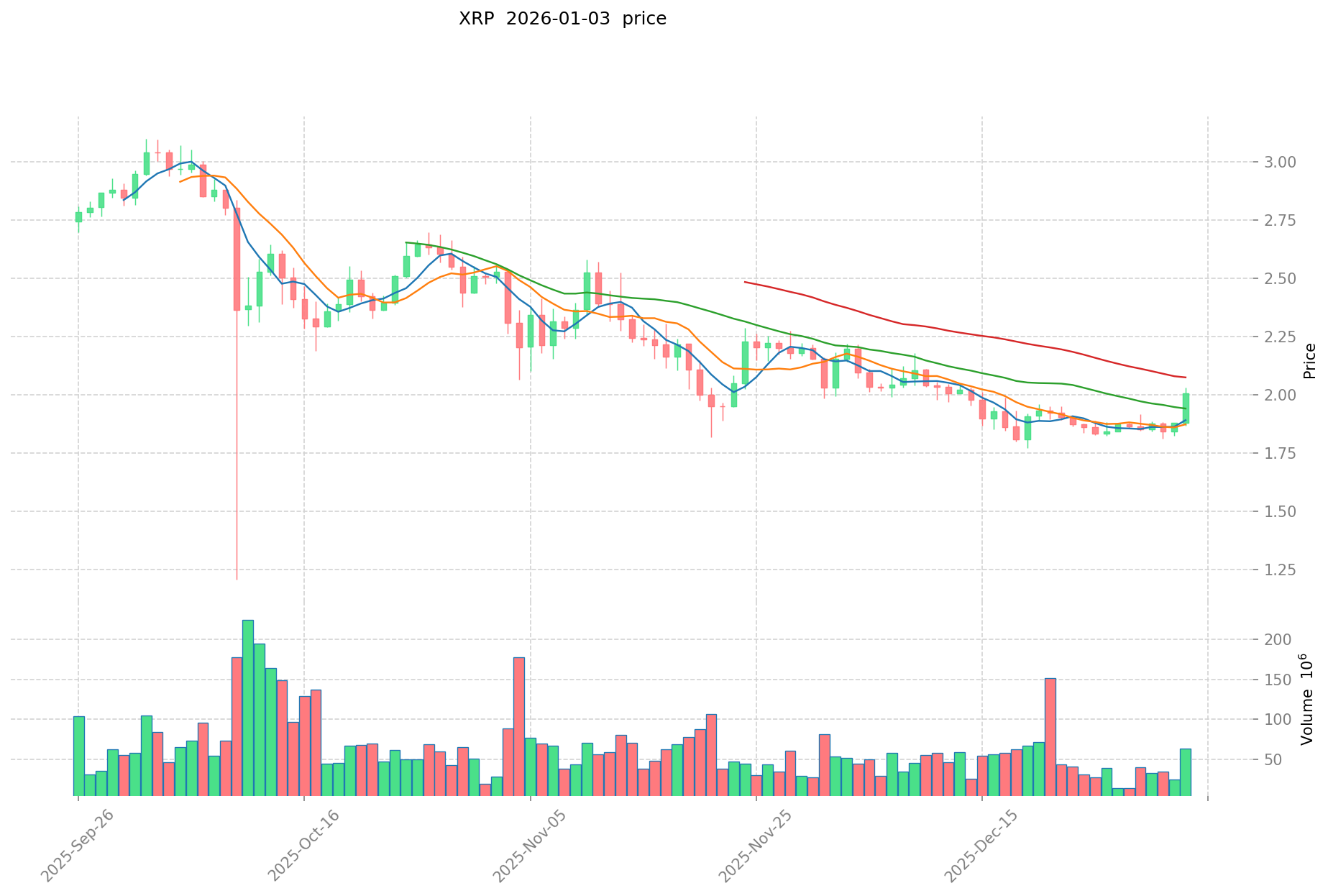
- July 2025: XRP achieved its all-time high of $3.65, reflecting improved regulatory sentiment and increased institutional interest.
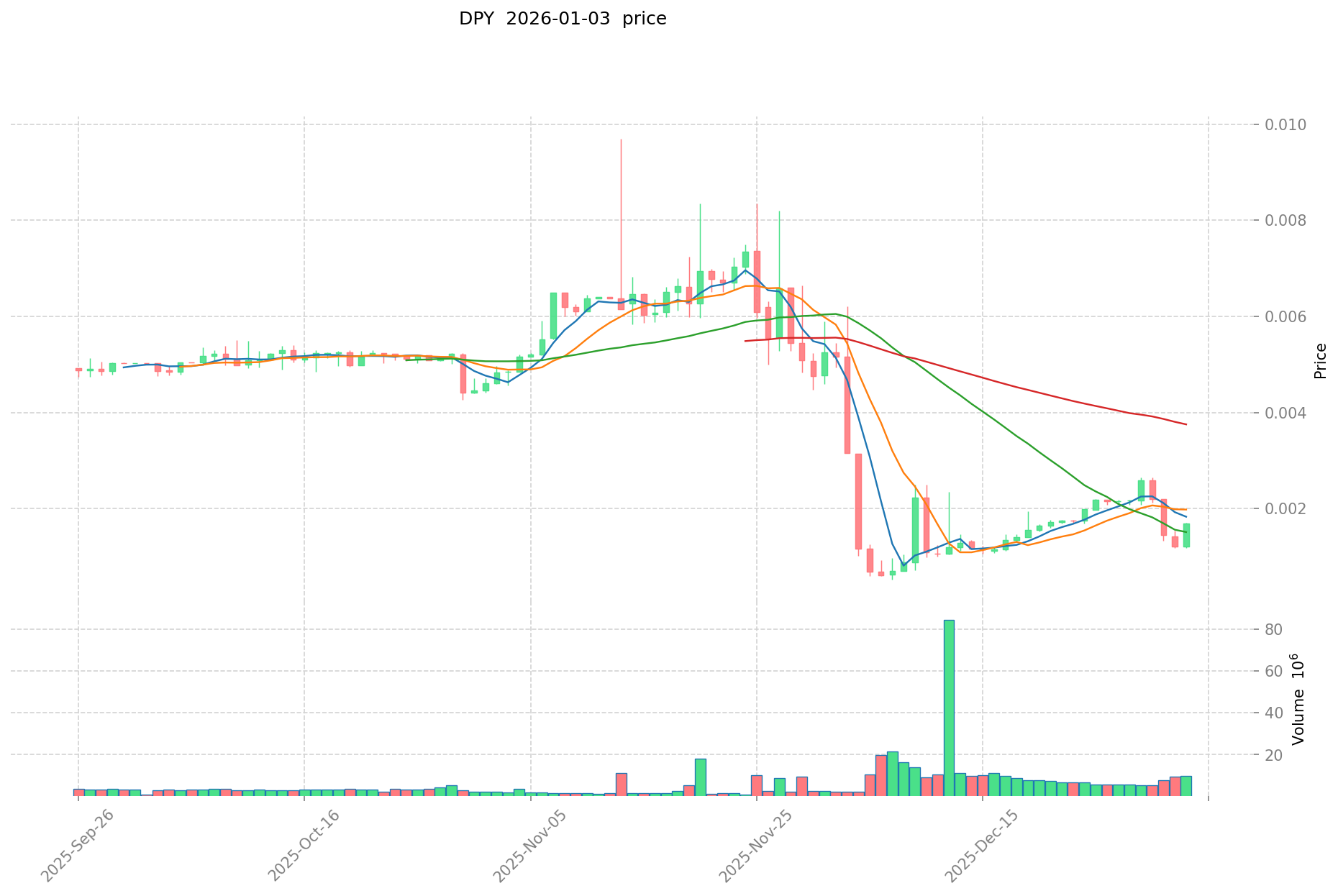
- Comparison Analysis: In the cryptocurrency market cycle, DPY declined from $4.88 to $0.00052106 (a 99.99% drop over approximately 8 years), while XRP fluctuated from $3.65 to its current level, demonstrating relatively stronger price resilience despite market volatility.
Current Market Status (January 3, 2026)
- DPY current price: $0.0016175
- XRP current price: $1.999
- 24-hour trading volume: DPY $13,331.20 vs XRP $143,978,157.20
- Market Sentiment Index (Fear & Greed Index): 29 (Fear)
View real-time prices:
II. Core Factors Affecting DPY vs XRP Investment Value
Tokenomics Comparison
- XRP: Fixed supply of 100 billion tokens with pre-mined distribution. The token serves as a utility asset for transaction fees and network operations on the XRP Ledger, with minimal economic incentives for validators compared to proof-of-work systems.
- DPY: Insufficient publicly available documentation regarding token supply mechanism, distribution model, or economic design parameters.
- 📌 Historical Pattern: XRP's fixed supply contrasts with inflationary models in many cryptocurrencies. The design prioritizes spam prevention and network stability rather than scarcity-driven value appreciation.
Institutional Adoption and Market Application
- Institutional Holdings: XRP benefits from Ripple's strategic partnerships with financial institutions. DPY lacks documented institutional adoption or enterprise partnerships.
- Enterprise Adoption: XRP is designed specifically for cross-border payments through Ripple's ODL (On-Demand Liquidity) solution, enabling financial institutions to reduce foreign exchange reserves and settlement times. The platform processes approximately 1,500 transactions per second compared to Bitcoin's 3-6 transactions per second. DPY has no documented enterprise applications or use cases.
- Regulatory Environment: XRP faces ongoing regulatory scrutiny, particularly in the United States where the SEC previously initiated enforcement actions against Ripple regarding whether XRP qualifies as a security. International markets maintain more active XRP trading despite US regulatory concerns. DPY's regulatory status remains undocumented.
Technology Development and Ecosystem Building
- XRP Technology: Built on the XRP Ledger with RPCA (Ripple Protocol Consensus Algorithm) for peer-to-peer transaction verification. The consensus mechanism differs from traditional proof-of-work and proof-of-stake systems, enabling faster settlement and lower computational requirements. XRP Ledger supports multiple currency pairs and has potential for broader virtual currency integration.
- DPY Ecosystem: Insufficient technical documentation available regarding development roadmap, consensus mechanism, or ecosystem expansion plans.
- Comparative Ecosystem: XRP Ledger supports multi-currency transactions and cross-border settlement applications. DPY's ecosystem scope remains undocumented.
Macroeconomic Environment and Market Cycles
- Inflation Resilience: XRP demonstrates cross-border utility that may provide value preservation benefits in high-inflation environments requiring international capital movement. DPY lacks documented macroeconomic utility analysis.
- Monetary Policy Impact: Interest rate changes and USD strength directly influence cryptocurrency valuations. Higher US rates typically reduce risk asset valuations, while lower rates encourage capital reallocation toward alternative assets. XRP's cross-border utility may provide some insulation from domestic monetary policy constraints.
- Geopolitical Factors: Demand for cross-border transaction alternatives increases during geopolitical tensions or international payment disruptions, directly supporting XRP's value proposition. DPY's geopolitical relevance remains undocumented.
III. 2026-2031 Price Prediction: DPY vs XRP
Short-term Prediction (2026)
- DPY: Conservative $0.000954-$0.00177925 | Optimistic $0.00177925
- XRP: Conservative $1.43712-$2.91416 | Optimistic $2.91416
Medium-term Prediction (2028-2029)
- DPY may enter consolidation phase, expected price range $0.001013-$0.00243
- XRP may enter growth phase, expected price range $1.535-$4.285
- Key drivers: institutional capital inflows, ETF adoption, ecosystem development
Long-term Prediction (2030-2031)
- DPY: base scenario $0.001310-$0.00343 | optimistic scenario $0.003429
- XRP: base scenario $2.284-$6.834 | optimistic scenario $6.834
View detailed price predictions for DPY and XRP
DPY:
| 年份 |
预测最高价 |
预测平均价格 |
预测最低价 |
涨跌幅 |
| 2026 |
0.00177925 |
0.0016175 |
0.000954325 |
0 |
| 2027 |
0.00212296875 |
0.001698375 |
0.00149457 |
5 |
| 2028 |
0.00242655328125 |
0.001910671875 |
0.00101265609375 |
18 |
| 2029 |
0.0024288460875 |
0.002168612578125 |
0.001973437446093 |
34 |
| 2030 |
0.002781462492703 |
0.002298729332812 |
0.001310275719703 |
42 |
| 2031 |
0.003429129482223 |
0.002540095912757 |
0.001447854670271 |
57 |
XRP:
| 年份 |
预测最高价 |
预测平均价格 |
预测最低价 |
涨跌幅 |
| 2026 |
2.91416 |
1.996 |
1.43712 |
0 |
| 2027 |
2.577834 |
2.45508 |
2.1604704 |
22 |
| 2028 |
3.64886265 |
2.516457 |
1.53503877 |
25 |
| 2029 |
4.28489715675 |
3.082659825 |
2.43530126175 |
54 |
| 2030 |
5.48882995140375 |
3.683778490875 |
2.2839426643425 |
84 |
| 2031 |
6.833593289497668 |
4.586304221139375 |
4.127673799025437 |
129 |
DPY vs XRP Investment Comparison
IV. Investment Strategy Comparison: DPY vs XRP
Long-term vs Short-term Investment Strategy
- DPY: Suitable for speculative investors with high risk tolerance seeking potential recovery from historical lows, though lacking documented ecosystem development and institutional adoption
- XRP: Suitable for investors seeking cross-border payment utility exposure and institutional adoption trends, with more established market infrastructure and regulatory clarity in international markets
Risk Management and Asset Allocation
- Conservative investors: DPY 0-5% vs XRP 5-15%
- Aggressive investors: DPY 5-15% vs XRP 15-30%
- Hedging tools: Stablecoin allocation, options strategies, cross-asset diversification combining both assets with established cryptocurrencies
V. Potential Risk Comparison
Market Risk
- DPY: Extremely low trading volume ($13,331.20 daily), limited market liquidity creating significant slippage risks, minimal price discovery mechanisms, and concentrated holder vulnerability
- XRP: Regulatory uncertainty from ongoing SEC enforcement actions, geopolitical dependency on cross-border payment demand, and competition from central bank digital currencies (CBDCs)
Technology Risk
- DPY: Insufficient technical documentation regarding consensus mechanism security, network stability verification, and smart contract audit history on Ethereum
- XRP: RPCA consensus mechanism differs from established proof-of-work and proof-of-stake models, creating unknowns in long-term network resilience; validator concentration risks remain undocumented
Regulatory Risk
- Global regulatory policies impact both assets differently: XRP faces documented SEC enforcement actions and security classification debates in the United States, while maintaining more active international trading. DPY's regulatory classification and compliance status remain undocumented across major jurisdictions.
VI. Conclusion: Which Is the Better Buy?
📌 Investment Value Summary
- DPY Advantages: Potential for significant percentage gains from depressed price levels; early-stage Ethereum ecosystem positioning from 2017 launch
- XRP Advantages: Documented institutional partnerships with financial institutions; established cross-border payment infrastructure processing 1,500+ transactions per second; fixed supply mechanism preventing inflation; demonstrated price resilience with current market valuation 1,247x higher than DPY; substantially higher trading volume enabling efficient entry and exit
✅ Investment Recommendations
- Beginner investors: Prioritize XRP due to documented use cases, institutional adoption, and superior liquidity; limit DPY exposure to minimal portfolio allocation given lack of public documentation
- Experienced investors: Consider DPY as a speculative position only if conducting independent research into ecosystem developments; maintain primary allocation toward XRP for portfolio stability and cross-border utility exposure
- Institutional investors: XRP aligns with institutional infrastructure through Ripple's ODL partnerships and regulatory clarity in international markets; DPY lacks documented enterprise applications or institutional custody solutions
⚠️ Risk Disclaimer: The cryptocurrency market exhibits extreme volatility. This analysis is based on available documentation and does not constitute investment advice. Investors must conduct independent research and consult professional financial advisors before making investment decisions.
FAQ
DPY和XRP分别是什么?各自的核心功能是什么?
DPY是固定供应加密货币,总量1,000,000枚,具有稀缺性。XRP是Ripple公司发行的数字资产,主要用于跨境支付和流动性解决方案,供应量相对较大。两者应用场景不同。
DPY和XRP在技术架构上有什么区别?
DPY采用固定总供应量机制,总量为1,000,000枚,而XRP采用通胀模型,供应量可持续增加。DPY在供应端设置了硬上限,XRP则没有固定供应上限。
DPY和XRP的交易速度和手续费如何对比?
XRP交易速度快,手续费低廉,平均约17美分。DPY交易速度相对较慢,手续费较高。总体而言,XRP在速度和成本效率方面具有明显优势。
DPY和XRP分别应用在哪些场景中?
DPY主要应用于以太坊生态智能合约和去中心化应用。XRP广泛应用于跨境支付、国际汇兑和金融机构清结算,两者在加密领域应用场景差异明显。
从投资角度看,DPY和XRP哪个更有潜力?
XRP作为成熟币种,基础设施完善且流动性充足。DPY作为新兴项目,增长潜力更大但风险也更高。投资者应根据风险承受能力选择,看重长期稳定可考虑XRP,追求高收益可关注DPY。
DPY和XRP的风险因素分别是什么?
DPY的风险主要来自宏观经济波动和政策变化的影响。XRP的风险则在于面临较多法律监管挑战和不确定性。两者都需关注市场流动性和技术发展动向。
DPY和XRP的流动性和市场规模如何对比?
XRP市场规模远超DPY。XRP流通供应超47.8亿枚,市值达数百亿美元,流动性充足,被广泛采纳。DPY流通量仅6090万枚,市值仅约10万美元,市场规模极小,流动性有限,主流认可度低。XRP优势明显。
初学者应该如何选择投资DPY还是XRP?
初学者可根据风险偏好选择。DPY作为Meme币波动较大,适合高风险承受者;XRP拥有更大市场规模和机构支持,相对稳健。建议先了解两者的技术特性和市场表现,再根据个人目标决策。
* The information is not intended to be and does not constitute financial advice or any other recommendation of any sort offered or endorsed by Gate.