


HVLO vs UNI: A Comparative Analysis of High-Velocity Learning Organizations and Unified Innovation Strategies
Introduction: HVLO vs UNI Investment Comparison
In the cryptocurrency market, the comparison between Hivello (HVLO) and Uniswap (UNI) has been an unavoidable topic for investors. The two not only show significant differences in market cap ranking, application scenarios, and price performance but also represent different positions in the crypto asset landscape.
Hivello (HVLO): Launched in 2025, it has gained market recognition for its mission to simplify and democratize DePIN mining.
Uniswap (UNI): Since its inception in 2020, it has been hailed as the pioneering automatic market-making protocol on the Ethereum blockchain, becoming one of the most traded and highest market cap cryptocurrencies globally.
This article will provide a comprehensive analysis of the investment value comparison between HVLO and UNI, focusing on historical price trends, supply mechanisms, institutional adoption, technological ecosystems, and future predictions, attempting to answer the question most crucial to investors:
"Which is the better buy right now?"
I. Price History Comparison and Current Market Status
HVLO (Coin A) and UNI (Coin B) Historical Price Trends
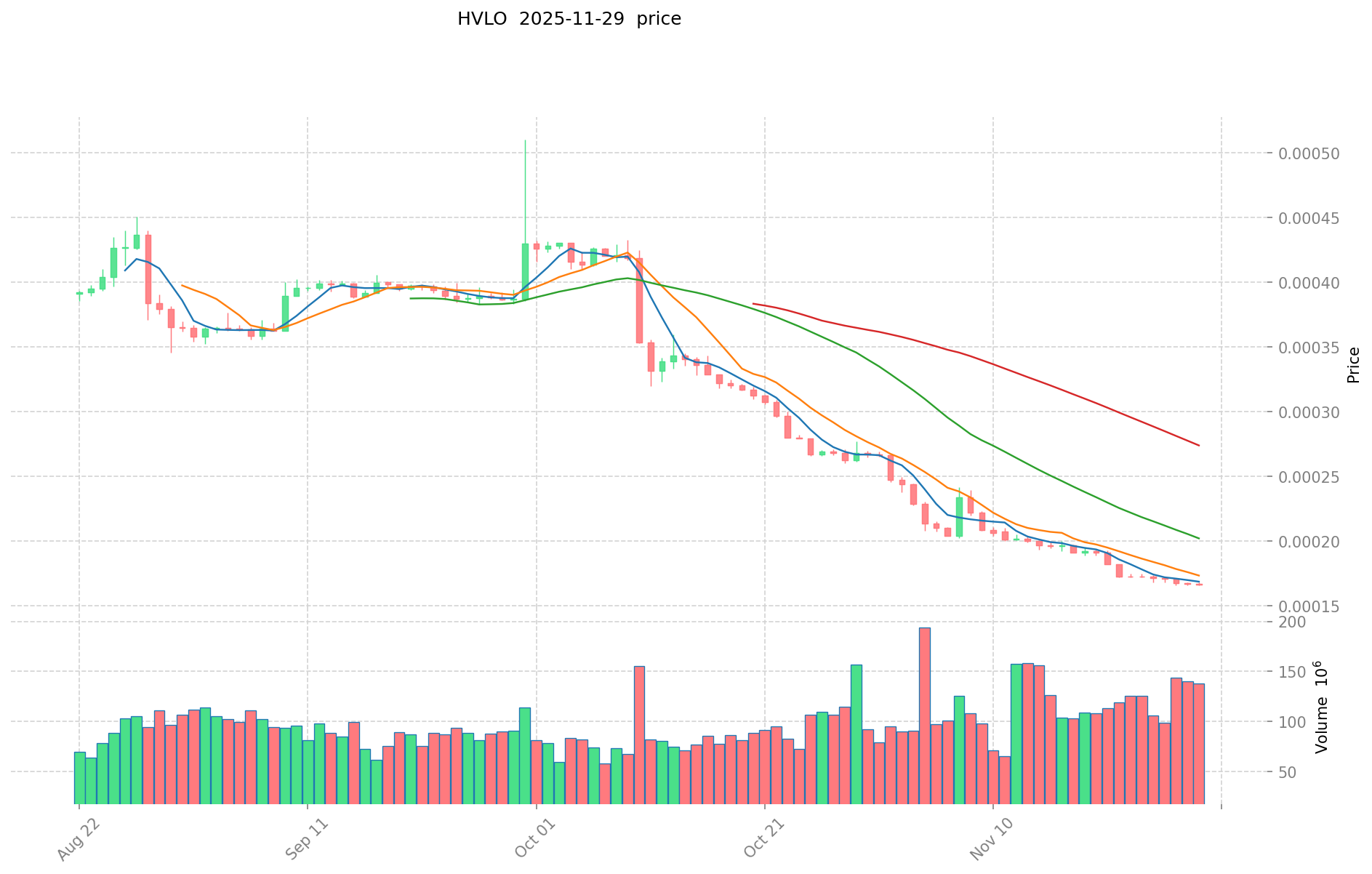
- 2025: HVLO reached its all-time high of $0.00796 on February 11, 2025, and subsequently declined to its all-time low of $0.00016571 on November 28, 2025.
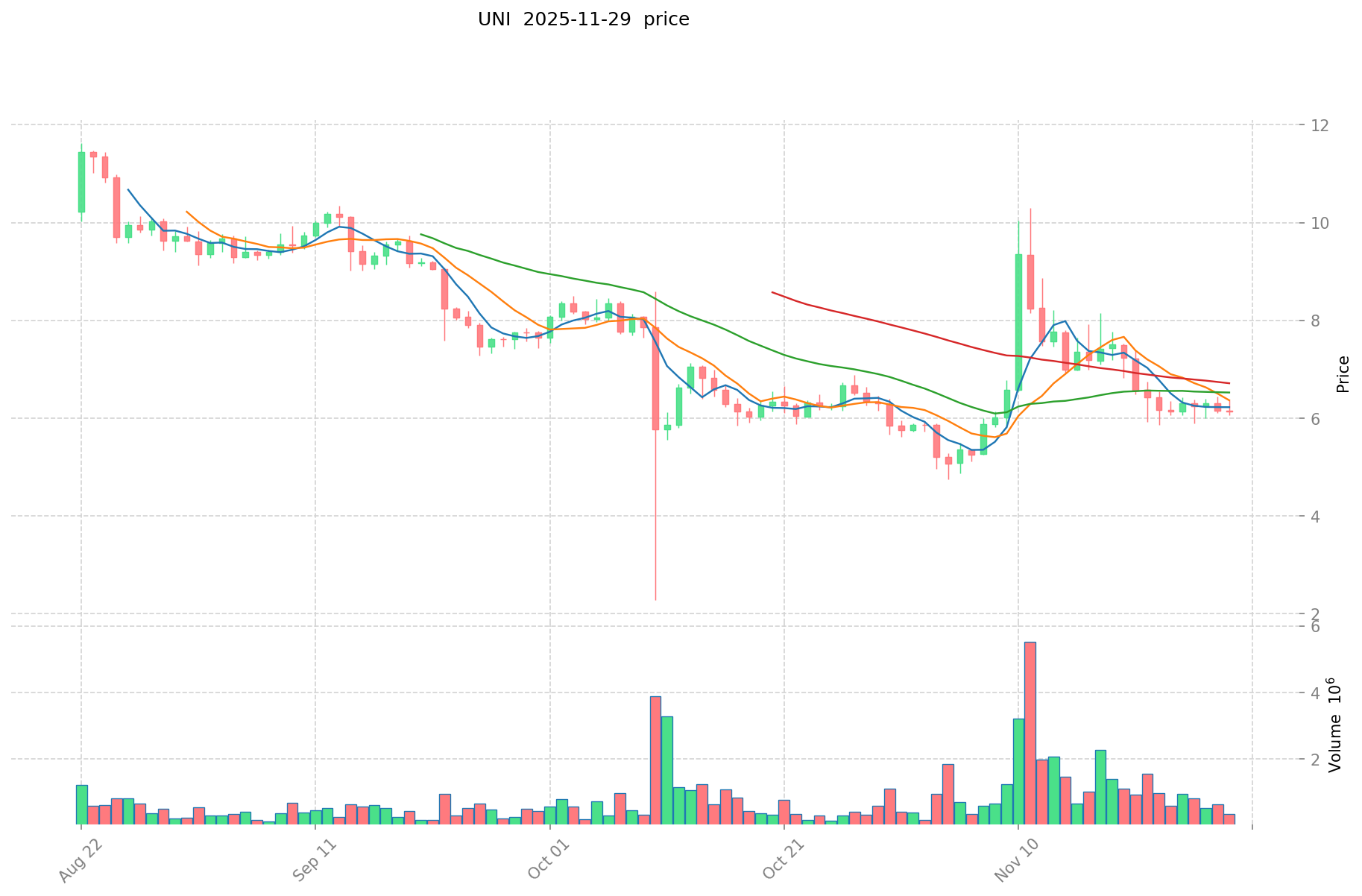
- 2021: UNI hit its all-time high of $44.92 on May 3, 2021, following the growth of decentralized finance (DeFi) and Uniswap's popularity.
- Comparative analysis: While HVLO is a relatively new token with limited historical data, UNI has shown significant volatility since its launch in 2020, dropping from its all-time high of $44.92 to its current price of $6.028, representing a substantial decline.
Current Market Situation (2025-11-30)
- HVLO current price: $0.00016655
- UNI current price: $6.028
- 24-hour trading volume: HVLO $22,775.97 vs UNI $1,140,996.82
- Market Sentiment Index (Fear & Greed Index): 28 (Fear)
Click to view real-time prices:
- View HVLO current price Market Price
- View UNI current price Market Price
II. Core Factors Affecting HVLO vs UNI Investment Value
Supply Mechanism Comparison (Tokenomics)
- HVLO: Features an inflationary model with emissions schedule expected to last 3.33 years. The protocol has allocated 50% of total token supply to incentivize user participation and reward behaviors beneficial to the protocol.
- UNI: Uses a governance token model with a maximum supply of 1 billion tokens. Initial distribution included community members, team members, investors, and advisors, with progressive release schedules.
- 📌 Historical pattern: HVLO's emission schedule creates predictable selling pressure in early stages, while UNI's more mature distribution may offer greater price stability.
Institutional Adoption and Market Applications
- Institutional holdings: UNI has greater institutional recognition and adoption due to Uniswap's first-mover advantage and established position in the DeFi space.
- Enterprise adoption: UNI benefits from Uniswap's widespread integration across DeFi platforms, while HVLO is still establishing market position through its aggregator functionality.
- Regulatory attitudes: Both tokens face similar regulatory scrutiny as DeFi governance tokens, with UNI potentially facing more attention due to its market prominence.
Technical Development and Ecosystem Building
- HVLO technical upgrades: Offers a DeFi aggregator solution that routes orders through multiple DEXs for optimal execution, with an intuitive interface for users and integrated risk management tools.
- UNI technical development: Uniswap protocol has evolved through multiple versions (V1, V2, V3), introducing concentrated liquidity, multiple fee tiers, and cross-chain deployments.
- Ecosystem comparison: UNI benefits from Uniswap's extensive ecosystem integration across DeFi applications, while HVLO is positioning itself as a gateway to this ecosystem through aggregation services.
Macroeconomic and Market Cycles
- Inflation environment performance: Both tokens are subject to crypto market cyclicality rather than serving as inflation hedges.
- Macroeconomic monetary policy: Interest rate changes affect both tokens similarly through their impact on risk asset sentiment.
- Geopolitical factors: Both benefit from increased demand for decentralized financial services during periods of financial instability or restrictions.
III. 2025-2030 Price Prediction: HVLO vs UNI
Short-term Prediction (2025)
- HVLO: Conservative $0.0001449768 - $0.00016664 | Optimistic $0.00016664 - $0.0002466272
- UNI: Conservative $4.58128 - $6.028 | Optimistic $6.028 - $8.07752
Mid-term Prediction (2027)
- HVLO may enter a growth phase, with prices expected in the range of $0.0001155081824 - $0.0002465655432
- UNI may enter a bullish market, with prices expected in the range of $6.07242636 - $10.40987376
- Key drivers: Institutional capital inflow, ETF developments, ecosystem growth
Long-term Prediction (2030)
- HVLO: Base scenario $0.000217842006863 - $0.000311202866948 | Optimistic scenario $0.000311202866948 - $0.000373443440337
- UNI: Base scenario $12.3650692619454 - $14.37798751389 | Optimistic scenario $14.37798751389 - $21.1356416454183
Disclaimer: This analysis is based on historical data and market projections. Cryptocurrency markets are highly volatile and unpredictable. This information should not be considered as financial advice. Always conduct your own research before making investment decisions.
HVLO:
| 年份 | 预测最高价 | 预测平均价格 | 预测最低价 | 涨跌幅 |
|---|---|---|---|---|
| 2025 | 0.0002466272 | 0.00016664 | 0.0001449768 | 0 |
| 2026 | 0.00023762864 | 0.0002066336 | 0.000126046496 | 24 |
| 2027 | 0.0002465655432 | 0.00022213112 | 0.0001155081824 | 33 |
| 2028 | 0.000297622381132 | 0.0002343483316 | 0.000145295965592 | 40 |
| 2029 | 0.00035642037753 | 0.000265985356366 | 0.000250026234984 | 59 |
| 2030 | 0.000373443440337 | 0.000311202866948 | 0.000217842006863 | 86 |
UNI:
| 年份 | 预测最高价 | 预测平均价格 | 预测最低价 | 涨跌幅 |
|---|---|---|---|---|
| 2025 | 8.07752 | 6.028 | 4.58128 | 0 |
| 2026 | 10.2970296 | 7.05276 | 4.1611284 | 17 |
| 2027 | 10.40987376 | 8.6748948 | 6.07242636 | 43 |
| 2028 | 13.836457206 | 9.54238428 | 8.7789935376 | 58 |
| 2029 | 17.06655428478 | 11.689420743 | 10.75426708356 | 94 |
| 2030 | 21.1356416454183 | 14.37798751389 | 12.3650692619454 | 138 |
IV. Investment Strategy Comparison: HVLO vs UNI
Long-term vs Short-term Investment Strategies
- HVLO: Suitable for investors focused on DePIN and aggregator potential
- UNI: Suitable for investors seeking established DeFi exposure and protocol stability
Risk Management and Asset Allocation
- Conservative investors: HVLO: 10% vs UNI: 90%
- Aggressive investors: HVLO: 30% vs UNI: 70%
- Hedging tools: Stablecoin allocation, options, cross-token portfolio
V. Potential Risk Comparison
Market Risks
- HVLO: High volatility due to newer market position and inflationary tokenomics
- UNI: Market saturation risks and competition from other DEX protocols
Technical Risks
- HVLO: Scalability, network stability
- UNI: Smart contract vulnerabilities, liquidity risks
Regulatory Risks
- Global regulatory policies may impact both tokens, with UNI potentially facing more scrutiny due to its market prominence
VI. Conclusion: Which Is the Better Buy?
📌 Investment Value Summary:
- HVLO advantages: Potential for growth in DePIN sector, innovative aggregator functionality
- UNI advantages: Established market position, extensive ecosystem integration, protocol maturity
✅ Investment Advice:
- New investors: Consider a small allocation to HVLO for exposure to emerging trends, larger allocation to UNI for stability
- Experienced investors: Balanced approach with higher risk tolerance for HVLO
- Institutional investors: Focus on UNI for liquidity and market recognition, monitor HVLO for potential future opportunities
⚠️ Risk Warning: The cryptocurrency market is highly volatile. This article does not constitute investment advice. None
VII. FAQ
Q1: What are the key differences between HVLO and UNI? A: HVLO is a newer token focused on DePIN mining and DeFi aggregation, while UNI is an established token for the Uniswap decentralized exchange. HVLO has an inflationary model with ongoing emissions, while UNI has a fixed maximum supply. UNI has greater institutional adoption and market recognition, but HVLO offers potential growth in emerging sectors.
Q2: Which token has performed better historically? A: UNI has a longer price history and reached a higher all-time high of $44.92 in May 2021. HVLO, being newer, reached its all-time high of $0.00796 in February 2025. However, both tokens have experienced significant price declines since their respective peaks.
Q3: How do the supply mechanisms of HVLO and UNI differ? A: HVLO features an inflationary model with emissions scheduled to last 3.33 years, allocating 50% of total supply to user incentives. UNI has a fixed maximum supply of 1 billion tokens, with initial distribution to community members, team, investors, and advisors.
Q4: What are the main risks associated with investing in HVLO and UNI? A: For HVLO, risks include high volatility due to its newer market position and inflationary tokenomics, as well as technical risks related to scalability. For UNI, risks include market saturation, competition from other DEX protocols, and potential regulatory scrutiny due to its market prominence.
Q5: How do institutional adoption and market applications compare between HVLO and UNI? A: UNI has greater institutional recognition and adoption due to Uniswap's first-mover advantage in the DeFi space. It's widely integrated across DeFi platforms. HVLO is still establishing its market position through its aggregator functionality and DePIN focus.
Q6: What are the long-term price predictions for HVLO and UNI by 2030? A: By 2030, HVLO's base scenario price range is predicted to be $0.000217842006863 - $0.000311202866948, with an optimistic scenario of $0.000311202866948 - $0.000373443440337. For UNI, the base scenario range is $12.3650692619454 - $14.37798751389, with an optimistic scenario of $14.37798751389 - $21.1356416454183.
Q7: How should investors approach allocating between HVLO and UNI? A: Conservative investors might consider allocating 10% to HVLO and 90% to UNI, while more aggressive investors could opt for 30% HVLO and 70% UNI. New investors may want to focus more on UNI for stability while allocating a small portion to HVLO for exposure to emerging trends. Experienced investors could take a more balanced approach with higher risk tolerance for HVLO.
Share
Content
Introduction: HVLO vs UNI Investment Comparison
I. Price History Comparison and Current Market Status
II. Core Factors Affecting HVLO vs UNI Investment Value
III. 2025-2030 Price Prediction: HVLO vs UNI
IV. Investment Strategy Comparison: HVLO vs UNI
V. Potential Risk Comparison
VI. Conclusion: Which Is the Better Buy?
VII. FAQ


