# JFI vs IMX: A Comprehensive Comparison of Two Leading Digital Asset Platforms
This in-depth analysis compares JackPool Finance (JFI) and Immutable X (IMX), two distinct digital assets serving different blockchain ecosystems. JFI operates as a yield optimization protocol on the Tron network, while IMX functions as a Layer 2 NFT scaling solution on Ethereum. The article examines historical price trends, current market status, tokenomics, investment strategies, and risk factors to help investors make informed decisions. With JFI trading at $2.357 and IMX at $0.2739, both assets present contrasting risk-reward profiles. Designed for crypto investors ranging from beginners to institutions, this guide addresses key questions: which asset offers better investment value, how do their ecosystems compare, and what strategies suit different risk appetites. The comprehensive framework includes 2026-2031 price forecasts, portfolio allocation recommendations, and detailed risk assessments across market, technical, and r
Introduction: JFI vs IMX Investment Comparison
In the cryptocurrency market, comparisons between JackPool Finance and Immutable X have become an important consideration for investors. The two projects differ significantly in market capitalization ranking, application scenarios, and price performance, representing distinct positions within the crypto asset ecosystem.
JackPool Finance (JFI): Introduced as a one-click DeFi mining aggregation protocol designed for JustSwap, it leverages the design philosophy of yield optimization on the Tron network, which offers faster transaction speeds and lower gas costs compared to other blockchain networks.
Immutable X (IMX): Established as a Layer 2 (L2) scaling solution for NFTs on Ethereum, it is designed to enable instant transactions, large-scale scalability, and zero gas costs for minting and trading, while maintaining user and asset security. IMX serves as an ERC-20 utility token that rewards network activities such as trading, liquidity provision, and application development.
This article will provide a comprehensive analysis of the investment value comparison between JFI and IMX from multiple dimensions, including historical price trends, supply mechanisms, market positioning, and ecosystem development, addressing the key question investors frequently ask:
"Which is the better investment choice currently?"
I. Historical Price Comparison and Current Market Status
JFI (JackPool.finance) and IMX (Immutable X) Historical Price Trends
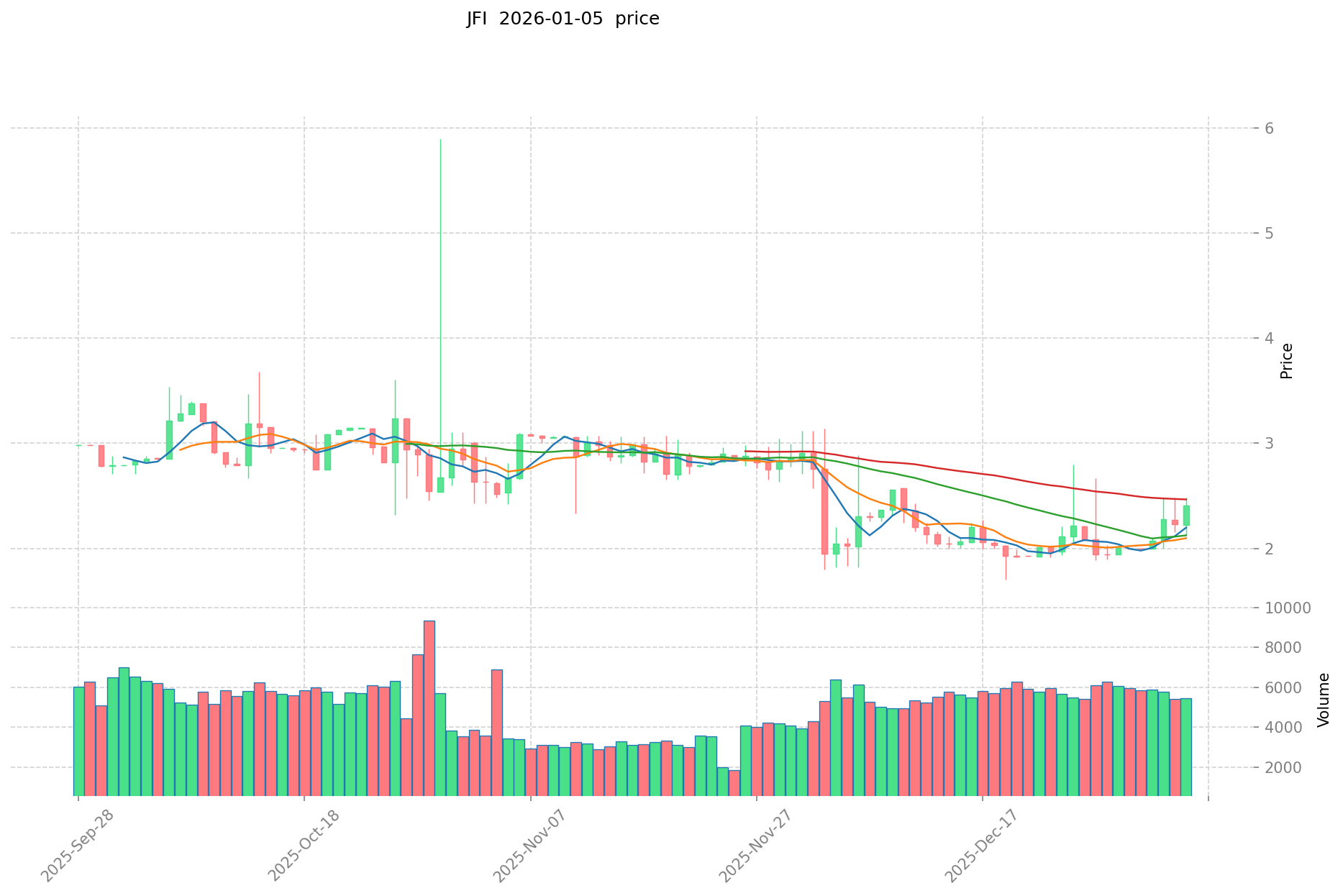
- 2020: JFI reached its all-time high of $1,547.43 on September 5, 2020, reflecting early market enthusiasm for yield farming protocols inspired by YFI's design.
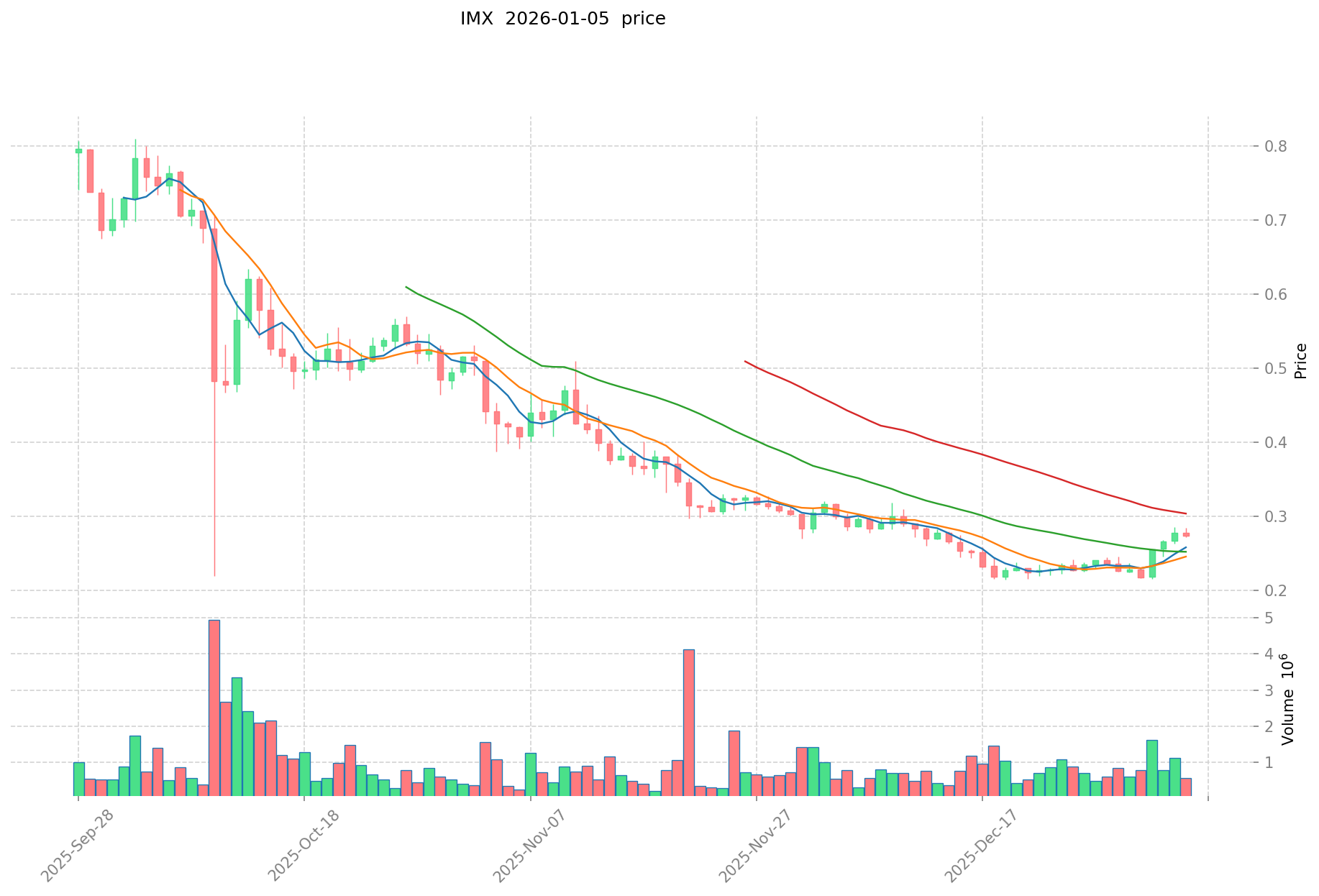
- 2021: IMX launched in April 2021 and reached its historical peak of $9.52 on November 26, 2021, driven by growing interest in NFT infrastructure and Layer 2 solutions on Ethereum.
- Comparative analysis: Over the extended market cycle, JFI declined from its $1,547.43 peak to a recent low of $1.70 (reached December 19, 2025), representing a 99.9% decline. IMX similarly experienced significant depreciation from $9.52 to $0.215226 (reached December 19, 2025), a decline of 97.7%.
Current Market Status (05 January 2026)
- JFI current price: $2.357
- IMX current price: $0.2739
- 24-hour trading volume: JFI $12,723.51 vs IMX $196,907.07
- Market emotion index (Fear & Greed Index): 26 (Fear).
Click to view real-time prices:
II. Core Factors Affecting JFI vs IMX Investment Value
Supply Mechanism Comparison (Tokenomics)
Information regarding the tokenomics and supply mechanisms of JFI and IMX is not available in the provided reference materials. This section cannot be completed without relevant data.
Institutional Adoption and Market Application
Institutional Holdings
Information about institutional holdings preferences between JFI and IMX is not provided in the reference materials.
Enterprise Adoption
The reference materials focus on OLED panel supply chain dynamics involving Samsung, BOE (京东方), and Apple, rather than cryptocurrency applications in cross-border payments, settlement, or investment portfolios. Therefore, comparative enterprise adoption data for JFI and IMX cannot be extracted from these sources.
National Policy
Regulatory stance information specific to JFI and IMX across different jurisdictions is not included in the provided reference materials.
Technology Development and Ecosystem Construction
Information about technology upgrades, technical developments, DeFi integration, NFT ecosystem, payment functionality, and smart contract implementation for JFI and IMX is not available in the provided reference materials.
Macroeconomic Factors and Market Cycles
Comparative analysis of JFI and IMX's inflation-resistant properties is not provided in the reference materials.
Macroeconomic Monetary Policy Impact
Data regarding how interest rates and USD index movements affect JFI and IMX is not available in the provided sources.
Geopolitical Factors
Information about cross-border transaction demand and international geopolitical impacts on JFI and IMX cannot be extracted from the reference materials, which primarily address semiconductor supply chain dynamics.
III. 2026-2031 Price Forecast: JFI vs IMX
Short-term Forecast (2026)
- JFI: Conservative $2.05–$2.36 | Optimistic $3.37
- IMX: Conservative $0.18–$0.27 | Optimistic $0.28
Medium-term Forecast (2027-2029)
- JFI may enter growth phase with 21-59% increase, projected price range $1.69–$5.20
- IMX may enter recovery phase with 1-21% increase, projected price range $0.18–$0.45
- Key drivers: Institutional capital inflows, ETF adoption, ecosystem development
Long-term Forecast (2030-2031)
- JFI: Base scenario $3.28–$4.48 | Optimistic scenario $5.79–$7.14
- IMX: Base scenario $0.23–$0.39 | Optimistic scenario $0.42–$0.59
View detailed price predictions for JFI and IMX
JFI:
| 年份 |
预测最高价 |
预测平均价格 |
预测最低价 |
涨跌幅 |
| 2026 |
3.37051 |
2.357 |
2.05059 |
0 |
| 2027 |
3.86606925 |
2.863755 |
1.68961545 |
21 |
| 2028 |
4.172491035 |
3.364912125 |
2.826526185 |
42 |
| 2029 |
5.2008081804 |
3.76870158 |
3.2787703746 |
59 |
| 2030 |
5.785333795458 |
4.4847548802 |
2.511462732912 |
90 |
| 2031 |
7.13771162958231 |
5.135044337829 |
3.33777881958885 |
117 |
IMX:
| 年份 |
预测最高价 |
预测平均价格 |
预测最低价 |
涨跌幅 |
| 2026 |
0.282529 |
0.2743 |
0.181038 |
0 |
| 2027 |
0.348018125 |
0.2784145 |
0.236652325 |
1 |
| 2028 |
0.35080227 |
0.3132163125 |
0.178533298125 |
14 |
| 2029 |
0.4482125431875 |
0.33200929125 |
0.3220490125125 |
21 |
| 2030 |
0.42131979059625 |
0.39011091721875 |
0.226264331986875 |
42 |
| 2031 |
0.59234441670495 |
0.4057153539075 |
0.3894867397512 |
48 |
四、投资策略对比:JFI vs IMX
长期 vs 短期投资策略
- JFI:适合关注收益优化、Tron生态参与者,看好中期增长潜力(2027-2029年预期增幅21-59%)
- IMX:适合看好NFT基础设施长期发展、Ethereum Layer 2生态建设者,追求稳定复苏(2027-2029年预期增幅1-21%)
风险管理与资产配置
- 保守型投资者:JFI 30% vs IMX 20%,稳定币配置 50%
- 激进型投资者:JFI 45% vs IMX 35%,稳定币配置 20%
- 对冲工具:稳定币配置、期权、跨币种组合
五、潜在风险对比
市场风险
- JFI:历史高点至今跌幅99.9%,流动性较低(24小时交易量$12,723.51),市场热度恢复难度大
- IMX:高峰跌幅97.7%,交易量相对充足(24小时交易量$196,907.07),但受NFT市场周期波动影响
技术风险
- JFI:依赖JustSwap及Tron网络稳定性,一键聚合挖矿协议面临智能合约风险
- IMX:作为Layer 2解决方案,需依赖Ethereum网络安全性,跨链桥接可能存在安全隐患
监管风险
- 全球监管政策对两者的不同影响:DeFi流动性挖矿面临监管审查,NFT交易相关资产同样面临政策不确定性
六、结论:Which Is the Better Buy?
📌 投资价值总结:
- JFI 优势:Tron网络高性能特性支撑,预期中期增幅更高(59%),适合看好收益农业复苏的投资者
- IMX 优势:Layer 2 NFT基础设施赛道明确,交易流动性相对充足,生态应用场景更为广泛
✅ 投资建议:
- 新手投资者:优先选择IMX,流动性更好、市场认可度相对较高,风险更易控制
- 有经验投资者:根据对Tron生态或NFT市场的判断分别配置,JFI追求高收益、IMX追求稳定复苏
- 机构投资者:两者均处于极端低位,可按风险偏好进行结构化布局,配合稳定币对冲
⚠️ 风险提示:加密货币市场波动性极高,JFI和IMX均经历超97%以上跌幅,当前市场情绪指数处于恐惧区间(26),投资前应充分评估个人风险承受能力。本文不构成投资建议。
FAQ
JFI和IMX分别是什么?它们各自的核心功能和应用场景是什么?
JFI是去中心化金融协议,提供流动性挖矿和治理功能。IMX是Immutable X,基于以太坊的第二层扩容方案,专注于NFT交易和游戏资产确权,提供高效低成本的交易环境。两者应用场景不同,JFI侧重DeFi生态,IMX侧重NFT和游戏领域。
JFI与IMX在技术架构上有什么主要区别?
JFI采用Layer2扩容方案,主要用于游戏资产流动性。IMX基于StarkEx零知识证明技术,专注NFT铸造和交易。两者都支持低成本交易,但IMX的zk-proof架构在隐私性和安全性上更具优势。
JFI和IMX的代币经济模型有什么不同?
IMX代币总量为20亿,大部分代币设有锁定期以激励长期持有,生态激励占比51.74%。JFI的具体代币经济模型设计各有特色,两者在总量、分配机制和锁定策略上存在差异。
投资JFI和IMX相比,哪个风险更低、潜力更大?
JFI风险较高但潜力大,适合进阶投资者;IMX相对稳定且交易额活跃,具有良好的市场认可度。选择需根据个人风险承受能力判断。
JFI和IMX在生态发展和社区支持方面各有什么优势?
JFI专注可持续项目生态建设,生态活跃度强。IMX则在社区激励和开发者支持上表现突出,两者共同推动生态繁荣发展。
JFI和IMX是否可以互补使用,还是竞争关系?
JFI和IMX分别专注于不同领域应用,两者具有互补性。JFI主要聚焦于特定生态,IMX侧重游戏和NFT领域,可在各自赛道发挥优势,共同推动Web3发展。
* The information is not intended to be and does not constitute financial advice or any other recommendation of any sort offered or endorsed by Gate.