# Article Overview: LRN vs BCH Blockchain Networks Comparison
This comprehensive analysis compares LRN and BCH across market performance, tokenomics, technology infrastructure, and investment potential. Designed for cryptocurrency investors seeking data-driven decisions, the article examines historical price trends, institutional adoption, ecosystem development, and macroeconomic factors influencing both assets. Key sections analyze LRN's speculative recovery opportunities against BCH's established payment infrastructure and halving cycle dynamics. The article addresses critical investor questions through 2026-2031 price forecasts, risk assessments, and tailored allocation strategies for conservative, aggressive, and institutional investors. Readers gain actionable insights into liquidity considerations, technology differentiation, regulatory environments, and position-sizing recommendations via Gate trading data, enabling informed portfolio decisions in the volatile cryptocurrency landscape.
---
**Key Sec
Introduction: LRN vs BCH Investment Comparison
In the cryptocurrency market, the comparison between LRN and BCH has always been a topic investors cannot ignore. The two assets demonstrate significant differences in market capitalization ranking, application scenarios, and price performance, representing distinct positions within the crypto asset landscape.
LRN (Loopring Neo Token): Launched as a decentralized trading protocol deployed on the NEO network, LRN supports decentralized token-to-token trading within the NEO ecosystem, leveraging decentralized technology to provide risk-free token exchange mechanisms.
BCH (Bitcoin Cash): Since its emergence in 2017 from a Bitcoin hard fork, it has been recognized as an asset following on-chain scaling principles, featuring 8MB blocks, enhanced transaction signatures, and decentralized development. It ranks among the top cryptocurrencies globally in terms of trading volume and market capitalization.
This article will provide a comprehensive analysis of LRN vs BCH investment value comparison across historical price trends, supply mechanisms, market adoption, and technical ecosystems, while attempting to address the question investors care about most:
"Which is the better buy right now?"
I. Historical Price Comparison and Market Status
LRN and BCH Historical Price Trends
- 2017: BCH emerged from Bitcoin hard fork on August 1, 2017, initiating its independent price discovery process.
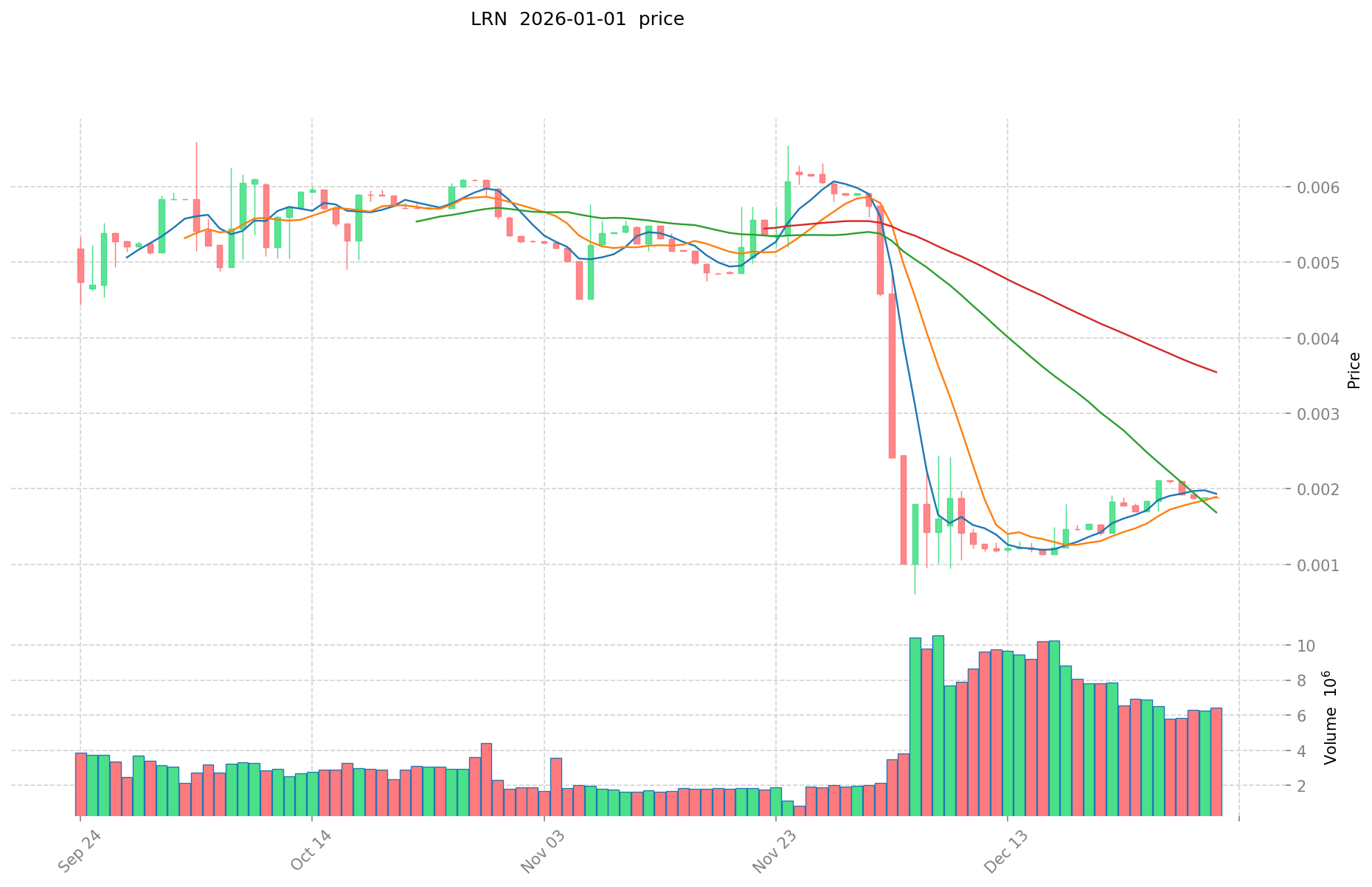
- 2018: LRN reached its all-time high of $3.40441 on November 1, 2018, during the peak of the 2017-2018 bull market.
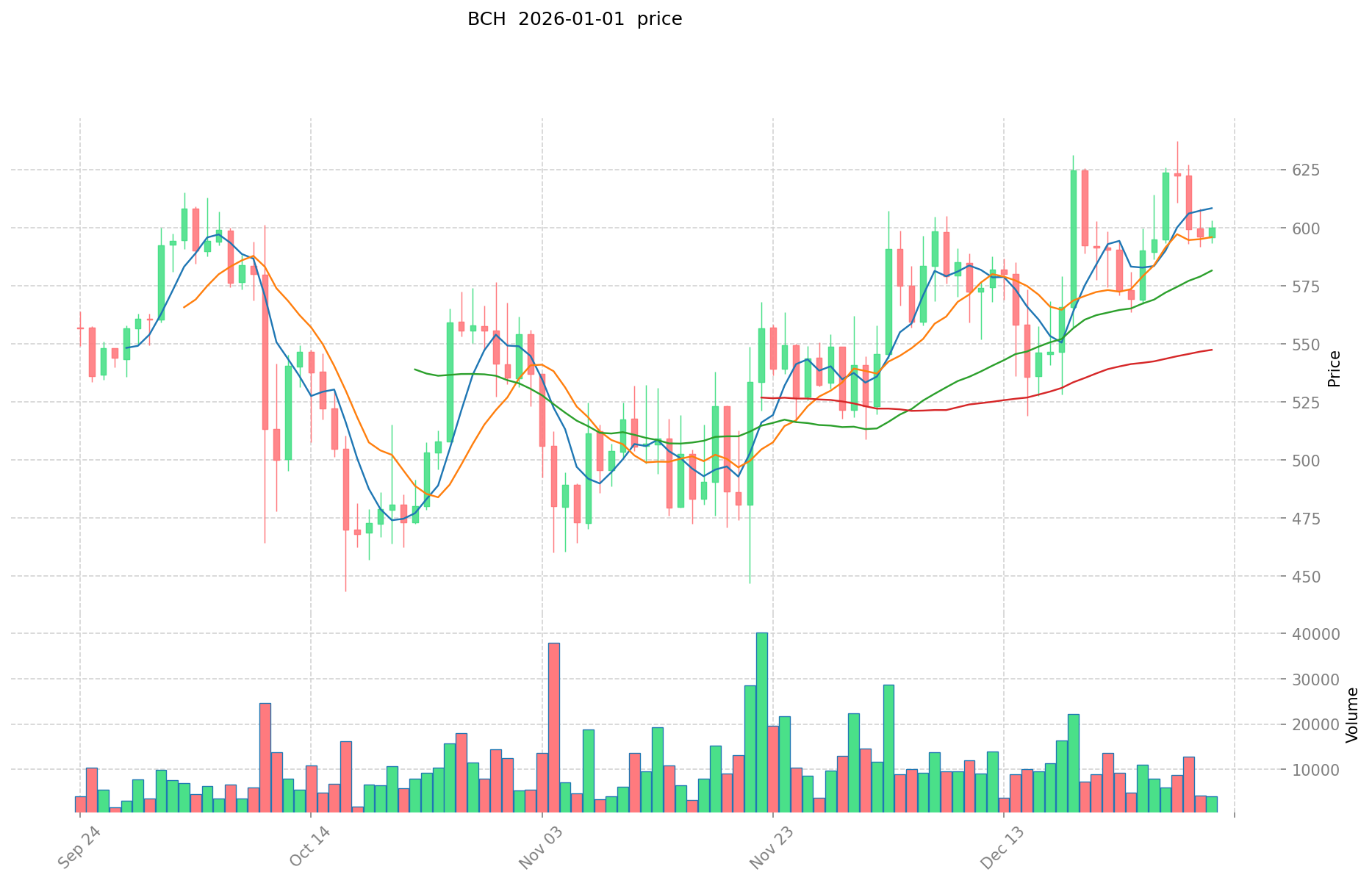
- 2018: BCH reached its all-time high of $3,785.82 on December 20, 2017, representing the peak of early cryptocurrency speculation.
- Comparative Analysis: In the market cycle from 2018 to 2025, LRN declined from $3.40441 to $0.000601091773 (ATL on May 9, 2025), representing a decline of over 99%. BCH declined from $3,785.82 to $76.93 (ATL on December 16, 2018), but has since recovered to current trading levels.
Current Market Status (January 01, 2026)
- LRN current price: $0.001883.
- BCH current price: $596.87.
- 24-hour trading volume: LRN $12,045.36 vs BCH $2,566,696.70.
- Market sentiment index (Fear & Greed Index): 20 (Extreme Fear).
Click to view real-time prices:
Core Factors Influencing the Investment Value of LRN vs BCH
I. Supply Mechanism Comparison (Tokenomics)
Bitcoin Cash (BCH):
- Fixed maximum supply of 21 million coins, identical to Bitcoin
- Follows a halving schedule approximately every four years, reducing mining rewards by 50%
- Currently in the fourth halving cycle with diminishing new supply
📌 Historical Pattern: The halving mechanism creates cyclical supply constraints that have historically preceded price appreciation cycles. However, market adoption and utility remain critical factors determining whether supply scarcity translates into price increases.
II. Institutional Adoption and Market Applications
Institutional Holdings:
- BCH maintains a lower institutional adoption rate compared to Bitcoin and Ethereum, primarily due to limited recognition as a payment-grade digital currency among traditional financial institutions
Enterprise Adoption:
- BCH serves as a peer-to-peer electronic cash system with acceptance among select online retailers and payment processors
- Some international remittance services have integrated BCH for lower-cost cross-border transactions
- Limited penetration in traditional corporate treasury management compared to major cryptocurrencies
National Policy Environment:
- BCH faces similar regulatory scrutiny as other cryptocurrencies in most jurisdictions
- Some countries with capital controls view BCH as a potential medium for international value transfer
- Regulatory clarity remains limited globally, affecting institutional participation levels
III. Technology Development and Ecosystem Construction
BCH Technology Evolution:
- Increased block size capacity (8MB to 32MB) enables higher transaction throughput compared to Bitcoin's 1MB limit
- Implementation of smart contract functionality (CashScript) expands beyond simple payment use cases
- Ongoing protocol upgrades focused on scalability and operational efficiency
Ecosystem Comparison:
- Payment infrastructure: BCH prioritizes merchant acceptance and point-of-sale solutions
- DeFi applications: Minimal development compared to Ethereum and competing Layer 1 blockchains
- Smart contract capabilities: Emerging but significantly behind established platforms
- Developer community size: Smaller active developer base relative to major blockchain ecosystems
IV. Macroeconomic Environment and Market Cycles
Performance During Inflation:
- BCH demonstrates limited evidence as a reliable inflation hedge compared to Bitcoin
- Adoption as alternative payment medium increases during periods of currency devaluation in specific jurisdictions
- Overall correlation with broader crypto market cycles remains primary determinant
Monetary Policy Impact:
- Interest rate changes: Rising rates typically increase opportunity costs for non-yielding assets like BCH
- US Dollar Index strength: Inverse correlation observed during periods of dollar appreciation
- Liquidity cycles: Quantitative easing periods have historically supported cryptocurrency valuations
Geopolitical Considerations:
- Cross-border remittance demand increases during regional economic instability
- Capital control environments create use cases for BCH in specific geographic regions
- International sanctions or restrictions on traditional payment networks may drive marginal adoption increases
III. 2026-2031 Price Forecast: LRN vs BCH
Short-term Forecast (2026)
- LRN: Conservative $0.001015 - $0.001885 | Bullish $0.001885 - $0.002087
- BCH: Conservative $387.89 - $596.76 | Bullish $596.76 - $883.20
Medium-term Forecast (2027-2029)
- LRN is expected to enter an accumulation phase with price range of $0.001488 - $0.003466, showing gradual recovery momentum
- BCH is expected to enter an expansion phase with price range of $643.78 - $1,244.79, demonstrating stronger growth trajectory
- Key drivers: institutional capital inflows, ETF approvals, ecosystem development initiatives
Long-term Forecast (2030-2031)
- LRN: Base case $0.002556 - $0.003587 | Bullish case $0.003300 - $0.004125
- BCH: Base case $570.65 - $1,222.05 | Bullish case $977.64 - $1,588.67
View detailed price predictions for LRN and BCH
LRN:
| 年份 |
预测最高价 |
预测平均价格 |
预测最低价 |
涨跌幅 |
| 2026 |
0.0020868 |
0.00188 |
0.0010152 |
0 |
| 2027 |
0.00247925 |
0.0019834 |
0.00148755 |
5 |
| 2028 |
0.00314616825 |
0.002231325 |
0.001874313 |
18 |
| 2029 |
0.00346848314625 |
0.002688746625 |
0.00207033490125 |
43 |
| 2030 |
0.004094557797881 |
0.003078614885625 |
0.002555250355068 |
63 |
| 2031 |
0.004124574293016 |
0.003586586341753 |
0.003299659434412 |
90 |
BCH:
| 年份 |
预测最高价 |
预测平均价格 |
预测最低价 |
涨跌幅 |
| 2026 |
883.2048 |
596.76 |
387.894 |
0 |
| 2027 |
806.580816 |
739.9824 |
643.784688 |
23 |
| 2028 |
1043.9301708 |
773.281608 |
672.75499896 |
29 |
| 2029 |
1244.790068478 |
908.6058894 |
808.659241566 |
52 |
| 2030 |
1367.40643325253 |
1076.697978939 |
570.64992883767 |
80 |
| 2031 |
1588.6678679244945 |
1222.052206095765 |
977.641764876612 |
104 |
IV. Investment Strategy Comparison: LRN vs BCH
Long-term vs Short-term Investment Strategy
- LRN: Suitable for investors focusing on NEO ecosystem development and speculative recovery opportunities from extreme price declines, requiring high risk tolerance
- BCH: Suitable for investors seeking payment utility recognition, cross-border remittance adoption, and moderate growth potential with relatively established market position
Risk Management and Asset Allocation
- Conservative investors: LRN 0-5% vs BCH 5-15%
- Aggressive investors: LRN 10-20% vs BCH 15-30%
- Hedging tools: Stablecoin allocation, options strategies, cross-currency portfolio diversification
V. Potential Risk Comparison
Market Risk
- LRN: Extreme illiquidity with 24-hour trading volume of $12,045.36; over 99% decline from all-time high indicates severe market abandonment risk; limited recovery catalysts in current market environment
- BCH: Moderate market risk with established trading infrastructure; however, lower institutional adoption compared to Bitcoin and Ethereum creates valuation ceiling; regulatory uncertainty affects adoption trajectory
Technology Risk
- LRN: Dependency on NEO network ecosystem viability; limited smart contract development and minimal DeFi integration create obsolescence risk relative to competing Layer 1 blockchains
- BCH: Network stability dependent on mining consensus with smaller hash rate compared to Bitcoin; smart contract functionality (CashScript) remains nascent and underdeveloped; protocol upgrade coordination challenges within decentralized development model
Regulatory Risk
- Global regulatory frameworks increasingly focus on stablecoin and payment token classification, with BCH potentially facing heightened scrutiny in jurisdictions restricting peer-to-peer payment systems; LRN faces compounded regulatory risk given NEO network's regulatory exposure in certain markets and minimal institutional recognition
VI. Conclusion: Which Is the Better Buy?
📌 Investment Value Summary:
- LRN advantages: Potential recovery opportunity from historical lows for speculative traders; minimal institutional competition limiting downside pressure from large liquidations
- BCH advantages: Established market infrastructure and trading liquidity; proven use case in remittance and payment scenarios; halving mechanism providing supply-side support; stronger institutional recognition relative to alternative cryptocurrencies
✅ Investment Recommendations:
- New investors: BCH recommended due to greater market maturity, established infrastructure, and reduced technology risk; LRN unsuitable given extreme illiquidity and recovery uncertainty
- Experienced investors: BCH suitable for tactical allocation based on halving cycles and macroeconomic conditions; LRN allocation limited to high-risk portfolio component with strict position sizing discipline
- Institutional investors: BCH demonstrates superior regulatory clarity and trading infrastructure for institutional participation; LRN lacks institutional-grade liquidity and custody infrastructure
⚠️ Risk Disclaimer: Cryptocurrency markets demonstrate extreme volatility. This article does not constitute investment advice. All investment decisions should incorporate comprehensive risk assessment and personal financial objectives.
FAQ
LRN和BCH分别是什么?有什么主要区别?
LRN是学习与报告网络,专注伦理与合规培训。BCH通常指业务连续性与风险管理。主要区别是LRN强调合规培训,而BCH侧重业务连续性和风险管理。
LRN和BCH在技术架构上有什么不同?
LRN是部署在NEO网络上的去中心化交易协议代币,主要用于支持代币的去中心化币币交易。BCH是独立的区块链,采用大区块设计以提升交易吞吐量。两者在底层架构、应用场景和技术方案上差异显著。
LRN和BCH各自的应用场景和使用目的是什么?
LRN主要应用于低速数据传输的错误检测和纠正。BCH码广泛用于存储和通信系统中,提供强大的错误纠正能力,确保数据传输的可靠性和完整性。
从投资角度看,LRN和BCH哪个更有潜力?
LRN作为新兴项目,增长潜力更大;BCH作为老牌项目,稳定性更强。LRN技术创新突出,未来升值空间广阔,更适合追求高收益的投资者。
LRN和BCH的市场流动性和交易额相比如何?
LRN通常拥有更高的交易额和市场流动性,BCH的市场活跃度相对较低。这些数据反映了市场对两种资产的不同偏好和需求差异。
LRN和BCH在安全性和去中心化程度上有什么差异?
LRN强调轻量化节点的去中心化设计,提供更好的隐私性和扩展性;BCH则保持较高的中心化程度,优先考虑交易速度和安全性。两者在去中心化与安全的平衡点上有明显差异。
LRN和BCH的共识机制和挖矿方式有什么区别?
LRN采用PoS共识机制,通过权益验证交易;BCH采用PoW挖矿方式,依靠计算力竞争记账权。PoS更节能高效,PoW更去中心化稳定。
选择投资LRN还是BCH需要考虑哪些因素?
投资选择需考虑市场趋势、流动性、社区支持度、技术基础、发展规划、交易额及网络稳定性。LRN与BCH各有特点,需根据自身风险承受能力和投资目标综合评估。
* The information is not intended to be and does not constitute financial advice or any other recommendation of any sort offered or endorsed by Gate.