# NAFT vs OP: A Comprehensive Comparison of Two Leading Digital Platforms in the Modern Era
## Article Overview
This comprehensive guide compares Nafter (NAFT), an NFT-based social networking platform, with Optimism (OP), a Layer 2 Ethereum scaling solution, examining their investment value through price history, market performance, and future potential. The analysis addresses critical investor questions about which asset offers better opportunities in 2026-2031, evaluating both platforms across tokenomics, liquidity, risk profiles, and institutional adoption. Designed for beginner to experienced investors, this article provides actionable investment strategies, detailed price forecasts, and risk management frameworks. Whether you seek exposure to emerging NFT ecosystems or established blockchain infrastructure, discover which platform aligns with your investment objectives, trading volumes, and risk tolerance on Gate.
Introduction: NAFT vs OP Investment Comparison
In the cryptocurrency market, NAFT vs OP comparison has always been a topic investors cannot ignore. The two not only show significant differences in market cap rankings, use cases, and price performance, but also represent different positioning of crypto assets.
Nafter (NAFT): Since its launch in 2021, it has gained market recognition by leveraging the power of non-fungible tokens (NFTs) to create a photo-sharing social network where users can sell limited edition prints of their favorite moments to community members.
Optimism (OP): Since its inception in 2022, it has been recognized as a low-cost, lightning-fast Ethereum Layer 2 blockchain that addresses the practical needs of developers and users, with OP serving as its native governance token.
This article will conduct a comprehensive analysis of NAFT vs OP investment value comparison around historical price trends, supply mechanisms, ecosystem development, and future outlook, while attempting to answer the question investors care most about:
"Which is the better buy right now?"
I. Price History Comparison and Current Market Status
Nafter (NAFT) and Optimism (OP) Historical Price Trends
- May 2021: Nafter reached its all-time high price of $0.365373, driven by the initial enthusiasm for NFT-based social networking platforms.
- March 2024: Optimism reached its all-time high price of $4.84, reflecting strong performance during the Layer 2 scaling solution expansion period.
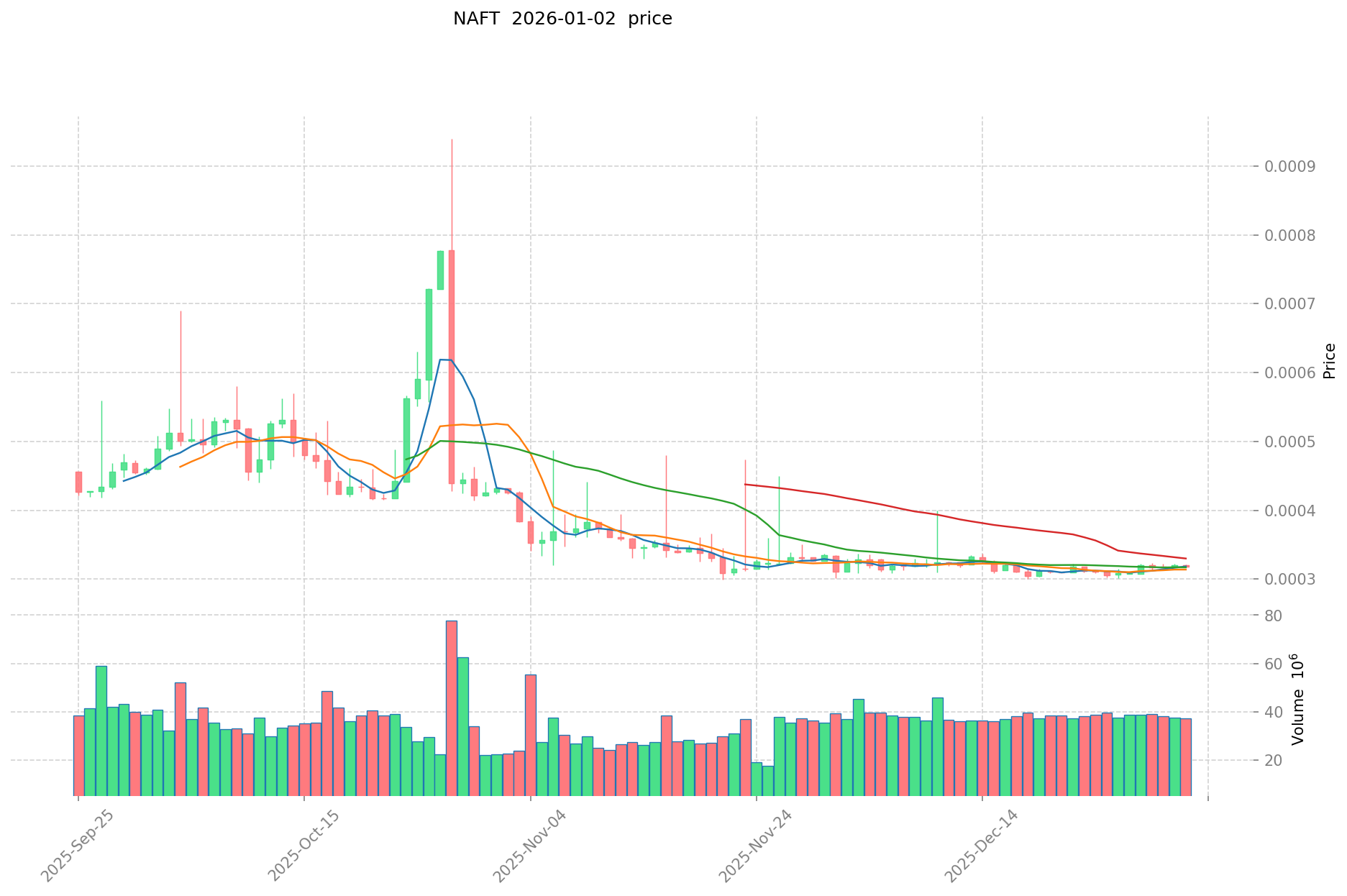
- Comparison Analysis: In the current market cycle from their respective peaks, Nafter has experienced a significant decline from $0.365373 to $0.0003197 (representing a decline of approximately 99.9%), while Optimism has also declined substantially from $4.84 to $0.2978 (representing a decline of approximately 93.8%).
Current Market Status (2026-01-02)
- Nafter (NAFT) current price: $0.0003197
- Optimism (OP) current price: $0.2978
- 24-hour trading volume: NAFT $11,851.95 vs OP $1,237,477.12
- Market emotion index (Fear & Greed Index): 28 (Fear)
Click to view real-time prices:

二、影响 NAFT vs OP 投资价值的核心因素
供应机制对比(Tokenomics)
由于参考资料中未提供关于 NAFT 和 OP 代币的具体供应机制、流通量、通胀模型等相关信息,该章节已省略。
机构采用与市场应用
企业采用与跨境交易
参考资料表明,贸易协议框架下的跨境投资与交易受多重因素影响。NAFTA 框架促进了北美地区的跨境投资和贸易流动,但企业对不同资产的采用取决于市场竞争力、成本结构和政策支持。
关键影响因素包括:
- 进口竞争压力对企业投资决策的影响;行业利息率、税收率、补助率等产业政策保护措施
- 宏观经济条件,包括需求水平以及国家间的贸易和投资关系,这些因素影响核心部门的就业和投资机会
- 全球价值链中的企业采购成本、支持功能外包(如信息技术服务、研发、市场营销)的国际配置
国家政策与监管态度
参考资料未提供关于 NAFT 和 OP 在不同国家的具体监管或政策支持情况的信息。
技术发展与生态建设
参考资料中未包含关于 NAFT 和 OP 技术升级、生态建设、DeFi、NFT、支付系统或智能合约落地情况的相关信息。
宏观经济与市场周期
参考资料未涉及这两种资产在通胀环境下的表现、对货币政策的敏感性、美元指数影响或地缘政治因素等具体内容。
III. 2026-2031 Price Forecast: NAFT vs OP
Short-term Forecast (2026)
- NAFT: Conservative $0.000233965-$0.0003205 | Optimistic $0.00042947
- OP: Conservative $0.27416-$0.298 | Optimistic $0.33674
Mid-term Forecast (2027-2029)
- NAFT could experience consolidation phase, estimated price range $0.0002324907-$0.0004956701724
- OP could enter growth acceleration phase, estimated price range $0.1872483-$0.536107910085
- Key drivers: institutional capital inflows, ETF adoption, ecosystem development
Long-term Forecast (2030-2031)
- NAFT: Base case $0.273098275632-$0.0004477020912 | Optimistic case $0.000668643073207
- OP: Base case $0.28395996658965-$0.4895861492925 | Optimistic case $0.684147685021339
View detailed price predictions for NAFT and OP
NAFT:
| 年份 |
预测最高价 |
预测平均价格 |
预测最低价 |
涨跌幅 |
| 2026 |
0.00042947 |
0.0003205 |
0.000233965 |
0 |
| 2027 |
0.00039373425 |
0.000374985 |
0.0002324907 |
17 |
| 2028 |
0.000415108395 |
0.000384359625 |
0.00033439287375 |
20 |
| 2029 |
0.0004956701724 |
0.00039973401 |
0.0003477685887 |
25 |
| 2030 |
0.000474564216672 |
0.0004477020912 |
0.000273098275632 |
40 |
| 2031 |
0.000668643073207 |
0.000461133153936 |
0.000313570544676 |
44 |
OP:
| 年份 |
预测最高价 |
预测平均价格 |
预测最低价 |
涨跌幅 |
| 2026 |
0.33674 |
0.298 |
0.27416 |
0 |
| 2027 |
0.4030599 |
0.31737 |
0.1872483 |
6 |
| 2028 |
0.525913827 |
0.36021495 |
0.2413440165 |
20 |
| 2029 |
0.536107910085 |
0.4430643885 |
0.38989666188 |
48 |
| 2030 |
0.5091695952642 |
0.4895861492925 |
0.28395996658965 |
64 |
| 2031 |
0.684147685021339 |
0.49937787227835 |
0.254682714861958 |
67 |
四、投资策略对比:NAFT vs OP
Long-term vs Short-term Investment Strategies
- NAFT: Suitable for investors seeking exposure to NFT-based social platforms and willing to accept high volatility; requires strong risk tolerance and long-term conviction in the platform's ecosystem development
- OP: Suitable for investors focused on Layer 2 scaling solutions and Ethereum infrastructure growth; aligns with those seeking exposure to blockchain infrastructure with established institutional adoption
Risk Management and Asset Allocation
- Conservative investors: NAFT 5% vs OP 20% (with 75% stablecoins)
- Aggressive investors: NAFT 15% vs OP 30% (with 55% in other growth assets)
- Hedging tools: Stablecoin allocation, put options on volatile positions, cross-asset diversification with established Layer 1 assets
五、潜在风险对比
Market Risk
- NAFT: Extreme price volatility (99.9% decline from ATH) indicates severe liquidity constraints and low trading volume ($11,851.95 daily), creating significant slippage risk for entry and exit; additionally, concentration risk in niche NFT social platform segment
- OP: Substantial price decline (93.8% from ATH) reflects broader Layer 2 market cycles, though higher trading volume ($1,237,477.12 daily) provides better liquidity for position management
Technical Risk
- NAFT: Limited information on network scalability and protocol upgrades; smart contract audit history and security vulnerabilities undisclosed
- OP: Layer 2 sequencer centralization risks, bridge security dependencies, and potential technical debt from rapid deployment cycles
Regulatory Risk
- Global cryptocurrency regulatory frameworks increasingly focus on Layer 2 solutions and NFT platforms, with potential restrictions on secondary market trading; jurisdiction-specific policies affect both assets differently depending on local classification of digital assets
六、结论:Which Is the Better Buy?
📌 Investment Value Summary
- NAFT Advantages: Operates in emerging NFT social media vertical; potential for significant upside if platform adoption accelerates; early-stage opportunity for contrarian investors
- OP Advantages: Established Layer 2 infrastructure with proven developer adoption; higher trading liquidity and price stability; benefits from Ethereum's network effects and institutional recognition; clearer path to utility through DeFi and smart contract deployment
✅ Investment Recommendations
- Beginner investors: Prioritize OP due to larger ecosystem maturity, better liquidity, and lower extreme volatility; allocate only minimal exposure to NAFT if exploring NFT thesis
- Experienced investors: Consider diversified portfolio with heavier OP weighting (70-80%) for core position; NAFT suitable only for those with high risk tolerance and specific NFT platform conviction; employ dollar-cost averaging to mitigate timing risk
- Institutional investors: OP presents more viable infrastructure allocation with clearer governance mechanisms and protocol roadmap; NAFT lacks sufficient liquidity and institutional-grade infrastructure for significant portfolio allocation
⚠️ Risk Disclaimer: Cryptocurrency markets exhibit extreme volatility and unpredictability. This analysis is provided for informational purposes only and does not constitute investment advice. Past performance does not guarantee future results. Investors must conduct independent research and consult financial advisors before making investment decisions.
FAQ
NAFT和OP分别是什么?各自的核心功能和定义是什么?
NAFT是北美自由贸易协定,核心功能是促进北美三国贸易自由化。OP是期权合约,核心功能是提供衍生品交易和风险管理工具。
NAFT与OP有什么主要区别?在性能、成本、安全性等方面如何对比?
NAFT性能更高效,交易额处理能力强;OP成本相对较低但扩展性有限。安全性上,NAFT采用更先进的加密机制,抗攻击能力更强;OP安全性稳定但创新不足。长期看,NAFT更具竞争优势。
NAFT和OP各自的适用场景是什么?我应该在什么情况下选择使用?
NAFT适用于跨链资产桥接和国际流动性场景,OP适用于Layer2扩展和低成本交易场景。选择NAFT实现多链互操作,选择OP追求更低交易费用和更快确认速度。
NAFT和OP的优缺点分别是什么?
NAFT优点是高流动性和交易额活跃,缺点是波动性较大。OP优点是低流通量便于价格上升,缺点是流动性受限且风险较高。
NAFT和OP在技术架构上有什么不同?
NAFT采用侧链架构,通过验证者提供跨链通信;OP则基于Optimistic Rollup方案,通过欺诈证明确保交易有效性。两者都旨在提升交易额,但技术路径存在差异。
使用NAFT和OP的风险分别是什么?需要注意哪些问题?
NAFT主要风险为市场流动性波动和政策变化。OP风险包括智能合约安全隐患和网络拥堵。需注意:密切监测市场动向,妥善保管私钥,谨慎参与高风险交易,定期审视投资组合。
* The information is not intended to be and does not constitute financial advice or any other recommendation of any sort offered or endorsed by Gate.