This comprehensive analysis compares RLS and ETC as cryptocurrency investment options, examining their distinct market positions and value propositions. RLS, launched in 2025, bridges traditional finance and DeFi with privacy-focused mechanisms, currently trading at $0.00692 with high volatility. ETC, operational since 2016, maintains decentralized principles with established market presence at $11.117 and superior liquidity ($1.52M daily volume). The article evaluates historical price trends, supply mechanisms, institutional adoption, technical ecosystems, and provides 2026-2031 price forecasts. Conservative investors may favor ETC's 80-90% allocation given its operational stability and longer track record, while aggressive investors might consider 40-50% RLS exposure for emerging growth opportunities. Key decision factors include risk tolerance, liquidity requirements, regulatory considerations, and portfolio diversification strategies in the current Extreme Fear market environment.
Introduction: RLS vs ETC Investment Comparison
In the cryptocurrency market, the comparison between RLS and ETC has become a topic of continuous interest among investors. The two exhibit notable differences in market cap ranking, application scenarios, and price performance, representing distinct positioning within the crypto asset landscape.
RLS (RLS): Launched in 2025, it has positioned itself as a blockchain ecosystem connecting Traditional Finance (TradFi) and DeFi in a compliant, scalable, and privacy-preserving manner, aiming to bridge regulated institutions with decentralized markets.
ETC (ETC): Since its emergence in 2016, it has been recognized as the continuation of the original Ethereum chain, upholding the "code is law" principle and providing a decentralized platform for executing smart contracts.
This article will provide a comprehensive analysis of the RLS vs ETC investment value comparison, examining historical price trends, supply mechanisms, institutional adoption, technical ecosystems, and future projections, while attempting to address the question investors care about most:
"Which is the better buy right now?"
I. Historical Price Comparison and Current Market Status
RLS (Coin A) and ETC (Coin B) Historical Price Trends
- 2025: RLS reached an all-time high of $0.0601 on December 1, 2025, before experiencing a significant decline.
- 2021: ETC reached an all-time high of $167.09 on May 7, 2021, driven by market momentum during the cryptocurrency bull cycle.
- 2016: ETC recorded an all-time low of $0.615038 on July 25, 2016, shortly after its launch as a continuation of the original Ethereum chain.
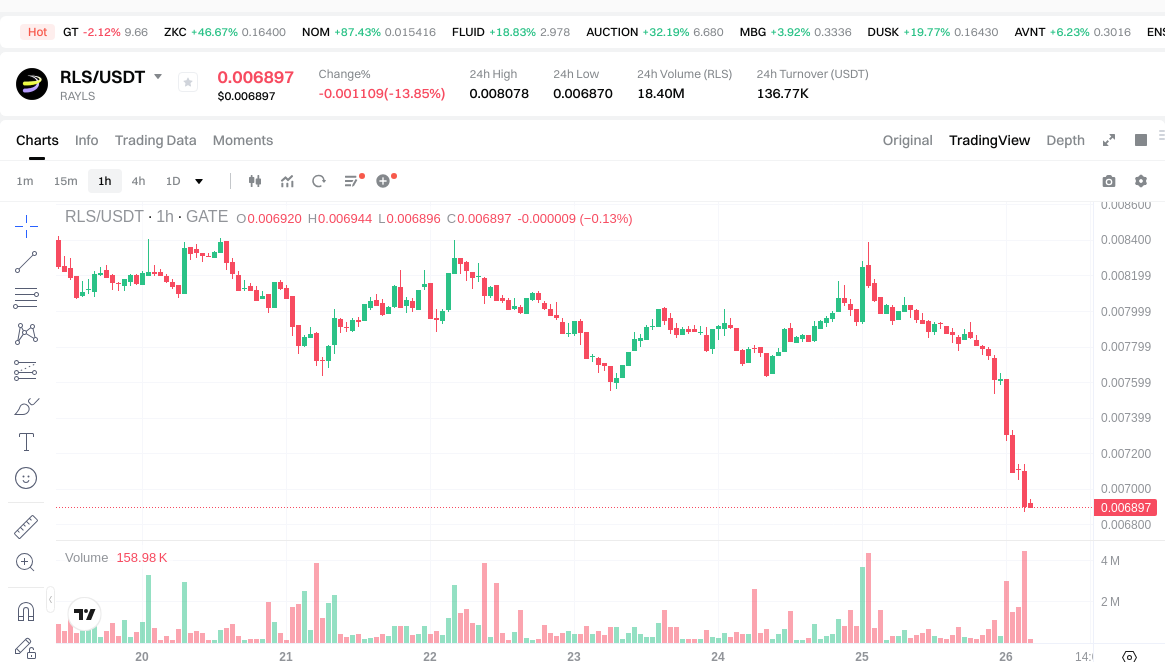
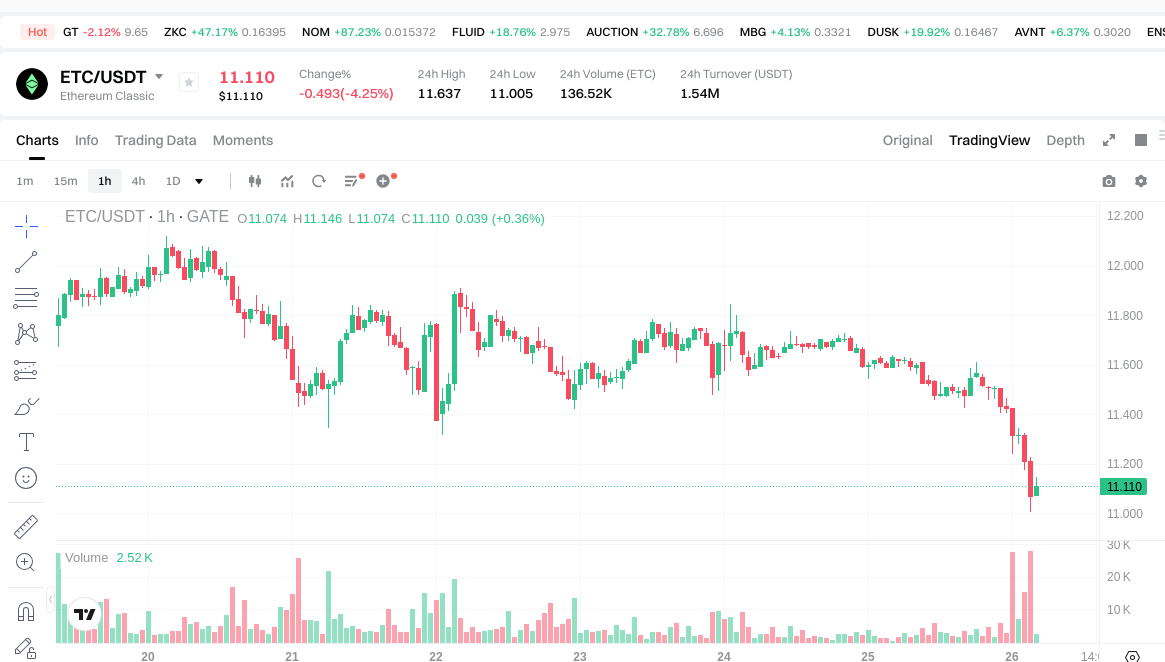
- Comparative Analysis: During the recent market cycle, RLS declined from its peak of $0.0601 to a low of $0.00687 on January 25, 2026, representing a substantial price correction. In contrast, ETC has experienced a longer-term decline from its 2021 peak of $167.09 to the current price level of $11.117, reflecting ongoing market adjustments and shifts in investor sentiment.
Current Market Status (January 26, 2026)
- RLS current price: $0.00692
- ETC current price: $11.117
- 24-hour trading volume: RLS $136,447.18 vs ETC $1,522,584.23
- Market Sentiment Index (Fear & Greed Index): 25 (Extreme Fear)
View real-time prices:
II. Core Factors Affecting RLS vs ETC Investment Value
Supply Mechanism Comparison (Tokenomics)
Due to limited available information in the provided materials, a detailed comparison of supply mechanisms between RLS and ETC cannot be conducted at this time. Supply characteristics such as maximum supply limits, emission schedules, and deflationary or inflationary models would typically influence long-term value dynamics.
Institutional Adoption and Market Application
Without specific data on institutional holdings, enterprise-level implementations, or regulatory positioning for RLS and ETC, a comparative analysis of their adoption across payment systems, settlement networks, or investment portfolios cannot be established. Regulatory attitudes across different jurisdictions would normally play a significant role in institutional participation.
Technical Development and Ecosystem Construction
Comprehensive information regarding technical upgrades, development roadmaps, or ecosystem expansion for either RLS or ETC is not available in the reference materials. Comparative analysis of their respective positions in DeFi protocols, NFT marketplaces, payment infrastructure, or smart contract platforms cannot be performed without adequate data.
Macroeconomic Environment and Market Cycles
An assessment of how RLS and ETC perform under varying macroeconomic conditions—including inflationary pressures, monetary policy shifts, interest rate changes, or US dollar index fluctuations—requires empirical data not present in the provided materials. Similarly, the impact of geopolitical factors on cross-border transaction demand cannot be evaluated without supporting information.
III. 2026-2031 Price Prediction: RLS vs ETC
Short-term Forecast (2026)
- RLS: Conservative $0.0041-$0.0069 | Optimistic $0.0069-$0.0071
- ETC: Conservative $9.56-$11.11 | Optimistic $11.11-$14.56
Medium-term Forecast (2028-2029)
- RLS may enter a consolidation phase, with projected prices ranging from $0.0044 to $0.0109
- ETC may enter a growth phase, with projected prices ranging from $10.00 to $21.75
- Key drivers: institutional capital inflows, ETF developments, ecosystem expansion
Long-term Forecast (2031)
- RLS: Baseline scenario $0.0076-$0.0108 | Optimistic scenario $0.0108-$0.0113
- ETC: Baseline scenario $13.13-$23.04 | Optimistic scenario $23.04-$31.11
View detailed price predictions for RLS and ETC
Disclaimer
RLS:
| Year |
Predicted High Price |
Predicted Average Price |
Predicted Low Price |
Price Change |
| 2026 |
0.0071173 |
0.00691 |
0.0040769 |
0 |
| 2027 |
0.007995561 |
0.00701365 |
0.004769282 |
1 |
| 2028 |
0.008780388435 |
0.0075046055 |
0.00435267119 |
8 |
| 2029 |
0.01091094593645 |
0.0081424969675 |
0.00472264824115 |
17 |
| 2030 |
0.012003669029488 |
0.009526721451975 |
0.008097713234178 |
37 |
| 2031 |
0.011303455002768 |
0.010765195240731 |
0.007643288620919 |
55 |
ETC:
| Year |
Predicted High Price |
Predicted Average Price |
Predicted Low Price |
Price Change |
| 2026 |
14.55541 |
11.111 |
9.55546 |
0 |
| 2027 |
17.83815495 |
12.833205 |
9.62490375 |
15 |
| 2028 |
16.40917757325 |
15.335679975 |
11.041689582 |
38 |
| 2029 |
21.74522742055125 |
15.872428774125 |
9.99963012769875 |
42 |
| 2030 |
27.272800741140281 |
18.808828097338125 |
12.225738263269781 |
69 |
| 2031 |
31.105099465972924 |
23.040814419239203 |
13.133264218966345 |
107 |
IV. Investment Strategy Comparison: RLS vs ETC
Long-term vs Short-term Investment Strategies
- RLS: May appeal to investors seeking exposure to emerging blockchain ecosystems that aim to bridge traditional finance and decentralized markets, though its relatively recent launch in 2025 suggests higher volatility and developmental uncertainty.
- ETC: May appeal to investors who value established blockchain platforms with a longer operational history since 2016, upholding decentralized principles and smart contract functionality.
Risk Management and Asset Allocation
- Conservative Investors: A potential allocation approach could consider RLS at 10-20% and ETC at 80-90%, reflecting ETC's longer market presence and more established trading patterns.
- Aggressive Investors: A potential allocation approach could consider RLS at 40-50% and ETC at 50-60%, allowing for higher exposure to emerging ecosystem opportunities while maintaining balanced risk.
- Hedging Tools: Stablecoin allocation, options strategies, and cross-asset portfolio diversification may help manage volatility exposure.
V. Potential Risk Comparison
Market Risk
- RLS: The significant price decline from $0.0601 in December 2025 to $0.00687 in January 2026 indicates substantial price volatility. The current 24-hour trading volume of $136,447.18 suggests relatively lower liquidity compared to more established assets.
- ETC: The extended decline from the May 2021 peak of $167.09 to the current level of $11.117 reflects ongoing market adjustment pressures. However, the 24-hour trading volume of $1,522,584.23 indicates comparatively higher market liquidity.
Technical Risk
- RLS: As a newer platform launched in 2025, potential concerns may include scalability challenges during ecosystem growth phases and network stability considerations during early operational stages.
- ETC: As an established blockchain continuing the original Ethereum chain, considerations may include mining concentration patterns and the ongoing security maintenance requirements inherent in proof-of-work systems.
Regulatory Risk
- Global regulatory developments may impact both assets differently, with newer platforms like RLS potentially facing evolving compliance frameworks, while established platforms like ETC may be subject to existing regulatory precedents and ongoing policy adjustments across various jurisdictions.
VI. Conclusion: Which Is the Better Buy?
📌 Investment Value Summary:
- RLS Characteristics: Represents exposure to an emerging ecosystem launched in 2025 with stated objectives of connecting traditional and decentralized finance, though accompanied by higher volatility and shorter operational track record.
- ETC Characteristics: Provides exposure to an established blockchain platform operational since 2016, with a longer market history and commitment to decentralized smart contract execution principles.
✅ Investment Considerations:
- New Investors: May consider starting with more established assets demonstrating longer operational histories and higher trading volumes, while limiting exposure to newer platforms until gaining market experience.
- Experienced Investors: May evaluate portfolio diversification strategies that balance exposure between established platforms with proven track records and emerging ecosystems with growth potential, based on individual risk tolerance.
- Institutional Investors: May conduct comprehensive due diligence on regulatory positioning, liquidity profiles, custody solutions, and ecosystem maturity before determining appropriate allocation strategies.
⚠️ Risk Disclosure: The cryptocurrency market exhibits significant volatility. This content does not constitute investment advice. The current market sentiment index stands at 25 (Extreme Fear) as of January 26, 2026. All investment decisions should be based on independent research and individual risk assessment.
VII. FAQ
Q1: What are the main differences between RLS and ETC in terms of market maturity?
RLS is a newly launched platform (2025) with higher volatility and limited operational history, while ETC is an established blockchain (since 2016) with proven track record and higher liquidity. ETC demonstrates significantly higher 24-hour trading volume ($1,522,584.23 vs $136,447.18 for RLS), indicating greater market depth and more stable price discovery mechanisms. RLS experienced a dramatic 88% decline from its December 2025 peak to January 2026, whereas ETC's price movements, despite substantial corrections from 2021 highs, reflect more established market cycles and investor behavior patterns accumulated over nearly a decade of operations.
Q2: How do the price projections for 2031 compare between RLS and ETC?
ETC shows substantially higher absolute price targets with a baseline scenario range of $13.13-$23.04 and optimistic scenario of $23.04-$31.11, while RLS projects a more modest baseline of $0.0076-$0.0108 and optimistic scenario of $0.0108-$0.0113. The projected growth trajectory differs significantly: ETC's 2031 optimistic scenario represents approximately 180% growth from current levels ($11.117), suggesting substantial appreciation potential based on ecosystem maturity and institutional adoption prospects. RLS's optimistic 2031 projection indicates approximately 63% growth from current prices ($0.00692), reflecting a more conservative growth outlook given its emerging platform status and shorter operational validation period.
Q3: Which asset is more suitable for conservative investors?
ETC is generally more suitable for conservative investors seeking established blockchain exposure with proven operational stability. The recommended allocation for conservative portfolios suggests 80-90% ETC versus 10-20% RLS, reflecting ETC's longer market presence, higher liquidity profile, and more predictable trading patterns accumulated since 2016. ETC's continuation of the original Ethereum chain provides historical precedent and demonstrated resilience through multiple market cycles, while its higher trading volumes facilitate easier position entry and exit with reduced slippage risk. However, all cryptocurrency investments carry inherent volatility risks that conservative investors should carefully evaluate against their risk tolerance thresholds.
Q4: What are the primary risk factors affecting RLS investment value?
RLS faces multiple risk dimensions including: (1) Market Risk—demonstrated by the 88% decline from peak to trough within two months and relatively low trading volume suggesting limited liquidity and potential price manipulation vulnerability; (2) Technical Risk—as a 2025-launched platform, potential scalability challenges during ecosystem growth phases and network stability considerations during early operational stages; (3) Regulatory Risk—evolving compliance frameworks for newer platforms connecting traditional finance and DeFi may introduce uncertain policy impacts across different jurisdictions. The current market sentiment index of 25 (Extreme Fear) further compounds near-term volatility expectations for higher-risk assets like RLS.
Q5: How does the 24-hour trading volume difference impact investment decisions?
The substantial trading volume differential ($1,522,584.23 for ETC versus $136,447.18 for RLS) significantly impacts practical investment execution and risk management. Higher trading volumes for ETC indicate: (1) Superior liquidity allowing larger position sizes without substantial price impact; (2) Tighter bid-ask spreads reducing transaction costs; (3) More efficient price discovery reflecting broader market consensus; (4) Lower manipulation risk due to greater market depth. For RLS, the lower trading volume suggests investors may face challenges executing large orders, wider spreads increasing trading costs, and potentially higher volatility from individual transactions moving prices. Position sizing strategies should account for these liquidity constraints, particularly during periods of market stress when liquidity typically contracts further.
Q6: What macroeconomic factors should investors monitor for both assets?
Investors should monitor several macroeconomic indicators affecting cryptocurrency valuations: (1) Monetary Policy—interest rate decisions by major central banks influencing risk appetite and capital flows into digital assets; (2) Inflation Trends—persistent inflationary pressures potentially driving demand for alternative stores of value; (3) US Dollar Strength—inverse correlation patterns between USD index movements and cryptocurrency prices; (4) Regulatory Developments—policy announcements regarding cryptocurrency classification, taxation, and institutional participation frameworks across major jurisdictions; (5) Market Sentiment—correlation with traditional risk assets during periods of financial stress or expansion. The current Extreme Fear reading (index 25) suggests elevated macro uncertainty warranting defensive positioning strategies.
Q7: Which asset offers better long-term appreciation potential based on the 2026-2031 forecasts?
Based on percentage growth projections, ETC demonstrates superior long-term appreciation potential with a projected 107% increase by 2031 under the optimistic scenario, compared to RLS's projected 55% increase over the same period. ETC's medium-term forecast (2028-2029) suggests entering a growth phase with prices potentially reaching $21.75, supported by anticipated institutional capital inflows and ecosystem expansion. RLS shows a more conservative consolidation phase projection through 2028-2029 with maximum prices around $0.0109, reflecting its emerging platform status requiring additional operational validation. However, investors should recognize that forecast accuracy diminishes over longer time horizons, and actual outcomes may vary significantly based on technological developments, competitive dynamics, regulatory changes, and broader market conditions not fully captured in baseline projection models.
Q8: What portfolio diversification strategy balances exposure between RLS and ETC?
A balanced diversification approach should consider: (1) Risk Tolerance Assessment—conservative investors favoring 80-90% ETC allocation versus aggressive investors considering 40-50% RLS for higher growth exposure; (2) Correlation Analysis—both assets exhibit cryptocurrency market correlation, suggesting complementary hedging instruments like stablecoins or traditional assets for true diversification; (3) Rebalancing Discipline—periodic portfolio rebalancing to maintain target allocations as relative prices fluctuate; (4) Incremental Position Building—dollar-cost averaging strategies to mitigate timing risk in volatile markets; (5) Risk Management Tools—consideration of options strategies, stop-loss orders, and position sizing based on maximum acceptable loss thresholds. The current Extreme Fear market environment (index 25) may present tactical entry opportunities for long-term oriented investors, though timing market bottoms remains inherently challenging.
* The information is not intended to be and does not constitute financial advice or any other recommendation of any sort offered or endorsed by Gate.