# Article Introduction
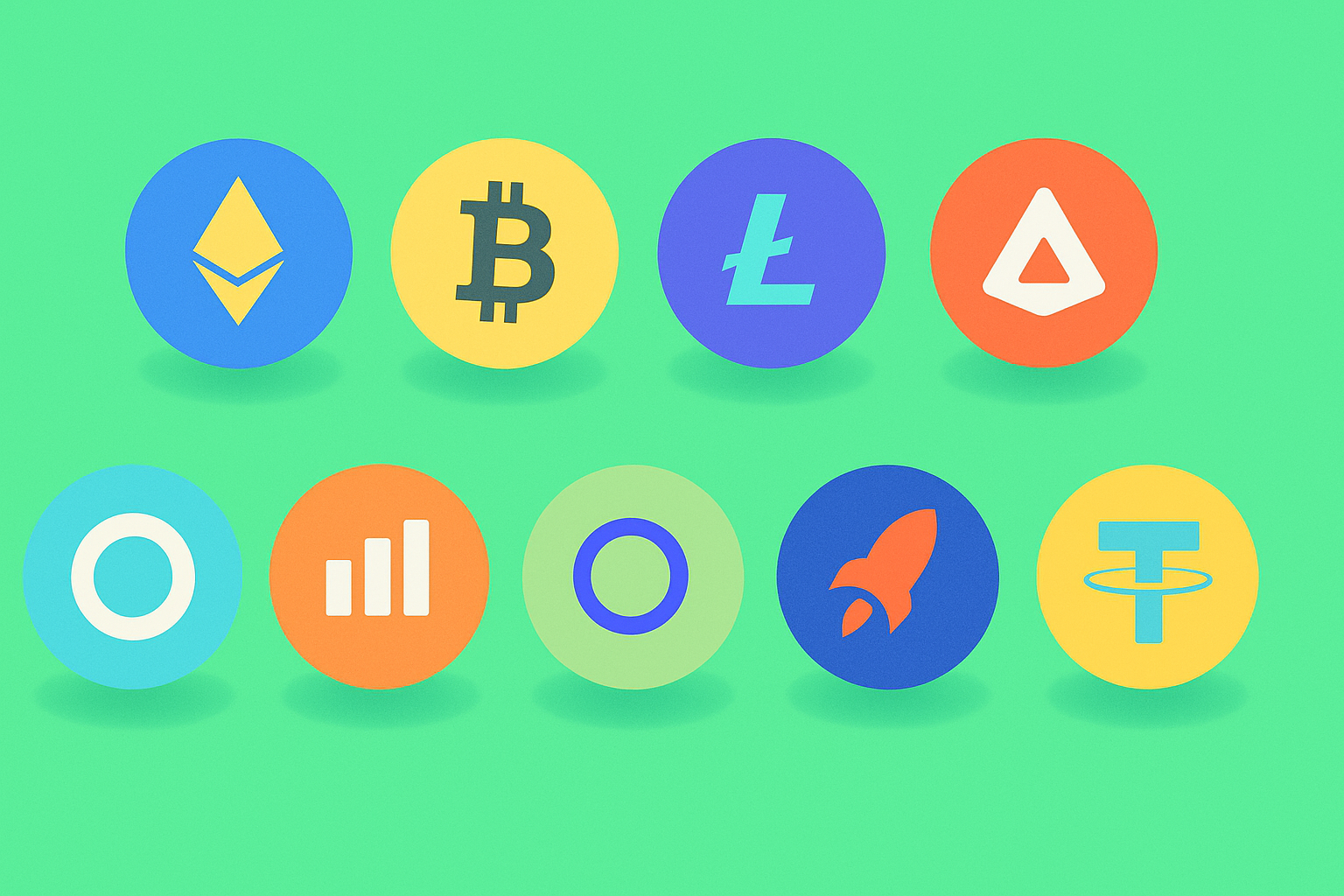
The cryptocurrency market has matured significantly through mainstream adoption, regulatory clarity, and technological innovation, making 2025 an opportune time for digital asset investment. This comprehensive guide examines ten promising cryptocurrencies—Bitcoin, Ethereum, Solana, Cardano, XRP, Polygon, Chainlink, Polkadot, Avalanche, and stablecoins—analyzing their unique value propositions and ecosystem growth. Whether you're a long-term investor seeking established networks, a risk-tolerant trader exploring emerging platforms, or a conservative participant preferring stability, this guide provides actionable insights for portfolio diversification. Learn how to evaluate cryptocurrency projects by assessing real use cases, transaction volume, and developer activity on platforms like Gate. Master investment strategies tailored to your risk tolerance while understanding key cryptocurrency fundamentals for informed decision-making in the evolving digital finance ecosystem.
Why Invest in Cryptocurrency?
The cryptocurrency market has experienced significant evolution, driven by groundbreaking innovations, regulatory clarity, and increasing institutional adoption. Cryptocurrencies are no longer speculative assets confined to niche markets—major corporations, governments, and financial institutions are now deeply involved in the digital asset ecosystem.
Several key factors make this an important time to consider cryptocurrency investments:
Mass Adoption: Cryptocurrencies are being increasingly integrated into mainstream finance, with major financial institutions and corporations recognizing their value.
Regulatory Progress: Governments worldwide are moving towards clearer regulatory frameworks, making cryptocurrency a more secure investment option.
Technological Breakthroughs: Blockchain technology continues to improve, creating faster and more efficient networks that enhance user experience and transaction capabilities.
Bitcoin (BTC): The Digital Gold
Bitcoin remains the most recognized and trusted cryptocurrency, often referred to as "digital gold." Governments and sovereign wealth funds have demonstrated increasing interest in Bitcoin as a strategic asset, reinforcing its importance in the global financial system.
Bitcoin's value proposition stems from its limited supply and decentralized nature, making it an attractive store of value. Institutional investors continue to expand their Bitcoin holdings, contributing to sustained price appreciation. The cryptocurrency's network effect and first-mover advantage maintain its position as the leading digital asset.
Analysts project significant long-term growth potential for Bitcoin, driven by continued institutional adoption and the ongoing recognition of its role as a hedge against inflation and currency devaluation.
Ethereum (ETH): The Powerhouse of Decentralized Applications
Ethereum has revolutionized the cryptocurrency space through its smart contract capabilities, enabling decentralized finance (DeFi), non-fungible tokens (NFTs), and AI-powered applications. The completion of Ethereum 2.0 has significantly improved the network's efficiency, with transaction speeds increasing while energy consumption has decreased substantially.
These upgrades make Ethereum more scalable and attractive for developers building decentralized applications. The expanding DeFi ecosystem continues to drive demand for Ethereum, as it serves as the foundation for numerous financial protocols and services. Institutional interest in Ethereum has grown considerably, supporting its market position as the leading smart contract platform.
Solana (SOL): The High-Speed Contender
Solana has emerged as one of the fastest and most cost-effective blockchain networks. Its architecture enables high transaction throughput while maintaining low fees, making it attractive for both developers and users. The platform's booming NFT ecosystem and partnerships with major companies position it as a strong competitor in the Layer 1 blockchain space.
Solana's continued network improvements and developer adoption contribute to its long-term growth prospects. The platform's ability to support complex applications at scale addresses key limitations of competing blockchains.
Cardano (ADA): The Research-Driven Blockchain
Cardano's development approach emphasizes peer-reviewed research and evidence-based implementation, ensuring long-term sustainability and security. The platform has successfully integrated smart contract functionality and is expanding into real-world applications, particularly in emerging markets.
Cardano's focus on scalability, interoperability, and sustainability positions it as a blockchain with strong fundamentals. The platform's growing adoption in various sectors demonstrates the viability of its technology stack and development philosophy.
XRP (XRP): The Future of Cross-Border Payments
XRP's primary value proposition lies in its ability to facilitate instant, low-cost international transactions. Financial institutions and payment providers have recognized XRP's potential to streamline cross-border payment processes, making it relevant for global finance.
The cryptocurrency's use case in remittances and institutional payments continues to drive adoption. As the global payments infrastructure evolves, XRP's role in facilitating efficient international transactions becomes increasingly significant.
Polygon (MATIC): Scaling Solutions for Ethereum
Polygon addresses Ethereum's scalability challenges by providing a framework for building and connecting Ethereum-compatible blockchains. The platform enables faster transactions and lower fees while maintaining security through connection to Ethereum's mainnet.
Polygon's partnerships with major technology and financial companies demonstrate growing enterprise adoption. As more projects integrate Polygon's scaling solutions, the platform's importance in the broader blockchain ecosystem continues to expand.
Chainlink (LINK): Connecting Blockchain to Real-World Data
Chainlink serves as the leading oracle network, enabling smart contracts to interact with real-world data and external systems. This infrastructure role makes Chainlink essential for the functioning of many decentralized applications.
As the cryptocurrency and blockchain industry expands into more complex applications requiring real-world data integration, Chainlink's role in blockchain infrastructure becomes increasingly critical. The platform's established position as the dominant oracle solution supports its long-term relevance.
Polkadot (DOT): The Future of Blockchain Interoperability
Polkadot enables different blockchains to communicate and share information seamlessly, addressing a key challenge in the Web3 ecosystem. As the blockchain landscape becomes increasingly fragmented, interoperability solutions like Polkadot become more valuable.
The platform's architecture allows for specialized blockchains to operate while maintaining connection to a shared security network. This approach enables greater flexibility and scalability across the entire blockchain ecosystem.
Avalanche (AVAX): Fast and Scalable Consensus
Avalanche offers ultra-fast transaction speeds and low fees through its innovative consensus mechanism, making it an attractive platform for developers and enterprises. The network's architecture supports high throughput while maintaining security and decentralization.
Institutional interest in Avalanche continues to grow as enterprises recognize the platform's capabilities for building scalable applications. The network's performance characteristics and developer ecosystem contribute to its competitive position.
Stablecoins (USDT, USDC): The Backbone of Digital Finance
Stablecoins provide essential liquidity and stability within the volatile cryptocurrency market. These tokens, pegged to fiat currencies, enable efficient value transfer while reducing exposure to cryptocurrency price fluctuations.
Stablecoins have become integral to payments, remittances, and decentralized finance applications. Their role in facilitating cryptocurrency adoption and enabling new financial applications continues to expand. The stablecoin market has experienced substantial growth, reflecting increasing recognition of their importance in the financial ecosystem.
Investment Strategy and Considerations
The cryptocurrency market continues to mature, with mainstream adoption, regulatory advancements, and technological improvements driving the ecosystem forward. A diversified approach to cryptocurrency investment can provide exposure to different use cases and technologies.
For Long-Term Investors: Established cryptocurrencies like Bitcoin, Ethereum, and Solana offer exposure to proven technologies and established ecosystems with strong network effects.
For Risk-Tolerant Investors: Alternative cryptocurrencies and emerging platforms may offer higher growth potential, though with correspondingly higher volatility and risk.
For Conservative Investors: Stablecoins provide a way to maintain exposure to cryptocurrency infrastructure and applications while avoiding price volatility.
Successful cryptocurrency investment requires careful research, risk assessment, and portfolio management. The evolving nature of the cryptocurrency market means that staying informed about technological developments and market trends remains essential for making informed investment decisions.
FAQ
What are the top cryptocurrencies to watch in 2024?
Bitcoin, Ethereum, XRP, Solana, BNB, Dogecoin, Cardano, and Notcoin are the most notable cryptocurrencies to watch in 2024. These digital assets have attracted significant investor attention and market activity due to strong fundamentals and ecosystem development.
Bitcoin and Ethereum future development prospects?
Bitcoin is positioned as a digital reserve asset with potential reaching hundreds of thousands by 2030, driven by institutional adoption and regulatory clarity. Ethereum leads decentralized finance with smart contract dominance, potentially reaching ten thousand dollars, while benefiting from staking yields and ecosystem growth.
How should beginners choose which cryptocurrencies to invest in?
Beginners should focus on established cryptocurrencies with strong market fundamentals, high trading volume, and proven security records. Research project teams, technology, and long-term vision. Diversify your portfolio across different assets to manage risk effectively. Start with smaller investments while you learn the market.
What are the main risks of cryptocurrency investment?
Cryptocurrency investments face volatility risk from price fluctuations, regulatory uncertainty from changing government policies, market manipulation in less regulated environments, security risks from hacks and theft, liquidity risk during market downturns, and technology risks from project failures.
Which cryptocurrency projects have long-term value potential?
Bitcoin and Ethereum demonstrate strong long-term value potential through robust technology foundations and expanding ecosystems. These projects continuously innovate and attract sustained institutional investment, positioning them as reliable assets for long-term wealth accumulation.
How to evaluate the real value of a cryptocurrency project?
Assess real value by analyzing market demand, actual use cases, and community engagement. Examine transaction volume, developer activity, tokenomics, and adoption rate. Strong fundamentals and genuine user adoption indicate sustainable value potential.
* The information is not intended to be and does not constitute financial advice or any other recommendation of any sort offered or endorsed by Gate.